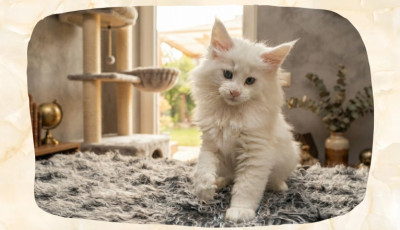
Cat Owner, Whose Terms Of Endearment For His Pet Look Like Nasty Insults, Has Other Pet Owners Sharing The Offensive Nicknames They Gave Their Furballs

A rescued kitten can turn a whole household into a soft place to land, until the owner’s “terms of endearment” start sounding like straight-up insults to everyone else. In this Reddit story, OP clearly adores his cat, but the nicknames he uses for his furball do not exactly read as cuddly, at least not to outsiders.
To make it messier, OP’s girlfriend also has a kitten, and she’s all warm and motherly with her pet, the kind of vibe that makes you think her baby talk is going to win everyone over. Instead, the comments turn into a nickname face-off, where OP’s playful cruelty-sounding words collide with everyone else’s opinions, and suddenly people are sharing the offensive pet names they’ve used too.
And that’s how “Crazy Pants” and “Jabba the Mutt” become the kind of harmless-sounding nicknames that still manage to start drama.
The OP uses nasty words as terms of endearment for his cat.
He owns a rescued kitten whom he loves so much.
His girlfriend also got a kitten. She is motherly toward her pet.

The way we communicate with our pets can reveal much about our emotional states and attachment styles. Research from the Journal of Social Psychology indicates that pet owners often use affectionate language as a means of expressing love and bonding.
This form of communication can enhance the emotional connection between owner and pet, fostering a sense of companionship and security.
Conversely, when terms of endearment are perceived negatively, it can lead to confusion and misunderstandings.
The playful use of nicknames for pets in the article reveals how these terms can embody both affection and humor among owners. The whimsical names, such as "Crazy Pants" and "Jabba the Mutt," illustrate a unique bond that transcends traditional pet naming conventions. This playful language serves not only to enhance emotional connections but also to reflect the distinct personalities of the pets. However, as seen in the sharing of offensive nicknames, the meanings behind these names can sometimes clash, leading to misunderstandings among fellow pet owners. The diverse interpretations of these nicknames highlight the complex nature of pet ownership, where love and humor can coexist, sometimes in unexpected ways.
The playful banter that pet owners engage in when naming their furry companions speaks volumes about the emotional connections that exist between them. As highlighted in the article, terms like "Crazy Pants" and "Jabba the Mutt" may sound harsh to those outside the relationship, yet they embody a unique form of affection. This mirrors attachment theory, which suggests that the language we use is a reflection of our emotional investments. Such nicknames may seem odd or even offensive to outsiders, but within the context of the owner-pet bond, they symbolize a deep and affectionate connection.
When the OP's girlfriend heard how the OP calls his cat, she got mad. She accuses him of bullying the feline.
If the OP's girlfriend refuses to understand the real deal, then he just needs to call his cat "nasty things" when she's not around.
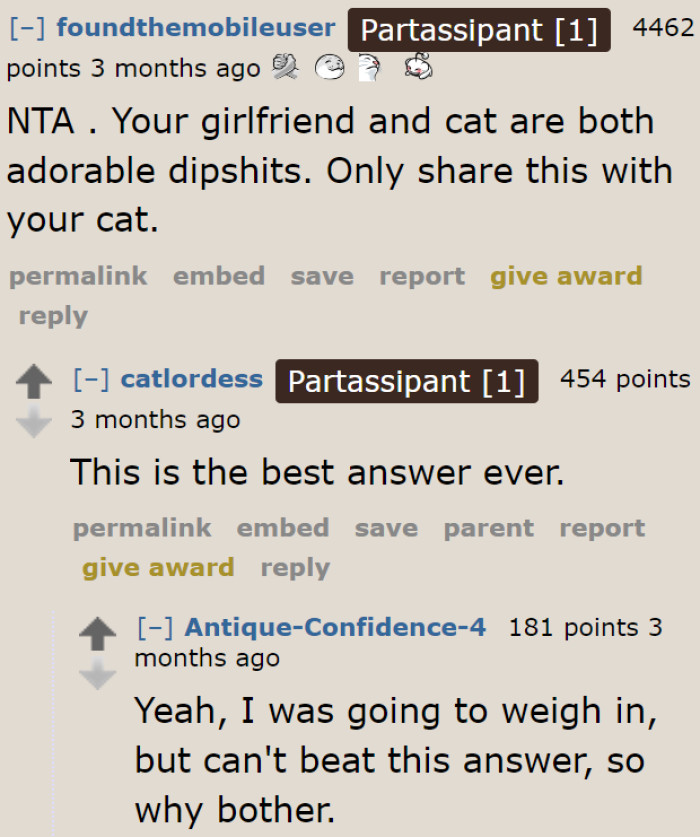
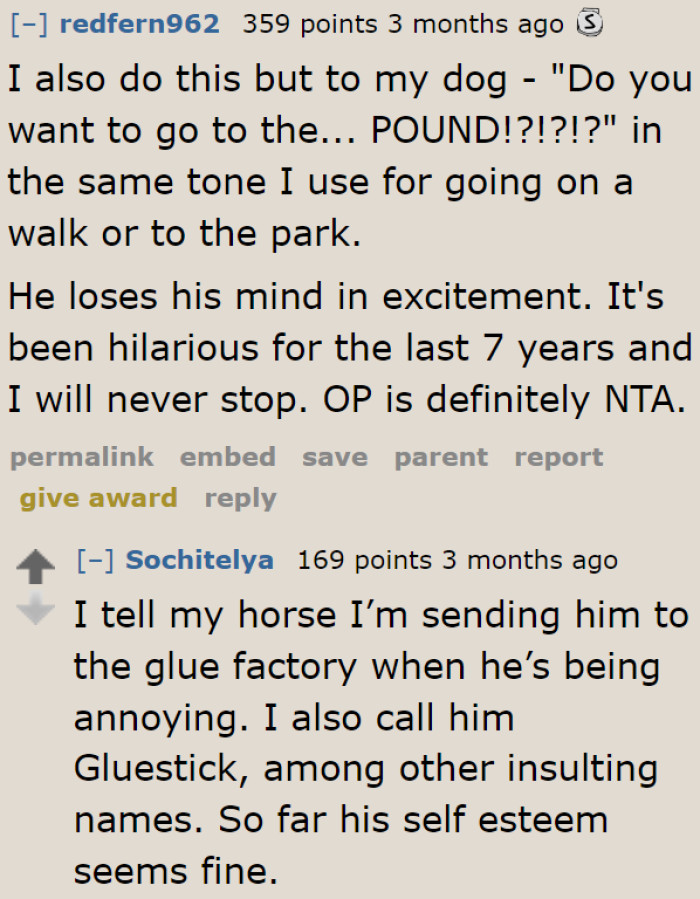
People started sharing the "insults" they call their pets.
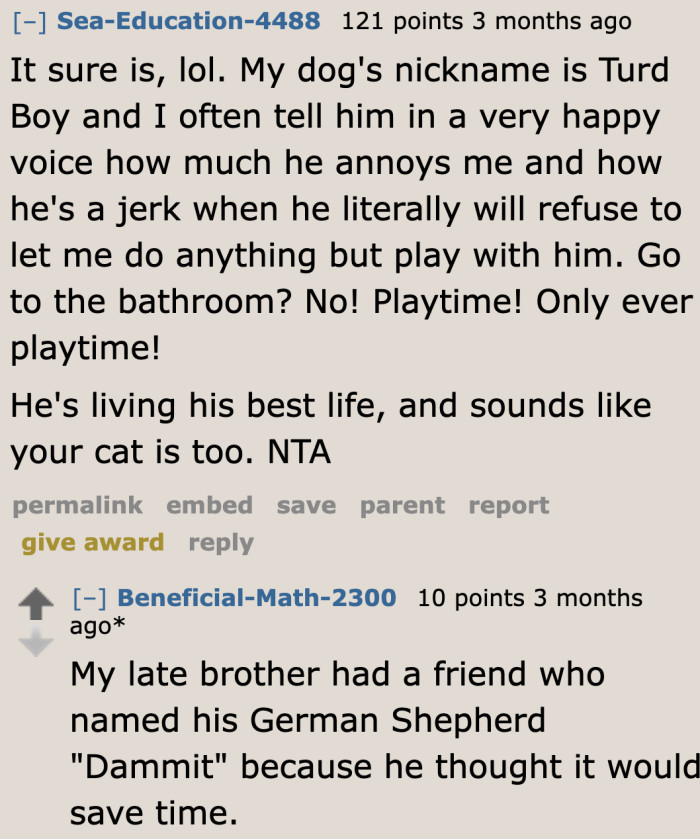
OP’s rescued kitten is the sweetest part of the story, but the offensive-sounding nicknames he throws out for it set the tone immediately.
Moreover, the phenomenon of anthropomorphism—attributing human characteristics to animals—can influence how we interact with our pets.
However, when the language used is perceived as harsh or insulting, it can create cognitive dissonance that affects the owner's emotional state.
This dissonance may lead to feelings of guilt or frustration, impacting the overall owner-pet relationship.
Interestingly, studies show that the way we label our pets can also reflect our personalities. A study published in the Personality and Individual Differences journal indicates that pet owners often choose names that resonate with their personal identities or social attitudes.
This connection can deepen the bond between owner and pet, making the relationship feel even more significant.
It's important to recognize that expressions of love can vary widely among individuals.
Others confess that they do the same thing as what OP's doing with his cat.
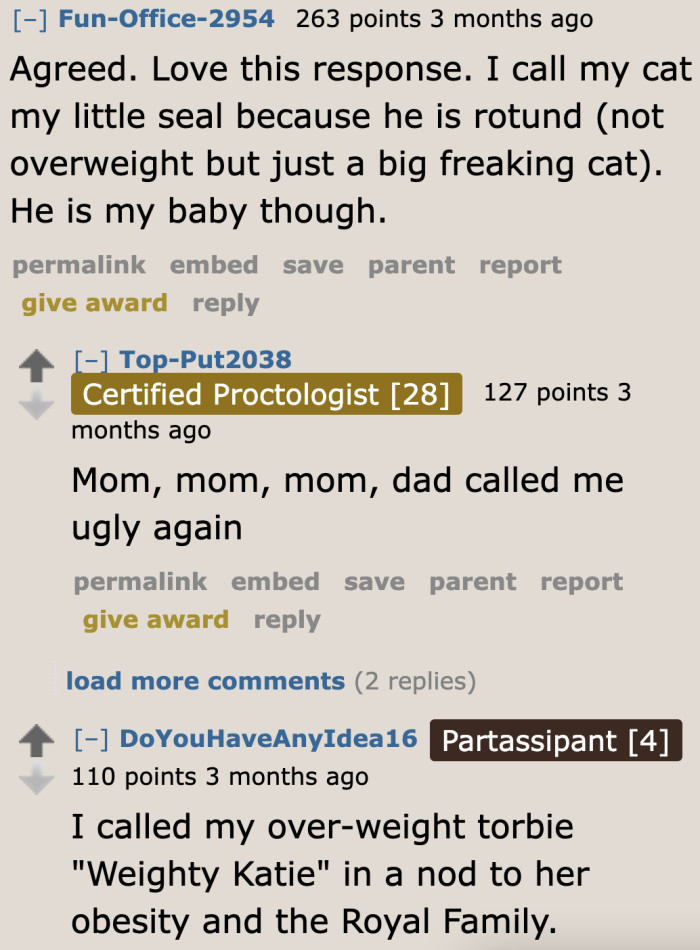
Those are some nasty nicknames.
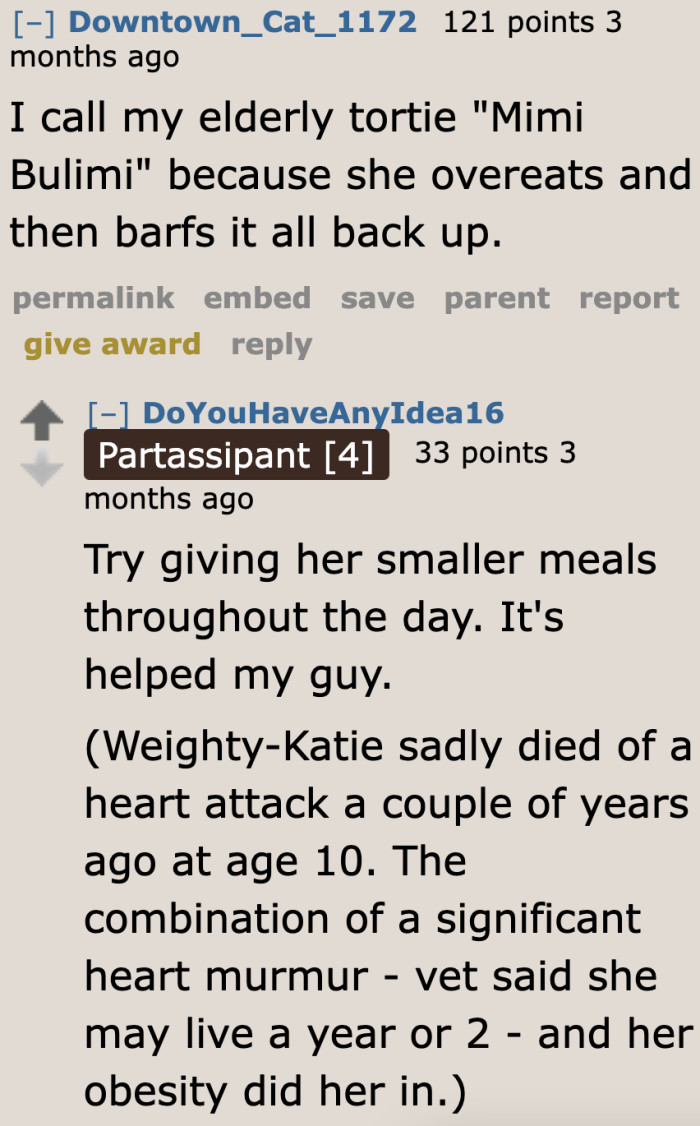
This user said it right. It's the tone that counts, not the word.
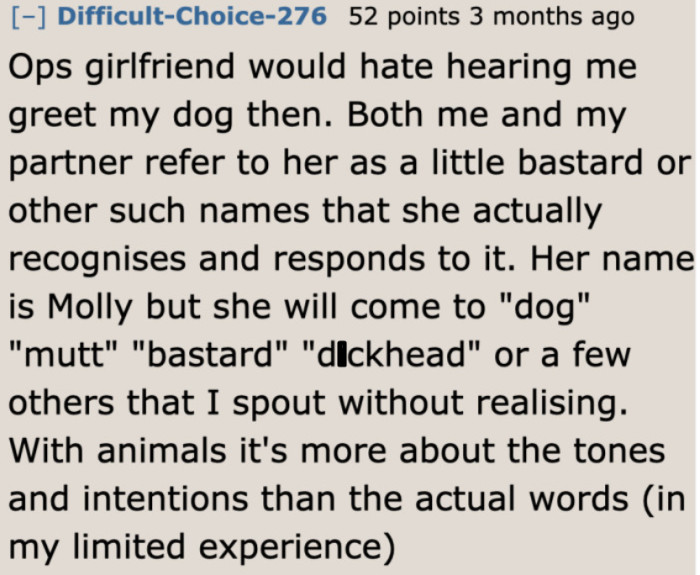
Then OP’s girlfriend comes in with her kitten, motherly and gentle, which makes the contrast even louder when her partner’s word choices get repeated.
To address misunderstandings in pet communication, it's crucial to foster a positive environment.
Social Dynamics and Humor in Relationships
Humor plays a critical role in human relationships, including those with pets. Research published in the Journal of Personality and Social Psychology indicates that humor can enhance relationship satisfaction and provide a buffer against stress.
Using playful or seemingly offensive nicknames may be a way for pet owners to express their affection through humor, which can create a light-hearted atmosphere.
Social connections can greatly influence how we perceive relationships with pets. Research from the Journal of Personality and Social Psychology indicates that individuals with strong social networks often report higher levels of happiness.
Sharing experiences and stories about pets can create bonds among pet owners, enhancing their sense of community and belonging.
Encouraging these interactions can foster a supportive environment for discussing diverse ways to express affection.
A Redditor confesses that they use their pet's nasty nicknames over the given name.
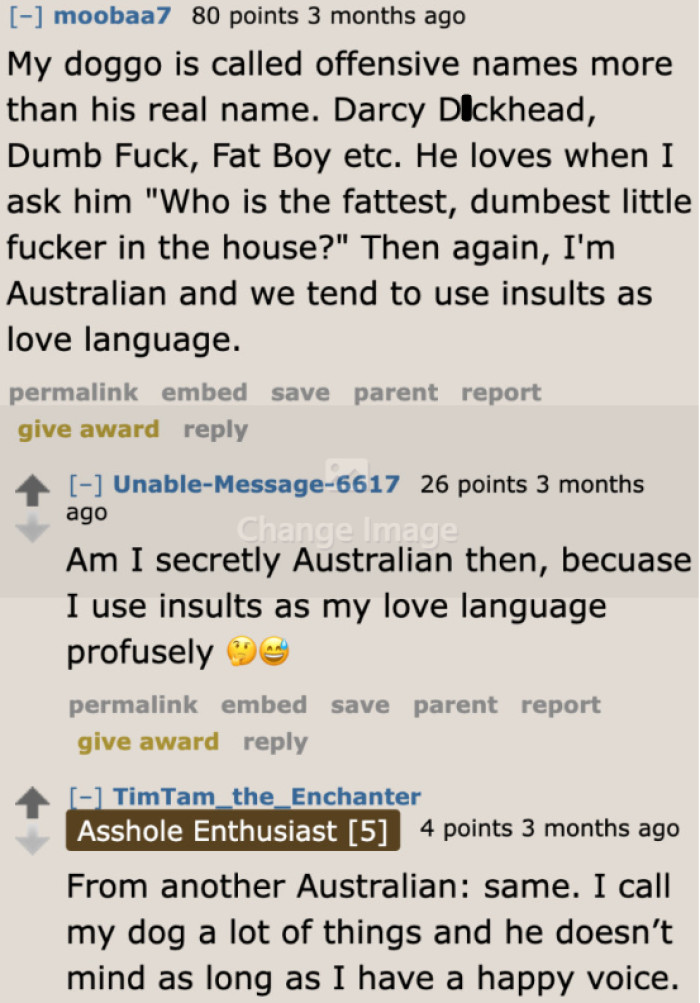
Cat thought its names were "Get Down" and "No, No, You Little S**t"
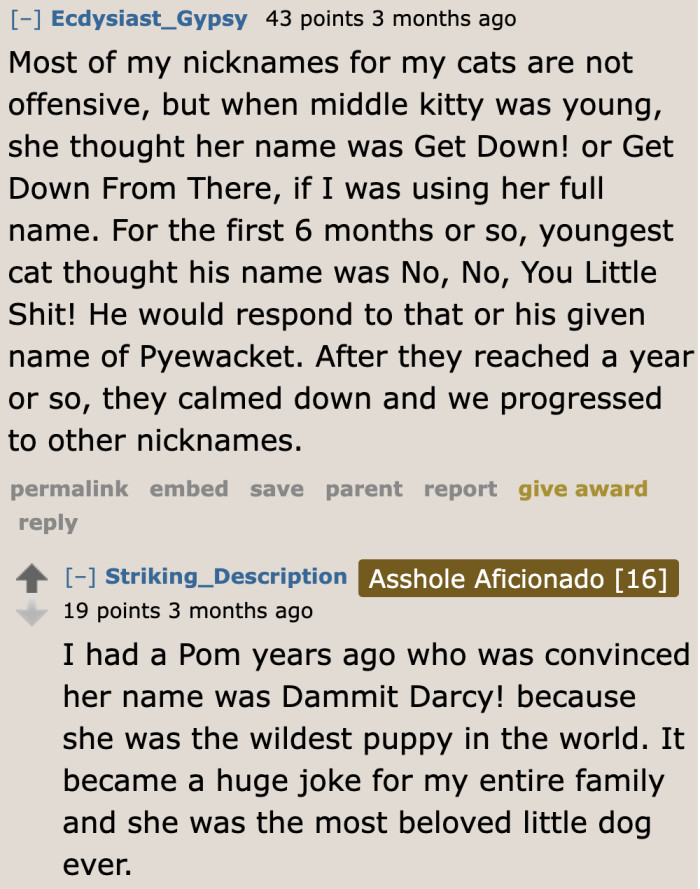
That's a really long name!
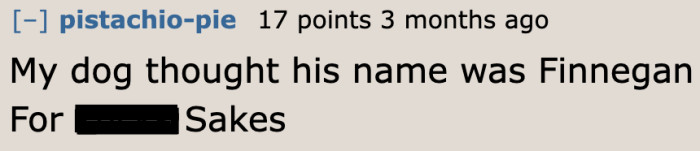
Additionally, exploring the emotional impact of language on pet behavior is essential.
However, it’s essential to consider how this humor is perceived by others.
Engaging in community pet events can also strengthen social ties.
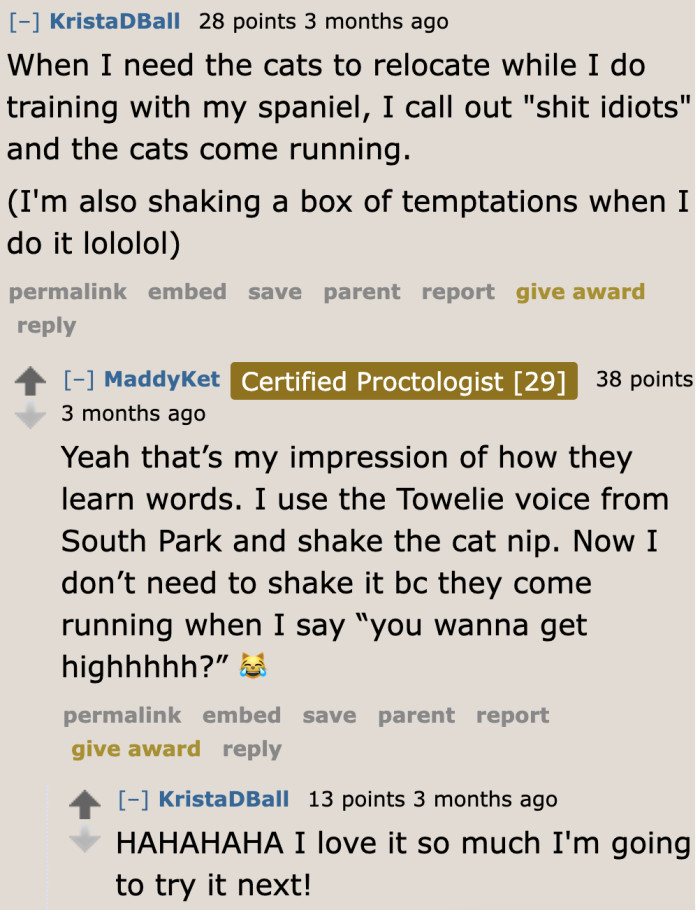
An excellent tip for when you need to relocate your cats.
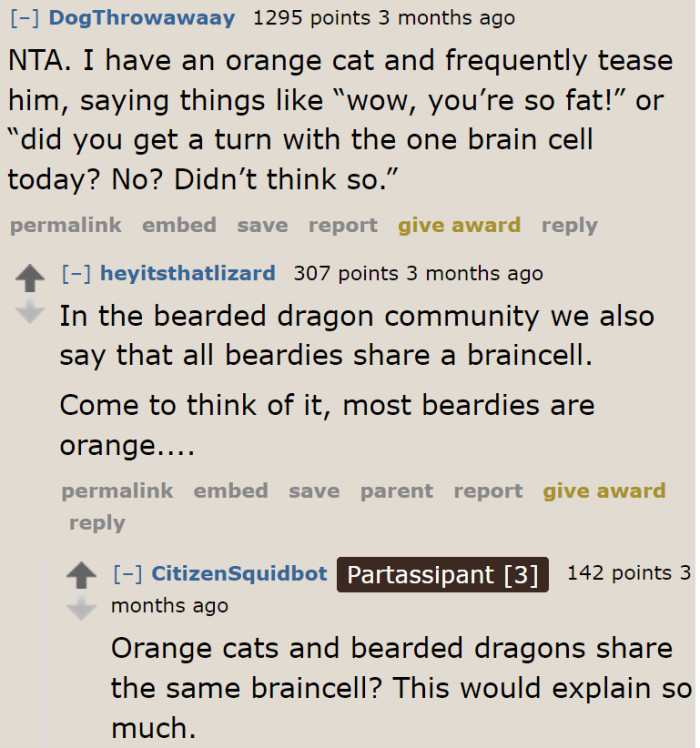
Well, it looks like orange cats and bearded dragons have something in common.
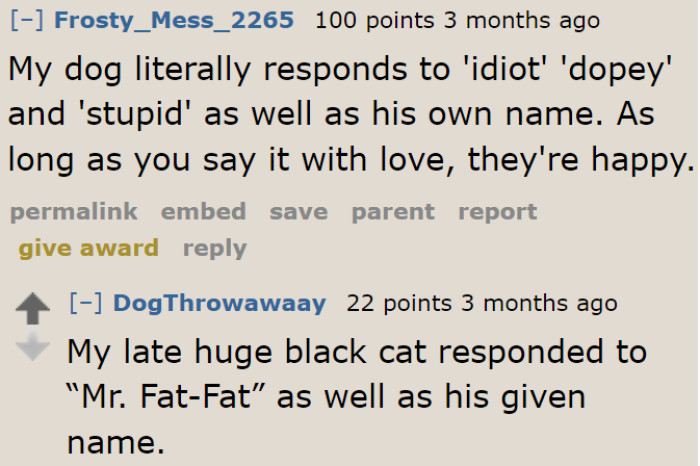
Pets responding to their silly nicknames.
When commenters start comparing “Crazy Pants” and “Jabba the Mutt,” the thread turns into a running list of pet names that are funny to the owner and brutal to everyone else.
The Psychological Benefits of Pet Ownership
Research consistently shows that pet ownership can lead to psychological benefits, including reduced stress and increased happiness. A study from the University of California indicates that pet owners often experience lower levels of anxiety and depression.
This emotional support can be especially beneficial during challenging times, providing companionship and a sense of purpose.
Understanding the emotional dynamics involved in pet ownership can enhance the overall experience and strengthen the bond between owner and pet.
When sharing pet nicknames, it's crucial to be sensitive to how others might perceive them.
Proof that cats aren't bothered by the nasty English words.
They're bothered by something else, though.
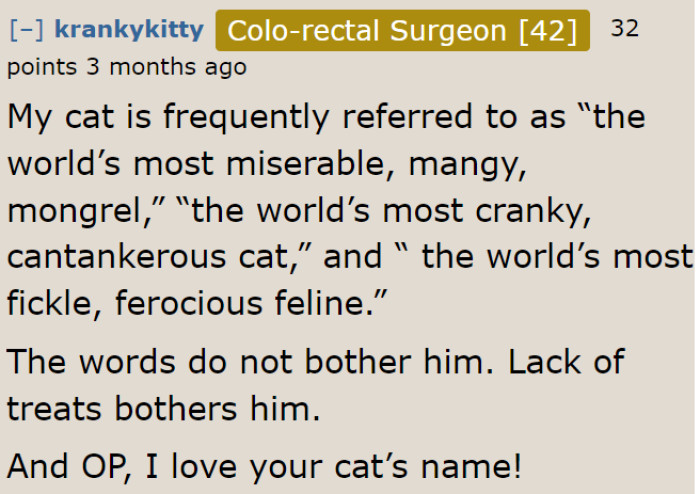
Aww, this mom's no fun.
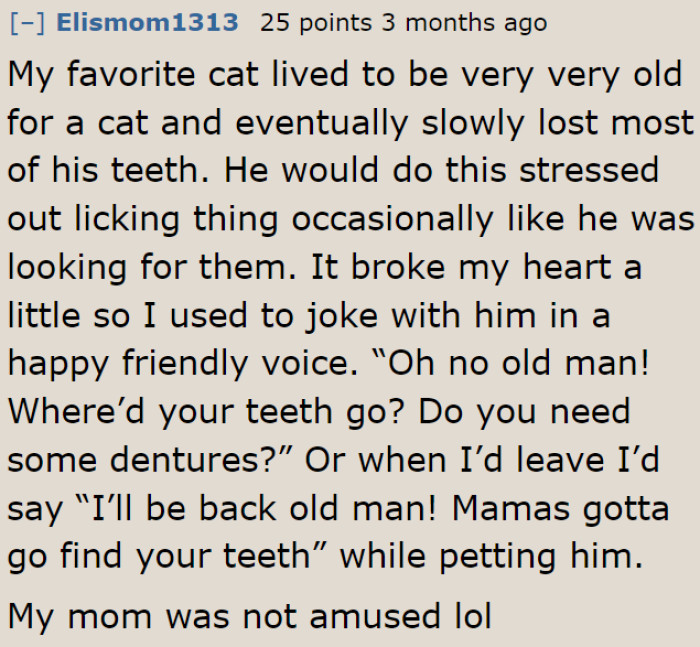
Cats and the English language.
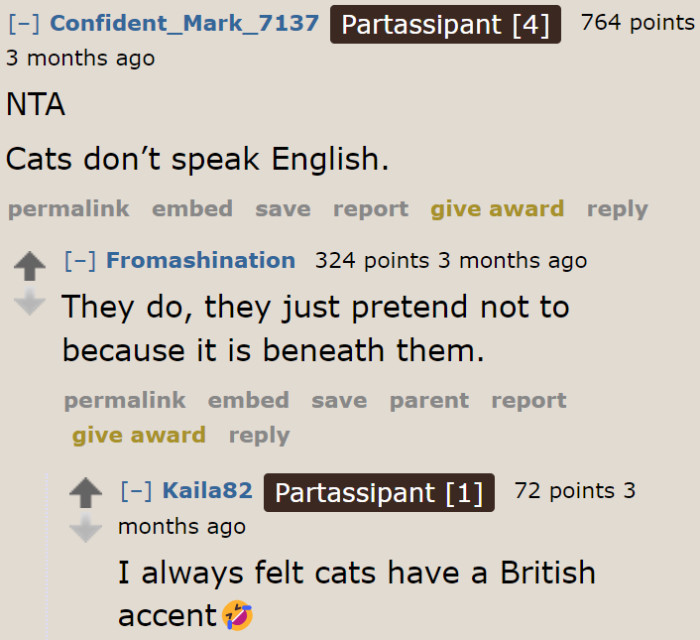
By the time people are trading their own “offensive” terms of endearment, the whole thing stops being about one cat and becomes about who gets the joke.
Lastly, recognizing the importance of communication in pet ownership can lead to more fulfilling relationships.
To navigate these sensitivities, pet owners might consider explaining the affectionate intent behind their nicknames.
The OP's girlfriend needs to have some sense of humor.
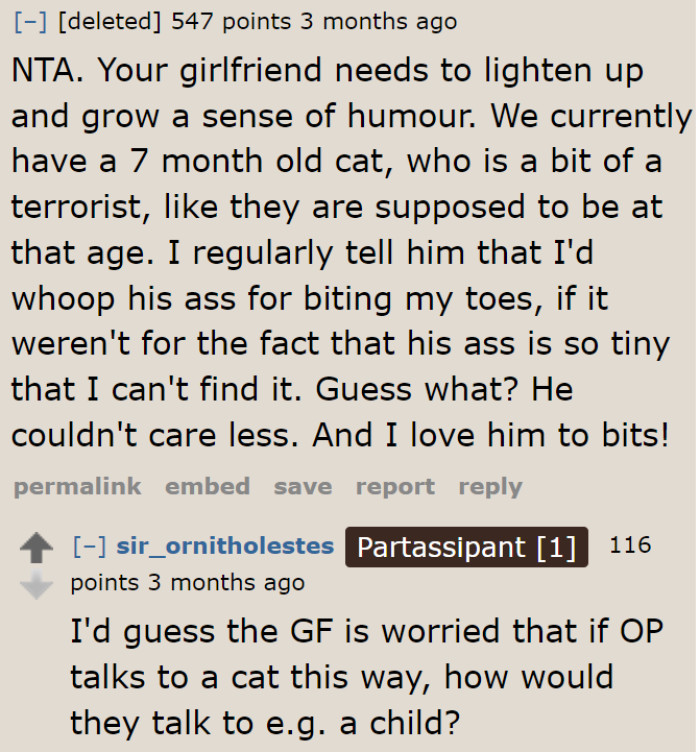
The girlfriend would probably be insulted if she were in this friend's shoes.
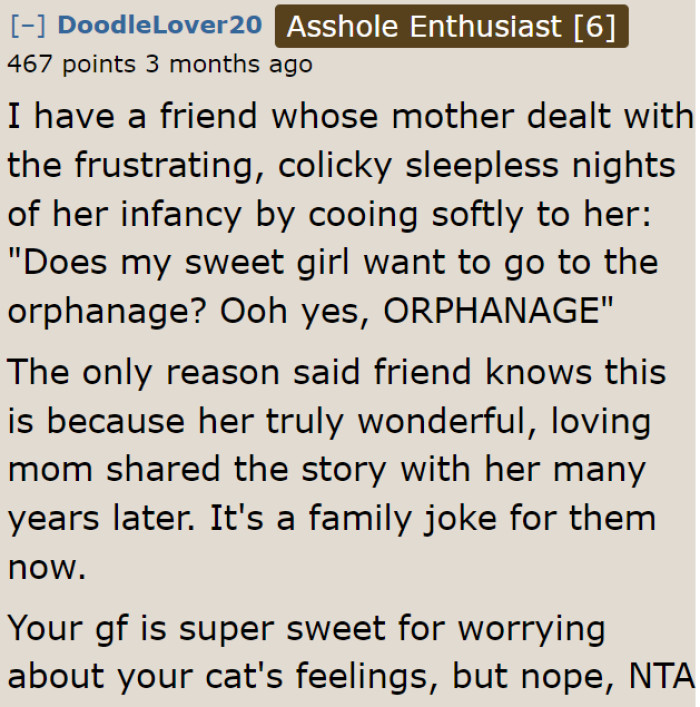
See? Pets don't understand English.
Shared experiences among pet owners can lead to deeper connections and understanding. Research in the Journal of Social Psychology shows that common interests, such as pet ownership, can facilitate friendships and community-building.
These connections can create a supportive network that appreciates the quirks of pet ownership, including the use of unique nicknames.
There's no harm done with the cat. So even if the OP continues to call his cat the nastiest names, it won't be a problem.
If it stresses his girlfriend out, maybe he only needs to say his unique terms of endearment whenever the girlfriend isn't around.
Do you also call your pets using offensive nicknames?
The playful array of nicknames for pets, as highlighted in the article, showcases the rich tapestry of affection that pet owners weave. Terms like "Crazy Pants" and "Jabba the Mutt" reflect not only a pet's character but also the unique bond shared between the animal and its owner. This creativity in naming goes beyond mere labels; it signifies a deeper emotional connection that can significantly enhance the joy of pet ownership.
Moreover, the act of giving a pet a quirky nickname can serve as a form of social expression, reinforcing the idea that these affectionate terms contribute to the overall well-being of both the pet and its owner. By sharing these humorous and sometimes absurd nicknames, pet owners foster a sense of community, illustrating that love for our furry companions often takes on unexpected forms.
Ultimately, embracing humor and creativity in pet ownership can foster a sense of community among pet lovers. Cultivating an environment of acceptance and understanding can enrich social interactions and deepen the bonds between pet owners.
By celebrating the uniqueness of their relationships with their pets, individuals can create a positive atmosphere that invites connection.
The article highlights a cat owner whose terms of endearment, while seemingly harsh, actually reflect a deep affection and a humorous take on their pet's personality. This blend of love and wit resonates with many pet owners, as they share their own amusingly offensive nicknames for their furry companions. Such interactions not only showcase the unique dynamics of pet ownership but also underline how these relationships mirror broader human connections. By celebrating the quirky and often humorous aspects of these nicknames, owners foster a sense of community and connection, enriching their own experiences with their pets.
The playful and often humorous nicknames that pet owners create for their furry companions reveal much about the dynamics of their relationships. As seen in the article, names that might sound insulting, such as "Crazy Pants" or "Jabba the Mutt," reflect not only affection but also a unique understanding of each pet's personality. This linguistic creativity underscores a bond that transcends conventional communication.
By embracing this quirky form of interaction, pet owners are not just expressing love in their own way; they are also building an environment rich in emotional connection. The shared laughter and playful banter associated with these names can enhance the overall relationship, showcasing the depth of affection that exists between pets and their owners.
Now OP has to wonder if his love language is just coming out as an insult to the rest of the internet.
Then read how a dog person whined on Reddit after his GF rejected his ultimatum to rehome her cat.
Share this article: