
Carmella the Rescue Chihuahua Goes From Unsure to Cherished in Her New Home

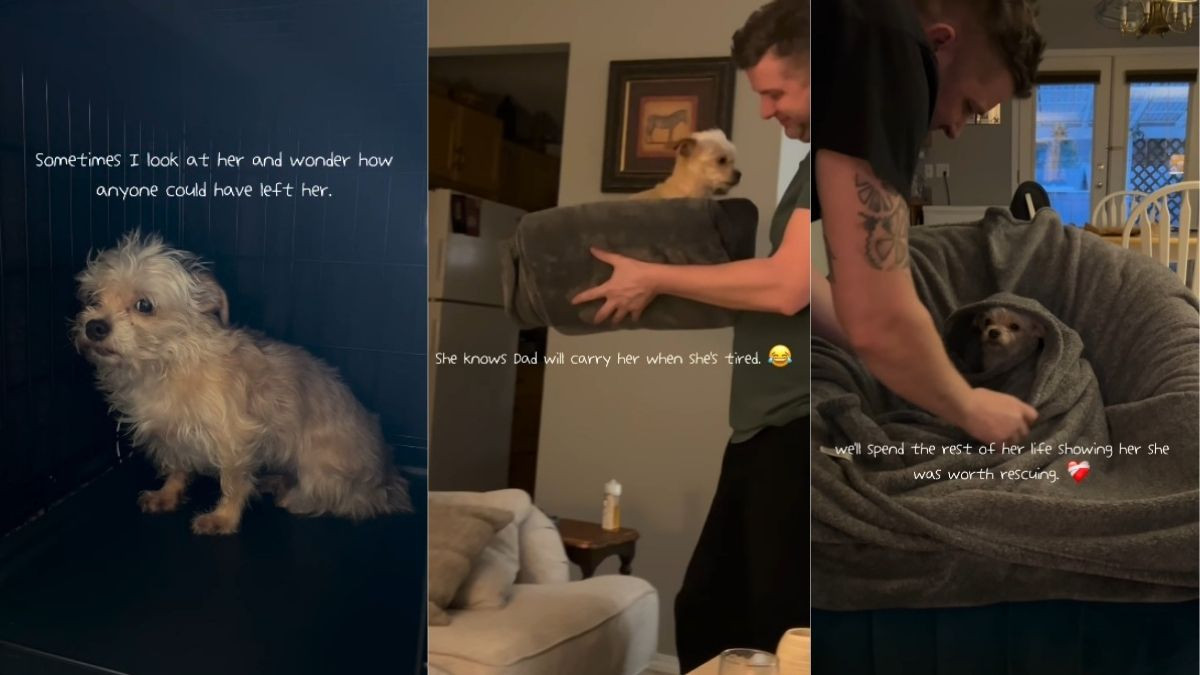
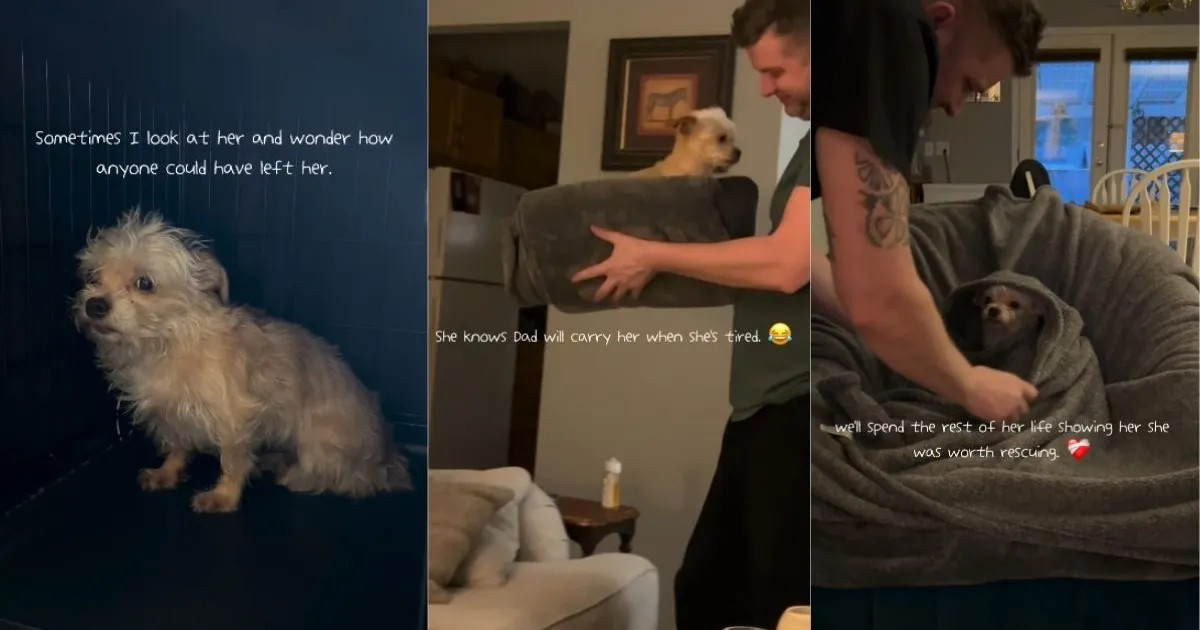
At first, Carmella looks almost swallowed by the moment, a tiny Chihuahua sitting small and unsure as a video asks how anyone could have left her behind. Then the picture shifts, and so does her story: in clip after clip, she is shown discovering what it looks like to be cared for.
The video, shared by Ashley, opens on a dog who seems uncertain about the world around her. Carmella is little, quiet, and visibly tentative in those first images. But the rest of the footage is less about what happened before and more about what is happening now.
In her new home, Carmella is shown close to Ashley, resting in her arms and settling into cuddles. The contrast is simple but striking. The dog who appeared unsure at the beginning looks relaxed as she is held and comforted. She sits calmly, leans into affection, and seems to be getting used to the idea that softness and attention are part of everyday life now.
Another clip shows Carmella riding in a car, something the video presents as a new experience for her. It is a small detail, but it adds to the picture of a dog being introduced to ordinary parts of family life with care. Nothing about the moment is framed as dramatic. Instead, it feels like one more sign that her world has changed.
Learning to trust
One of the clearest glimpses of that change comes in a playful moment at home. Carmella is sitting on furniture when her human picks her up, and the caption jokes that she already knows dad will carry her when she gets tired. The scene is lighthearted, but it points to something larger. Carmella is learning that she does not have to manage on her own.
That idea runs through Ashley's posts about her. Carmella can rely on the people around her to look after her, and her family appears determined to make that lesson stick. The little Chihuahua is not just being housed. She is being spoiled with attention, comfort, and the kind of routine affection that tells a dog she belongs.
Ashley describes herself online as a rescue dog mom, and Carmella features regularly in what she shares. Her page also carries a broader message: rescue dogs deserve the very best, and they can bring a great deal of love into a family.
That message clearly resonates with people who have been watching Carmella's transformation. In the comments, viewers thanked Ashley for giving her a loving life and said the dog reminded them of rescues they knew themselves. One person said Carmella brought to mind a dog named Willow Bees, who had been tied to a fence at a shelter and is now, in that owner's words, the most spoiled girl.
Other viewers called Carmella sweet and beautiful. One said the videos make them tear up because Ashley saved such an adorable pup. The response reflects what people often recognize in rescue stories like this one: the visible shift that can happen when a dog finally feels safe.
Ashley has a nickname for Carmella on her profile, calling her the "World's most spoiled rescue Chi." Behind the joke is a promise. Her family says rescue dogs deserve the absolute best, and they plan to spend the rest of Carmella's life showing her just how loved and valued she is.
Why a rescued dog may seem unsure at first
Many newly adopted dogs arrive in a state of overload. A shelter, foster home, transport, vet visit, and a new house can all stack up as major changes. Dogs often cope by shutting down, hiding, barking, pacing, clinging, or refusing food. None of that automatically means the dog is unfriendly or poorly adjusted. It often means the dog is trying to feel safe.
Small dogs can be especially easy to misread. Trembling, freezing, lip licking, turning the head away, and avoiding hands are common signs of stress, not stubbornness. Being picked up too often can add to that stress, even when people mean to comfort them. Let the dog approach on their own terms whenever possible.
A rescue dog’s personality usually appears in layers. The first goal is not instant affection. It is predictability, rest, and trust.
How to help a new dog settle in
Keep the first stretch simple. Set up a quiet sleeping area, regular meal times, and a consistent routine for toilet breaks and short walks. Limit visitors, noise, and exciting outings until the dog shows they can relax at home.
Use gentle, reward based handling. Toss treats nearby instead of reaching over the head. Sit sideways rather than looming face to face. Let the dog sniff you. If they move away, respect that signal. For nervous small dogs, provide ramps or steps to furniture if allowed, and avoid repeated lifting unless necessary for safety.
Management matters as much as affection. Use a secure harness and identification, because frightened dogs can slip collars or bolt through doors. Supervise introductions to other pets, give separate feeding spaces, and provide a safe retreat such as a crate or covered bed if the dog likes one.
What progress looks like, and when to get help
Improvement is often quiet. A dog may start eating more comfortably, sleeping deeply, choosing to sit nearby, exploring rooms, playing briefly, or greeting familiar people at the door. Setbacks are normal after a startling noise, a visitor, or a change in routine.
If fear remains intense, or if the dog growls, snaps, guards food, soils the home suddenly, or cannot settle, ask for help early. A veterinarian can rule out pain or illness, and a qualified reward based trainer or behavior professional can build a plan. Early support can prevent fear from becoming a long term pattern.
Patience is not passive. Calm routines, careful observation, and small positive experiences are what help many rescue dogs turn uncertainty into security.
Share this article:





