
Woman Adopts Neighborhood Cat, Then Sees Missing Cat Signs That Seem to Match Him

A woman who took in a cat she believed was stray thought the story had ended with a quiet adoption. Then signs for a missing cat appeared around the neighborhood, and suddenly the rescue came with a painful question.
By the time the posters went up, the cat had already started to settle in. The woman said he had been in her home for a week, was getting along with her other cat, and already felt like part of the family. That was what made the discovery so difficult. The missing-cat signs described an animal that seemed to match the one she had just brought home.
Her account began with a neighborhood cat who appeared to be on his own. She said he was very standoffish at first, but she eventually managed to befriend him. When she got a closer look, she believed he needed help. He had fleas, she wrote, and he seemed malnourished.
Rather than immediately assume he was abandoned, she tried to find out whether he belonged to someone. She took him to the Humane Society, where he was checked for a microchip. There was none. She also posted in lost-and-found Facebook groups and on a neighborhood app, but no one came forward to claim him.

A rescue that seemed settled
With no chip and no response to her posts, she moved ahead with a formal adoption through the Humane Society. From her point of view, she was not taking someone else’s pet. She was doing what many people are urged to do when they find an animal that looks uncared for: check for identification, alert the community, and work through a shelter or humane organization.
The cat’s adjustment seemed to confirm that she had made the right call. He fit in with the home quickly enough that, within a week, she described him as feeling like family. For anyone who has ever brought in a wary outdoor cat and watched him begin to relax, that kind of bond can form fast.
Then came the twist. Someone started putting up signs all over the neighborhood for a missing cat that appeared to match his description. What had felt like a straightforward rescue suddenly became an emotional and ethical dilemma.
The question she could not ignore
The woman said she believed she had no legal obligation to return the cat after adopting him through the Humane Society. She was also candid about something many rescuers might struggle to admit: she did not want to give him up. At the same time, she wondered whether staying silent would make her a bad person.
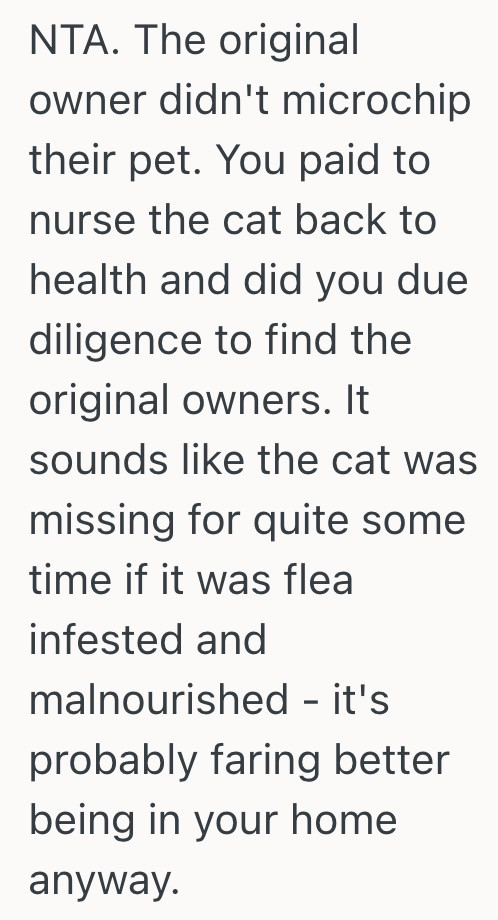
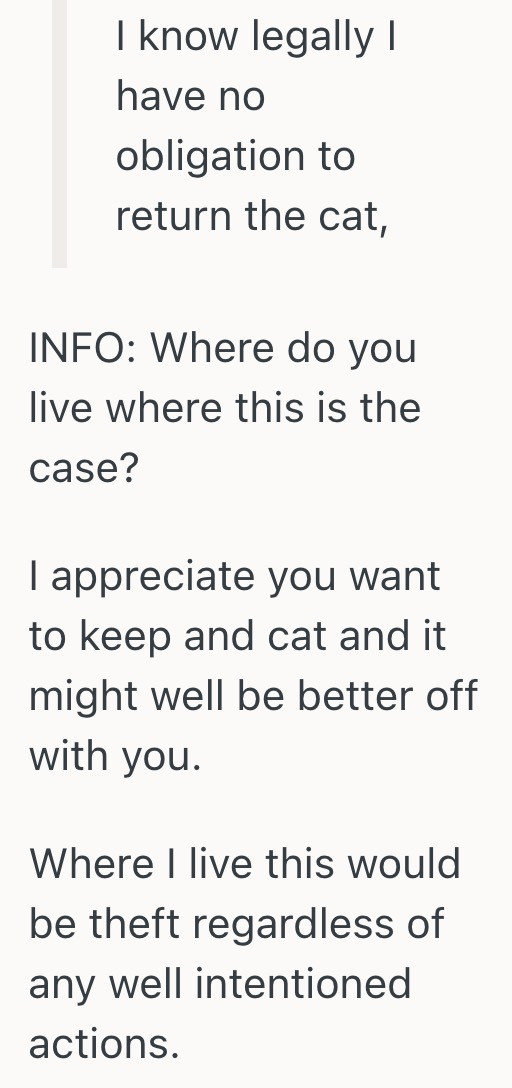
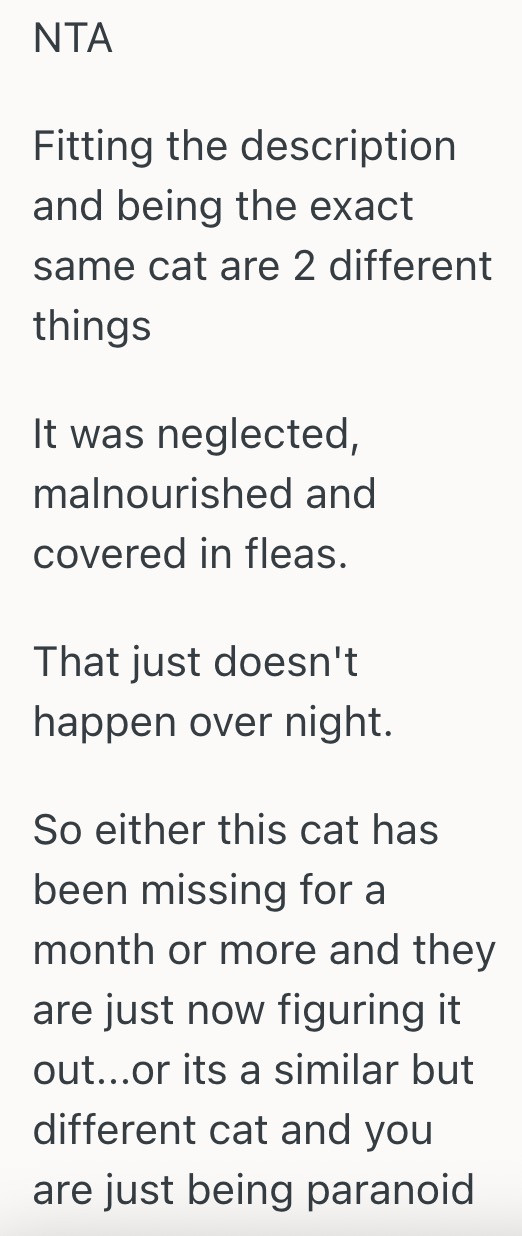
People who weighed in on her story did not land on one clear answer. Some said they were unsure what she should do. Others thought she should keep the cat, pointing to his condition when she found him and the effort she had already made to locate an owner. One person argued that keeping him could still be illegal. Another possibility raised by readers was that the missing-cat posters might not refer to the same animal at all.
That uncertainty is what gives the story its pull. On one side is the possibility that a pet owner is searching for a missing cat. On the other is a cat who was found with fleas, seemed underfed, had no microchip, and now has a home where he is wanted.
The signs left the woman with a choice she had never intended to face. What remains clear is the part that started everything: she saw a cat in poor condition, tried to help him responsibly, and gave him a place in her home. Whether that path leads to a reunion or confirms an adoption, the cat is no longer just a figure in the neighborhood. He matters deeply to someone now.
A friendly cat is not always a stray
Cats that approach people, spend time on porches, or seem comfortable indoors are not necessarily abandoned. Many owned cats roam, visit multiple homes, and accept food from more than one person. Some are lost, some are outdoor pets, and some are community cats that are cared for by neighbors without having a single indoor home.
A quick visual check can help, but it is not definitive. A collar can fall off. A thin cat may still have a home. A clean, social cat may still be lost. Kittens, injured cats, and cats in obvious distress usually need prompt help, while a healthy adult cat seen briefly may simply be passing through.
Best steps when you find a cat
If a cat seems to be staying nearby or trying to come inside, start by keeping it safe and separate from your own pets. Offer water and, if needed, a small amount of cat food. Then check for identification. A tag is the fastest answer, but a microchip scan is often the most useful next step. Veterinary clinics and animal shelters can usually scan for a chip and may help contact the registered owner.
It also helps to look close to where the cat was found. Put up simple found pet notices, check neighborhood bulletin boards, ask nearby homes, and review local lost pet listings. When someone claims the cat, ask for proof such as recent photos, veterinary records, or details about markings and behavior. Laws and holding periods vary by area, so local animal services can explain the usual process.

If no owner is found
If a search does not turn up an owner, the cat may need either temporary foster care or a permanent home. Before bringing a found cat fully indoors, arrange a veterinary visit for a basic health check, parasite treatment, and advice on vaccination and spaying or neutering. Keep the cat in a quiet room at first, with a litter box, food, water, and hiding spots.
Slow introductions matter if you already have pets. Separate spaces, scent swapping, and brief supervised meetings reduce stress and help prevent conflict. If you cannot keep the cat, a rescue group or shelter may be able to guide placement. The goal is not only kindness, but a careful path that gives a lost pet the best chance of reunion and a homeless pet the best chance of a stable home.
Share this article:





