Shelter Dog Buck Gets His First New Bed and Instantly Makes Himself at Home

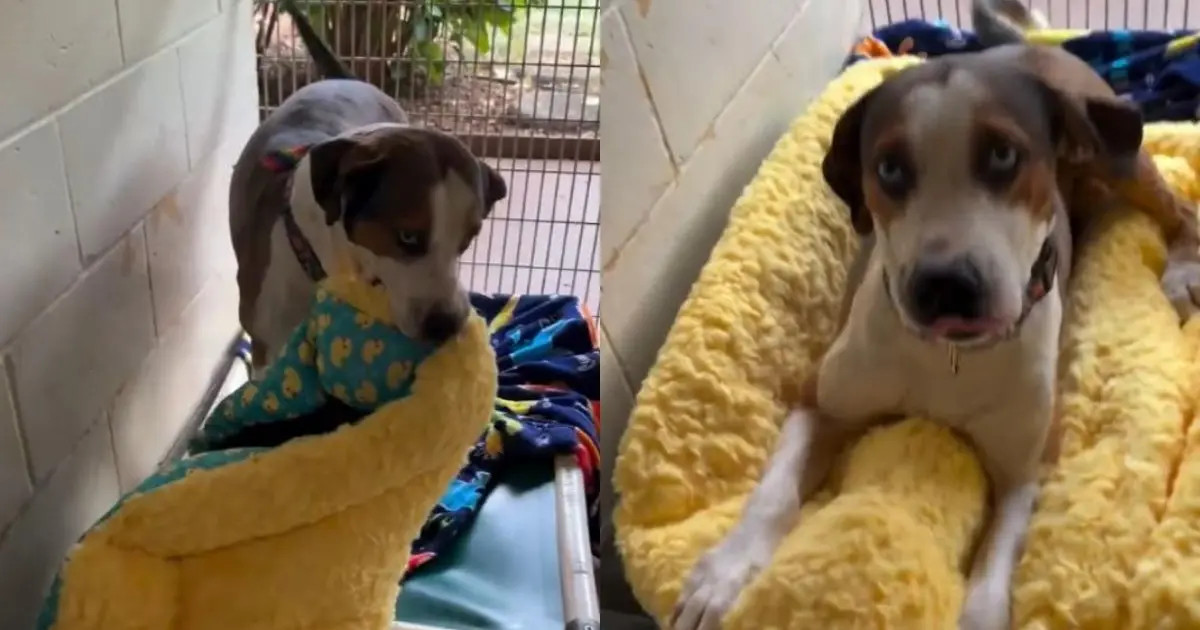
Buck did not need any help deciding what to do with his new bed. The shelter dog picked it up, carried it across his kennel, and settled in as if he had been waiting for that exact moment.
That simple scene is what has drawn so much attention to Buck, a dog at Maui Humane Society. In the clip below, shared by @cassondrachristman, he is behind the kennel bars as someone brings him a soft yellow bed.
Buck takes hold of the bedding right away and moves with purpose. He carries it through the kennel area, brings it over to a raised cot, and places it where he wants it. Then he climbs up and tucks himself into the blanket, turning the small gift into a comfortable spot of his own.
A small surprise, and a little more of Buck’s story
The video does not end with the bed. Cassondra also gives Buck what the on-screen text calls one more surprise, a new giraffe toy. He accepts the orange stuffed animal immediately and brings “giraffey” back to his bed before settling in.
The post adds more context about the dog winning over viewers online. Buck was found wandering the streets of Molokai for weeks with other pups. The caption wonders how a dog described as adorable, personable, and funny could have gone without anyone looking for him.
Buck is estimated to be about 3 years old. He is described as friendly and a dog who loves treats, toys, and dog beds. His quick attachment to the new bedding made that last detail especially easy to believe.

People are rooting for him
The response was immediate. Commenters called Buck sweet, smart, cute, and gorgeous, with several focusing on his expressive eyes. One person wrote, “What a sweet lil man!!! Oh my heart.” Another asked how he was still at the shelter and urged the internet to get moving.
For now, Buck is still waiting at Maui Humane Society. But the little routine that made strangers smile, choosing his spot, tucking himself in, and keeping his new toy close, has also introduced many people to a dog who is still looking for someone to choose him.
Why a bed matters to a dog
A dog bed is more than a soft place to sleep. It gives a dog a predictable spot to rest, which can lower stress and help the animal feel secure. Many dogs naturally look for a den-like area where they can relax without being disturbed. A bed can become that safe base.
Good bedding also supports joints, keeps a dog off cold or hard floors, and can help older dogs, large dogs, and dogs with mobility issues stay more comfortable. Some dogs like to stretch out on a flat cushion, while others prefer bolsters they can lean against. Watching how a dog sleeps is often the best guide to what style will suit it.
Helping a rescue dog settle in
Dogs coming from shelters or other unstable situations often need time to learn that a new space is safe. A bed can help with that transition if it is placed in a quiet area with a clear view of the room, away from heavy foot traffic. Many dogs relax faster when they have both company and the option to retreat.
Keep early routines simple. Offer meals, walks, toilet breaks, and bedtime at roughly the same times each day. Let the dog approach the bed on its own. You can encourage use with calm praise, a familiar blanket, or a chew, but avoid forcing the dog to stay there. Some dogs settle immediately, while others circle, dig, or switch sleeping spots before choosing a favorite place. That is normal.
Choosing and caring for a dog bed
Pick a bed that matches the dog's size, coat, age, and habits. Dogs that run hot may prefer breathable fabric. Dogs that like to burrow may do better with thicker sides or layered blankets. If chewing is a concern, avoid loose trim and inspect seams often. A washable cover is one of the most practical features, especially during the first weeks in a new home.
Place the bed where the dog can rest without constant interruption, but not in total isolation unless the dog clearly seeks that. Having more than one resting spot can help, especially in multi-room homes. If the dog guards the bed, respect the space and work on trust with gentle handling and reward-based training rather than punishment.
Share this article: