
Dog Owner Upset After Pet-Sitting Friend Helps Himself to Cheese and Tortillas

Some people don’t recognize a favor, and this pet-sitting mess proves it. OP was doing his friend a solid by watching the dog overnight, and he thought the deal was pretty simple: he’d get beer and a full gas tank, and the house would be left alone.
Then the hunger hit. While OP was pet-sitting, he went looking for something to eat and made a quesadilla using his friend’s tortillas and cheese. Not a full feast, just a quick bite, but the friendship tension kicked in fast when the dog owner later realized the pack was opened.
It started as a birthday favor, and it ended with OP wondering if he just burned a friendship over a quesadilla.
The OP Made Food Using His Friend's Tortillas and Cheese During an Overnight Pet-Sitting Job.
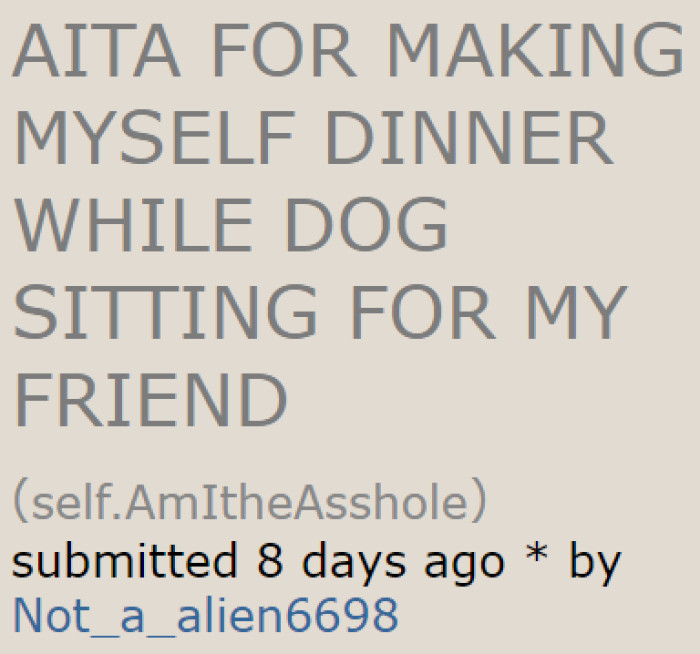
It Was the OP's Birthday When His Friend Asked Him to Pet Sit for a Dog. He Only Gets Beer and a Full Gas Tank as Payment.
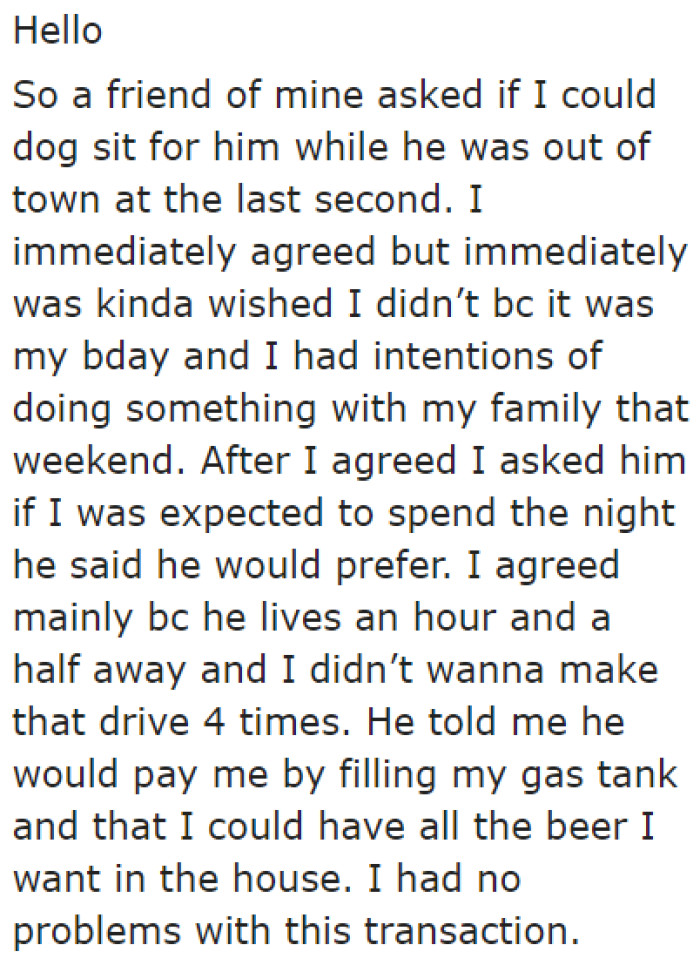
On the Night of His Pet-Sitting Job, He Got Hungry, So He Treated Himself to a Simple Quesadilla Made Using His Friend's Ingredients.
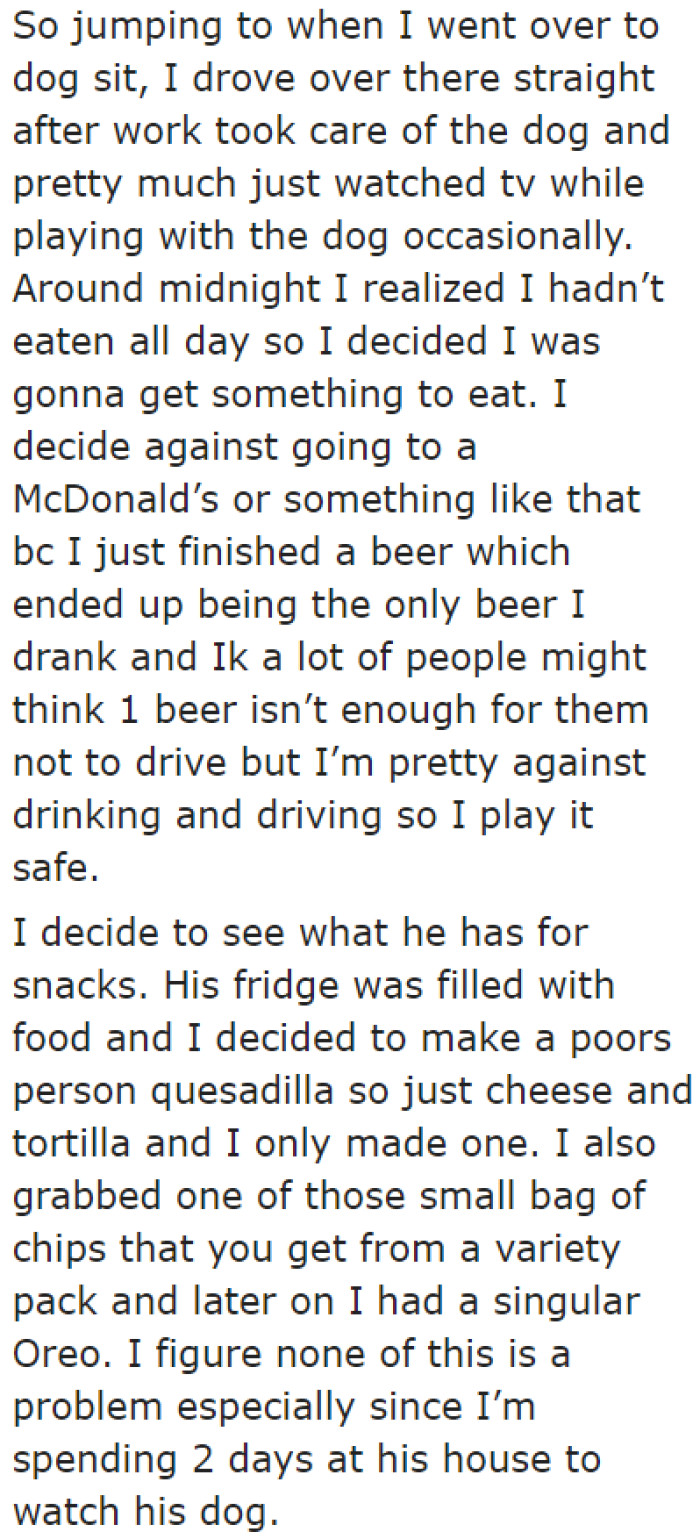
OP only got beer and a full gas tank for the overnight dog job, so the food situation was already feeling like a bargain gone sideways.
Social Norms and Behavioral Expectations
Social norms dictate acceptable behavior within specific contexts, and violations can lead to conflict or discomfort.
In this scenario, the expectation that guests respect the boundaries of the host's home is a fundamental aspect of social etiquette.
Research suggests that breaches of these norms can trigger feelings of anger or betrayal, particularly when trust is involved.
The ambiguity surrounding the food situation clearly contributed to the conflict. When a friend steps in to care for a pet overnight, it is reasonable to expect that the terms of the arrangement are understood by both parties.
In this case, the dog owner may not have communicated whether food was included in the agreement or if the sitter should provide their own. When pet sitters feel uncertain about what they can access, it can lead to feelings of entitlement or resentment, which may manifest in behaviors like taking food without asking. This scenario serves as a cautionary tale about the importance of establishing comprehensive guidelines in informal agreements.
The Friend Called Him One Day and Found Out That He Was the One Who Opened the Pack of Tortillas and Cheese.
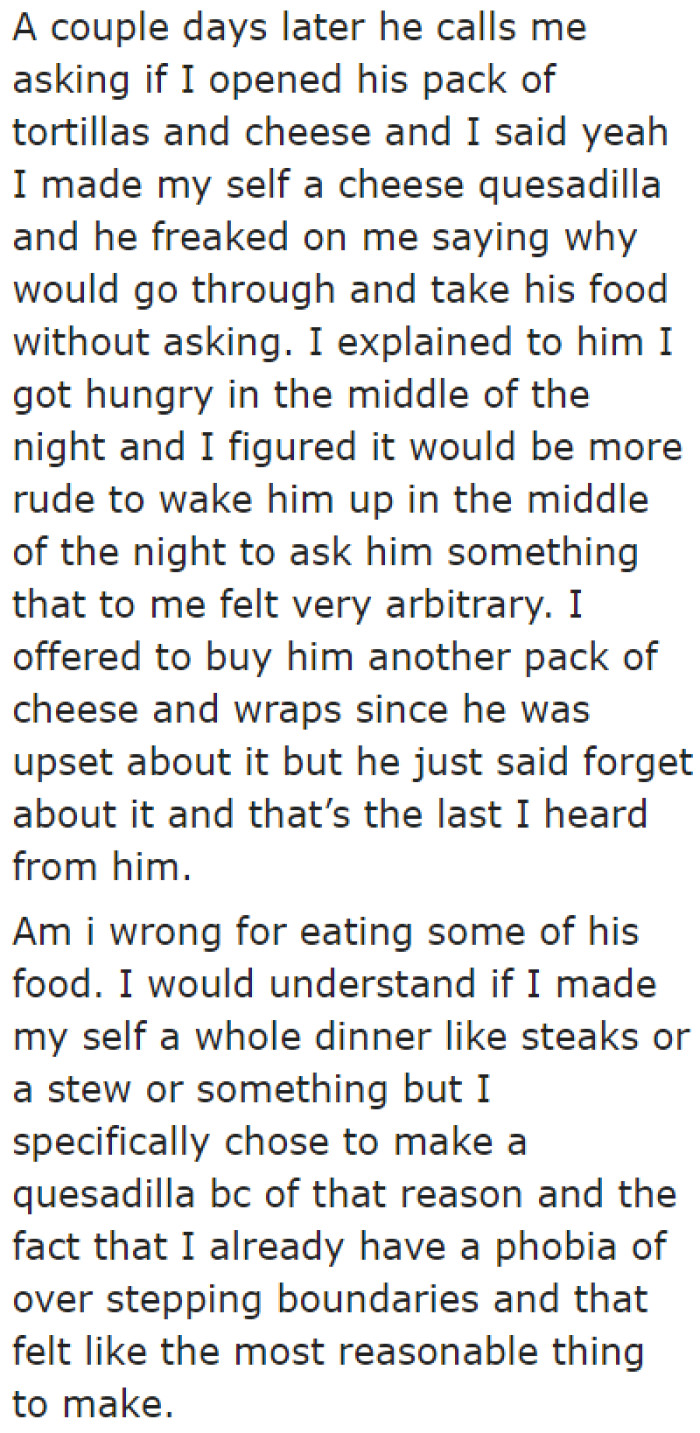
The Community Sided with the OP, Saying the Friend Isn't a True Friend.
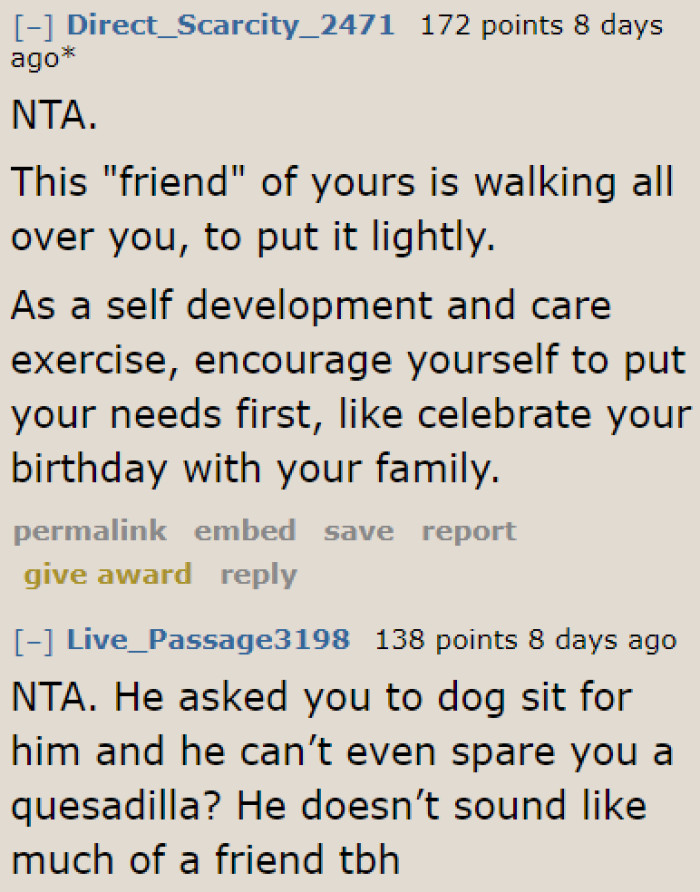
The Dog Owner Is a Cheapskate Indeed. If He Didn't Want Any of His Food Touched, He Should Have Left a Meal for the OP.
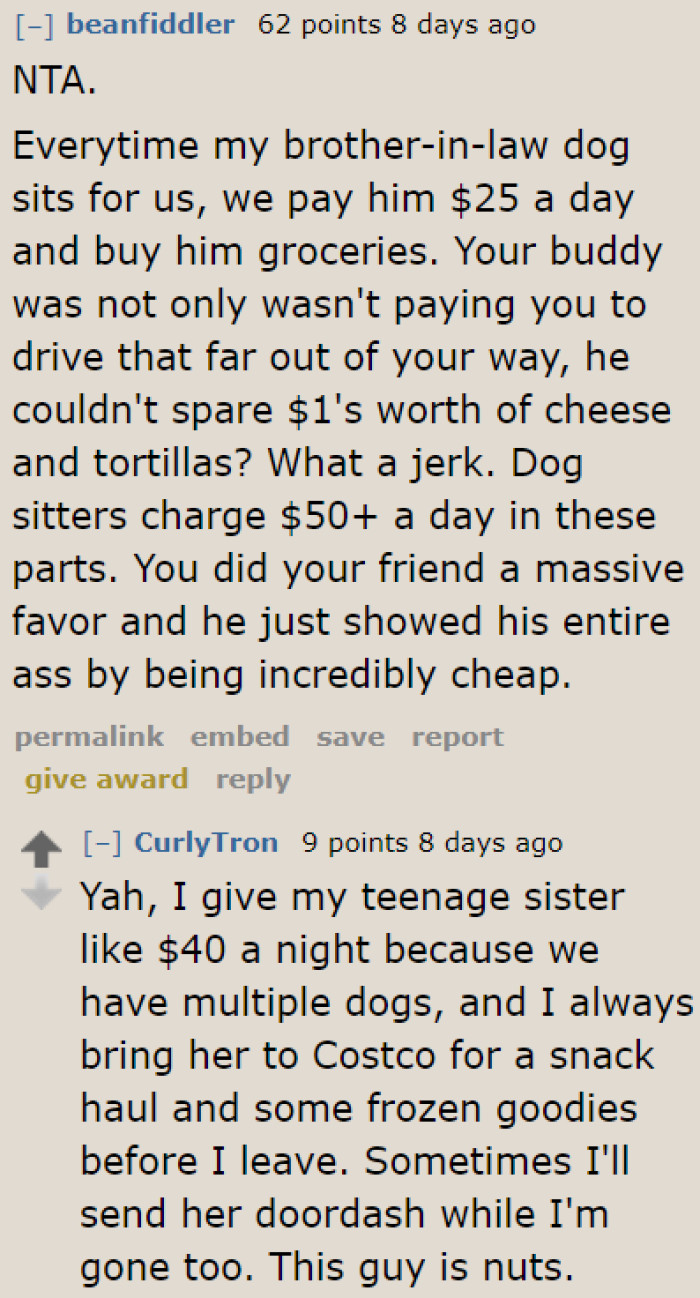
That’s when the birthday pet-sitting turned into a late-night snack run, because OP helped himself to the tortillas and cheese.
Behavioral psychologists indicate that the surprise and upset experienced by the dog owner may stem from a perceived threat to their social standing.
This reaction highlights how our social identities are often tied to our roles as hosts and caretakers, which can be disrupted when others fail to meet our expectations.
Understanding this dynamic can provide clarity on why the friend's actions felt particularly egregious to the dog owner.
This messy pet-sitting feud is similar to the AITA argument over not cleaning up after a friend’s dog.
In social settings, the concept of reciprocity plays a crucial role in relationship satisfaction. When one party feels taken advantage of, it can lead to resentment.
Why Can't the Dog Owner Spare the OP a Quesadilla?
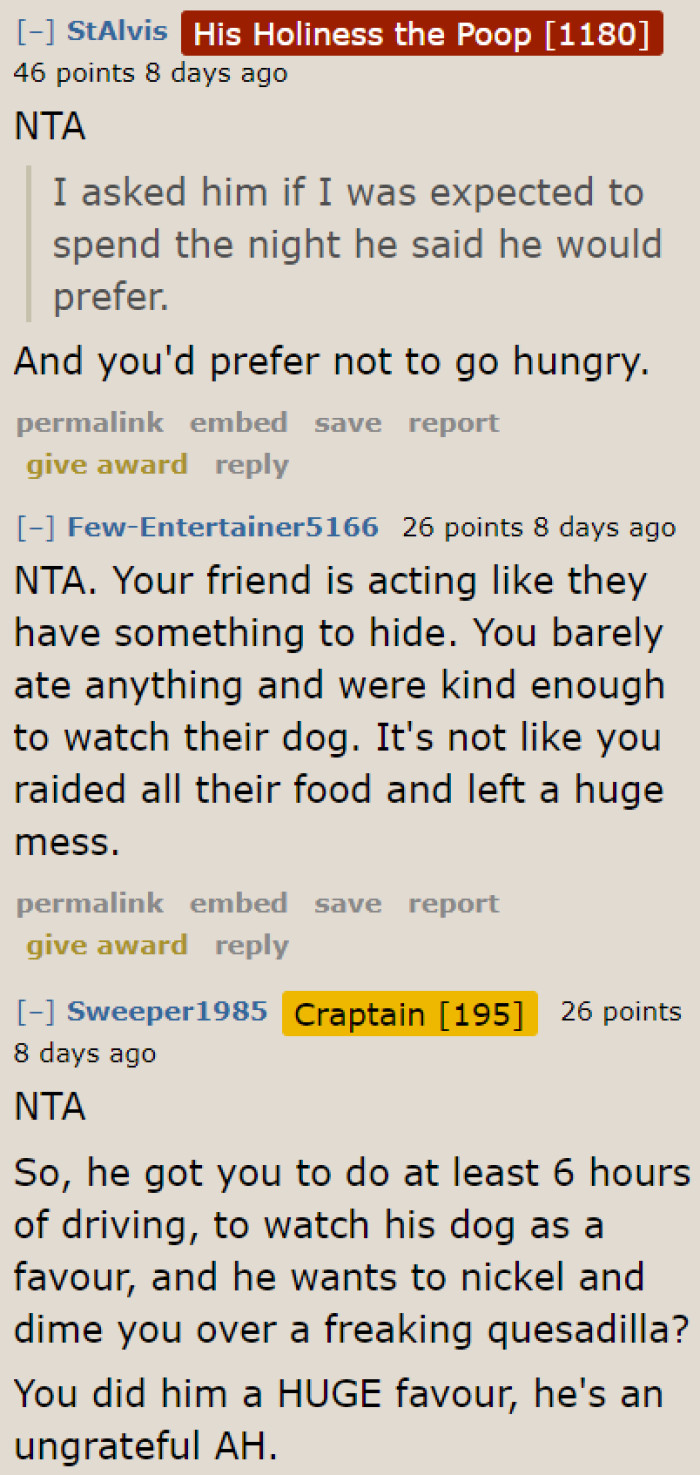
The Reaction Is Indeed Odd. Maybe He Is Hiding Something, as One User Has Pointed Out.
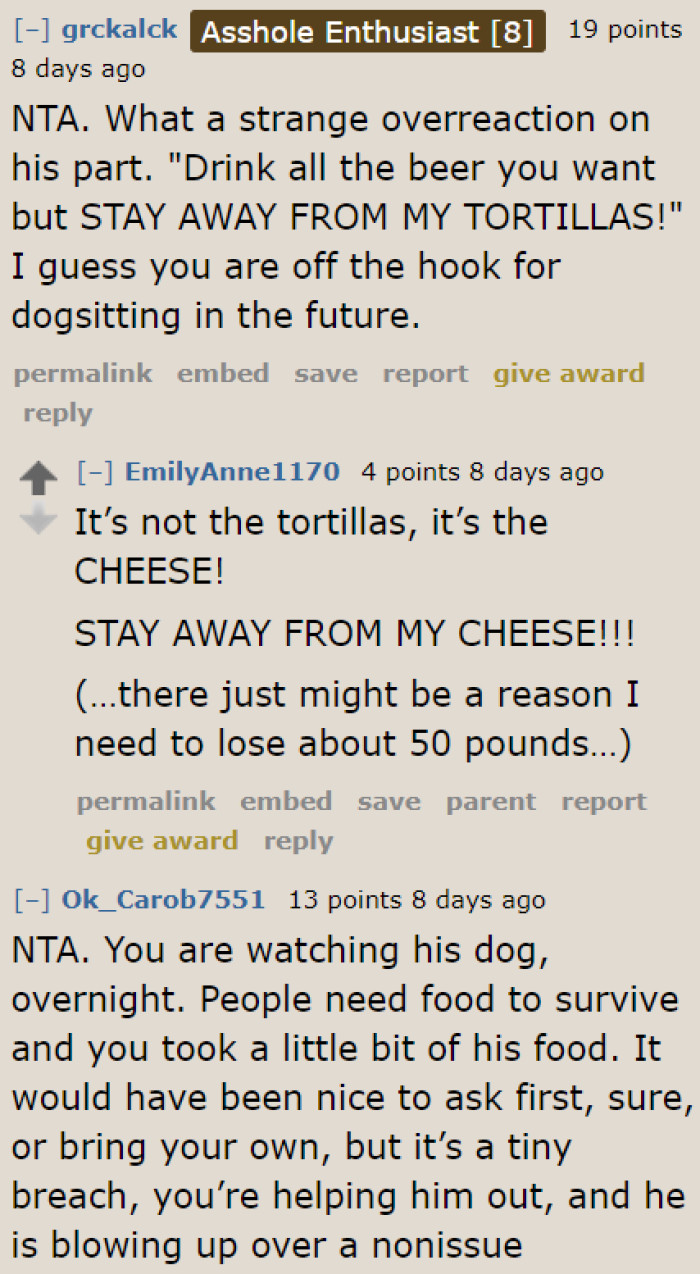
Other Dog Owners Would Allow Pet Sitters to Get Whatever's in Their Food Stash.
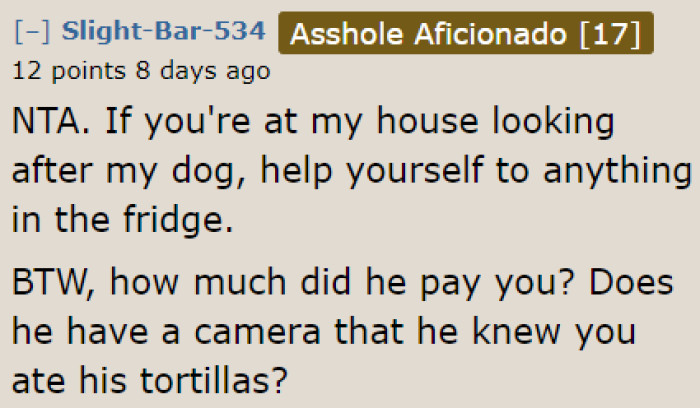
The dog owner found out later, when the friend called and mentioned the pack being opened, and suddenly it wasn’t about hunger anymore.
Addressing Conflicts Through Communication
Effective communication is essential in resolving interpersonal conflicts, particularly those rooted in misunderstandings.
Encouraging open dialogue can help both parties understand each other's perspectives and facilitate a resolution that honors both individuals' experiences.
The absence of established limits can create environments ripe for conflict.
Encouraging open dialogue about expectations can foster mutual respect and understanding.
Some Redditors Believe That What the OP Received from His Friend Wasn't Enough.
Gas and beer as payment? He should have been compensated more!
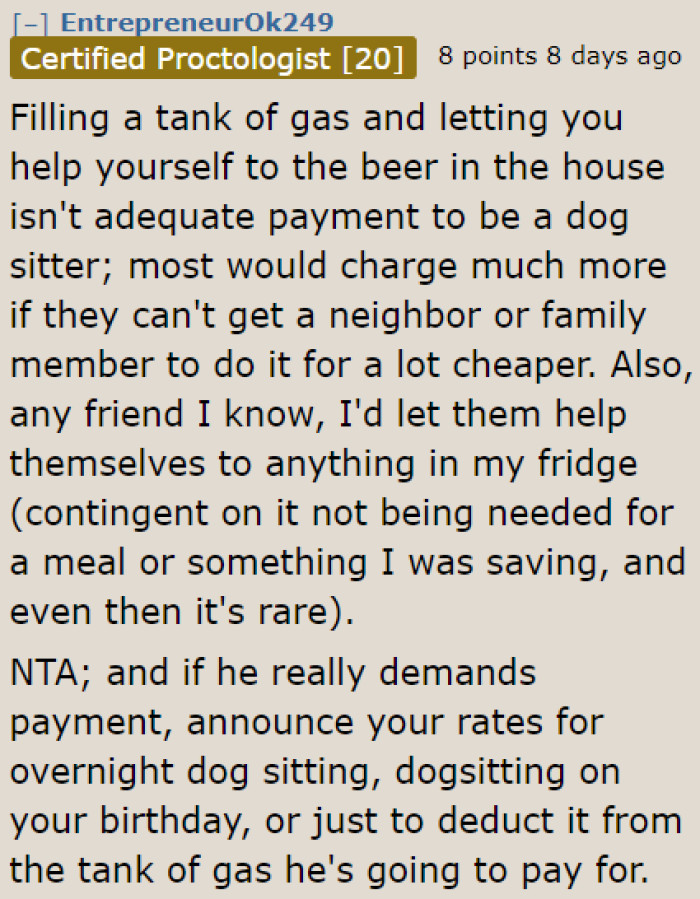
This friend took advantage of the OP. He thinks that paying for gas and giving the OP some beer would be sufficient.
On top of that, he got angry over a piece of quesadilla when it was his responsibility to ensure that a pet sitter had enough food. The OP shouldn't agree to this setup next time.
If he takes another pet-sitting job, he needs to be paid properly, and the owner also needs to cover food costs if necessary.
The community lined up behind OP, calling the friend not a real friend, and the whole thing turned into a “who actually owes what” argument.
Additionally, the role of communication cannot be overstated.
When a pet owner entrusts their dog to a sitter, both parties must have a shared understanding of what is expected, including the use of food. The incident serves as a reminder that conflicts, when navigated thoughtfully, can pave the way for stronger relationships and enhance the experience for both the pet owner and the sitter.
Conflict resolution strategies, such as active listening and 'I' statements, can foster healthier interactions.
By implementing these strategies, the dog owner and friend can work toward mending their relationship.
Trust is foundational in any relationship, and breaches can lead to significant emotional fallout.
The situation between the dog owner and the pet-sitting friend highlights the delicate nature of social norms and trust within personal relationships. When the lines of responsibility are blurred, particularly regarding food, it can lead to misunderstandings and conflict. In this case, the owner’s expectations about providing food for the sitter were not clearly communicated, which is crucial in maintaining harmony. Addressing the emotional dynamics at play can be key to resolving such tensions, as both parties may have differing views on what constitutes acceptable behavior in this arrangement.
Now OP is stuck wondering if one quesadilla was worth losing a friend.
He took the dog past the overnight window, read about the friend who kept the dog too long.
Share this article:





