
Owner Lets Snow-Hating Cat Out As Malicious Compliance, Cat Instantly Regrets Going Outdoors After Encountering Snow

Some people train their cats with treats, others with patience, and one OP apparently trained hers with pure malicious compliance. The result? A snow-hating cat that hears “no,” understands it, and still chooses violence the moment the back door opens.
Here’s the messy part, it’s snowy outside, the OP can’t just let the cat out, and her cat is known for bolting outdoors for 5 to 30 minutes right after she gets home. She warned the cat about the snow, the cat insisted anyway, and the OP decided to “comply” in the most petty way possible.
And the second those paws hit the white stuff, the dramatic regret was instant, like the cat realized the cold reality a little too late.
The OP shared how she maliciously complied with her cat's demand to go outdoors.

The OP tells the community that her cat is trained. It understands the word "no."
The cat also has a habit of heading outdoors for 5 to 30 minutes after the OP gets back home.

The OP tells everyone her cat is trained, it even understands “no,” which makes the snow tantrum feel way more personal.
The cat's dramatic regret after stepping into the snow underscores how environmental factors can heavily influence behavior. In this instance, the feline's insistence on venturing outdoors, despite its owner's hesitance, reflects an innate curiosity that often leads to unexpected consequences. This scenario is a vivid reminder of how animals, much like humans, can sometimes prioritize their immediate desires over caution. The story serves as a parallel to human behavior, where individuals frequently pursue risky paths even when aware of potential pitfalls. Just as the cat learns the hard way about the cold reality of snow, we too may find ourselves facing the repercussions of our choices.
It was snowy outside. The OP couldn't just let her cat out for obvious reasons and because it hates snow.
Despite her warnings about the snow, the cat still insisted on going out. So, the OP maliciously complied.

The cat regretted going outside as soon as it encountered the snow.

Moreover, this situation highlights the importance of understanding boundaries in pet ownership.
The OP paid cat tax to the community who demanded a photo of her pet.
EDIT: It's been pointed out that I forgot the cat tax. How silly of me.
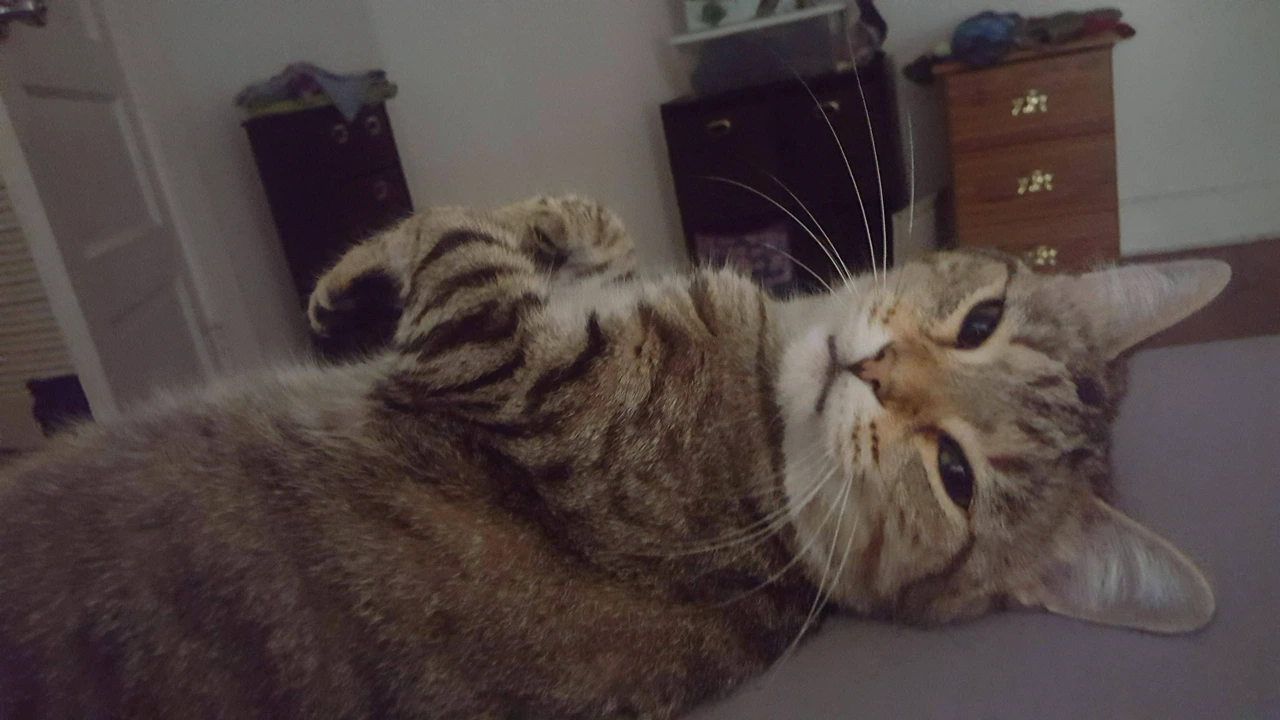
Because of the OP's malicious compliance, it seems that her cat hates her and her boyfriend.
We're pretty sure she'll get over it, though.
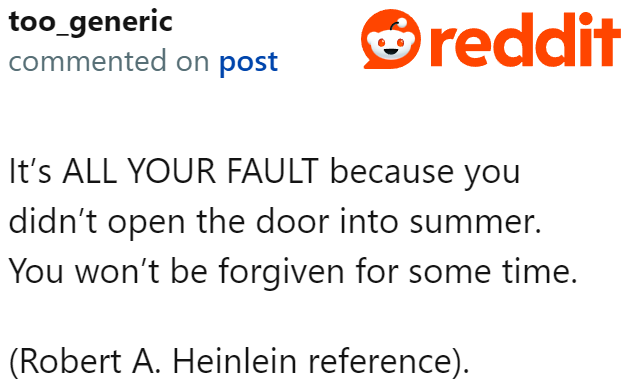
After the OP gets back home and the cat immediately tries to escape for those 5 to 30 minutes, the “no snow” rule turns into a daily standoff.
This also echoes how a Redditor made a PowerPoint to prove their mom wrong with facts.
This incident also serves as a reminder of how environmental factors can shape behavior. Studies from Stanford University indicate that pets often react based on their surroundings, and changes in environment can lead to stress or discomfort. The cat's regret after encountering snow highlights the importance of creating safe and comfortable environments for pets.
Pet owners should be mindful of their animals' preferences and behaviors, allowing them to make choices that prioritize their well-being.
Some cats sure are demanding!
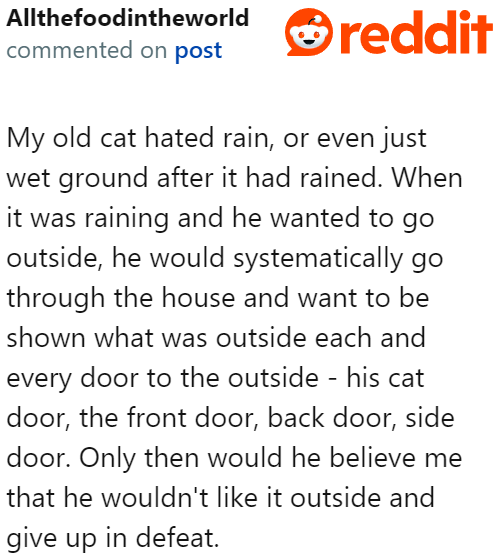
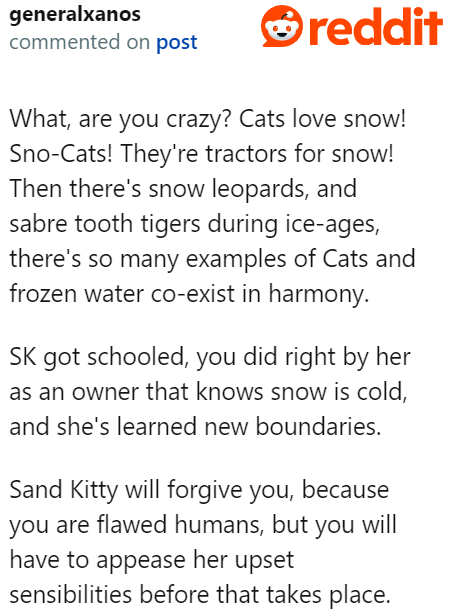
Then comes the malicious compliance, the OP couldn’t stop the outdoor demand, so she basically let the cat learn the lesson itself.
In this amusing story, Sand Kitty's insistence on going outside despite the snowy conditions leads to a hilarious turn of events. Despite already being trained, cats still have an unpredictable nature.
Those quirks and silly antics are the reasons why it's such a fun and fulfilling experience to have a pet to take care of. The cat might be annoyed at the OP's malicious compliance for now, but it'll get over it.
Sooner or later, it'll be playing with the OP and her boyfriend. But it probably won't be hanging outside for a while.
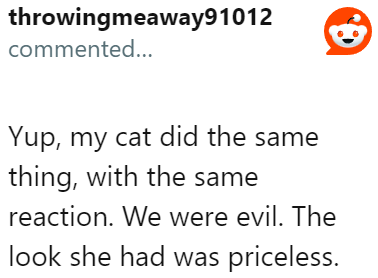
Apparently, there are cats out there with the same attitude as the OP's pet.
One user was a fan of the cat's name: Sand Kitty.
According to the OP, the cat's name suits its color.

The cat regrets it the moment it hits the snow, and somehow that’s when the whole “cat also hates OP and her boyfriend” theory starts making the rounds.
Additionally, understanding the psychological aspects of pets can help owners foster better relationships with their animals.
This feline fiasco highlights the complexities of animal behavior and the significant role that environment plays in shaping their experiences. The owner's decision to comply with the cat's persistent demands for outdoor access serves as a reminder that even the most assertive pets can face the consequences of their choices. The instant regret displayed by the cat after encountering snow illustrates the delicate balance of setting boundaries while also catering to their emotional needs. By fostering positive interactions and understanding their pets better, owners can enhance the bond they share, turning moments of compliance into opportunities for growth and connection.
Now the OP has a cat that understands “no,” it just refuses to respect it when snow is involved.
Want another safety rule broken, read about the pet sitter letting a cat out without a leash.
Share this article:





