Noisy Cat Gets Told To Shut Up Plenty Of Times, But Instead Of Keeping Quiet She Ends Up Thinking 'Shut Up' Is Her Name

One noisy cat turned a simple scolding into a full-blown identity crisis. After hearing the same phrase over and over, this Reddit user says his cat started acting like it was her actual name.
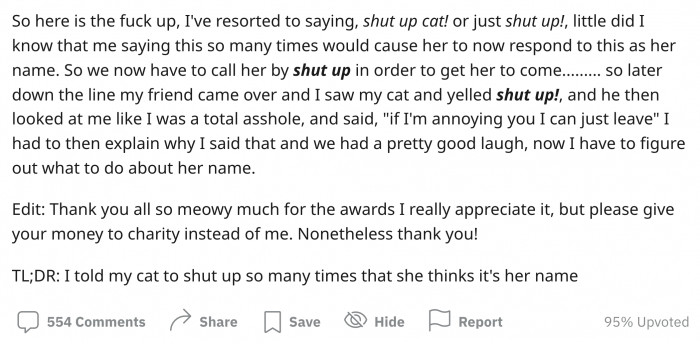
The story comes from a TIFU post by Elvesareop, who says his cat was so loud that he kept telling her to shut up. That repeated phrase eventually stuck, and the cat began responding to it like it belonged to her.
It is a ridiculous little mix-up, and the comments only make it funnier.
According to the owner, Luna, their cat is so noisy.
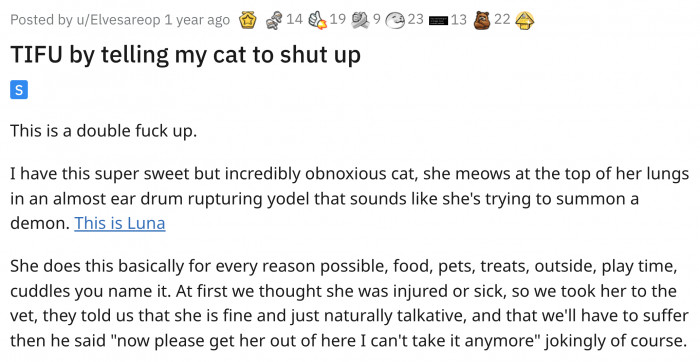
To add insult to injury, the cat owner's friend thought that he was being told to shut up. But the truth is that the original poster was just calling the cat.
Luna, the cat who thinks that Shut Up is her name.
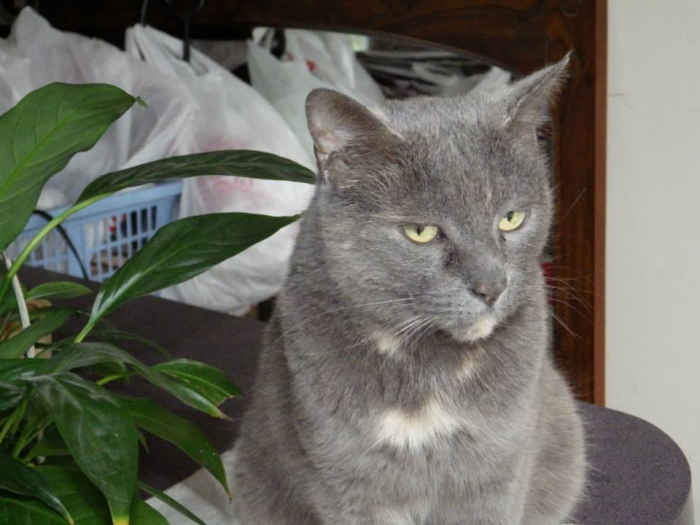
In this case, the cat’s vocalizations reflect her desire for attention and interaction, rather than a true understanding of the phrase 'shut up.'
Research shows that animals often interpret human cues in ways that serve their social needs, leading to misunderstandings.
The antics of the cat in this story illustrate the often humorous disconnect between human language and animal comprehension. Despite the owner's repeated requests for silence, the cat seems to interpret the phrase "shut up" as its name, revealing a comical misunderstanding of communication. This incident not only entertains but also sheds light on the intricate dynamics of interspecies interaction. The cat’s behavior exemplifies how pets can develop their own interpretations of the words and phrases we use, often leading to unexpected and amusing results. As such, this scenario encourages pet owners to reflect on the ways in which their pets perceive language, ultimately enhancing the bond they share.
Redditors started talking about what name they ended up with.

Ghost Get Down and Jesus CAT
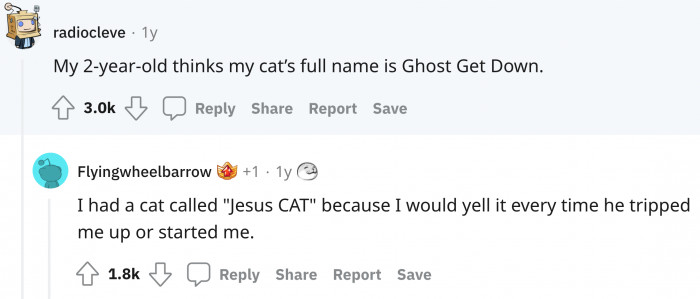
Some also ended up with really long names.

Moreover, it’s essential to recognize that pet behavior is often influenced by their environment and the interactions they have with their owners.
This suggests that reinforcing certain behaviors, even inadvertently, can lead to unexpected outcomes, such as a cat adopting a humorous 'name.'
Moreover, the concept of operant conditioning can help explain the cat's behavior.
Apparently, other Redditors can relate to the original poster's situation.
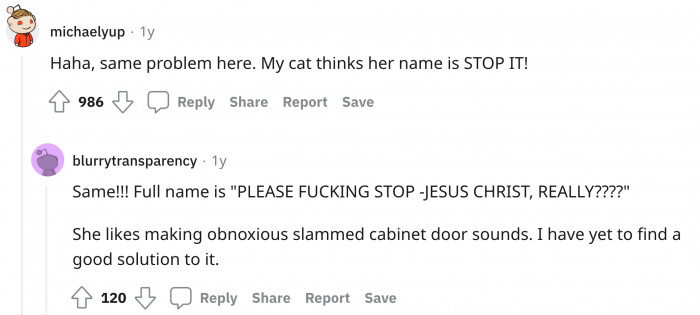
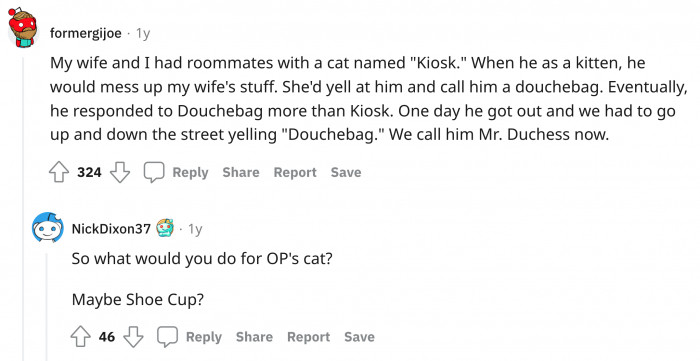
A user found another name that sounds like the name their cat ended up recognizing.
Thus, Douchebag became Mr. Duchess. Perhaps Luna's owner can do the same, as suggested by another commenter.
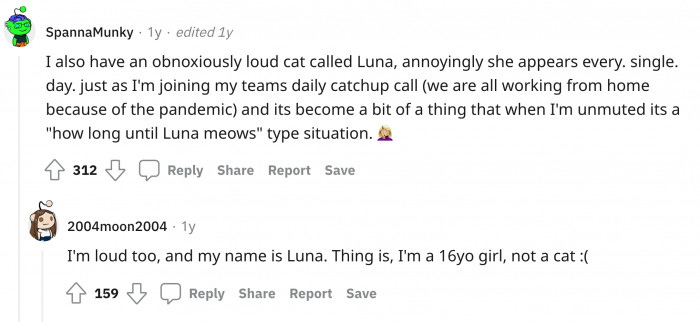
It seems that cats and people named Luna have a noisy personality.
Positive reinforcement is a well-established principle in animal behavior training.
Rewarding desired behaviors can lead to an increased frequency of those behaviors over time.
In this case, the cat may have learned that vocalizing leads to attention, reinforcing the behavior more than any other.
Effective communication is essential in developing a strong bond with pets.
One user is a fan of the name
And then apparently there's a dog named Sit. Poor dog.

Then there are also cats named Shitty Kitty.
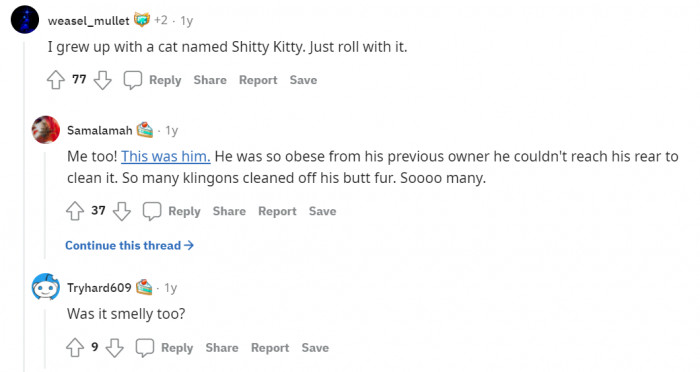
Oh no...

Additionally, understanding the psychological principles behind animal training can help pet owners create more effective communication strategies.
Studies indicate that clarity in commands and consistency in responses are crucial for successful training.
This is the same energy as a cat owner giving “nasty” term-of-endearment nicknames that other pet parents thought were brutal
Interestingly, the expectations we have for our pets can shape their behavior.
We wonder if he still lives up to his name.
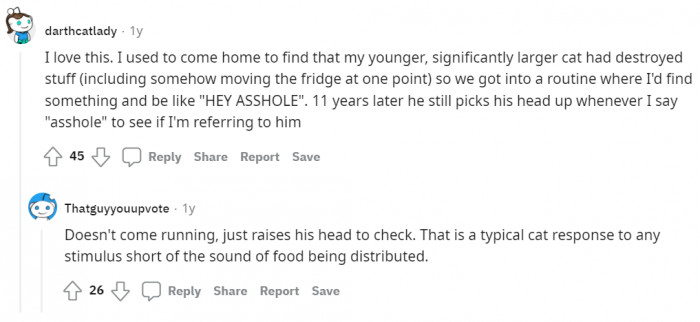
We're also wondering why.
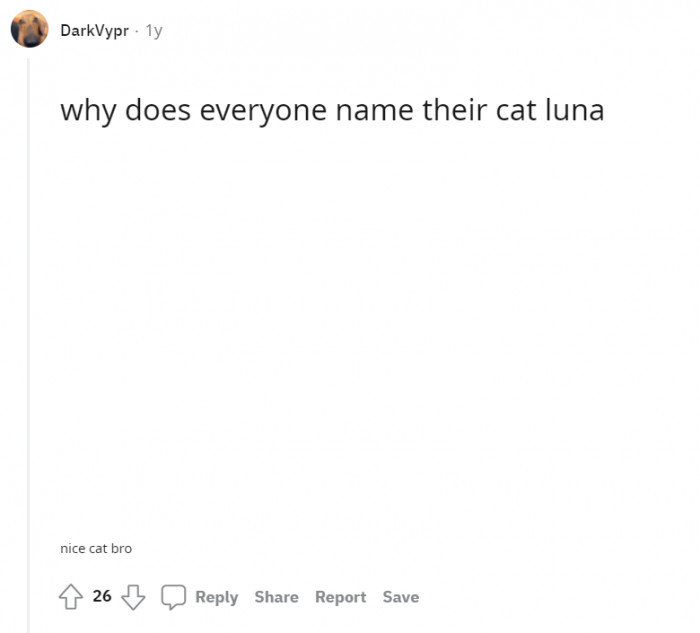
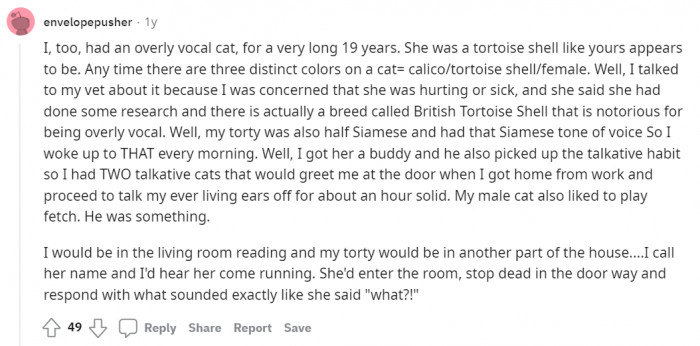
Just a cat owner with two super talkative cats.
To foster positive behaviors in pets, owners can set up an enriching environment that promotes play and interaction.
Training pets using positive reinforcement techniques can significantly enhance their learning experiences.
Even the adorable cats can be overly vocal too.
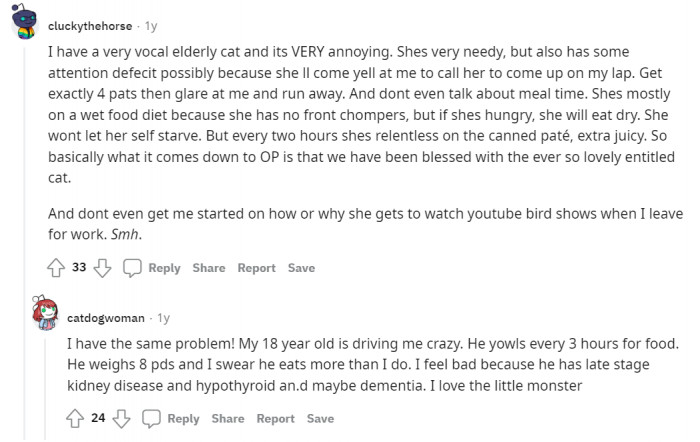
She does, doesn't she?
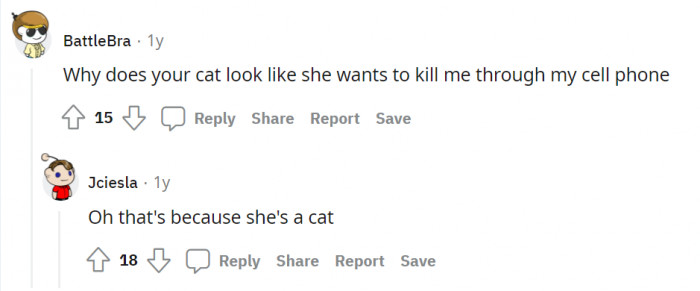
This cat owner learned his lesson from another person's experience.

Moreover, it's essential for owners to be patient and understanding of their pets' needs.
By fostering a supportive environment, pet owners can cultivate a stronger bond with their animals.
Furthermore, understanding animal behavior can improve owners' emotional well-being.
That's scary indeed!

We also have DAMMIT DOG.

Our pets can annoy the hell out of us sometimes. And in those situations, we tend to overuse expressions to stop their mischief.
Unfortunately, by saying those phrases all the time, our beloved pets can mistake them for their names. You've seen it in the posts we've shared today.
If you have a pet, then it's probably best not to use the same phrase over and over again to stop their bad behavior. Otherwise, your pet will end up recognizing that as their name.
Patience is a crucial trait for successful pet ownership. Animals, like humans, learn at their own pace, and understanding this can prevent frustration.
Moreover, this patient approach can lead to a deeper emotional connection between the pet and owner, enhancing the overall bond.
The story of the cat who misinterprets "shut up" as her name highlights the complexities of feline behavior and communication. This amusing yet telling situation reflects the importance of how pets perceive the words and tones we use around them. Instead of growing frustrated, the cat's owner could consider employing positive reinforcement techniques to guide her understanding of commands and names more effectively.
This incident underscores how critical it is for pet owners to recognize that animals are not just passive recipients of our language but active participants in their environments. Building a nurturing and communicative relationship with pets requires patience and a keen awareness of their responses to our words. The outcome is not just a quieter household but a deeper bond that enhances the overall companionship between human and feline.
Effective communication is key to building a strong relationship with pets.
Understanding animal body language and vocalizations can enhance interactions between pets and owners.
By paying attention to these cues, owners can respond more effectively to their pets' needs, improving overall behavior.
Ultimately, it's crucial for pet owners to embrace the learning journey that comes with animal companionship.
The story of the noisy cat who believes "Shut Up" is her name illustrates the intriguing complexities of communication that exist between pets and their owners. This amusing scenario highlights how our words and phrases can be interpreted by our feline companions, often in unexpected ways. As the cat continues to vocalize, despite being told to quiet down, it underscores the importance of understanding the dynamics of pet communication.
Recognizing these quirks not only enhances our relationships with our pets but also informs more effective training strategies. This cat's misunderstanding serves as a reminder that fostering a positive environment, one that appreciates the unique personality of each animal, can profoundly deepen the bond we share with them.
Share this article: