Lady Refuses to Let Boyfriend's Family Pets into Their Home, Gets Termed Germaphobe

A 28-year-old woman refused to let her boyfriend’s family bring their pets into their shared apartment, and somehow that turned into her being labeled a “germaphobe.” And honestly, the whole thing sounds like it should be simple, until you realize the pets are not exactly house-trained like they’re living in a magazine spread.
OP genuinely loves the animals, but she’s not thrilled about the reality: occasional accidents on the floor, fur tracking in, and the idea of them running around their home like it’s a free-for-all. Meanwhile, her boyfriend is totally fine with it, and he’s also not buying the “pet care is ridiculous” argument his family seems to be pushing. So when the family shows up with the pets, the disagreement stops being about animals and starts being about what “home” even means to each of them.
Here’s the full story, and it gets messy fast.
The OP writes...
Their animals are not super well potty trained and sometimes have accidents on the floor.

OP loves these animals, but she doesn't like the idea of them running all over their apartment.

The recent situation involving a woman refusing to allow her boyfriend's family pets into their home underscores the complexities of differing values within relationships. The article illustrates how such conflicts often reveal deeper fears and insecurities shaped by individual backgrounds. For instance, the woman’s strong preference for a clean living environment clashes sharply with her partner's view of pets as essential family members. This fundamental disagreement not only highlights the tension that can arise from contrasting lifestyles but also raises questions about compatibility in values.
It is essential for couples facing similar dilemmas to engage in open and honest discussions about their feelings. Acknowledging each other's perspectives can pave the way for understanding and compromise, which are vital for navigating the intricacies of shared living spaces. The emotional stakes are high when it comes to what makes a home comfortable, and finding common ground is critical for the relationship's health.
He doesn't have a problem with fur or germs trekked in from the outside.
OP won't be comfortable in her own home if this is allowed to happen.
They see the idea of paying for pet care as ridiculous.

The boyfriend’s family wants their pets in the apartment, and OP is already thinking about the accidents she’s trying not to deal with.
A couple could follow a structured approach, like creating pet-free zones or designated pet times, to address cleanliness concerns while allowing for pet inclusion.
This kind of collaborative problem-solving fosters empathy, as both partners feel heard and respected. Additionally, actively discussing potential solutions can help avoid resentment and misunderstandings in the future.
OP has offered the following explanation for why they think they might be the a-hole:
(1) Not allowing my boyfriend's family to bring their pets into our shared home. (2) Opposing the status quo in the family regarding bringing pets into each other's homes and creating an inconvenience for them that they wouldn't normally have.
And the comments roll in...

Neither of them is wrong.
They should have a discussion about sanitation first.

OP explains she would not feel comfortable in her own home if the pets roam around freely.
Cultural Influences on Family Dynamics
This can manifest in relationships where one partner feels obligated to adopt the family's values, causing friction.
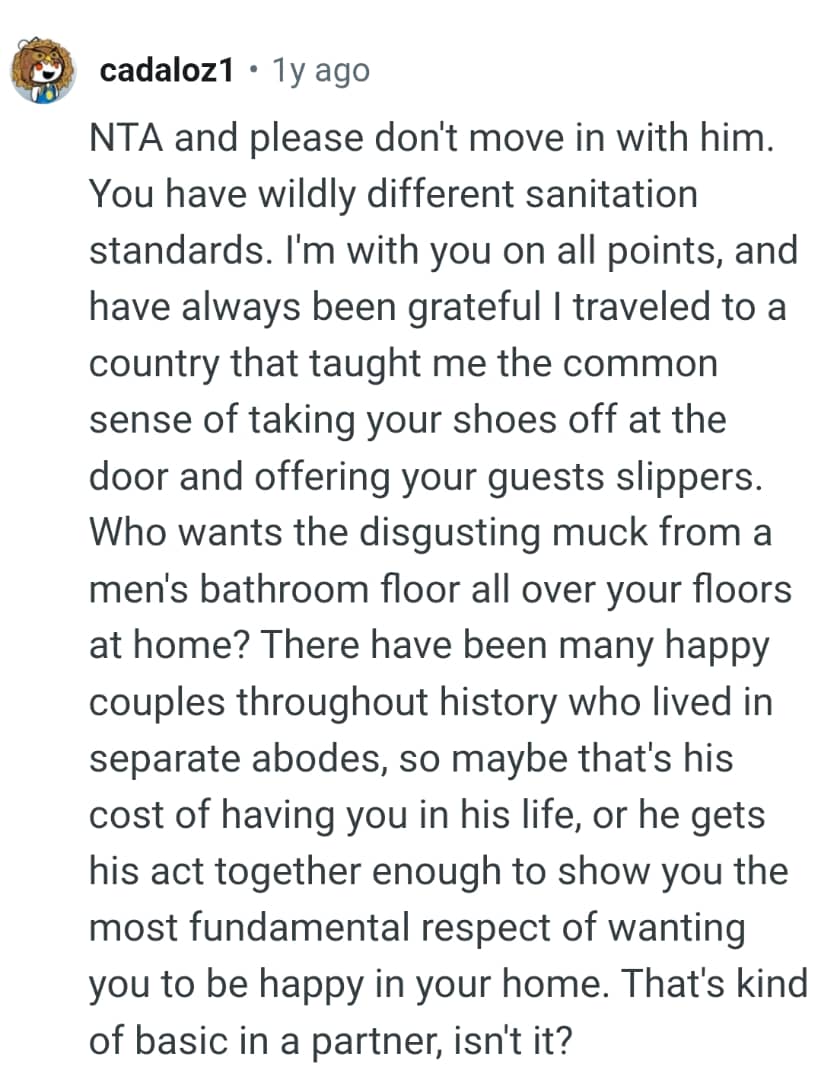
This Redditor understands why people don't allow shoes indoors.
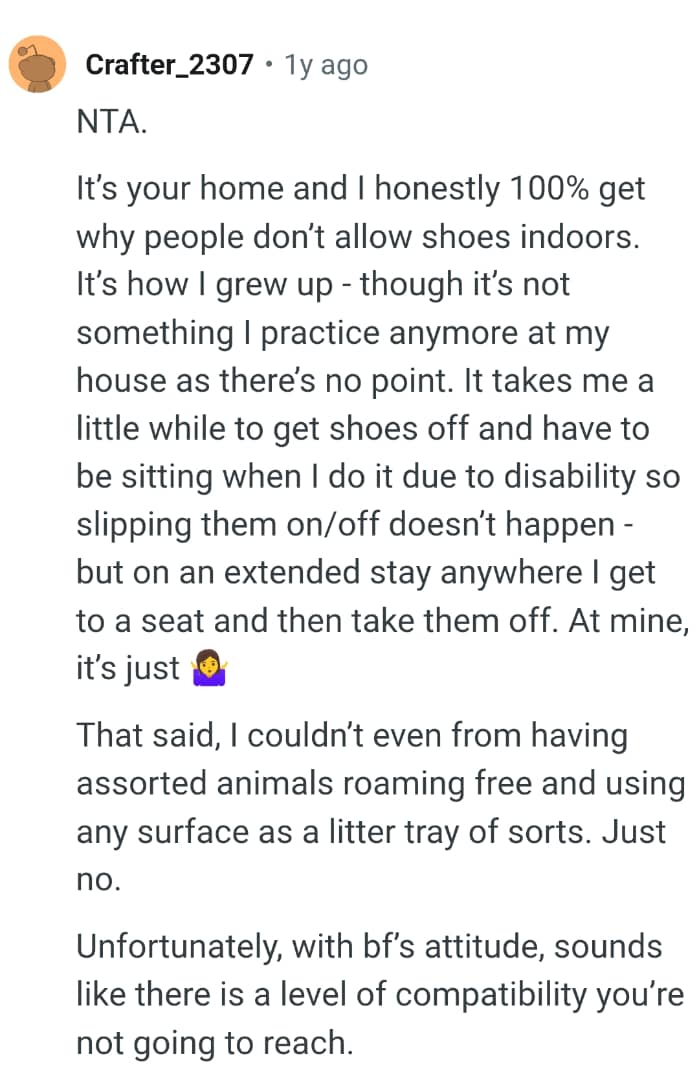
They are both ignoring some major differences.

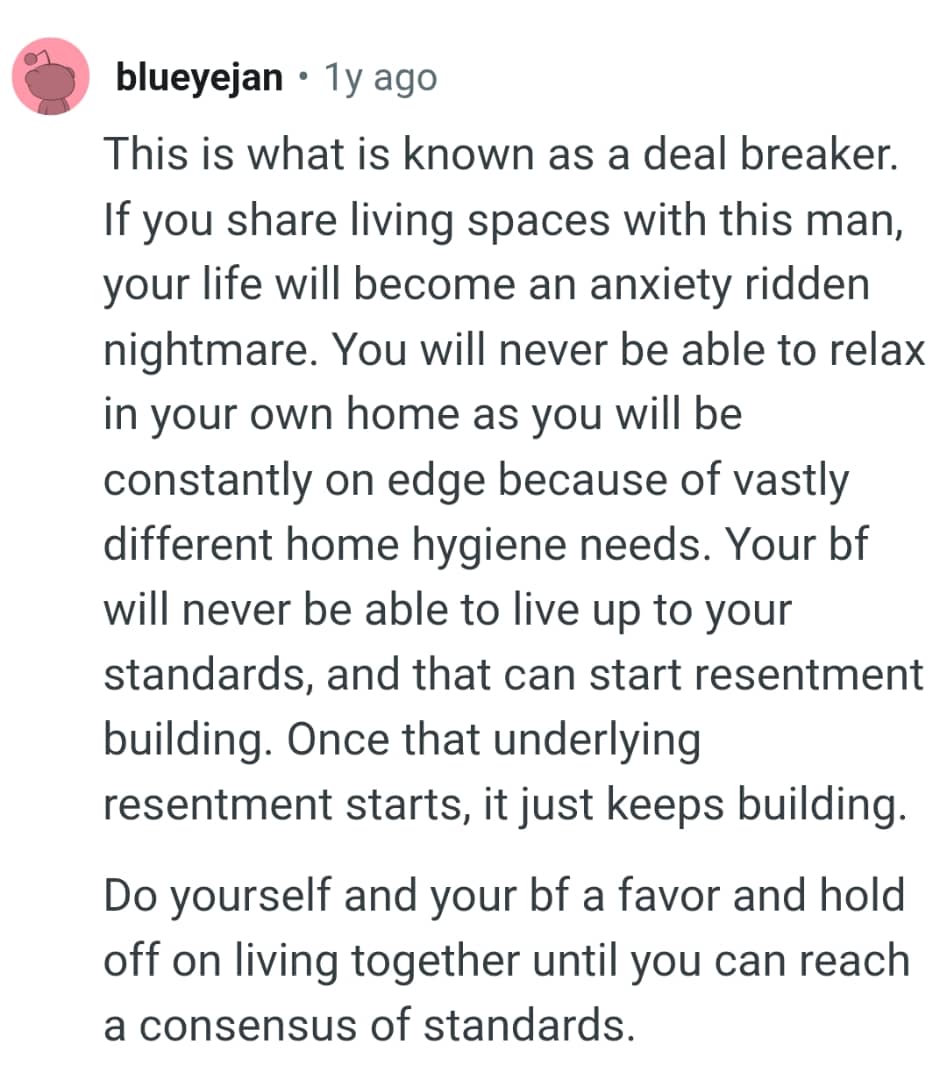
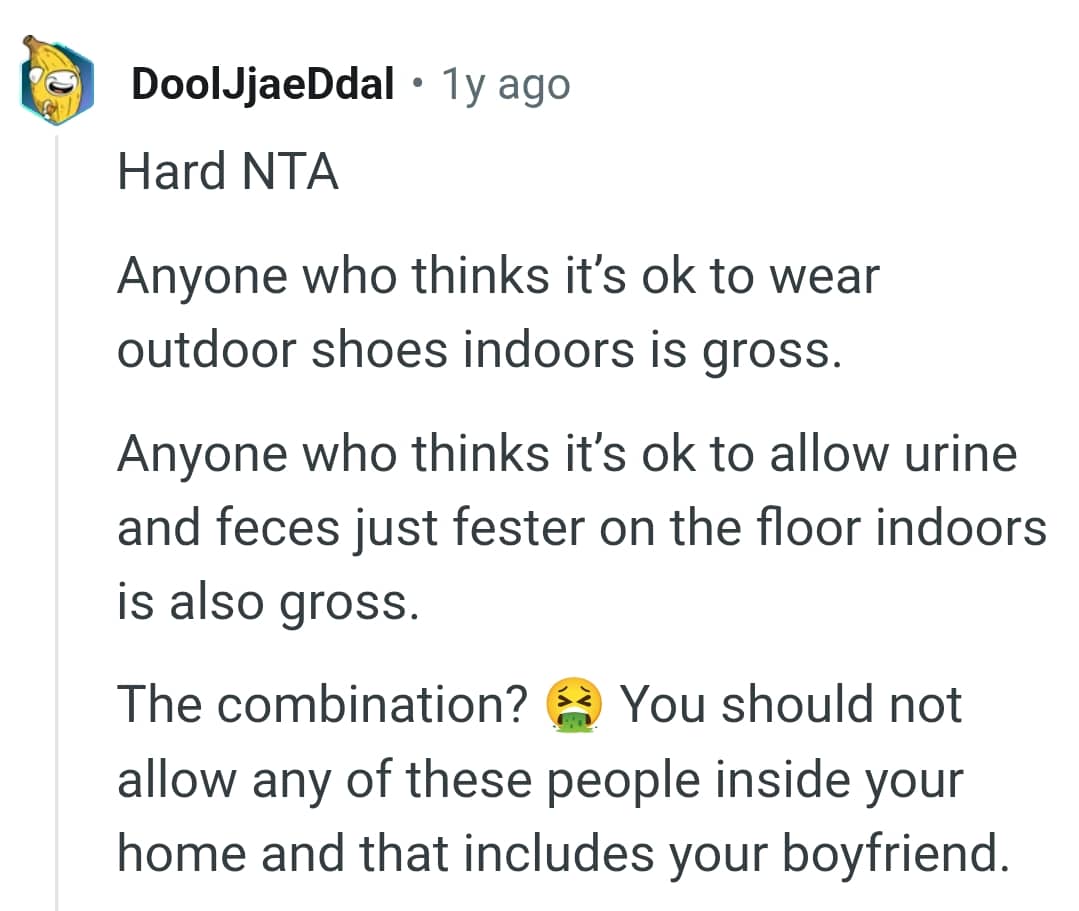
This is what is called a deal breaker.
The dynamics of this relationship highlight how upbringing shapes our perceptions and comfort levels, particularly when it comes to pets in the home. The article illustrates a key conflict where one partner's reluctance to welcome the boyfriend's family pets is rooted in their past experiences. This resistance may stem from how pets were treated during their formative years, suggesting a deep-seated discomfort that is not merely about cleanliness but rather a reflection of their childhood environment.
By delving into these personal histories, the couple could cultivate a deeper understanding of each other's perspectives. This exploration is essential for fostering empathy and finding a compromise that respects both individuals' boundaries, ultimately leading to a more harmonious living arrangement. In situations like this, recognizing the significance of past experiences can transform conflict into an opportunity for connection and growth.
This feels like the wife who let her husband’s sick ex-wife move in, but refused seven cats.
That's how it's going to be if you want pets.

OP's boyfriend won't ban animals from their place.
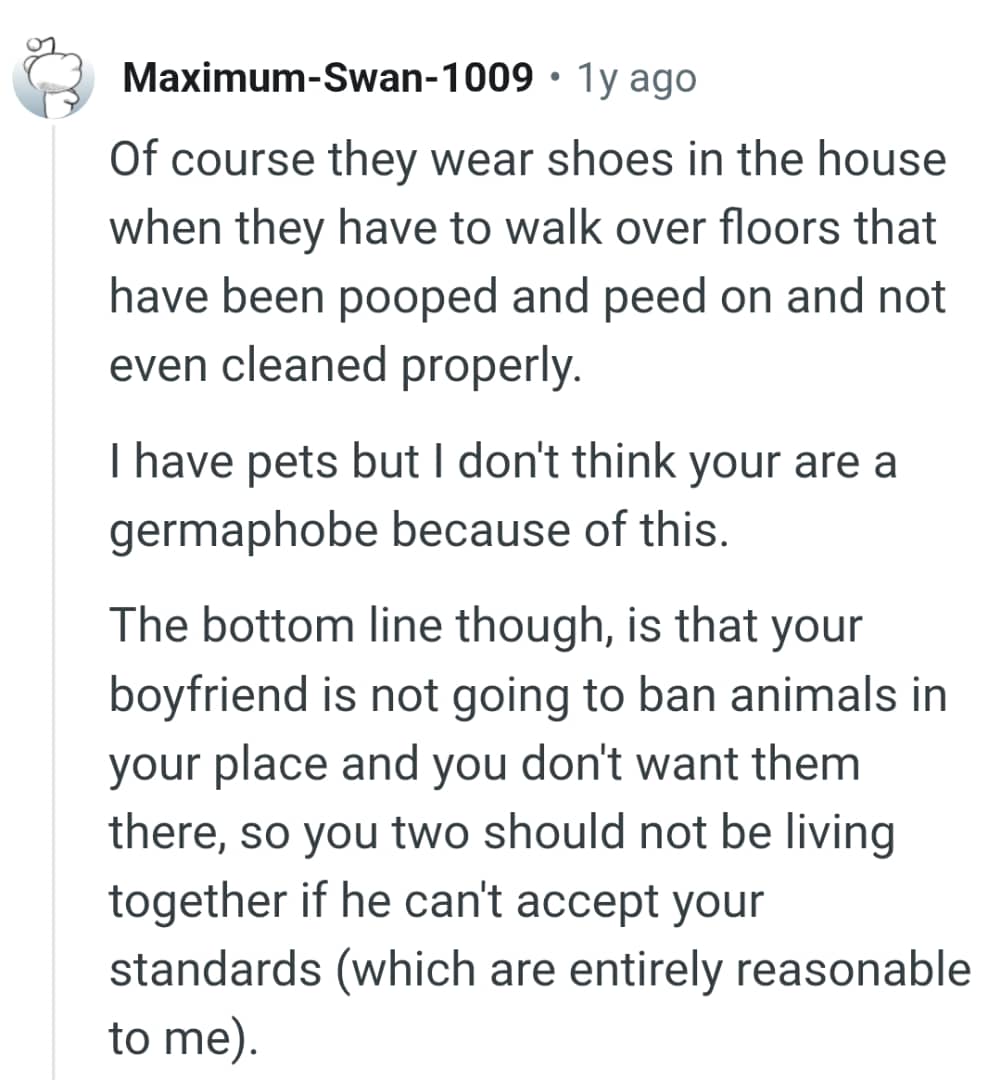
The OP didn't say they weren't compatible.

Then the couple’s real clash hits, because he’s cool with fur and germs, but she sees paying for pet care as non-negotiable nonsense.
Recognizing the emotional underpinnings of cleanliness can help couples approach the issue with compassion, allowing them to negotiate shared responsibilities and standards more effectively.
All of the OP's points are genuinely reasonable.

Pet messes on the floor are totally unacceptable.
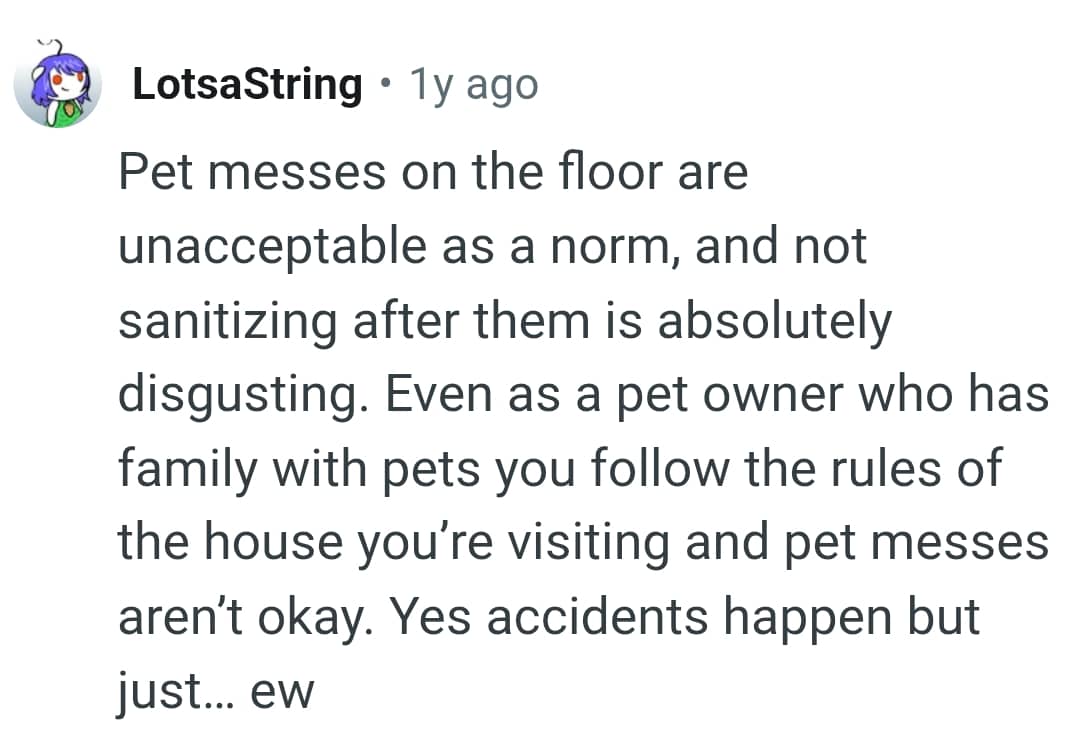
This Redditor is making a good point.

When navigating differences in a relationship, it’s crucial to approach conversations with curiosity rather than judgment. This method not only fosters understanding but also encourages partners to express their feelings freely.
Listening actively can lead to creative solutions and a more fulfilling partnership. This approach creates an environment where both partners feel valued and respected, paving the way for compromise.
There have been many happy couples throughout history.
It's appalling he thinks that way.

They will not live together comfortably.

By the time the “not allowing the pets” decision lands, OP is the one getting called the problem by everyone involved.
Future Considerations for Healthy Relationships
To avoid similar conflicts in the future, establishing early dialogues about household expectations can be beneficial.
It's not the AH for this Redditor.
As this couple goes through their delicate relationship, they're forced to confront the reality that love alone may not be enough. The decisions they make now will set the tone for their future together.
Will they find a way to reconcile their differences, or will the tension between them become a permanent fixture? The story serves as a poignant reminder that relationships are a delicate balance of give and take, and that sometimes, the smallest issues can become the most significant challenges.
Only time will tell if their love can overcome the obstacles ahead.
This situation highlights how deeply personal values can clash in relationships, especially when it comes to comfort and hygiene. The OP's strong preference for a pet-free home likely stems from a desire for control and cleanliness, which can often tie back to underlying anxiety or a need for order. On the other hand, her boyfriend’s dismissal of her concerns may reflect a sense of loyalty to his family's norms, showcasing how familial influences shape our expectations and behaviors in romantic partnerships.
Ultimately, the complexity of relationship dynamics necessitates open communication, empathy, and compromise.
Now he’s stuck wondering if his apartment rules are worth losing OP over.
Wait until you see the girlfriend who made her BF dump his dog before moving in.
Share this article: