
Redditor Asks If They're An A**hole For Not Punishing Their Dog More When It Fights Back Against Their Mom's "Little Rat Dog"

A 28-year-old woman refused to take the blame for her mom’s dog drama, and now she’s stuck in a Reddit debate over who should be punished when the “little rat dog” fights back.
The situation is messy because the dogs are wildly different sizes. OP says the tiny dog storms over crying to their mom, then their mom starts yelling at OP to “control your dog,” even though OP insists the bigger dog is only reacting after being bothered.
Now OP is asking if they’re an a-hole for not punishing their dog harder, and the comments are not letting anyone off easy.
The OP recently shared a story about a dilemma they're facing with their mother's dog.
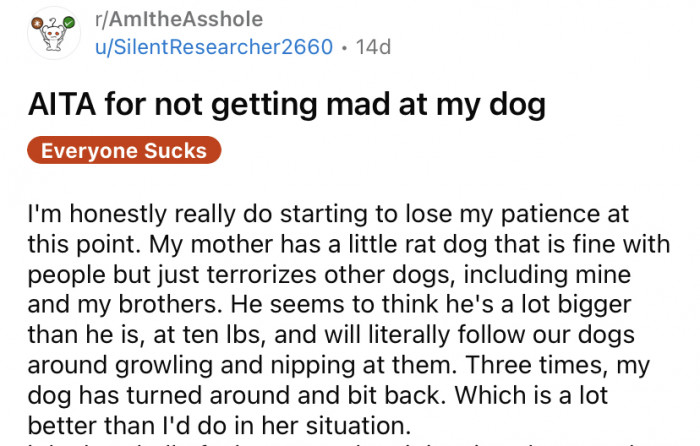
Because of the size difference of the dogs, OP says it looks much worse when it happens than it actually is.

The little dog will run crying to OP's mom, who will then scream at the OP to control their dog.

The Redditor's situation with their mother's 'little rat dog' highlights a common behavioral issue in pets, where perceived threats lead to aggressive behavior.
This fear-based aggression can be exacerbated by the owner's reaction to the dog's behavior, creating a cycle of anxiety and aggression that can be challenging to break.
The dynamics of canine behavior can often mirror human interactions, particularly when it comes to aggression. In this case, the OP's mother's dog may be exhibiting aggressive tendencies as a response to perceived threats or discomfort, which can lead to conflicts between the two dogs.
Here's how people reacted.
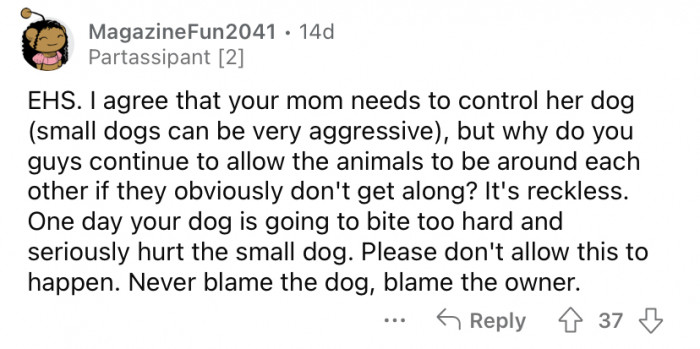
"It sounds like natural consequences."

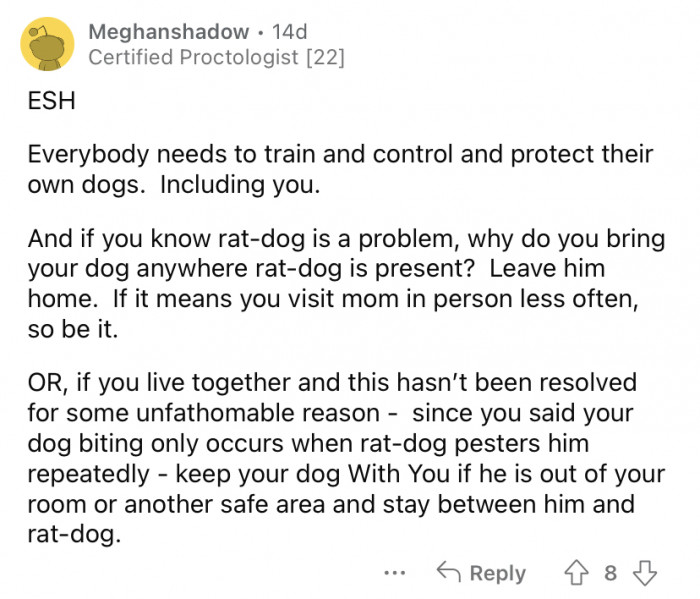
"You all need to train your dogs."
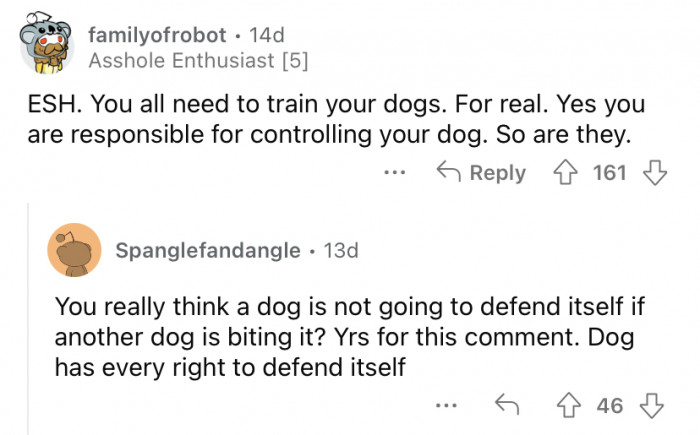
OP’s mom hears the “little rat dog” whining and immediately flips the script, blaming OP instead of the moment that started it.
Research has shown that dogs communicate their discomfort and fear through various signals, such as growling or snapping.
In the realm of pet ownership, the ability to interpret a dog's body language and behavioral signals is paramount in mitigating potential aggression. The Reddit story illustrates a common situation where misunderstandings can lead to conflict between animals. The Redditor's reluctance to punish their dog for fighting back against the "little rat dog" reflects a broader issue many pet owners face. Often, owners overlook signs of stress or discomfort in their pets, which can spiral into aggressive encounters if not properly managed. By promoting education on canine body language, owners can learn to navigate these interactions more effectively, potentially preventing unnecessary confrontations and fostering a more harmonious household.
"Why do you all have dogs without the relevant training?"
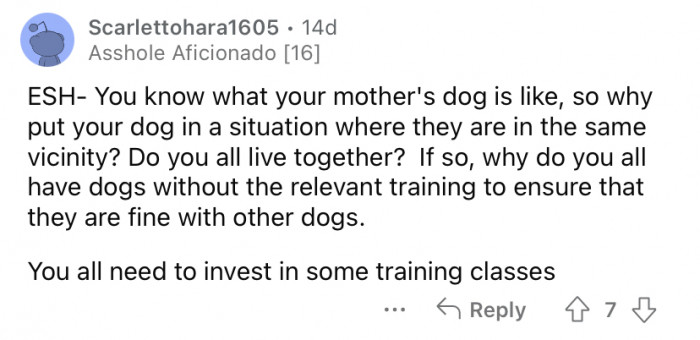
So many questions.

Everyone sucks here!
The environment plays a significant role in shaping a dog's behavior. Research from the University of California, Davis, indicates that dogs raised in stable, positive environments are more likely to develop secure attachments and exhibit balanced behavior.
Conversely, dogs in chaotic or stressful environments may develop anxiety or aggression, particularly if they feel threatened by other animals.
When the smaller dog runs to OP’s mom like it’s a witness in court, the whole house turns into a blame game.
Interestingly, the behavior of the dog's owner can significantly influence canine aggression. Research from the University of Pennsylvania indicates that a dog's behavior often reflects the emotional state and actions of its owner.
In this scenario, the OP's mother's dismissive attitude towards her dog's behavior may inadvertently encourage aggression, as dogs often pick up on their owner's emotional cues. Recognizing this dynamic can be crucial in addressing the underlying issues.
Why do you allow it to keep happening?

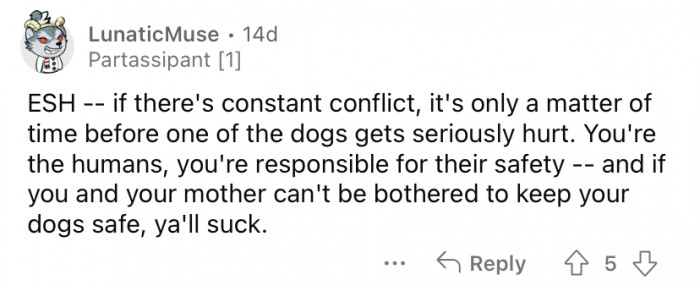
"It's only a matter of time before one of the dogs gets seriously hurt."
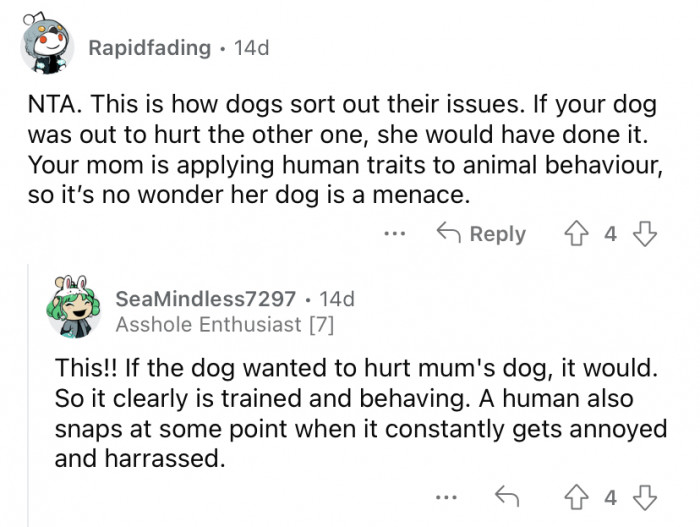
"This is how dos sort out their issues."
Implementing structured training and socialization can help mitigate aggressive behaviors. Professional trainers often recommend positive reinforcement techniques to encourage desirable behaviors while reducing anxiety. For example, desensitizing a dog to the presence of other dogs can lower aggression levels over time.
Owners should also prioritize providing a safe space for their pets to retreat to when feeling overwhelmed.
It’s similar to the woman who refused to discipline her dogs for barring their teeth.
From a behavioral perspective, reinforcing positive interactions between the two dogs is essential. Techniques such as positive reinforcement training can help modify aggressive behaviors and encourage friendly interactions.
It's instinct!
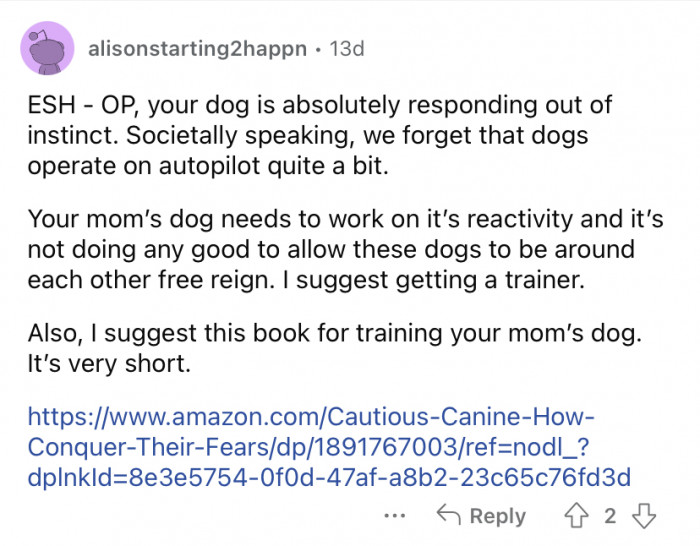
"The little dog is a bully."
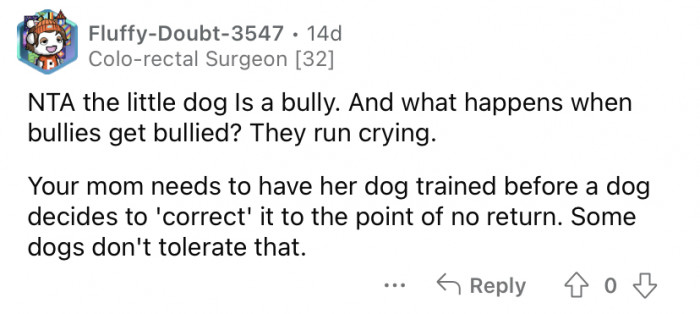
YTA.
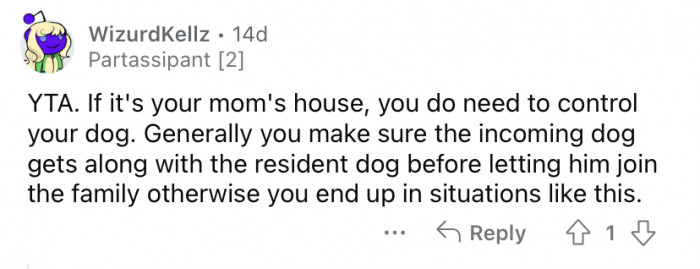
Every time OP’s bigger dog “fights back,” it looks worse than it is, but the yelling from OP’s mom makes it spiral.
Evaluating Owner Behavior and Expectations
Owner behavior significantly impacts canine aggression.
Strategies for Managing Canine Conflicts
For the OP, establishing boundaries between the two dogs can help minimize conflicts.
"Leave your dog at home."
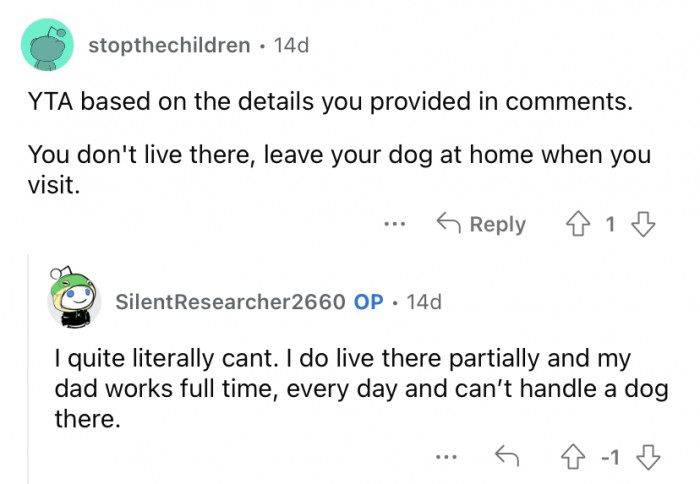
"Neither of your dogs are safe to be together."
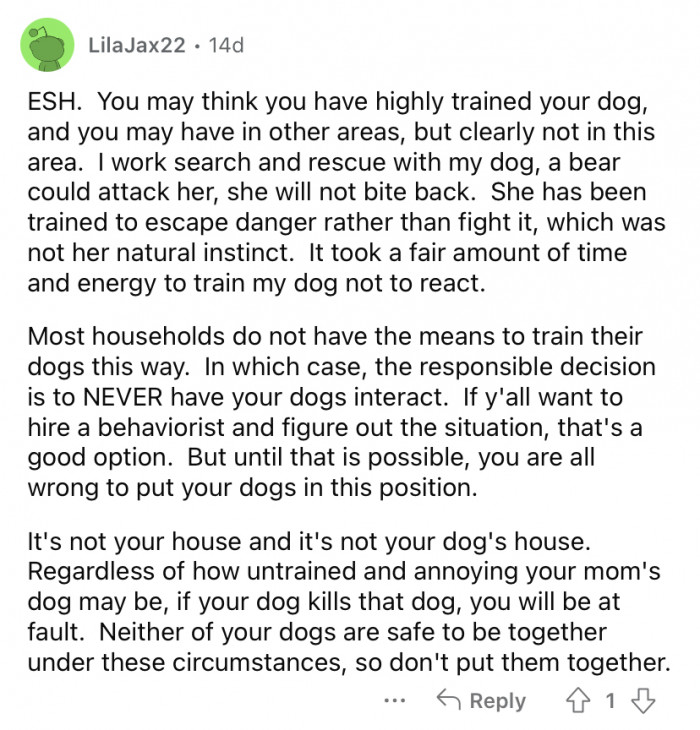
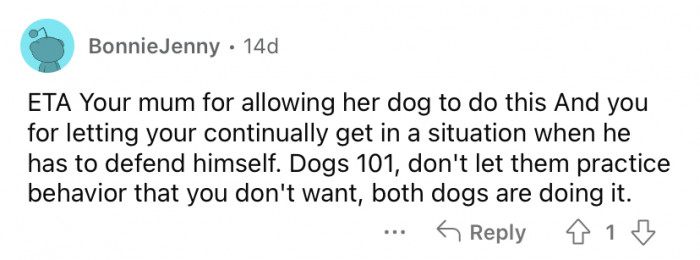
It's basic "Dogs 101."
Owners can benefit from training programs that teach them effective communication strategies with their dogs. Workshops on canine behavior can empower owners to respond appropriately to their pets' needs, ultimately leading to healthier interactions.
Additionally, consulting with a veterinarian or animal behaviorist can provide tailored strategies for managing aggression and improving the pet's overall well-being.
Additionally, seeking the guidance of a professional dog trainer or behaviorist can provide valuable insights into managing aggressive behaviors. These professionals can offer tailored strategies that address the unique dynamics of the dogs involved.
Studies indicate that professional intervention can yield successful outcomes, as trainers can implement evidence-based techniques that promote positive behavior changes.
"Please separate these dogs!"

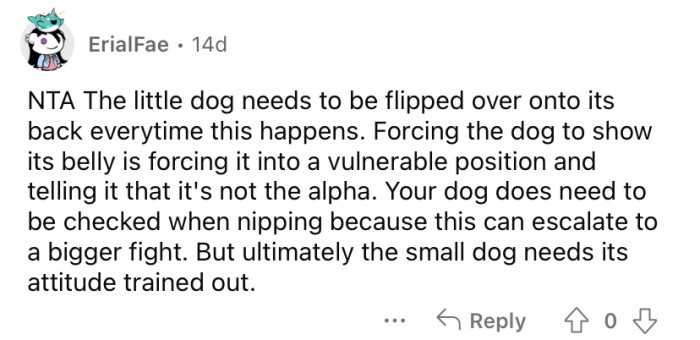
"The small dog needs its attitude trained out."
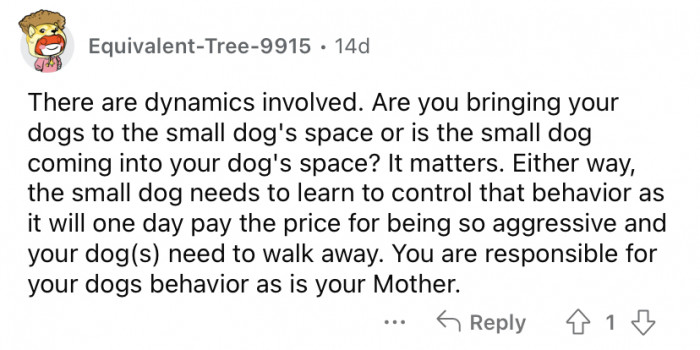
"You are responsible for your dogs behavior."
By the time Redditors are calling it “natural consequences” and asking why everyone has dogs without training, OP is still stuck wondering what “control” even means here.
Consistency is key in training and managing aggressive behaviors in dogs.
Establishing a consistent training regimen can enhance the dog's sense of security, making them less likely to exhibit aggressive tendencies.
The situation presented by the Reddit user highlights the importance of understanding the social dynamics among pets, particularly in mixed-species households. The conflict between their dog and the "little rat dog" controlled by their mom serves as a prime example of how miscommunication and misinterpretation of social cues can lead to aggression. Recognizing the social hierarchies among dogs is essential for preventing these kinds of conflicts. By understanding the underlying social structures, pet owners can facilitate smoother interactions and create a more harmonious living environment for all involved. This approach not only helps in mitigating aggression but also fosters a sense of peace among pets, allowing them to coexist more effectively. The Redditor's hesitation to punish their dog for defending itself suggests an awareness of these dynamics and reflects a compassionate approach to pet ownership.
What's your take on this situation? Do you think the OP should be disciplining their dog more for retaliating, or is it up to their mother to keep her dog's behavior in check?
Either way, the most important thing here is the safety of both dogs and their owners. Perhaps some further training would be beneficial for all of them.
We would love to hear your opinions on this. You can share your thoughts with us in the comment section.
Lastly, ongoing education about canine behavior can empower owners to make informed decisions regarding their pets.
In this scenario, the Reddit user faces a difficult choice regarding their dog's behavior towards their mom's smaller dog. Rather than resorting to punishment, this owner’s instinct to protect their pet suggests a need for education and positive reinforcement to foster a more harmonious relationship between the dogs.
By addressing these issues proactively and considering professional guidance, pet owners can not only mitigate aggressive behaviors but also create a more enjoyable and secure environment for all pets involved. This situation serves as a reminder that compassion and understanding are key in resolving conflicts, especially when it involves beloved family pets.
Creating a structured training plan that includes regular exercise, socialization, and mental stimulation can significantly improve a dog's behavioral outcomes. Engaging in activities that challenge a dog mentally and physically can reduce frustration and anxiety, which often lead to aggression.
Ultimately, a proactive approach to training and socialization can foster a healthier, more balanced relationship between pets and their owners.
In this complex situation involving u/SilentResearcher2660 and their dog, it is crucial to recognize the elements that contribute to a dog's aggressive behavior. The incident with the "little rat dog" highlights the need for consistent training and socialization, which are vital for promoting positive interactions among pets and family members. By thoroughly addressing these underlying issues, pet owners can work towards creating a safer and more harmonious environment that benefits all involved.
OP might not be the problem, but the family dinner of barking, crying, and yelling definitely is.
For another family standoff, read about a mom’s fury after a little girl tried to pet her dog.
Share this article:





