
Family Dog Unintentionally Causes His 88-Year-Old Grandma to Fall When He Chased a Squirrel, but He Immediately Went to Her Side to Get Help

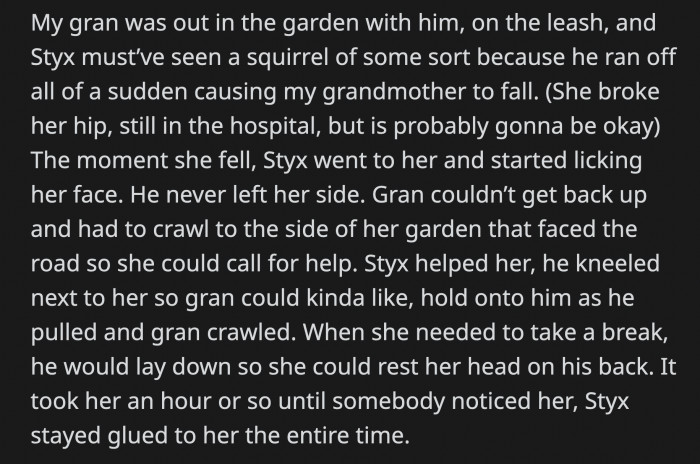
Styx the Golden Retriever did what a lot of dogs do the second a squirrel appears, he forgot everything else. The problem was that his leash, his excitement, and his 88-year-old grandma were all part of the same moment.
What started as a quiet day in the garden turned into a painful accident when Styx bolted and caused Grandma to fall and break her hip. But even after the tumble, the dog stayed right beside her, licking her face and refusing to leave while she tried to get help.
It was a scary situation, but Styx’s loyalty made it unforgettable. Read on.
The pup did cause the unfortunate incident, but he didn't leave the old woman's side

The dog crawled slowly and carefully to help drag OP's grandma

He stopped and offered himself as a pillow whenever grandma needed a break. It took OP's grandma about an hour before anyone noticed her, but Styx never left her side.
The incident involving a dog chasing a squirrel and inadvertently causing an accident highlights the unpredictable nature of pet ownership. This serves as a reminder of the dual nature of pet ownership, where the joy of companionship is often accompanied by responsibilities and risks. Understanding canine behavior is crucial for preventing accidents and ensuring the safety of both pets and the public.
When a dog inadvertently causes an accident, as in this scenario, it brings to light the complexities of human-animal interactions.
The immediate reactions can vary, with some owners feeling guilt, anxiety, or even frustration, showcasing the intricate emotional bonds shared between pets and their owners.
OP's grandma said she wouldn't have managed to move far if it weren't for the dog

It is sad that accidents like these happen, but Styx was such a good boy for recognizing that OP's grandma needed help, and he stayed by her side the whole time.
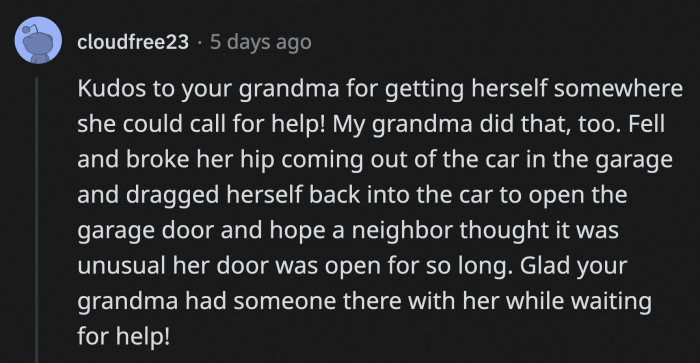
It was an honest accident, and the pup didn't realize how powerful his zoomies were. He immediately made sure OP's grandma got to a safe place while waiting for help.

Moreover, the emotional dynamics at play in the relationship between pets and their owners can influence how we react to such incidents. Research from Yale University indicates that strong bonds with pets can lead to heightened emotional responses during crises. This emotional investment can cloud judgment, making it essential for pet owners to remain calm and focused when unexpected situations arise.
Training pets to respond to commands under various circumstances can help owners manage their emotions and behaviors more effectively.
Furthermore, studies suggest that pets can serve as both stressors and sources of comfort.
It’s the same kind of tension as a girlfriend dealing with a boyfriend who wants to call animal control.
There is no doubt that Styx received a lot of belly rubs that day, and he probably dreamt of chasing squirrels as well!

Dogs can be unaware of their power once their instincts kick in, but they do more than make up for it.
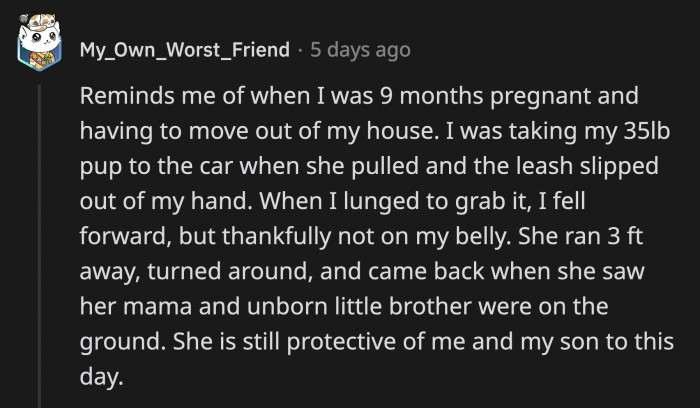
She won't be walking Styx anytime soon, but OP says she is recovering.

Effective training is a cornerstone of responsible pet ownership.
To manage the stress associated with pet ownership, practicing mindfulness and grounding techniques can help owners regulate their emotional responses during unforeseen events, allowing for a more balanced reaction.
Additionally, seeking social support from friends, family, or pet communities can provide reassurance and validation, helping to alleviate feelings of anxiety associated with pet-related incidents.
Aside from Styx being a good boy, Grandma's continuous and speedy recovery is the absolute best news for OP's family.

Not all dogs are like Styx, who can snap out of chase mode and go into hero mode.

Generally speaking, dogs are a good combination of both.

Additionally, understanding the concept of impulse control can shed light on canine behavior. Dogs often act on instinct, and their ability to control impulses can vary based on factors such as breed and training. Research shows that training can enhance impulse control, leading to better decision-making by pets in unpredictable situations.
By prioritizing training and socialization, pet owners can help their dogs develop better impulse control, reducing the likelihood of accidents and ensuring safer interactions in public spaces.
Furthermore, understanding the triggers that lead to accidents is crucial.
This wouldn't have happened if OP's dad had listened to their hesitations about grandma babysitting them for the day. Foresight is 20/20 indeed.
Fortunately, Styx realized that his grandma needed help and acted quickly. We are not Styx's PR team, but we know he didn't mean for his grandma to fall; it just looked like the squirrel really needed a friend that day.
The incident involving the Golden Retriever chasing a squirrel and inadvertently causing his 88-year-old owner to fall highlights the unpredictable nature of animal behavior. While we often view pets as family members, it is crucial to remember that their instincts can sometimes lead to unforeseen consequences. In this case, the dog's immediate response to check on his grandma after the fall reflects a deep bond and loyalty, showcasing how these relationships can evoke strong emotional reactions during unexpected events.
This incident serves as a reminder of the importance of proactive training and awareness when it comes to pet ownership. By understanding the inherent instincts of our pets, we can better prepare for situations that might arise, ultimately contributing to a safer and more harmonious living environment.
The recent incident involving an 88-year-old grandmother and her Golden Retriever serves as a poignant reminder of the unpredictable nature of animal behavior. While dogs are beloved companions, they are still driven by instinct, as highlighted by the dog's chase after a squirrel that led to the grandmother's fall. This scenario underscores the importance of understanding canine instincts and the potential consequences of their uncontrolled behavior. It also emphasizes that despite rigorous training, there are moments when a dog's instincts can take precedence over learned commands. Responsible pet ownership is crucial not only for the safety of the pet but also for the well-being of those around them. By being aware of these dynamics, pet owners can better navigate the challenges of dog ownership and create safer public spaces for everyone.
After this grandma’s fall, see how a teen “rescued” a friend’s dog and paid for it. Teen breaks into cousin’s house to rescue friend’s dog.
Share this article:





