
Dad In The Bad Books With 5-Year-Old Daughter For Not Inviting The Neighbor's Dog To Her Birthday Party

A 5-year-old birthday party should be the easiest kind of chaos. But in this Reddit story, it turned into a full-on family drama because one guest was a dog, not a kid.
OP told his daughter she couldn’t invite the neighbor’s dog to her party. His reason was simple, the dog is “really big and unruly,” and he didn’t want that energy around cake and little kids. Then his wife got mad, because their daughter wanted the dog there, and the neighbor was apparently so offended he started bad-mouthing OP to everyone else.
Here’s the full story.
The OP shared a story about how he disappointed his daughter by not inviting the neighbor's dog to her birthday party.
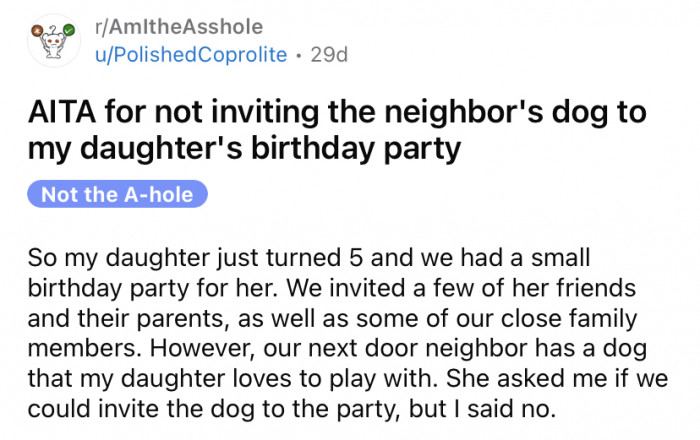
OP's daughter asked if she could invite him, but OP said no because he believes the dog is "really big and unruly."
OP's wife was upset over his decision and said he should have allowed the dog to attend if their daughter wanted him there.
Birthday celebrations hold significant importance in the emotional development of young children, as highlighted by the recent story shared by a Reddit user. The tale of a father disappointing his daughter by not inviting the neighbor's dog to her birthday party underscores the potential emotional fallout from seemingly small decisions.
When a child's emotional expectations are not met, as seen in this case, it can lead to feelings of disappointment and insecurity. The father's oversight may seem trivial to adults, but for a five-year-old, such moments are pivotal.
These early experiences, like this birthday mishap, play a crucial role in shaping how children form relationships and perceive their self-worth, emphasizing the delicate balance parents must navigate in fulfilling their children's emotional needs.
Child Development and Emotional Responses
Children often express their emotions in unique ways, heavily influenced by their developmental stage.
The next-door neighbor was also upset about the situation and began bad-mouthing him to all their other neighbors.
Here's how people reacted.

"Weird."

OP shut down the dog invite after his daughter asked if she could bring him, and that’s where the birthday started to unravel.
Additionally, the emotional significance of a pet's presence during special occasions is often overlooked.
The recent tale of a father facing the wrath of his 5-year-old daughter for not inviting the neighbor's dog to her birthday party sheds light on the complex dynamics of parental decisions and children's emotional responses. The disappointment expressed by the little girl illustrates how deeply children feel about inclusivity and the importance of their social circles, which can sometimes extend to pets. This situation underscores the necessity for parents to navigate their choices with an understanding of their children's feelings. Acknowledging a child's perspective is essential, as it not only validates their emotions but also lays the groundwork for healthy emotional development. When parents recognize and respect their children's sentiments, it can foster a sense of security and trust that is crucial for their growth. In this case, the father's decision, although seemingly innocent, highlighted the need for greater emotional attunement to his daughter's desires, particularly during significant events like a birthday celebration.
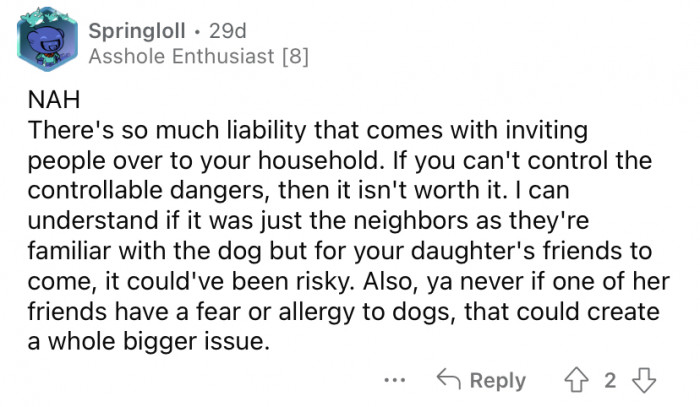
It's a "liability issue."
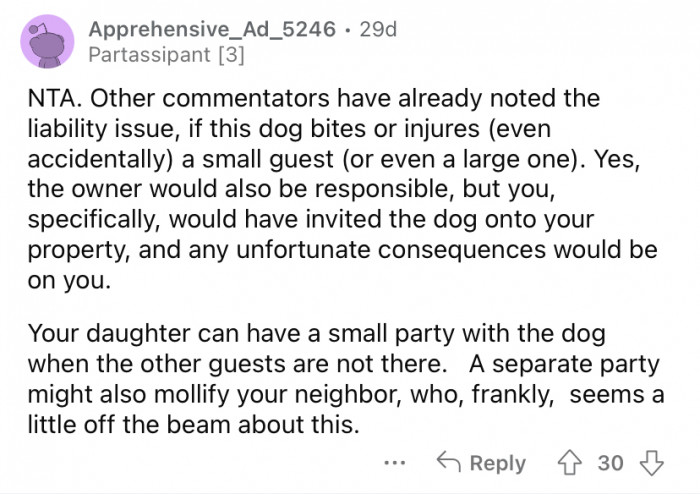
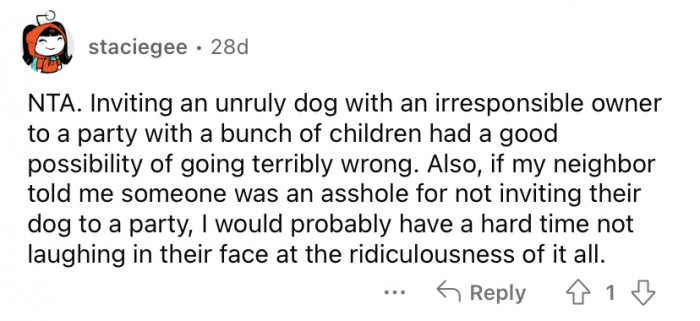
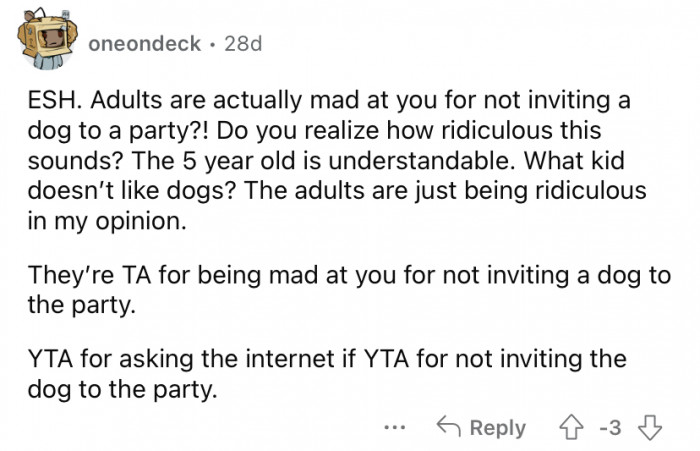
"That's absolutely ridiculous."
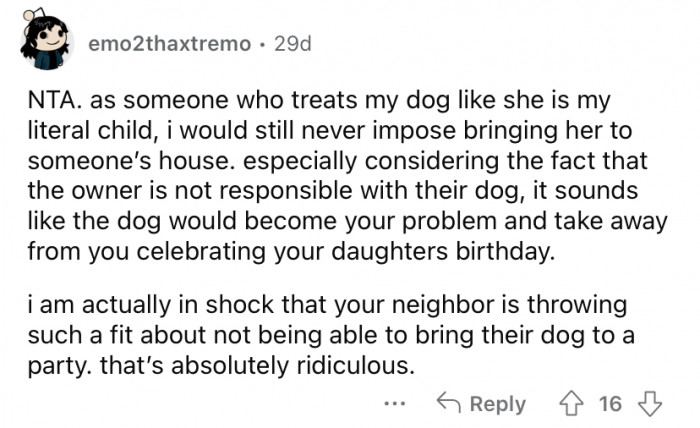
It's cute... but weird.
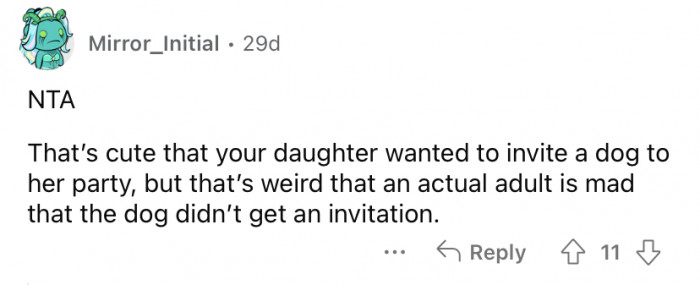
Balancing Safety and Emotional Needs
When it comes to decisions about including pets in family events, it's important to consider both emotional and safety concerns. Research published in the National Institutes of Health highlights the importance of balancing these factors to foster healthy relationships.
Understanding the potential risks while also recognizing the emotional benefits of including pets can lead to more informed decisions.
OP’s wife immediately challenged the decision, saying the dog should have been allowed since their daughter wanted him at the party.
Strategies for Navigating Parental Conflicts
When faced with conflicts between parental decisions and children's emotional needs, open communication becomes vital. A family therapist might suggest that parents engage their children in discussions about decisions affecting them, promoting a sense of agency and understanding.
This approach can mitigate feelings of rejection and help children process their emotions more healthily, encouraging resilience.
"You did the right thing."
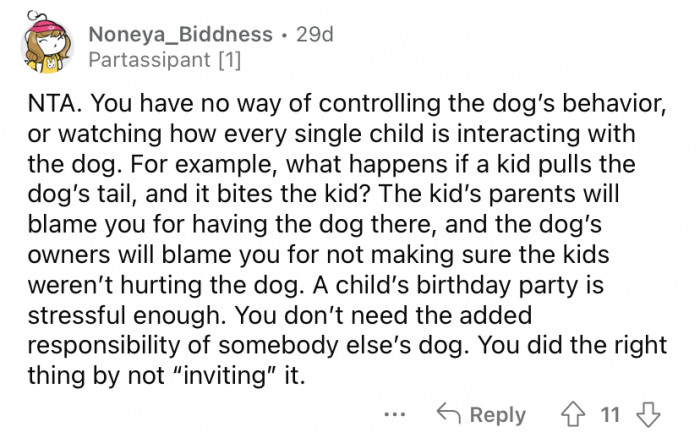
A "recipe for disaster."
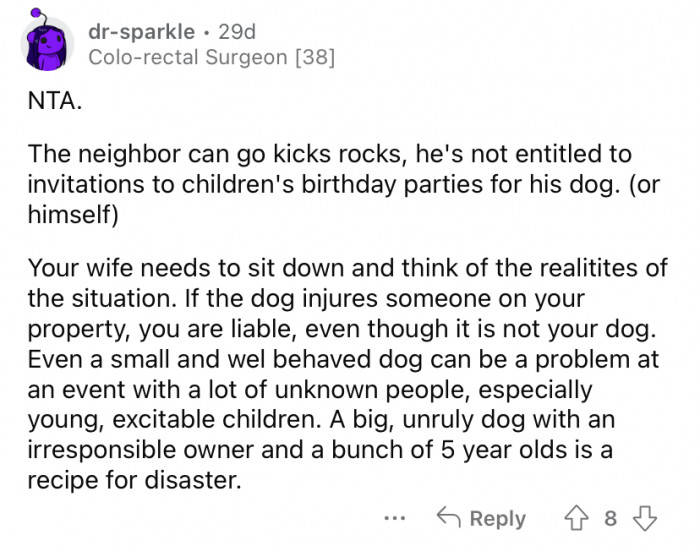
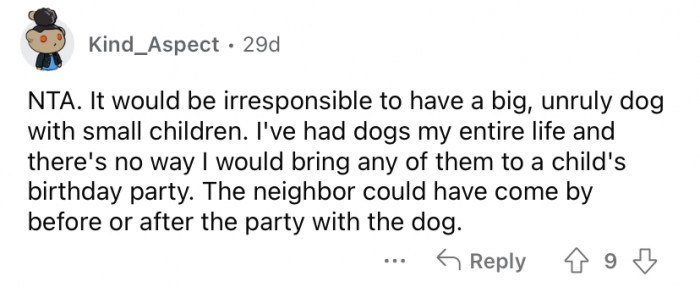
"It would be irresponsible."
Practical recommendations might include discussing safety measures with family members to alleviate concerns while still honoring the child's emotional needs.
Creating a plan that ensures everyone feels safe and included can enhance the overall experience for everyone involved.
And if you’re wondering about boundaries when a kid has a say, see the dad keeping a dog his daughter hates, even after she refuses to warm up to it.
Additionally, involving children in the decision-making process can foster empathy and understanding.
The sarcasm is real.
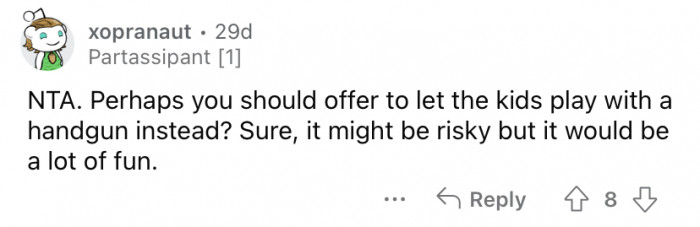
Save the dog a piece of cake.

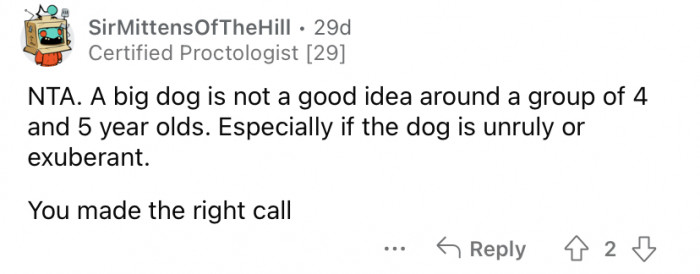
"You made the right call."
Then the neighbor got involved, because instead of letting it go, they started bad-mouthing OP to other neighbors.
Effective communication within families is vital for navigating challenging situations.
"It's rude and entitled."

"How is this even a thing?"

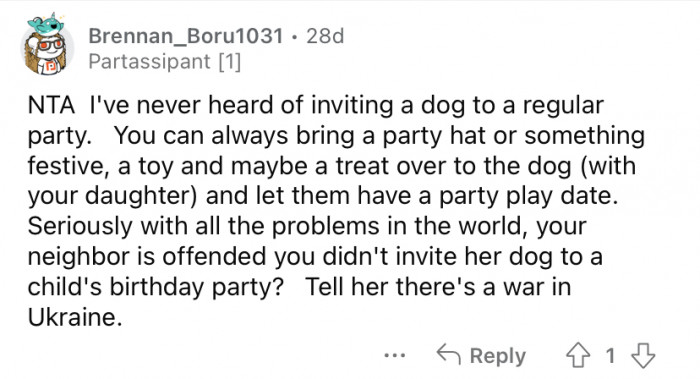
"It isn't worth it."
Encouraging joint discussions about the importance of including the pet might help bridge the gap between the father's concerns and the daughter's wishes.
By fostering this dialogue, the family can work toward a solution that honors everyone's feelings.
"Someone could get hurt."
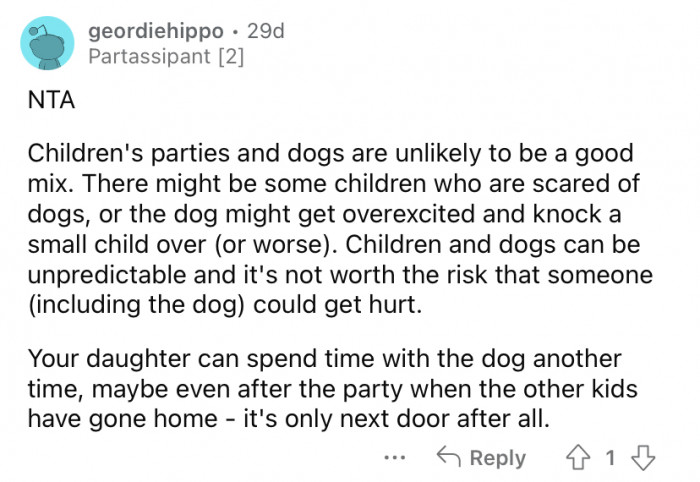
"100% NTA."
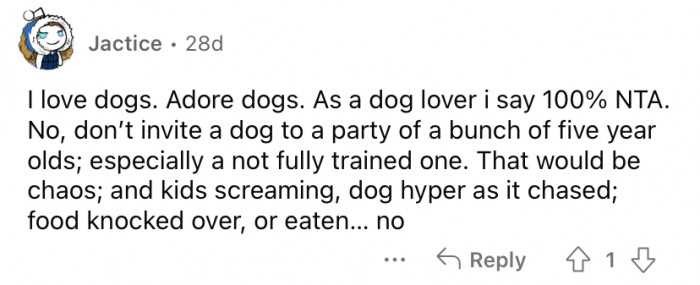
It should be "all about the kids."

By the time people were whispering “weird” around the block, OP was stuck between a disappointed kid and an angry neighborhood.
Creating Compromise and Understanding
Compromise is key to resolving family disputes.
This could involve agreeing to certain conditions under which the dog can attend the party, ensuring both safety and emotional fulfillment.
"The neighbor is a fool."
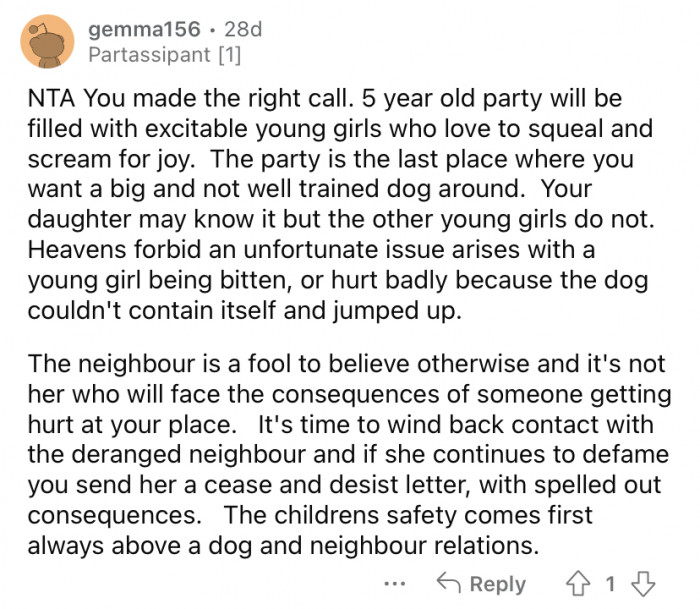
"A good possibility of going terribly wrong."
Everyone sucks here!
Ultimately, finding a balanced approach that respects both the child's desire for inclusion and the father's safety concerns can lead to a more harmonious family environment.
Implementing these strategies can create a sense of unity and understanding during difficult discussions.
Okay, but did anyone ask the dog?

"Let them have a party play-date."
What's your take on this situation? Do you think the OP should have given in and allowed the dog to be invited to the party, or was he doing the right thing by trying to keep everyone safe?
As some commenters suggested, perhaps the little girl could have a separate birthday celebration with the dog. After all, it's very sweet that she wanted to invite him to her special day.
We would love to hear your opinions on this. You can share them with us in the comment section.
In this scenario, the father's decision not to invite the neighbor's dog to his daughter's birthday party illustrates the complex emotional landscape that parents often navigate. The disappointment felt by the young girl speaks to the importance of recognizing and validating children's emotions, even when decisions may seem trivial to adults. This incident sheds light on the necessity of open communication within families. By encouraging dialogue about feelings and expectations, parents can help their children process disappointments more effectively. In this case, the father’s oversight turned into a teaching moment about managing emotions and understanding that not every wish can be granted.
The situation surrounding the birthday party highlights the emotional weight that pets carry in family dynamics. The disappointment expressed by the 5-year-old daughter reveals how deeply intertwined these animals can be in our celebrations. When planning events, it becomes essential to acknowledge these feelings and consider how including pets, like the neighbor's dog, could have transformed the experience.
This scenario serves as a reminder of the importance of open communication within families. By discussing expectations and finding middle ground, such conflicts can be addressed in a way that strengthens relationships. Ultimately, the aim should be to cultivate an atmosphere where everyone, including furry friends, is recognized and cherished, thereby enriching the family experience as a whole.
Now he’s wondering if he accidentally made the dog the main character.
For another “no dog, no matter who asked” showdown, read about the man who blocked his friend’s girlfriend from bringing her dog to a pool party.
Share this article:





