
Dog Owner Gets Branded As The A-Hole By Her Mom And Entitled Relatives For Prioritizing Her Dog's Needs Over Theirs

Some people really do treat your home like a free vacation rental, even when you’ve warned them your dog is not going to be “easy mode.” In this Reddit story, OP gets branded as the A-hole by her mom and entitled relatives, all because she refuses to ignore her dog’s behavior problems.
OP’s relatives show up anyway, despite knowing the situation, and at first the dog reacts but eventually settles around them. The complication? Her uncle still won’t let the dog near him after witnessing something traumatic, and OP ends up leashing her dog for the entire stay just to keep the peace.
When OP finally says her relatives are not welcome to stay again, the backlash hits fast, and the whole family starts acting like her dog is the problem.
OP asks:
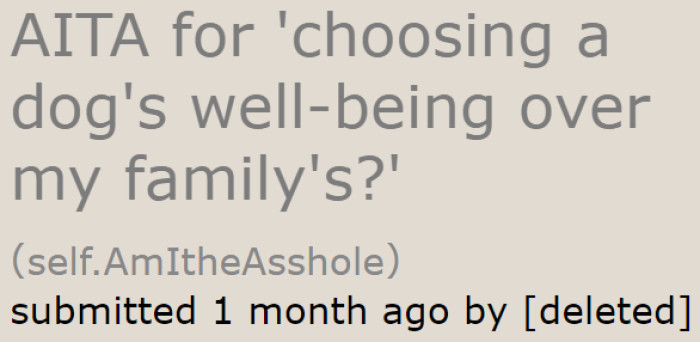
The OP tells the community that she has a dog with behavior problems.
Her relatives decided to stay with her despite knowing her dog's behavior. Mistake
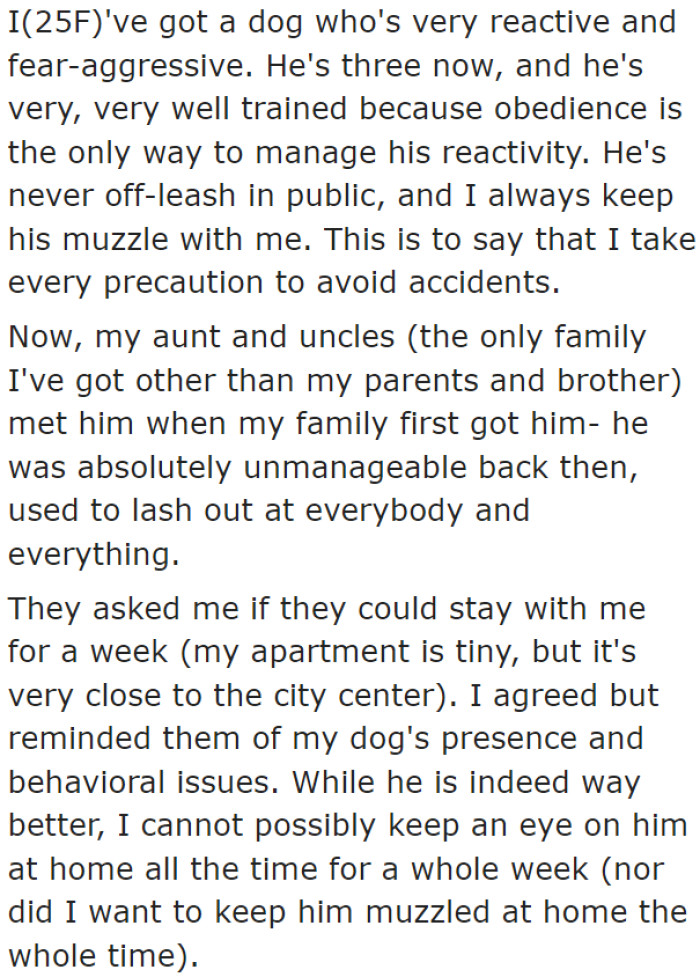
The dog reacted at first but seemed fine with their presence eventually. However, her uncle won't let the dog near him because he witnessed something traumatic.
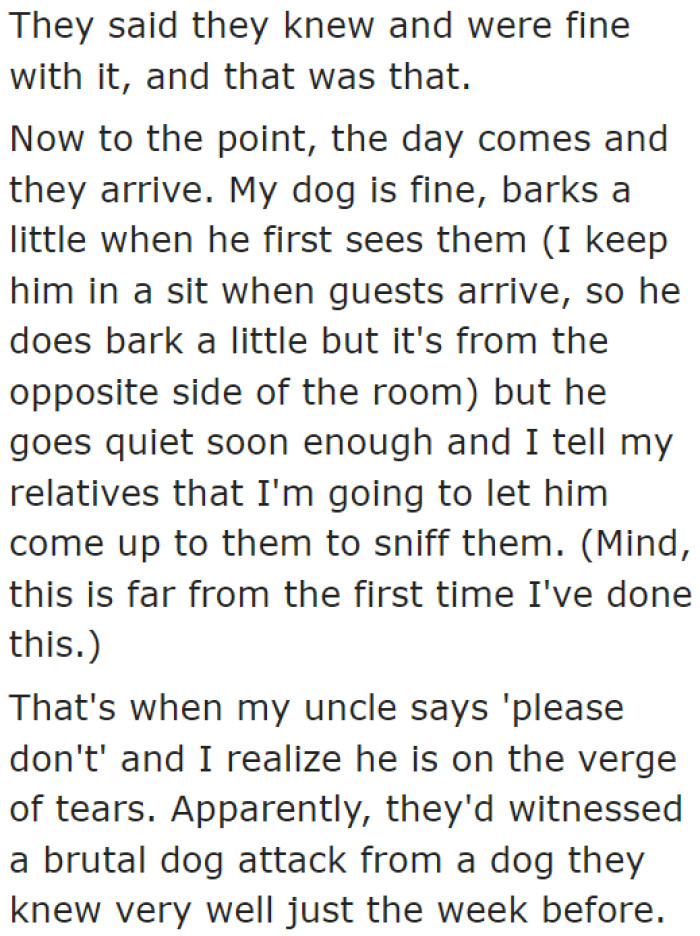
Family dynamics are often fraught with complexity, particularly when entitlement rears its head.
OP’s relatives decide to stay with her after being warned about her dog’s behavior, and that is where the “you’re being unreasonable” accusations start brewing.
Balancing Needs and Relationships
Balancing the needs of pets and family members requires thoughtful consideration. Engaging family in discussions about pet care can foster mutual respect and understanding.
Additionally, involving family members in pet care can enhance their relationship with the pet, reducing feelings of exclusion. This approach aligns with findings that emphasize the importance of shared experiences in strengthening family bonds and enhancing overall well-being.
The Complexity of Pet Ownership
Pet ownership often elicits strong emotional responses, particularly when it intersects with family dynamics.
She had to leash her dog for the entire duration her relatives stayed with her.
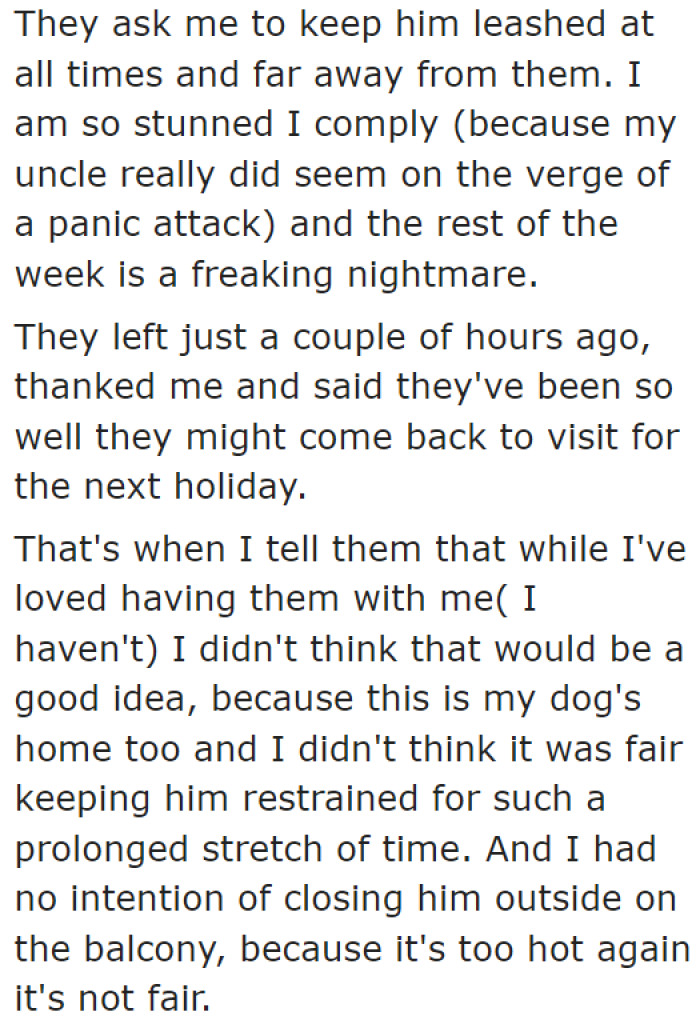
She told her relatives that she doesn't recommend them staying with her next time.
This angered them, and her mom got upset too.
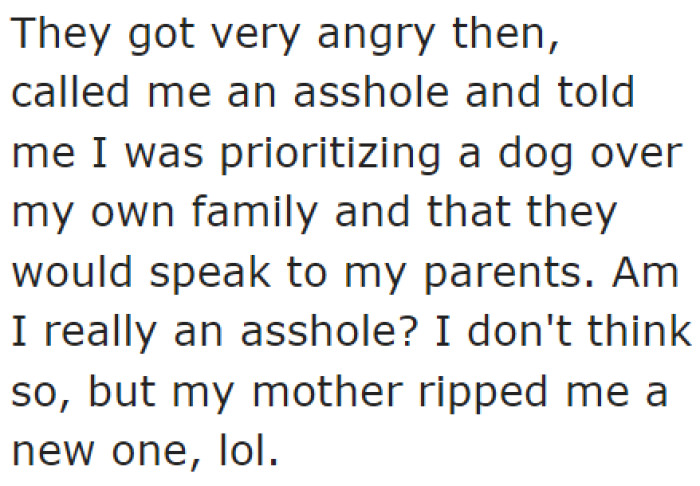
Why do they feel entitled to the OP's home? It's not like they're contributing anything to her.
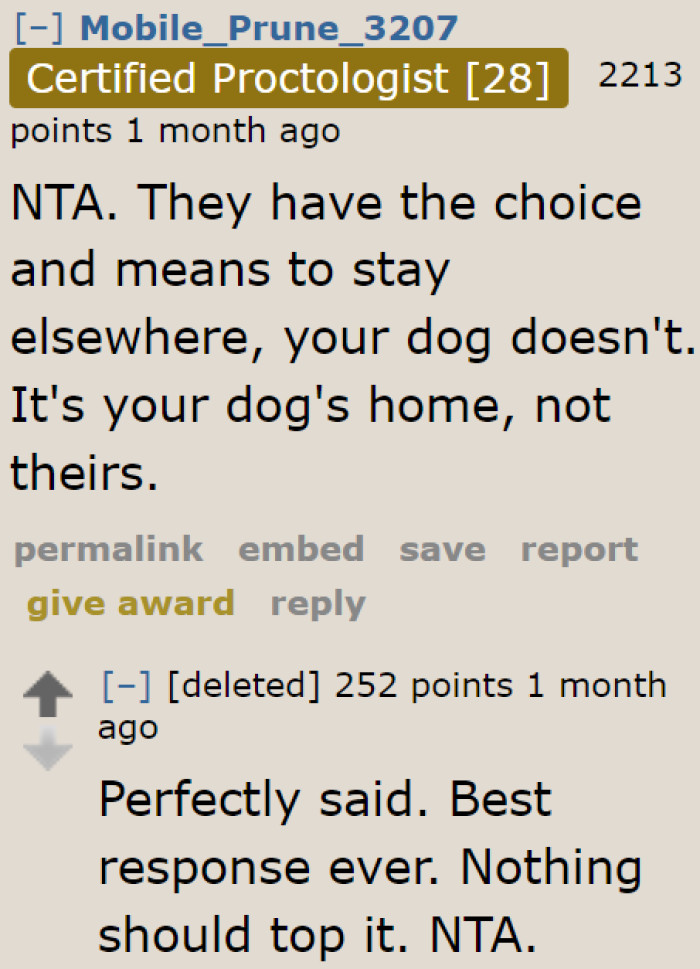
Even though the dog eventually calms down around them, her uncle’s traumatic experience turns every interaction into a fight over boundaries.
The Emotional Bond with Pets
Studies indicate that pets can significantly contribute to their owners' psychological well-being, acting as a source of emotional support.
This bond can sometimes lead to prioritizing a pet's needs over human relationships, which may be misunderstood by family members. Understanding this dynamic can foster empathy and reduce conflict.
This is similar to an owner leaving her dog with a friend who ignored instructions and fed fresh meat.
In behavioral psychology, the concept of operant conditioning explains how reinforcement and punishment shape actions.
The sense of entitlement makes your head ache.
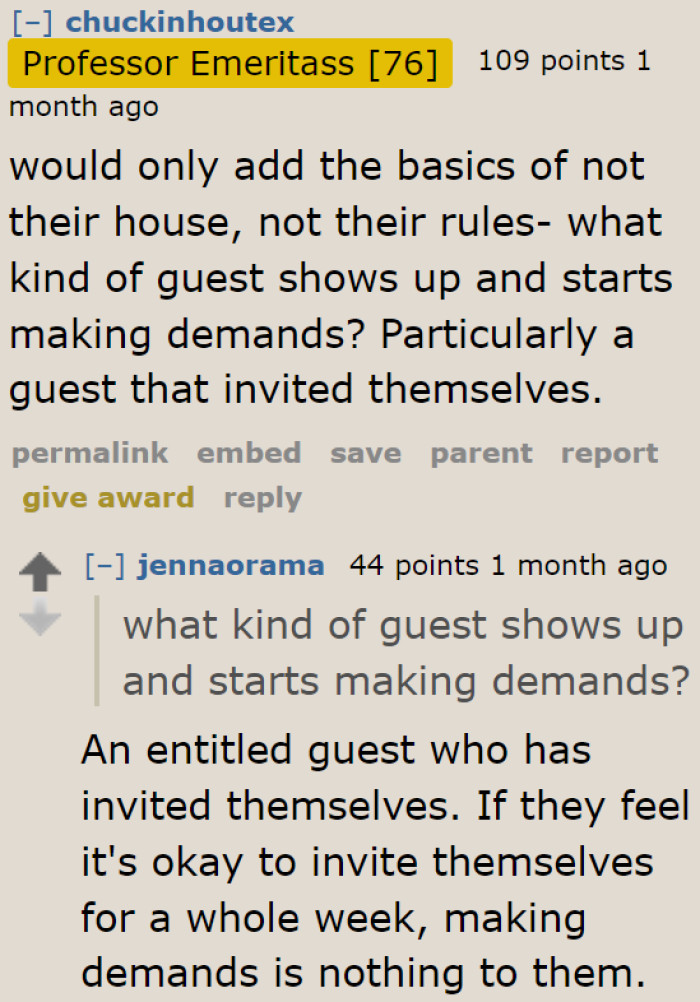
These relatives are probably cheapskates if they don't want to pay for hotel accommodations.
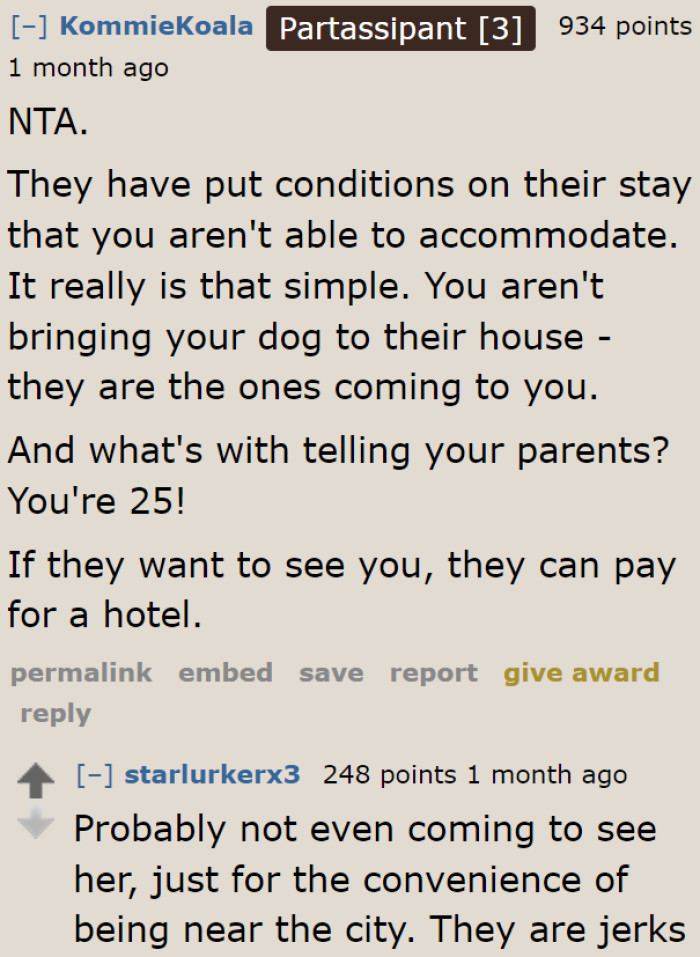
A dog is considered family, so it makes sense for the OP to consider her dog's needs.
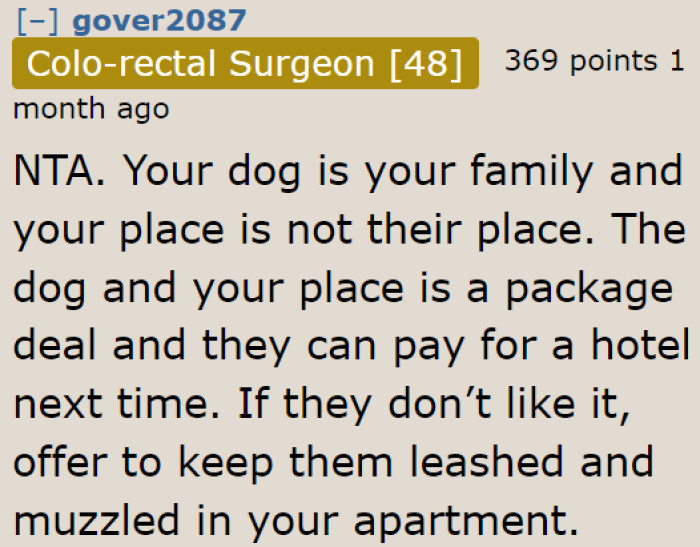
So OP does the only thing she can manage, she leashes the dog the whole time they’re there, and her mom still acts like OP should be accommodating everyone else.
Coping Strategies for Conflict Resolution
Effective communication is vital in resolving conflicts, especially within families. Practicing active listening can help relatives express their feelings without escalating tensions. Research shows that utilizing 'I' statements, like 'I feel ignored when...' promotes understanding rather than defensiveness.
Finding Common Ground in Family Disputes
Conflict resolution strategies can be beneficial in addressing family disagreements over pets.
If the uncle is afraid of dogs, then he should've decided to stay at a hotel.
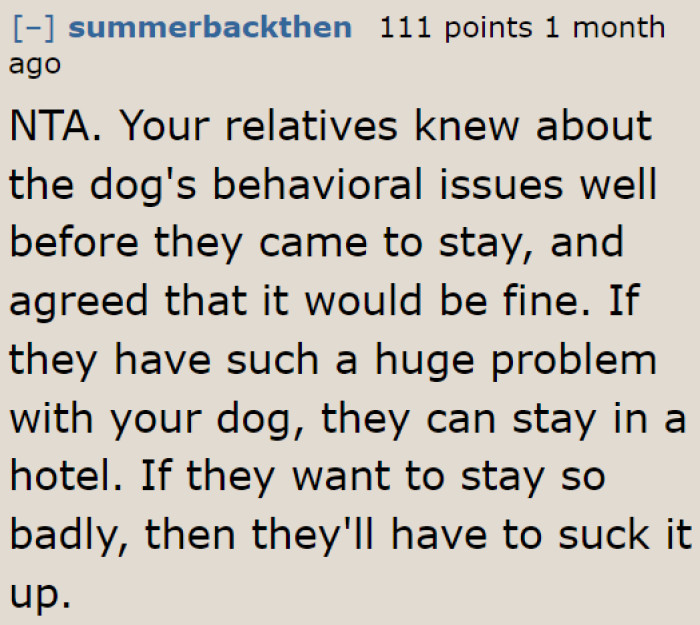
The OP's house is the dog's house too. The OP has every right to refuse.
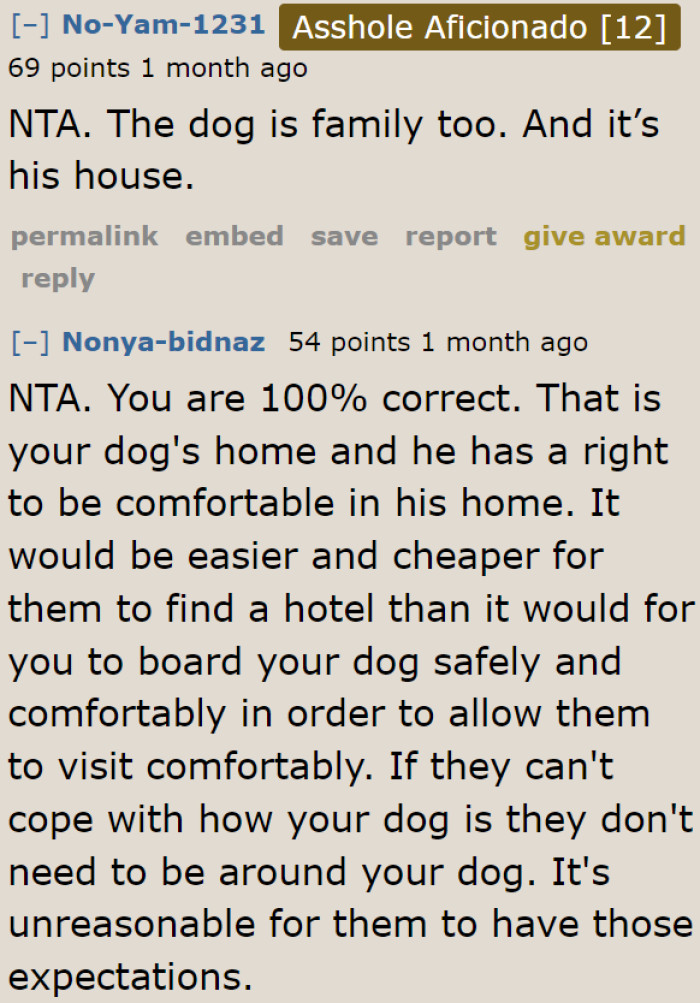
One week is a long stay. They need to book a hotel room next time.
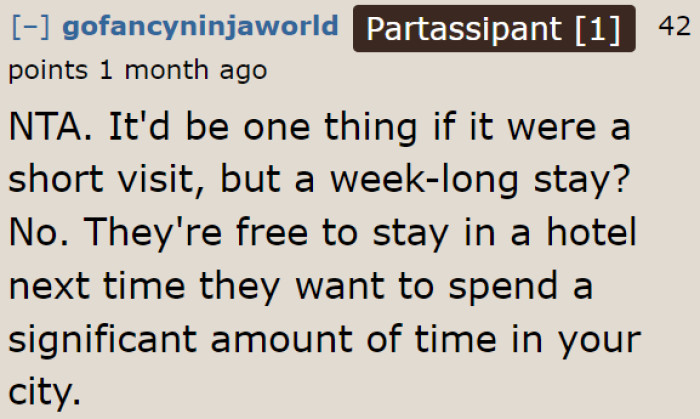
The moment OP tells them she won’t recommend they stay again, entitlement takes over, and suddenly the relatives are mad she is prioritizing her dog’s needs in her own house.
Perceptions of prioritization can lead to misunderstandings in family relationships.
To alleviate family tensions, it may be helpful for the dog owner to initiate a family meeting to openly discuss everyone's feelings and needs.
Encouraging each member to express their concerns and desires regarding the dog can promote empathy and understanding.
Additionally, considering compromises, such as designated areas for the dog or reduced interactions during visits, can help ease the situation.
These relatives believe they're entitled to the OP's home just because they're older. However, she has every right to refuse their request.
Their one-week stay was too long, and the OP had to keep her dog leashed during that time. This situation could stress out her furry friend.
Ultimately, refusing to accommodate them is the OP's choice. If they want to stay in the area so badly, as the users have suggested, they can always opt for a hotel.
The situation highlights the intricate emotional dynamics that arise when pet ownership intersects with family relationships. The dog owner's decision to prioritize her dog's needs has sparked significant backlash from her relatives, illustrating their sense of entitlement and lack of empathy. Open communication is vital in such scenarios, as it can pave the way for collaborative solutions that respect both the pet's requirements and the family's expectations.
The conflict between the dog owner and her family highlights a significant issue in modern relationships: the clash between human needs and the emotional bonds we form with our pets. The article illustrates how the dog owner’s decision to prioritize her pet's needs has led to accusations of selfishness from her relatives, showcasing their sense of entitlement. Such situations are not uncommon, as family members often struggle to understand the depth of these pet-owner bonds.
It is crucial for families to engage in open dialogue about their feelings and expectations. By addressing misunderstandings directly, they can foster a more inclusive environment where both human and animal needs are acknowledged. The emotional well-being derived from pets should not be dismissed; it can greatly enhance family dynamics and contribute to overall mental health. In prioritizing her dog's needs, the owner may be modeling a form of self-care that, if understood by her relatives, could lead to a more supportive family atmosphere.
The family dinner did not end well, because OP’s dog stayed leashed, but the drama never did.
For another “my dog needs me” family fight, read about a mom neglecting her kid’s dog while they were away.
Share this article:





