
Dog Owner Ask Redditors About The Best Way To Train Her German Shepherd Mix To Walk “Nicely”

A German Shepherd mix, a leash, and one stubborn walking habit are at the center of this Reddit story. The owner says the dog has learned plenty of commands, but “walking nicely” still feels like a daily battle.
What makes it tricky is that the dog seems to want two very different things at once, a calm leash walk and a chance to sniff, pull, and roam. That tension has the owner asking Reddit for help, and the replies quickly turn into a mix of shared experiences and practical-sounding ideas.
Now the big question is whether this pup can ever settle into one good routine. Read on.
This is OP’s dilemma

OP narrated how they came to owning the GSD mix
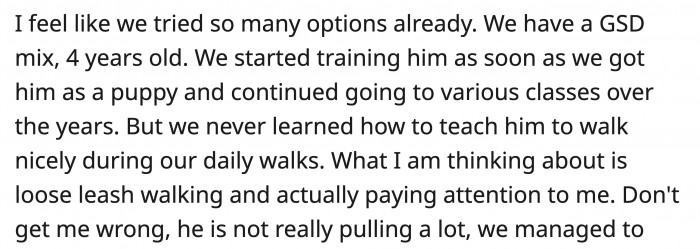
And what kind of struggle she was having in terms of getting his dog to follow kindly

One of the core principles in training dogs is the concept of reinforcement, rooted in behavioral psychology. In dog training, positive reinforcement, such as treats or praise, can effectively increase the likelihood of desired behaviors, like walking nicely on a leash. Conversely, studies indicate that negative reinforcement, which involves the removal of an unpleasant stimulus, can lead to anxiety and fear in dogs, adversely affecting their overall behavior and bond with their owner.
Thus, when training a German Shepherd mix to walk nicely, it’s crucial to employ positive reinforcement consistently. This approach not only encourages the desired behavior but also strengthens the human-animal bond through mutual respect and understanding.
A lot have lent their opinions and advice to OP which she was really appreciative of

One of the best pieces of advice they offered is for OP to give her dog two kinds of distinguished walks, a walk where the dog needs to play nicely and another one where he can do what he wants
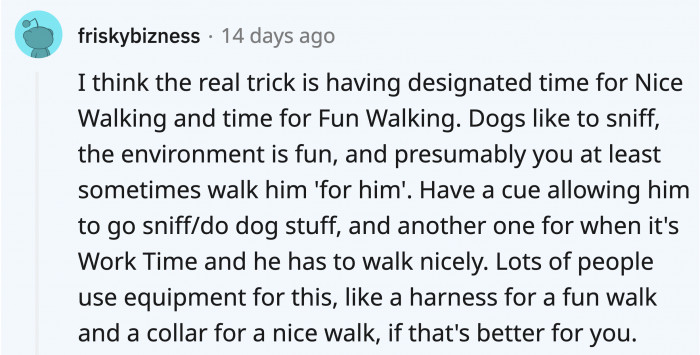
There’s an agreement with this from other Redditors.
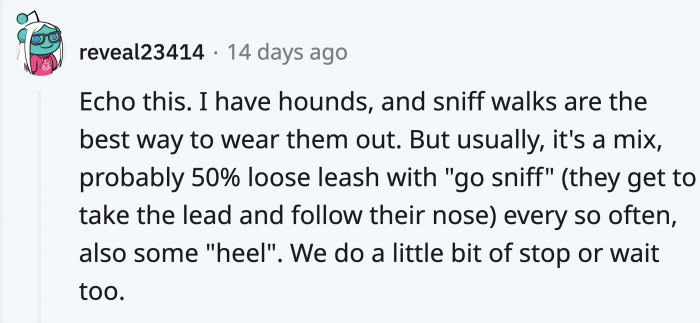
Training a German Shepherd mix to walk nicely requires a deep understanding of the animal's emotional and psychological needs. Dogs, like humans, can experience a spectrum of emotions, and if training is not approached with care, stress and anxiety may arise. The article highlights the importance of early socialization and exposure to diverse environments as key factors in shaping a dog’s behavior. For a German Shepherd mix, this means that regular exposure to various stimuli during training sessions is essential to fostering adaptability and confidence.
In practical terms, incorporating different settings into training, such as various parks or neighborhoods, allows the dog to adjust to new experiences while receiving positive reinforcement. This method not only aids in teaching the dog to walk nicely but also aligns with broader principles of behavior modification that stress the significance of context in training outcomes.
Moreover, behavioral psychology offers valuable insights into how dogs process commands.
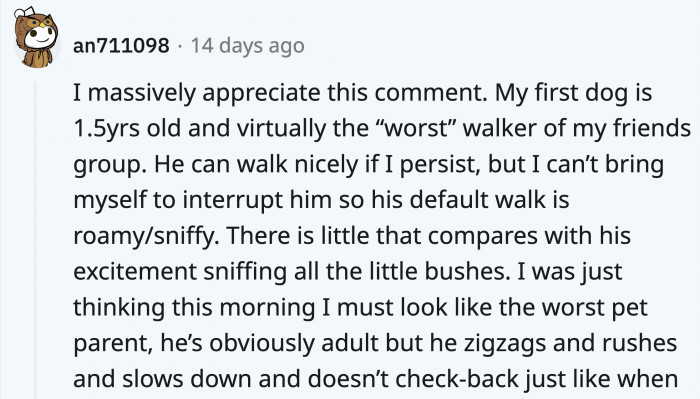
This one shared their experience on how to...
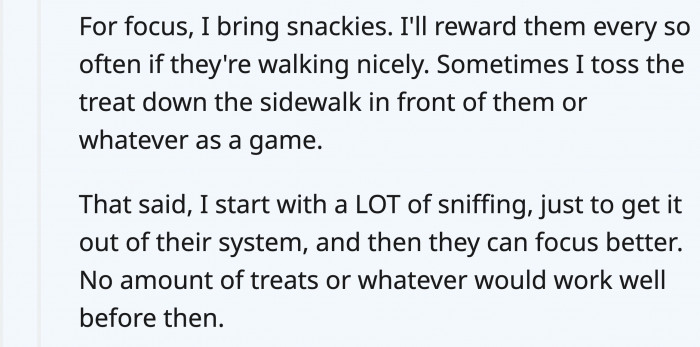
reward their dogs while also tiring them out.

Adventure walks that tire dogs out would...
The Importance of Consistency in Training
Consistency is a central tenet in effective dog training and is supported by psychological theories surrounding habit formation. Research from the University of Pennsylvania suggests that behaviors are more likely to be retained when practiced regularly and in a consistent manner. This idea is rooted in the concept of operant conditioning, where repeated reinforcement of a behavior leads to habit formation. For dog training, this implies that if commands and rewards are consistent, the dog will learn to associate specific actions with outcomes more effectively.
To implement this, owners should establish a routine that reinforces the same commands and rewards each time the dog walks nicely. This consistency also helps owners feel more empowered and confident in their training approach, creating a positive feedback loop.
Practical Training Strategies
One effective strategy for training is the use of short, frequent training sessions.
Brief but consistent training periods can enhance retention and understanding.
Training should be enjoyable for both dog and owner, incorporating play and rewards to maintain engagement.
also mean that both of you will have peace
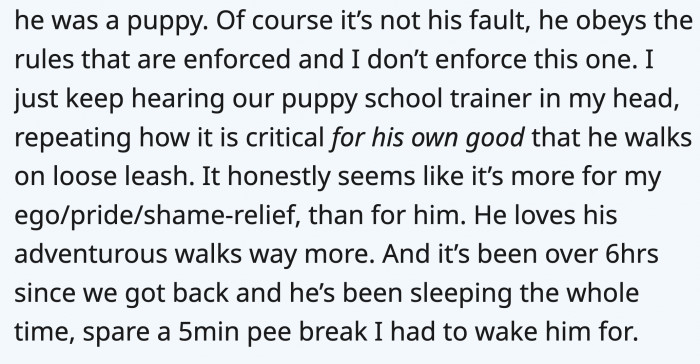
This dog has a default sniff or pull kind of walk

She isn't food or toy motivated so they had to use different measures

One significant factor in dog training is the human-animal bond, which plays a crucial role in how effectively a dog can learn. A positive relationship built on trust and respect leads to better engagement from the dog, making training more effective.
To strengthen this bond, owners should engage in activities beyond training, such as playtime or simply spending quality time with their dogs. This not only reinforces the training but also improves the overall emotional well-being of the pet, making them more receptive to learning.
This is similar to the neighbor who threatened animal control after the dog escaped during walks.
Dogs can learn complex commands when owners clearly communicate their expectations.
This clarity helps dogs understand what actions are rewarded, reinforcing positive behavior while reducing confusion.
Things that mentally challenge her but she still always pull
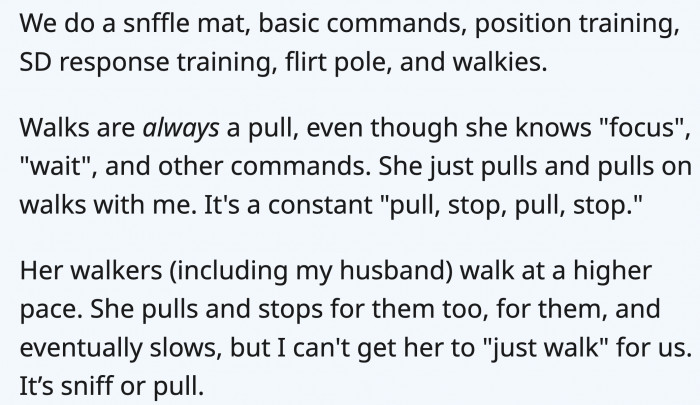
OP asks how she can balance the two kinds of walks

There’s also a suggestion of using cue words so the dogs know when and where to enjoy

The Role of Mental Stimulation in Training
Mental stimulation is a key aspect of dog training that is often overlooked. Research from the University of Georgia indicates that dogs require not just physical exercise but also cognitive challenges to maintain their overall health and well-being. Engaging a dog’s mind can improve their focus during training sessions, making them more receptive to learning commands. This is especially true for intelligent breeds like German Shepherds, who thrive when given tasks that challenge their cognitive abilities.
Practical solutions include incorporating puzzle toys or scent work into training sessions, which can keep the dog engaged and mentally stimulated. A study published in the Journal of Animal Behavior found that dogs trained with added cognitive challenges performed better in obedience tasks compared to those who only underwent traditional physical training. This combination of mental and physical exercises fosters a more balanced and obedient pet.
Socialization as a Key Component
Socialization is a vital part of a dog's training process.
There might be a difference in what a nice walk means for other owners...
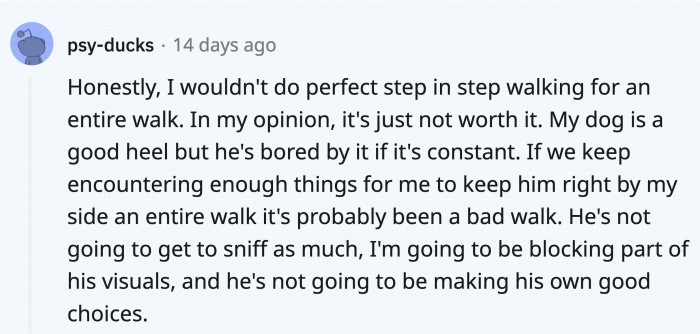
but it would be helpful if they can work their way to longer intervals

OP agrees and would just like to work on their walk so his dog would be less distracted

The socialization process is another critical aspect of training a dog to walk nicely. Socialization helps dogs learn how to interact appropriately with various people, animals, and environments.
For practical application, owners should gradually expose their German Shepherd mix to different social situations while reinforcing calm behavior with treats and praise. This exposure should be controlled and positive, allowing the dog to build confidence and learn appropriate responses to new stimuli.
Furthermore, understanding a dog's personality can significantly influence training outcomes.
Research in animal behavior suggests tailoring training approaches to suit individual dog temperaments can enhance effectiveness.
For example, a more timid dog may require a gentler approach, while a more assertive dog might respond better to a firmer strategy.
Someone pointed out that OP’s GSD mix’s behavior is understandable...
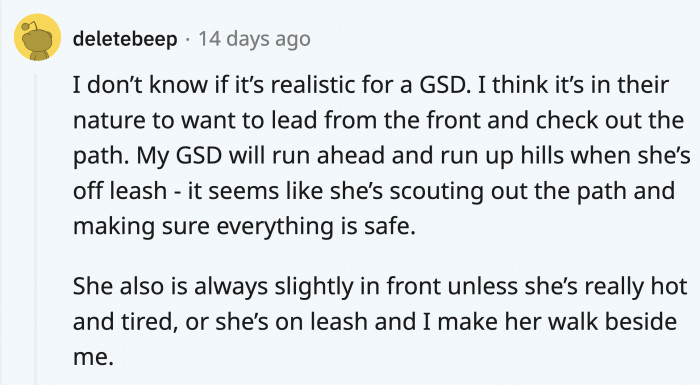
as they also have one of their own who exhibits the same trait

The traits of dogs can vary depending on what breed they are. So most times, it’s all trial and error until you achieve what works for both you and your pet.
Luckily, there’s an abundance of pet owners who are willing to share their experiences with other people. For OP, it’s just a matter of finding what applies best to her pet and sticking with it.
The Role of Environmental Factors
Environmental factors also play a significant role in a dog's ability to learn.
For instance, distractions in the training environment can impede learning and retention.
Training a German Shepherd mix to walk nicely requires more than just basic commands; it involves understanding the psychological principles that govern canine behavior. By tapping into these principles, owners can achieve more effective training outcomes while fostering a deeper bond with their pets.
Insights into how dogs learn can significantly improve training techniques, making walks more enjoyable for both the owner and the dog. The path to a well-trained dog is not only about obedience; it enriches the owner’s life and enhances the overall companionship.
Training a dog, particularly a German Shepherd mix, requires an understanding of the principles that govern behavior.
Before you try treats, check out the Reddit-style tips for training a hyperactive German Shepherd, no trainer, no treats.
Share this article:





