
Random Facebook User Makes Wild, Sweeping Claims About Cats And Their Owners, Advises All Cat Owners To Seek Help

A random Facebook commenter managed to turn a simple pet conversation into a full-on identity showdown, and the OP got hit with the kind of sweeping claims that make your eyes do that “wait, what?” thing.
In the thread, the user started listing jobs and activities dogs supposedly help humans with, then pivoted to something darker and weirder, “I would happily eat a cat, but never eat a dog.” The OP questioned them, and the commenter responded by accusing the OP of harboring inappropriate feelings for their cat, then basically told them to seek help.
And honestly, the wildest part is how quickly this turned into a defense of pet ownership like it was personal territory.
They then listed out jobs and activities that dogs assist humans with.
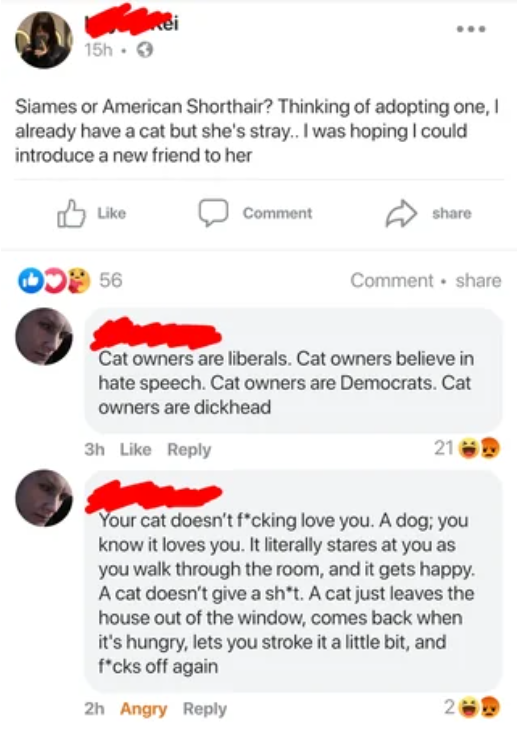
The commenter revealed something about themself when they said, "I would happily eat a cat, but never eat a dog."
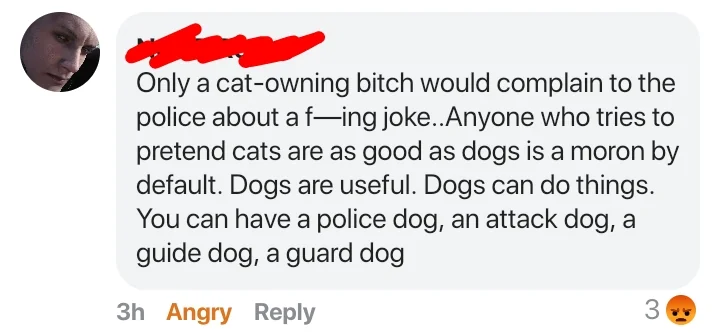
The irony was lost on them when they advised the OP to seek help after they accused them of harboring inappropriate feelings for their cat.

The article highlights the intense emotional landscape surrounding pet ownership, particularly how individuals react defensively when their choices are questioned. The Facebook user's sweeping claims about cat owners demonstrate this phenomenon perfectly. In a world where social media often amplifies such sentiments, it is evident that many people feel a deep connection to their pets, viewing any criticism as a direct threat. This reaction underscores a broader social dynamic where pet ownership is not just a personal choice but an integral part of one's identity. The extreme nature of the user's remarks reflects a societal inclination to protect that identity against perceived attacks, revealing just how passionately people invest themselves in their relationships with their pets.
The Psychology Behind Animal Ownership
The relationship between pets and their owners often reflects deeper psychological needs for companionship and emotional support.
That whole “dogs do jobs for humans” list was just the warm-up before the commenter went for the “eat a cat, never eat a dog” line.
The article highlights the intense emotional connection that many cat owners feel towards their pets, a bond that often spills into the realm of social media. As illustrated by the wild claims made by a random Facebook user, discussions around pet ownership can provoke passionate reactions that reveal deeper issues of identity and social belonging. The fervor with which some individuals defend their views on cats may stem from their personal experiences, leading to polarizing debates that can escalate quickly. This phenomenon is particularly evident in the online discourse surrounding pet care and ethics, where opinions clash and civility can easily dissolve into conflict.
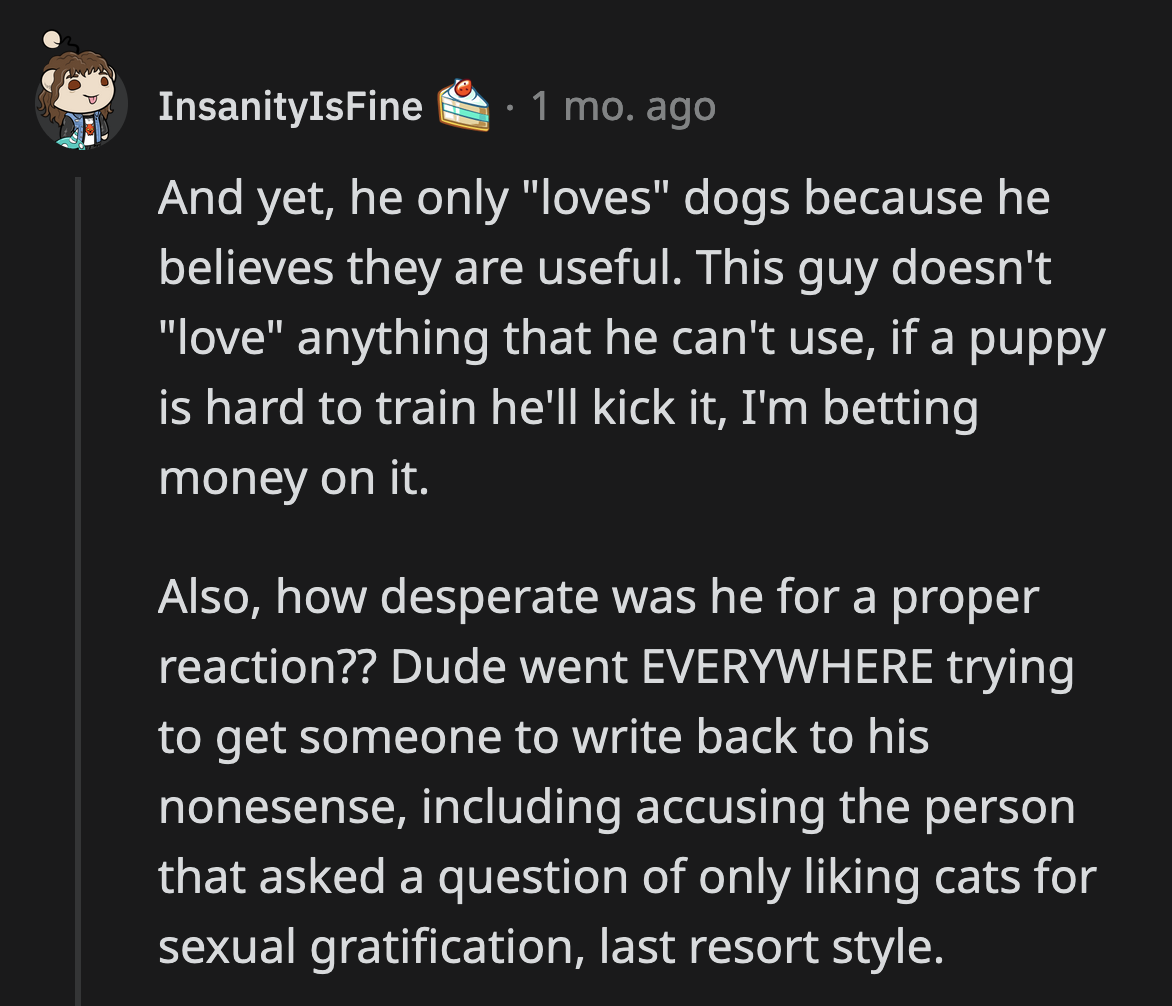
This person wanted OP to argue with them so badly.
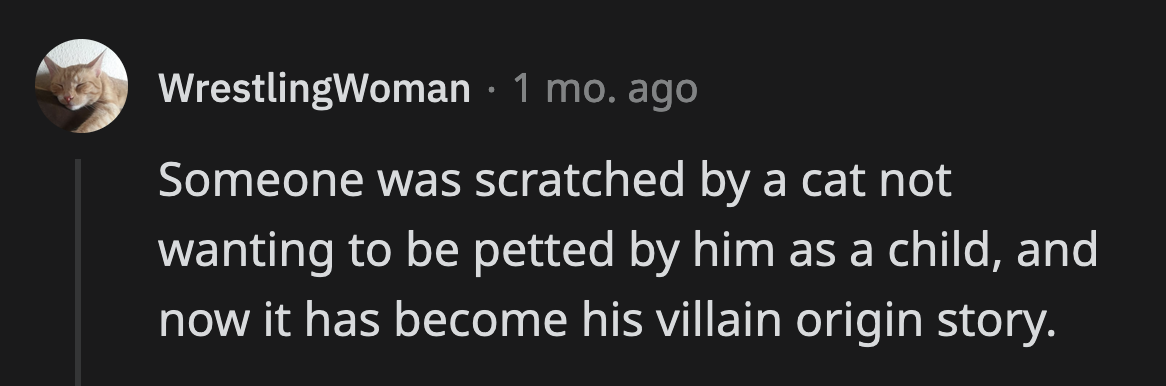
Two things can be true. The commenter could have had a bad experience with a cat and is also a jerk.

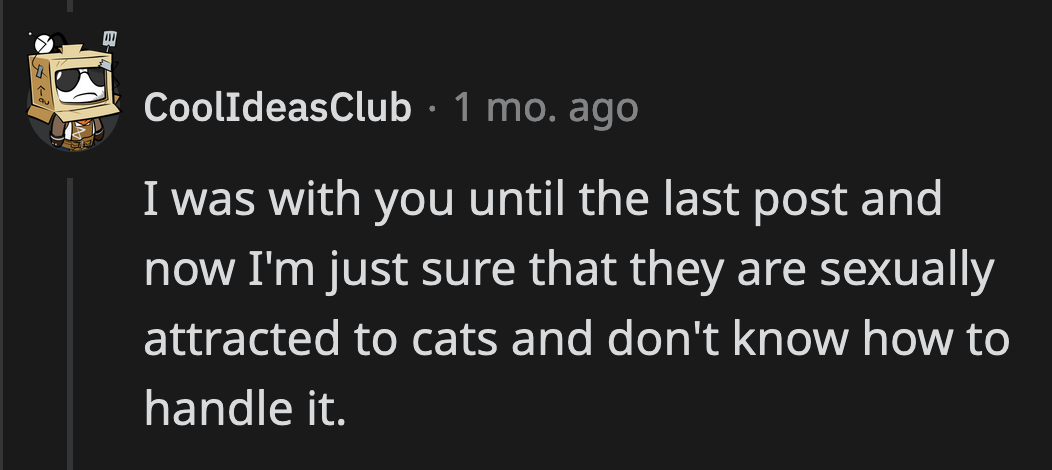
Classic projection right there.
In the realm of online discourse, particularly on platforms like Facebook, it becomes evident that users often project their personal beliefs and values onto their pets. This phenomenon suggests that individuals may view their cats as extensions of their own identities. The sweeping claims made by the Facebook user about cat owners reveal a profound emotional investment in the concept of pet ownership which can lead to defensive reactions when such beliefs are challenged. This connection is critical to understanding the dynamics at play in social media interactions. When someone feels their relationship with their pet is under scrutiny, it can trigger an escalation in conflict, showcasing how deeply intertwined our identities can become with our pets.
Studies show that people often project their feelings about animals onto broader societal contexts, leading to passionate debates about pet ownership and ethics. A study published in the Journal of Social Issues highlights that such discussions often evoke strong emotional responses, as they touch on personal values and beliefs.
Recognizing these emotional drivers can help individuals engage in more constructive conversations rather than divisive arguments.
Studies show that social media amplifies personal opinions, making it easier for individuals to express extreme views without the same accountability as face-to-face interactions.
This highlights the complexities of online discourse surrounding pet ownership and care.
Is it possible that cats are too complex for this person to befriend?
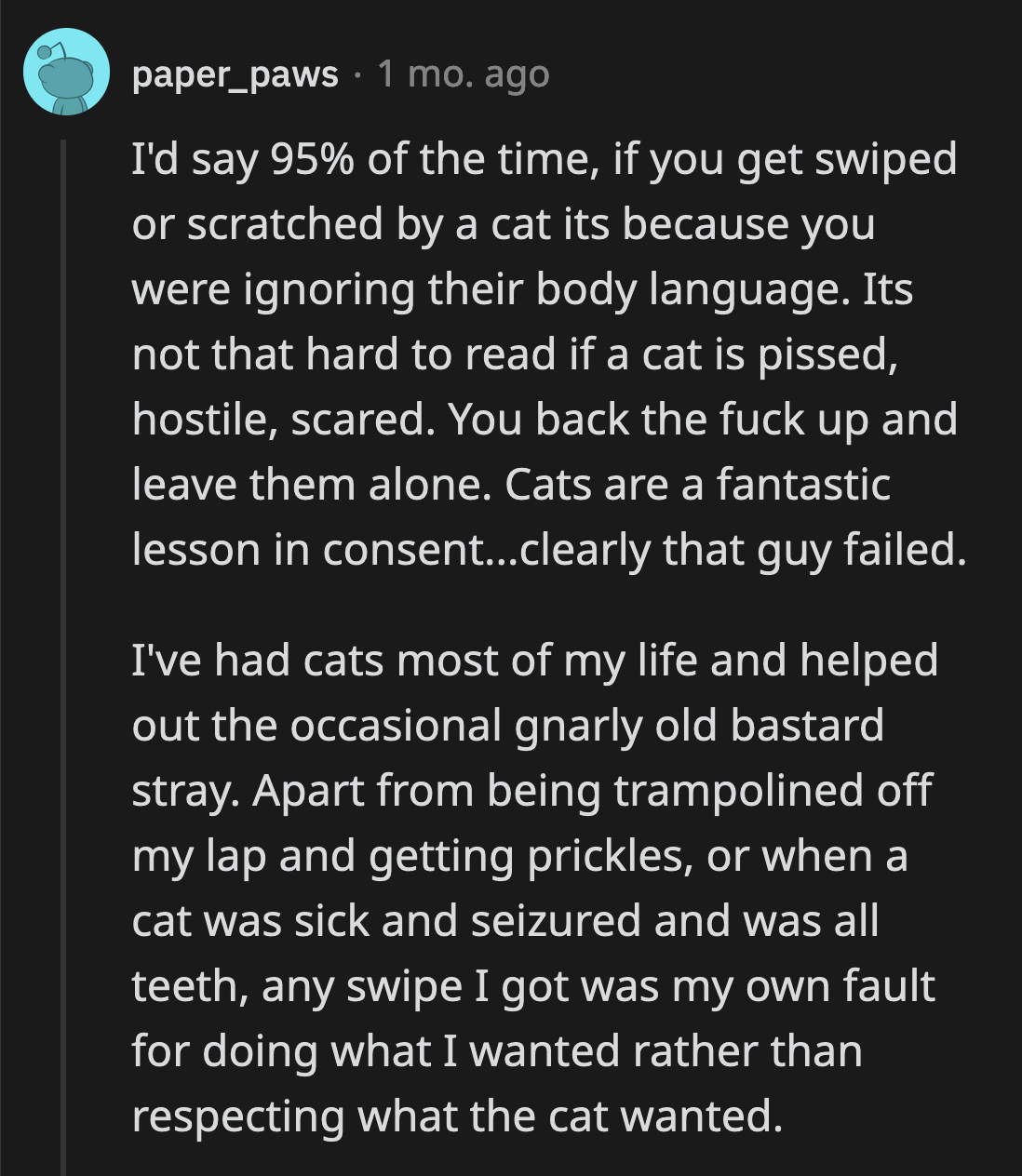
Cats can probably sense their intentions from miles away and run off before they can approach.
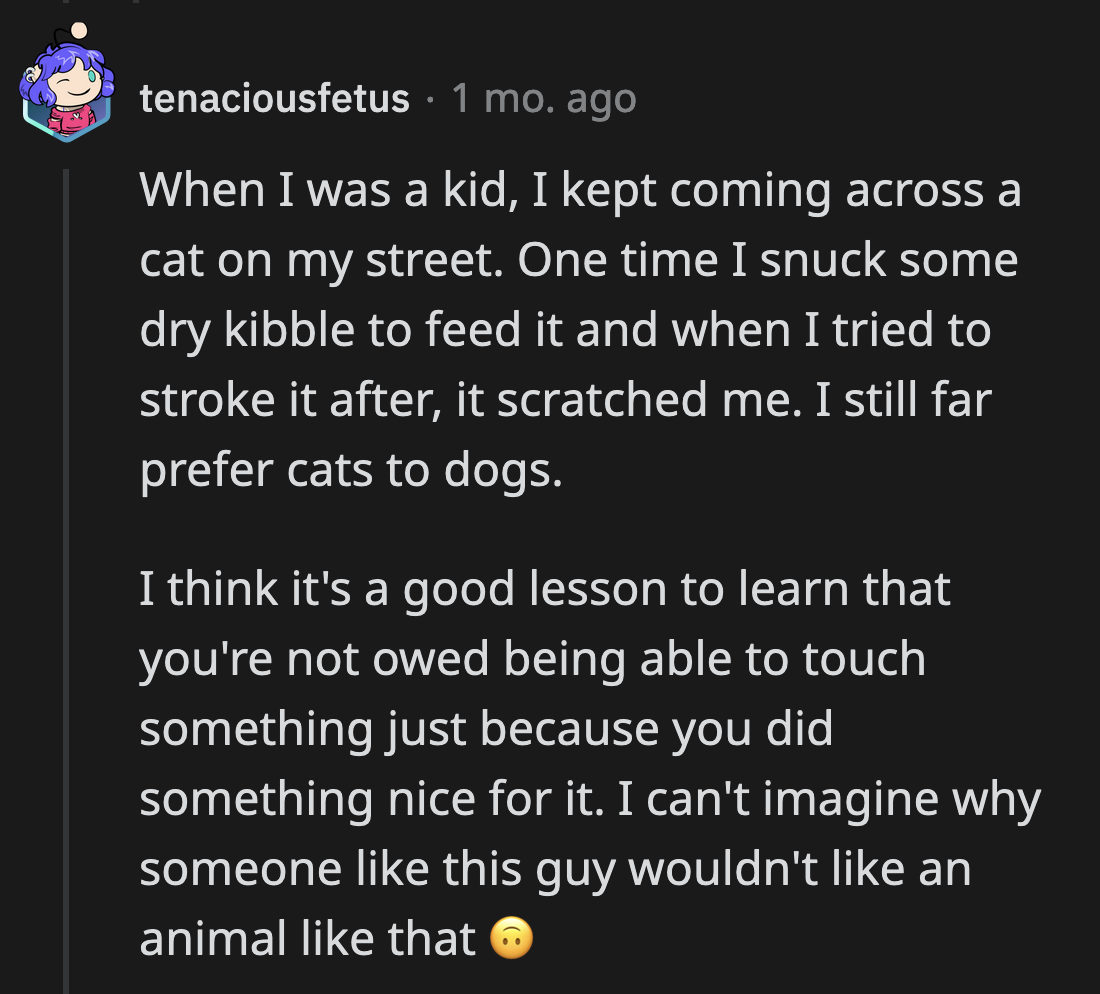
Cats got your back...
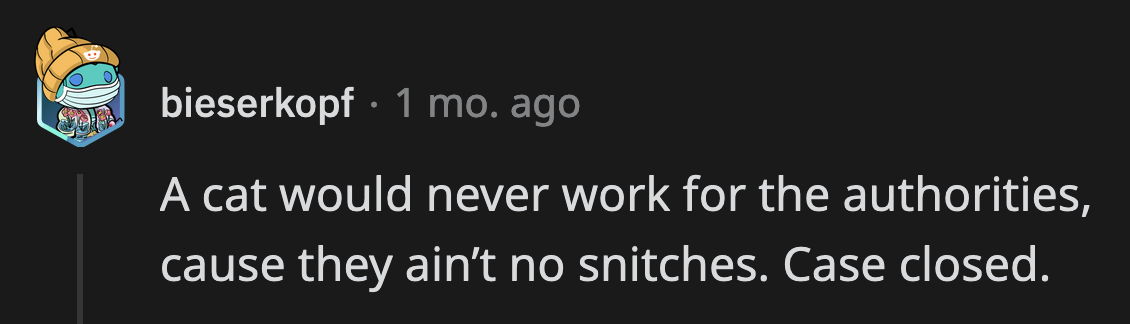
The moment OP got accused of having “inappropriate feelings” about their cat, the conversation stopped being about pets and started being about ego.
This feels like the woman who raged about her husband’s cat and got attacked online.
The discourse surrounding pet ownership, particularly in the case of cat owners, reveals underlying tensions related to identity and community. The Facebook user's sweeping claims about cat ownership serve as a striking example of how deeply intertwined personal values and lifestyle choices can become with our relationships with pets. When such beliefs are questioned, it can provoke strong emotional responses, highlighting the fragile nature of online identities. The intensity of the user's comments underscores how significant their role as a cat owner is to their self-conception, prompting not only defensiveness but also a call for others to seek validation or assistance in their own pet-related identities.
Empathy plays a crucial role in navigating discussions about animal ownership and ethics.
The Ethics of Pet Ownership
Research indicates that discussions around pet ownership often evoke ethical considerations, particularly when it comes to welfare and treatment.
This can create tension in discussions about pet care and ownership.
...meanwhile, dogs would trade their owners for a chicken nugget or belly scratches.
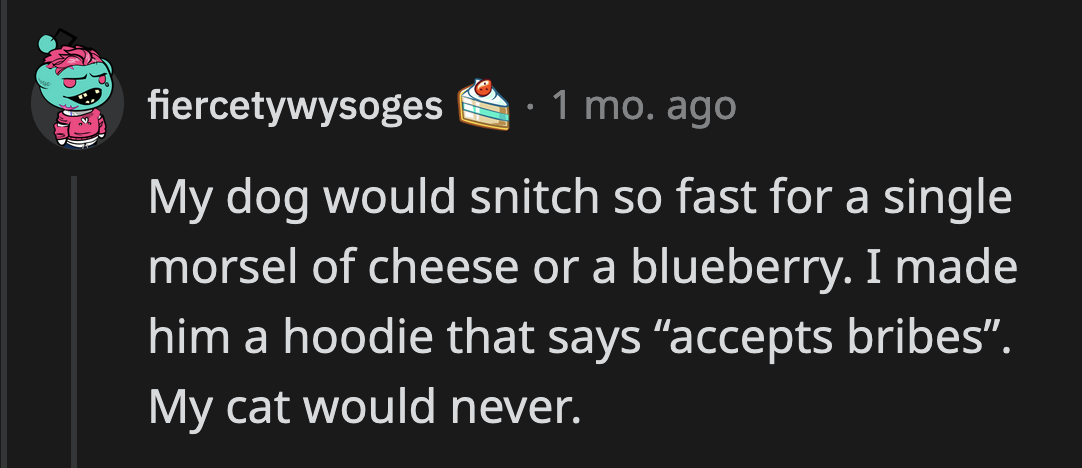
But pets are all different. They have distinct personalities. Not all dogs are affectionate and not all cats are aloof.
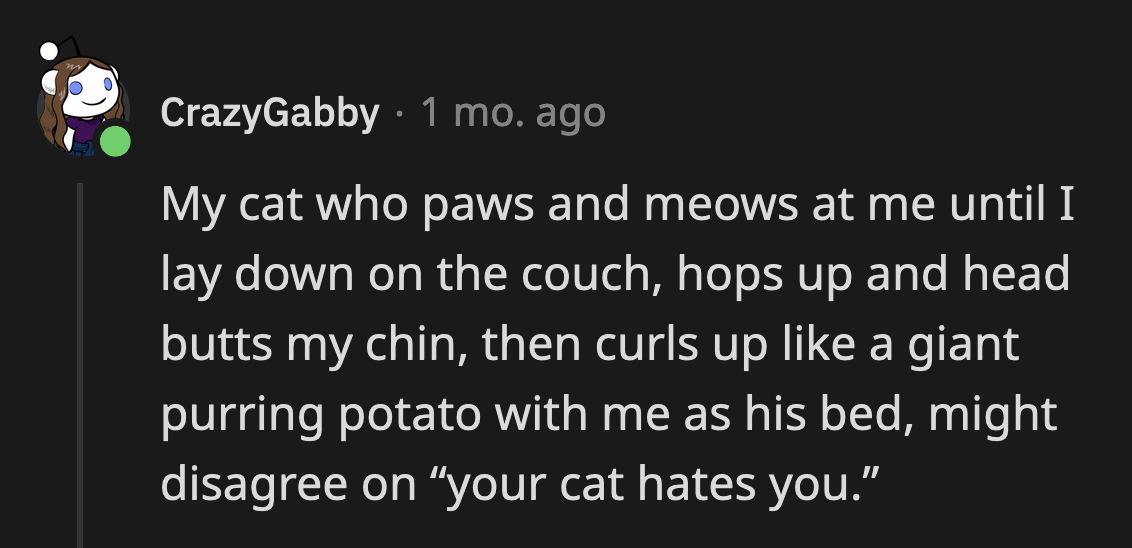
A person who willingly claimed online that they would eat a cat isn't someone anyone should hug.

The irony is brutal, because the commenter advised OP to seek help right after firing off the most emotionally charged, sweeping statements on the page.
By acknowledging the emotional weight behind these discussions, individuals can foster healthier dialogues and mitigate conflicts.
This approach can lead to a greater understanding of differing viewpoints and promote resolution.
Acknowledging the emotional weight attached to these issues can help individuals respond thoughtfully rather than reactively.
Practicing active listening and validating each other's feelings can foster healthier conversations about animal ownership.
Practically, it’s essential for individuals expressing strong opinions about pet ownership to engage in respectful dialogue with others.
Encouraging open conversations about differing views can foster understanding and reduce tensions.
Additionally, finding common ground, such as shared values around animal welfare, can help strengthen relationships.
It must blow the commenter's mind when they meet someone who has cats and dogs.

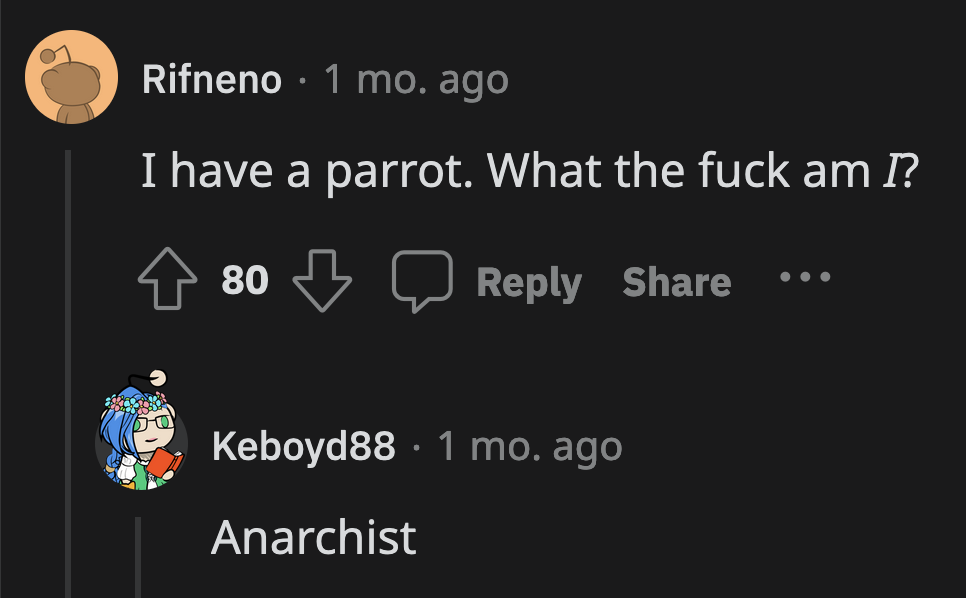
If you have hamsters, you're a socialist. We don't make the rules.
They only claim to love dogs because they find them useful.
Now every time cat ownership came up in the thread, it felt like the commenters were protecting their bond instead of discussing it like a normal debate.
Open communication is vital when navigating sensitive topics like pet ownership.
Engaging in open dialogue about differing opinions on animal ethics is essential for fostering understanding and reducing conflict.
Navigating controversial topics like pet ownership requires sensitivity and empathy.
Research shows that demonstrating understanding during discussions can significantly reduce conflict.
It was pathetic that the commenter kept spamming the OP's replies to get a rise out of them and still failed. They were looking for an argument so badly based on their provocative responses to such an innocent question.
Redditors wondered what their experience with cats was that made them believe the worst of them. One thing is certain: this person shouldn't be trusted to care for any animal ever after those questionable responses.
Ultimately, creating an environment where all opinions are respected can promote healthier discussions about pet care and ownership.
The recent claims made by a random Facebook user about cat owners highlight the intense emotions often tied to discussions of pet ownership. The article captures how social media can amplify these sentiments, with anonymity allowing users to express extreme views without accountability. The need for empathy and respect is crucial in these dialogues, especially given the ethical considerations surrounding pet care. To truly address conflicts and differing opinions on the topic, fostering open communication is essential. The sweeping generalizations made online can lead to misunderstandings, but with a more constructive approach, individuals might engage in healthier discussions about their beloved pets.
In the realm of social media, conversations surrounding pet ownership, particularly cats, reveal significant insights into the psychological landscape of their owners. The recent claims made by a random Facebook user highlight a troubling trend where anonymity breeds hostility rather than constructive discourse. As the article illustrates, the advice for cat owners to seek help suggests a deeper societal issue regarding the perceptions of pet ownership and responsibility.
Encouraging empathy and fostering open dialogue are crucial in navigating these contentious discussions. By promoting understanding and respect among pet owners, we can aspire to cultivate healthier interactions that reflect a more ethical approach to animal companionship.
Ultimately, fostering empathy and compassion is key in resolving conflicts over pet ownership.
The relationship between cat owners and their feline companions is deeply rooted in emotional connections and personal identity.
The OP didn’t just get roasted, they got diagnosed by a stranger who thinks cats are edible.
Want more cat-owner chaos, read how an adoption denial sparked bad luck wishes for the poor creature in this post.
Share this article:





