Possessive Man Gets Upset After Discovering That His Friend Vaccinated Cat They Found Together

Some people don’t recognize a favor, and this one Reddit story is proof. A cat got tossed out the car window, and two friends ended up rescuing it together, like a feel-good movie scene.
Then the “friend bond” hit a speed bump. The OP decided to adopt the cat, and even more importantly, got it vaccinated. That’s when the other guy flipped, acting like the cat belonged to him, despite the fact that they found it in the same moment and saved it together.
What makes it messy is that the OP thinks vaccinating a rescued cat is the responsible move, while the friend thinks that decision was some kind of betrayal.
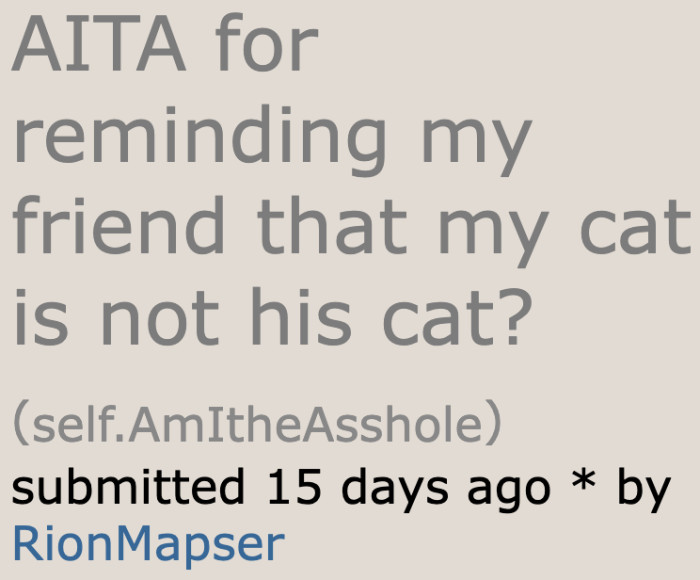
The OP wonders if it was harsh of them to remind their friend that the cat doesn't belong to him.
It seems that the friend is being too possessive of the cat since they rescued it together.
The poor cat was thrown out the car window, so they rescued it. The OP decided to adopt it.
Unfortunately, the OP's friend got upset with them after finding out that they had the cat vaccinated.
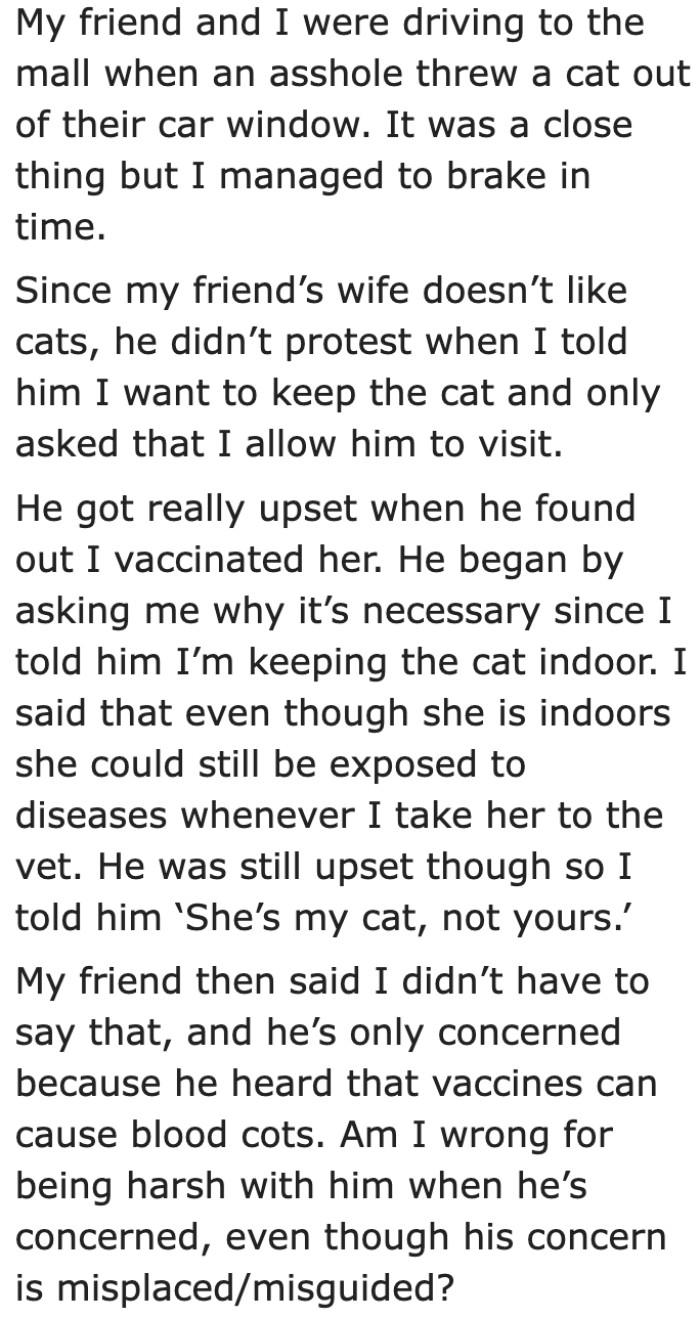
Even though they found the cat together, the friend has no say in what the OP wants to do with it.
Vaccinations are a very responsible thing to do as a cat owner, so the OP doesn't need to listen to their friend.
The bond between humans and animals can evoke strong emotions, as illustrated by the possessive man in this scenario. These attachments often stem from deep-seated emotional needs for companionship and love. The man's upset reaction to his friend’s actions highlights how personal attachments can lead to feelings of jealousy and possessiveness, which are common in human relationships.
Research indicates that such emotional connections can significantly impact an individual's mental health and overall well-being.
The whole thing starts after the cat is thrown out the car window, and the OP and this possessive friend both jump in to rescue it.
The situation between the possessive friend and the vaccinated cat reveals deeper psychological undercurrents that are often overlooked. The possessive individual's reaction may be rooted in insecurities and a need for control, reflecting an anxious attachment style. This type of attachment can provoke conflicts, particularly when a friend takes an action that appears to undermine the possessive person's sense of ownership or influence. In this case, the decision to vaccinate the cat—an act of care and responsibility—has sparked tension, illustrating how possessiveness can cloud judgment and strain friendships. The possessive friend’s inability to appreciate the cat's well-being over his own feelings of control underscores a fundamental struggle between autonomy and attachment that frequently arises in interpersonal relationships.
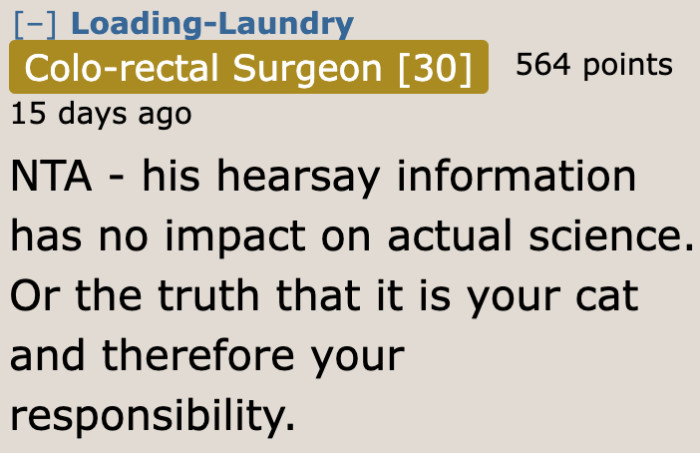
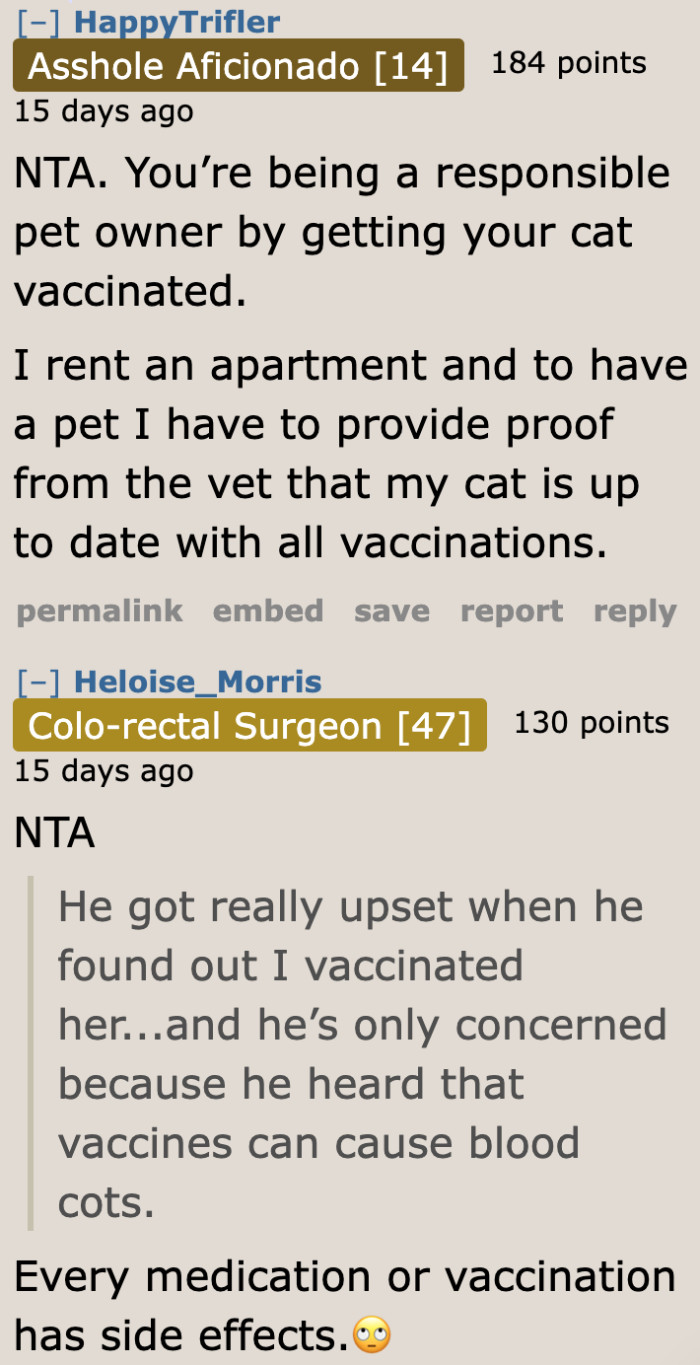
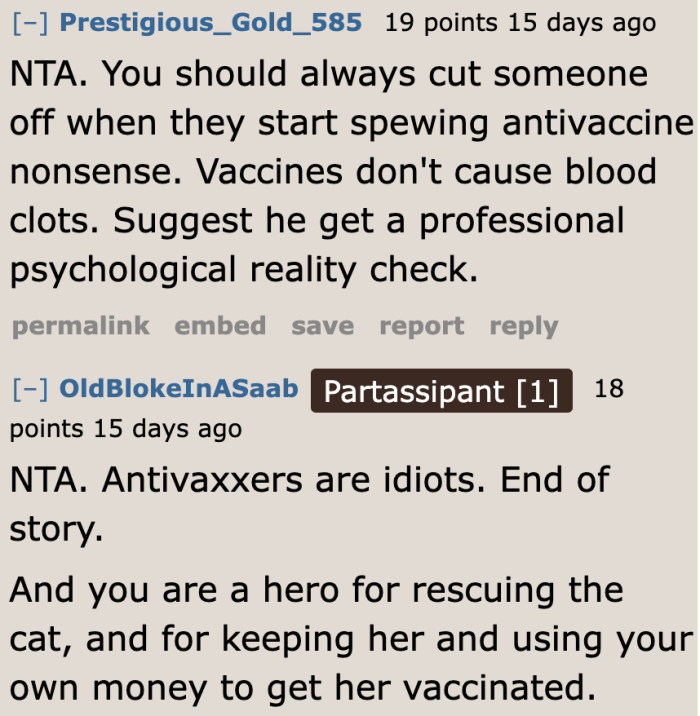
Vets know better than this friend who was with them when they rescued the cat.
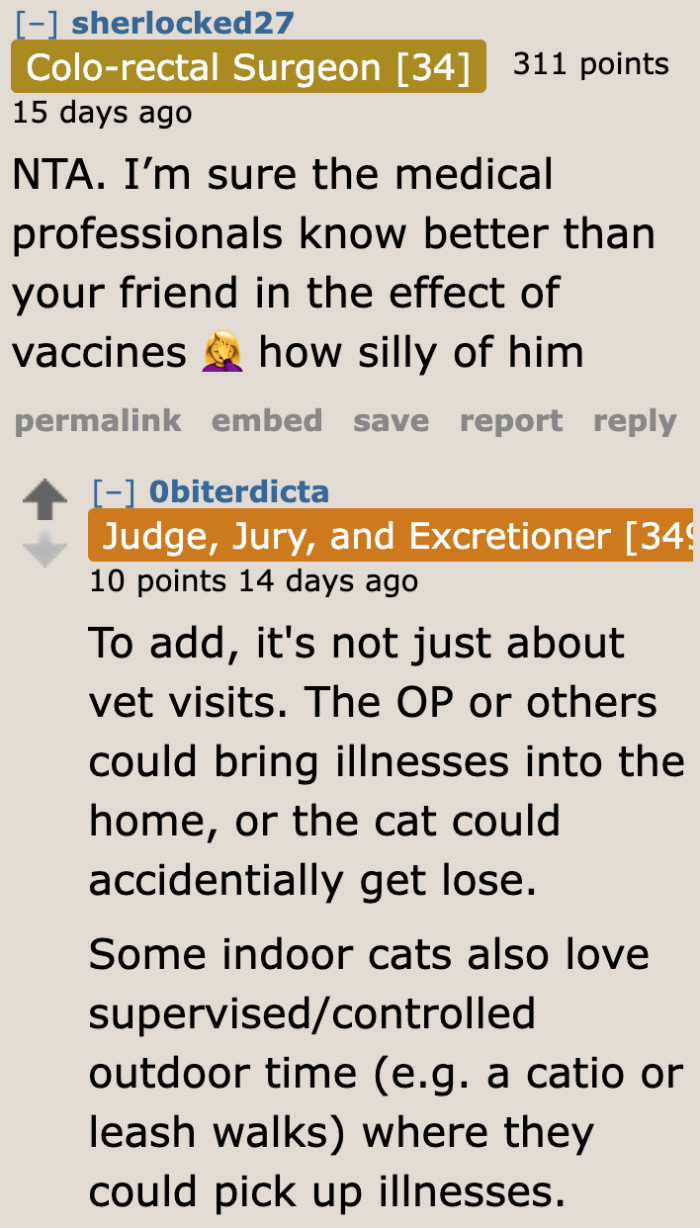
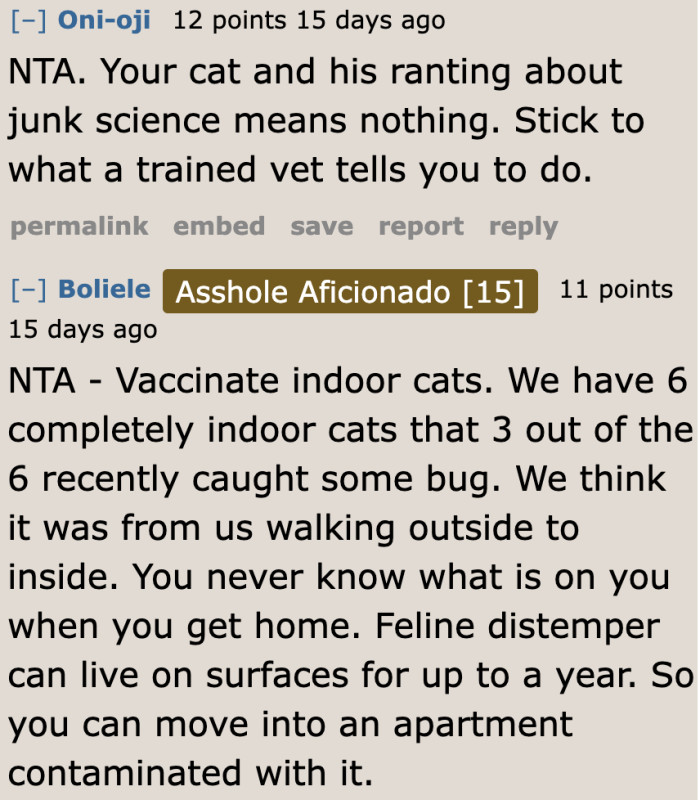
Redditors support the OP's decision to have the cav vaccinated.
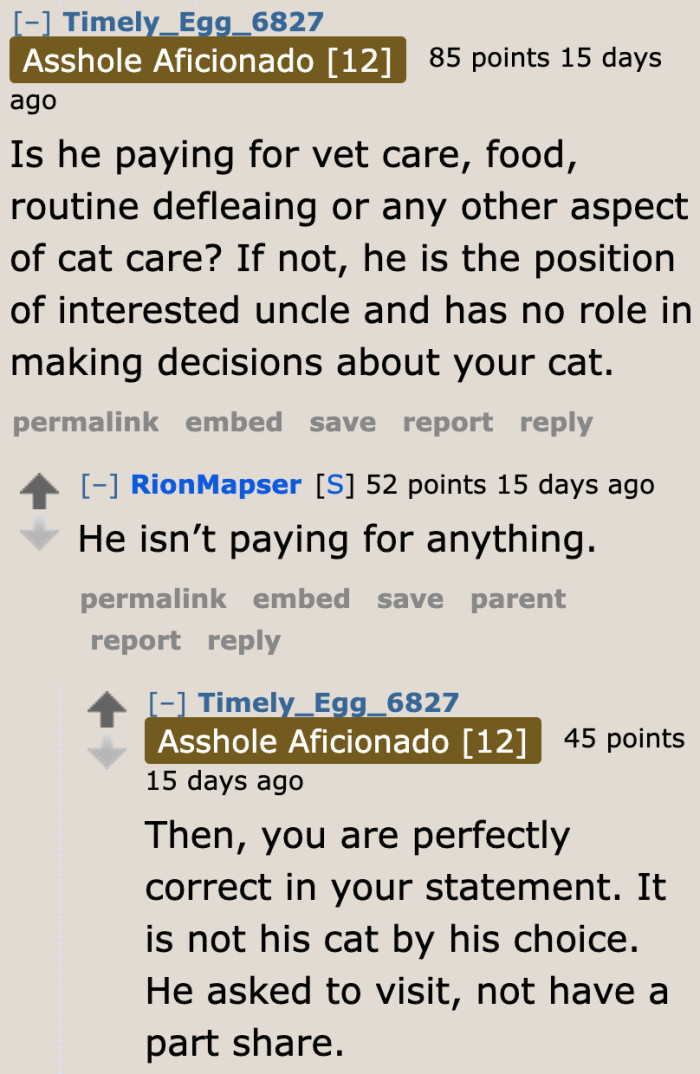
The friend isn't paying anything for the cat. Therefore, it's not a shared responsibility.
The decision on what to do with the cat is the OP's alone.
This situation also reflects the complexities of interpersonal relationships, particularly when it comes to shared responsibilities or interests. Psychological studies suggest that possessiveness can arise from insecurity or fear of loss, often leading to conflict. Understanding the underlying motivations for these feelings can open up pathways for healthier communication and resolution.
The situation involving the possessive man and his friend who vaccinated a cat they found together highlights the deeper emotional currents that often accompany possessive behaviors. This incident underscores how unmet emotional needs can manifest in feelings of insecurity and undervaluation. The man's reaction to his friend's decision to vaccinate the cat reveals a need for control and validation in relationships. Understanding these emotional drivers is crucial, as it points to the possibility of personal growth and the development of healthier dynamics. Instead of viewing the vaccination as a shared responsibility, his possessiveness turned it into a point of contention, illustrating how emotional insecurities can complicate what should be a collaborative and caring decision about a beloved pet.
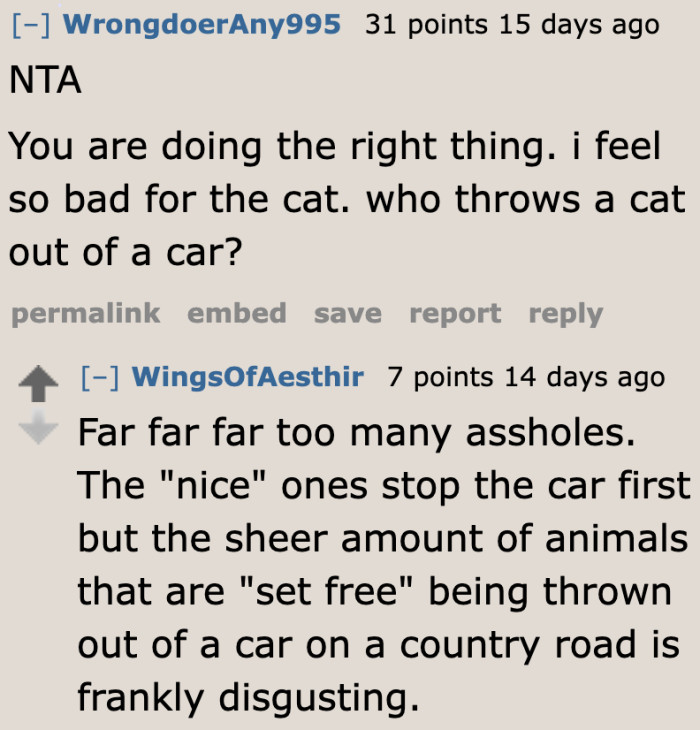
Some people are just heartless.
Who in their right mind would throw a cat out of a car window?
It's a good thing that the cat went to the OP. Looks like the friend doesn't bother looking at facts when it comes to pet care.
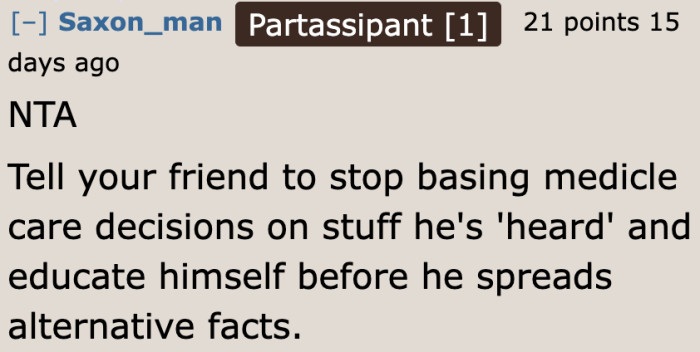
The OP can try educating his friend whenever there's an opportunity.
Imagine if the OP's friend decided to own a pet while believing in hearsay beliefs.
Once the OP adopts the cat, the friend’s “we rescued it together” energy turns into full-on ownership mode.
Speaking of “poisonous” accusations, check out how a partner refused to vaccinate his outdoor cat.
The emotional turmoil experienced by the man in the story highlights how jealousy can undermine relationships, especially when personal insecurities come into play. His reaction to his friend vaccinating the cat they found together suggests a deeper concern about his role in their friendship and his connection to the cat. By viewing this situation through the lens of emotional vulnerability, one can see how the man's upset is not merely about the vaccination but rather a reflection of his fears regarding loss and attachment. Recognizing these underlying feelings could pave the way for more compassionate interactions, encouraging all parties involved to engage with empathy and understanding.
Friendships can be particularly challenging when possessiveness comes into play. Studies published in the Journal of Social and Personal Relationships show that possessive behaviors can lead to conflicts and strain between friends. This can create an environment where individuals feel pressured to choose sides or alter their behavior, ultimately damaging the friendship.
The OP doesn't have to listen to their friend. They need to listen to what the vet recommends.
The tension really ignites when the friend finds out the OP vaccinated the cat and takes it personally.
There's no harm in the OP gently reminding their friend about who really owns the cat. When it comes to our furry friends, boundaries are key, especially if someone's getting a bit too possessive.
Now, it seems like this friend might not be the go-to expert on cat healthcare. Instead of taking their advice, let's stick to the real MVPs—facts and vets.
Addressing possessiveness requires open communication and boundaries.
Emotional intelligence plays a crucial role in managing possessiveness in relationships. Developing emotional intelligence involves self-awareness, empathy, and effective communication, which can significantly enhance interpersonal dynamics.
Encouraging possessive individuals to develop their emotional intelligence can be beneficial. Engaging in self-reflection and seeking feedback from trusted friends can help them gain insights into their behavior and its impact on others. Additionally, engaging in therapy or support groups can provide a safe space for exploring these feelings and developing healthier relationship patterns.
Finding Balance in Friendships
Ultimately, maintaining a healthy friendship requires balance and respect for each other's autonomy.
By prioritizing open communication and understanding, friends can navigate possessive behaviors more effectively and strengthen their bond. Encouraging personal growth and emotional intelligence can lead to more balanced and supportive friendships, enhancing overall well-being for everyone involved.
Now the OP is stuck wondering if they were too harsh for reminding their friend the cat doesn’t belong to him.
The situation between the man and his friend highlights how possessiveness can complicate even the simplest of friendships. The man’s reaction to his friend's decision to vaccinate the cat they found together suggests that there may be underlying emotional insecurities at play. This possessiveness, particularly regarding a shared responsibility for a pet, can strain relationships significantly. Instead of viewing the vaccination as a positive step for the cat’s health, the man perceives it as a breach of control over the situation. This case illustrates the importance of open communication in friendships, especially when it comes to decisions impacting shared interests. Encouraging a culture where autonomy and respect are prioritized could help mitigate such conflicts in the future, allowing friendships to thrive rather than falter under the weight of jealousy or control.
Moreover, open communication is vital in resolving feelings of jealousy. Discussing feelings of possessiveness and seeking reassurance from friends can help alleviate tensions and misunderstandings. In this case, the man might benefit from expressing his feelings directly to his friend and discussing the implications of their shared responsibilities towards the cat.
Compromise is essential in maintaining healthy friendships. Successful friendships often require a willingness to consider each other’s needs and feelings. In this instance, the man could explore ways to involve his friend in caring for the cat that honor both their feelings without escalating conflict.
Research indicates that mutual respect and understanding can lead to stronger, more resilient friendships.
Additionally, seeking mutual agreements about the cat's care can help foster a sense of teamwork between the friends. Creating a structured plan for sharing responsibilities can alleviate feelings of possessiveness while promoting a collaborative spirit.
Emotional regulation plays a vital role in resolving the conflict presented in this story. The possessive man's reaction to his friend vaccinating the cat they found together highlights a deeper issue of jealousy and insecurity. By failing to manage these feelings, he risks damaging their friendship and causing unnecessary tension. Techniques such as mindfulness and cognitive reframing could serve him well, offering pathways to better understand and control his emotions. By adopting such strategies, he could not only enhance his emotional well-being but also strengthen his relationships, fostering a more supportive environment for the cat they both care for.
Ultimately, fostering a supportive environment for open communication can help friends address feelings of possessiveness and jealousy. Encouraging honest discussions about emotions can lead to a deeper understanding and strengthen the friendship.
The recent incident involving a man upset over his friend's decision to vaccinate a cat they found together highlights the complexities of possessiveness in friendships. The emotional dynamics at play here are emblematic of a deeper issue that can arise when individuals feel a sense of ownership over shared experiences, particularly when it comes to beloved pets. This situation illustrates how jealousy can manifest in unexpected ways, prompting a reaction that undermines trust and open communication.
To navigate such feelings effectively, it is crucial for friends to engage in honest conversations about their expectations and feelings toward shared responsibilities. By fostering a culture of understanding and compromise, friendships can not only survive these challenges but also emerge stronger. Ultimately, the wellbeing of the cat should serve as a reminder that prioritizing the needs of those we care for can help alleviate possessive tendencies and promote healthier relationships.
He may have wanted a shared rescue, but he clearly expected shared control too.
Then read how one lady gave her future roommate a choice, her cat at the vet or no move-in.
Share this article: