Husband Plans to Get Rid of All Pets Because Wife Brought Them Home Without His Permission and He's Tired of Doing All the Work

A husband is stuck in a house full of pets, and it all started with one move his wife made without asking him first. He says she brought home a dog, and then another set of cats, like it was no big deal, even though he never agreed to any of it.
Now he’s the one doing the daily work, cleaning up, feeding them, and dealing with the fallout, while he feels completely sidelined. To make it worse, he’s not just annoyed, he’s plotting to get rid of the animals, and he’s worried his kids and his wife’s family will see it as an unforgivable betrayal.
Here’s the part that makes it messy, he’s not arguing about pets, he’s arguing about control.
A Husband Feels Stuck About the Situation He's In.

The OP Mentions That His Wife Never Told Him That She's Getting Pets.
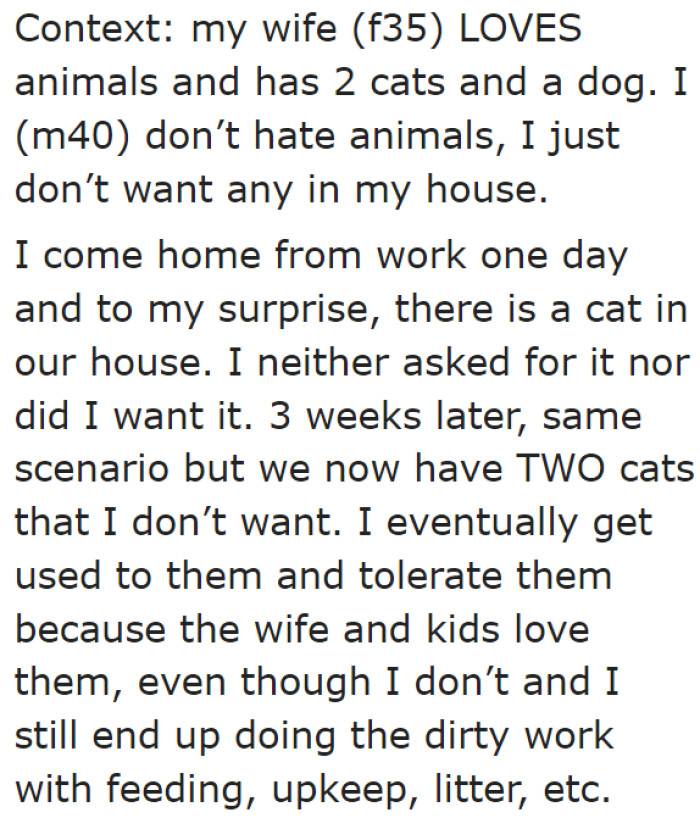
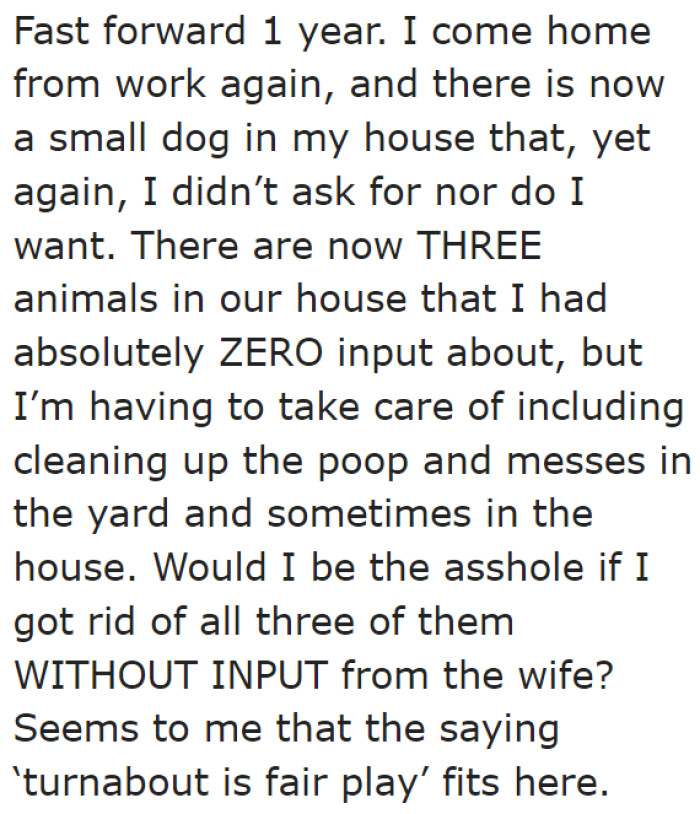
Then He Has to Deal with a Dog, Which His Wife Took Home Without His Consent.
Now, he wants these poor furballs out of the house.
Effective communication is crucial in maintaining healthy relationships, particularly when it comes to shared responsibilities.
His Family Would Hate Him If He Continues His Plans.
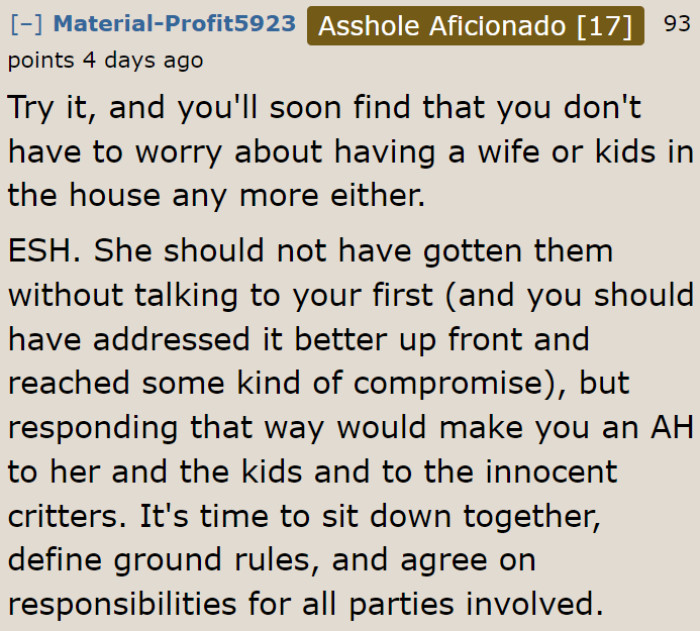
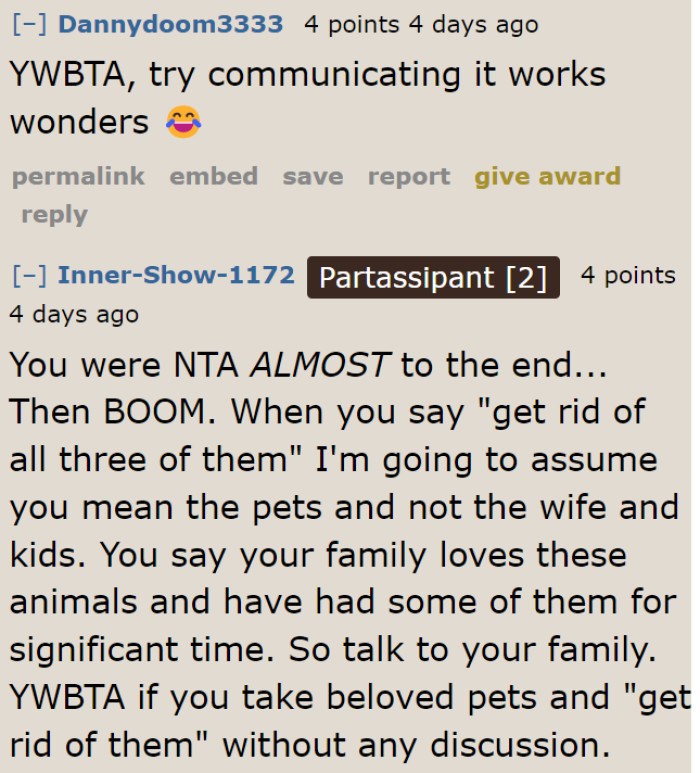
A Discussion Needs to Be Held Between the OP and His Wife.
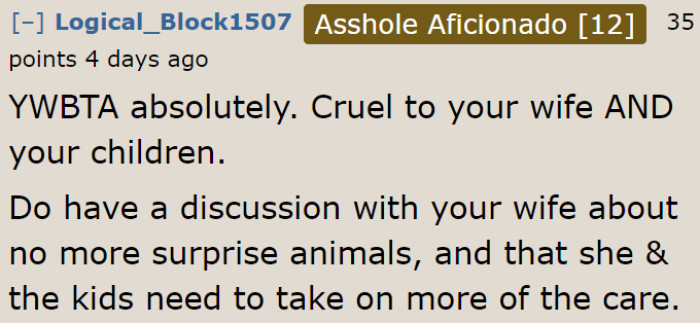
He Should Have Done Something After His Wife Brought the Cats Home.
That’s when he realizes his wife never even gave him a heads-up before the dog and cats showed up.
The decision to remove pets without consulting one’s partner can reflect deeper issues of control and autonomy in relationships.
Studies show that when individuals feel their autonomy is threatened, they may respond by asserting control in other areas, such as managing household responsibilities.
This dynamic can lead to conflict and feelings of betrayal, emphasizing the need for collaboration in decision-making processes.
Once He Gets Rid of the Pets, His Kids Will Forever Remember His Evil Deed.
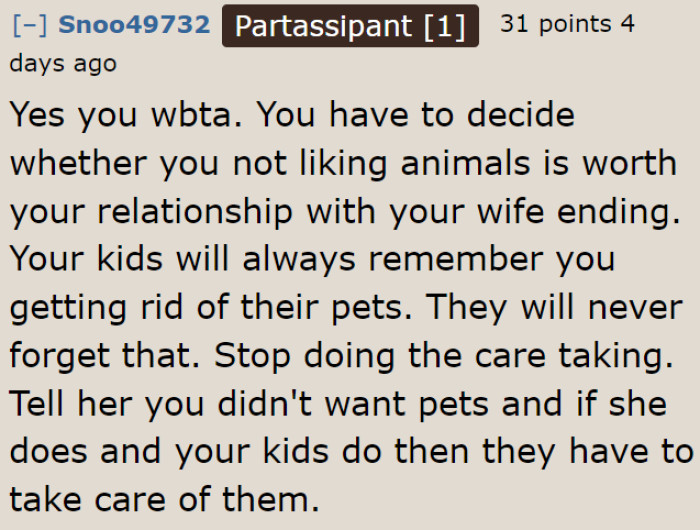
The OP Needs to Stand Up for Himself and Refuse to Accept Things He Isn't Comfortable With.
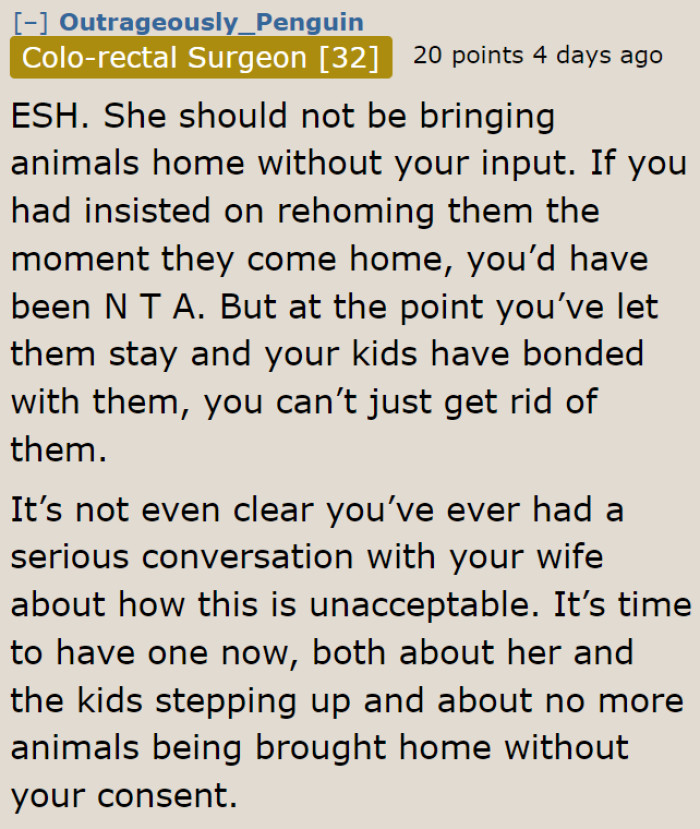
The Animals Don't Deserve to Be Treated This Way.

After he’s been stuck doing all the work, he starts talking about getting rid of the pets entirely.
Strategies for Effective Collaboration
Collaborative decision-making can enhance relationship satisfaction and foster emotional intimacy.
This approach encourages both partners to express their thoughts and feelings openly, promoting understanding and cooperation.
This is similar to the woman who brought home a cat and wrecked her marriage after her husband refused.
The OP Needs to Talk to His Wife and Tell Her That She Can't Just Assume That He's Okay with Major Decisions Without His Consent.
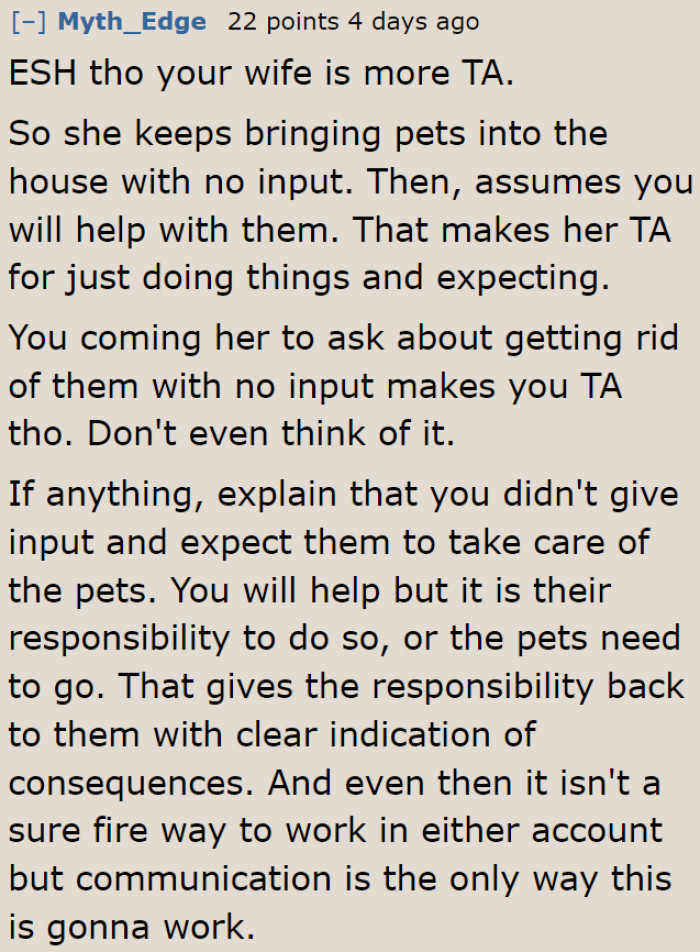
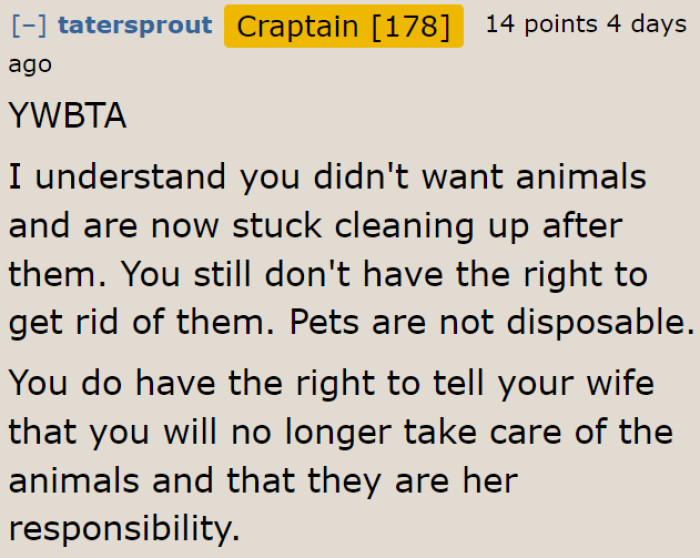
Does He Want to Breed Resentment in His Kids?

Then the “family would hate him” warning kicks in, because his kids are watching how he handles it.
Moreover, regular check-ins about household responsibilities can help prevent conflicts from arising.
The Wife Needs to Understand That He Needs to Have a Say in These Kinds of Decisions.
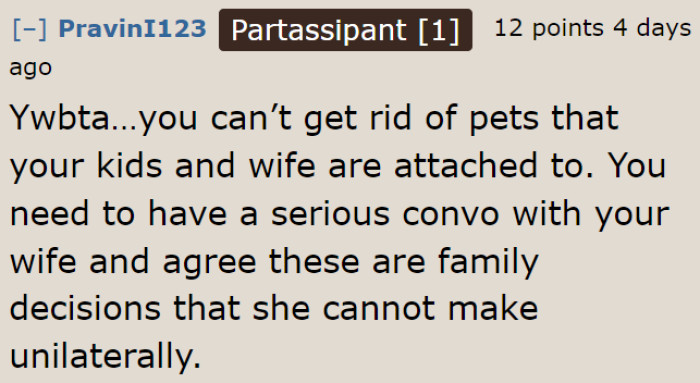
He Shouldn't Do Something Wrong to Make Things Right.
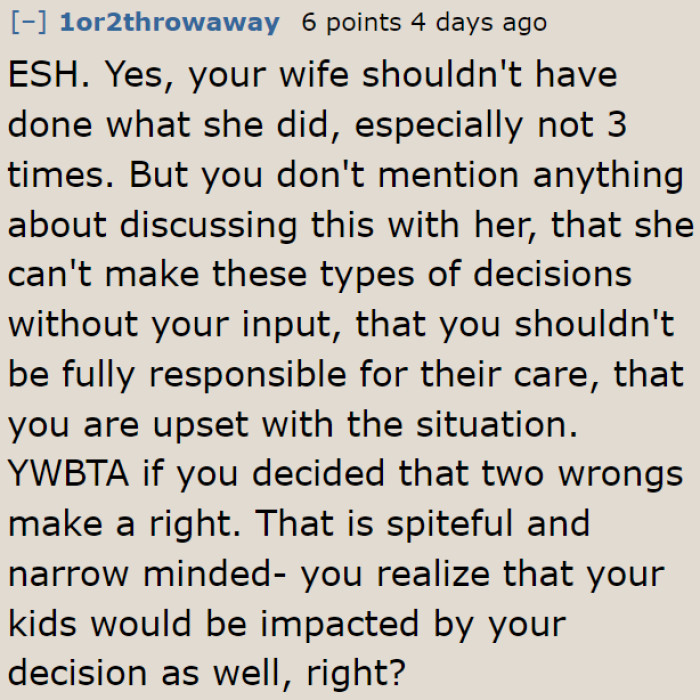
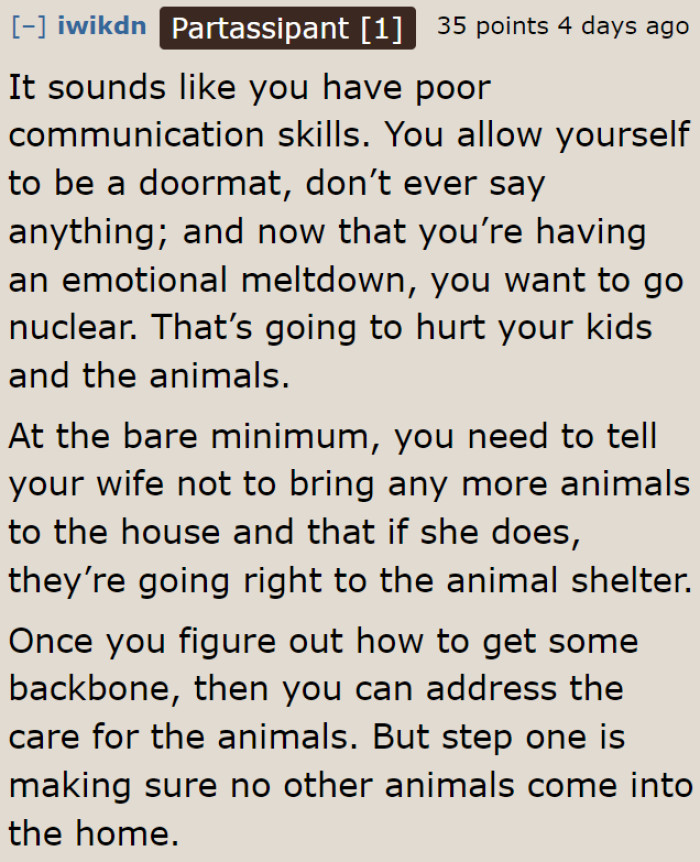
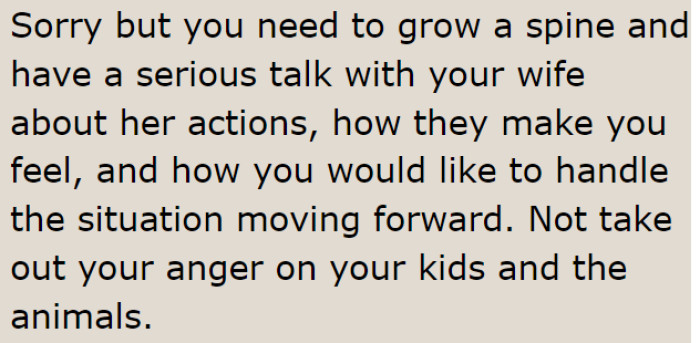
This Husband Needs to Grow a Backbone.
Shared values play a vital role in relationship satisfaction, particularly regarding important decisions like pet ownership.
Studies show that when partners align their values, they are more likely to navigate challenges successfully.
The Conversation About Animals Needed to Happen After the OP's Wife Brought Home the First Cat.
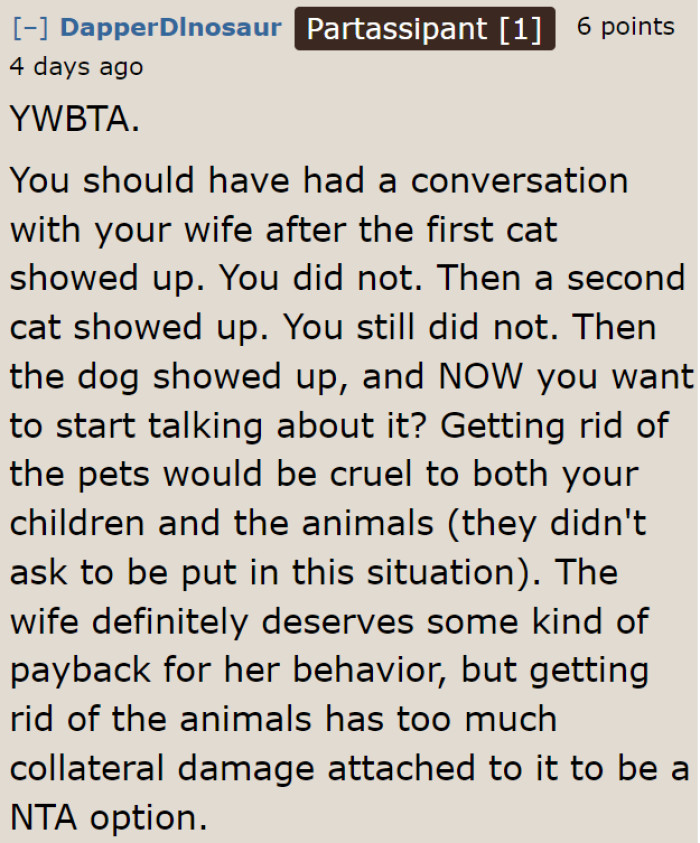
The Responsibility Needs to Be Distributed. It's Unfair That He Does All the Work When He Never Agreed to the Pets.
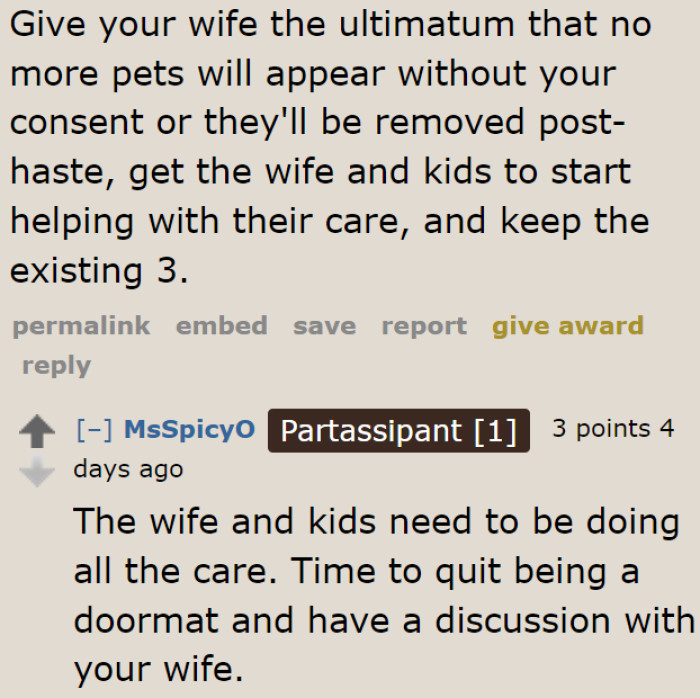
The OP Didn't Have to Wait for the Third Pet to Arrive to Raise This Issue.
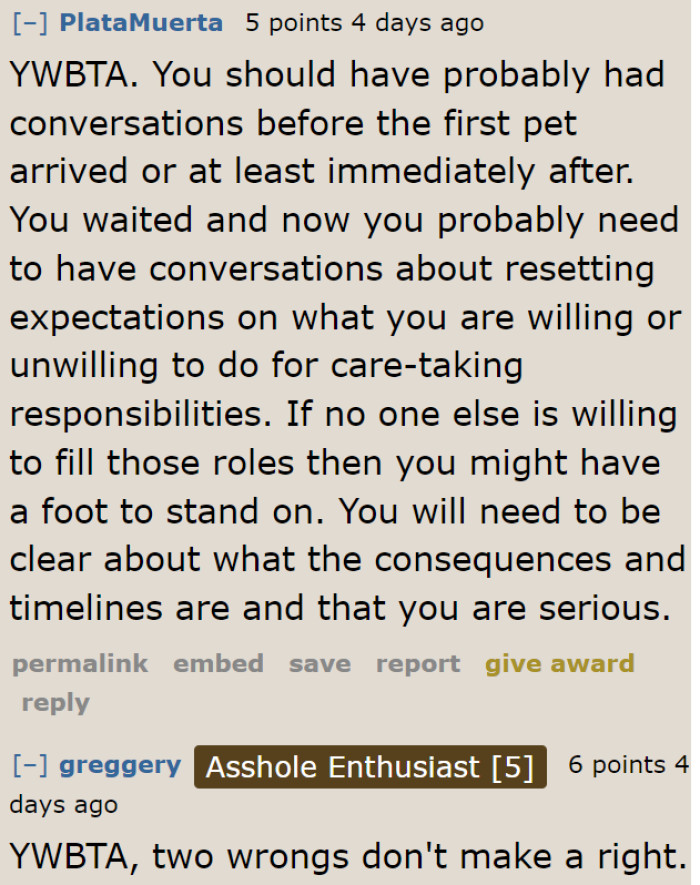
He's Also the A**hole for Trying to Involve the Innocent Animals in His Evil Plan.
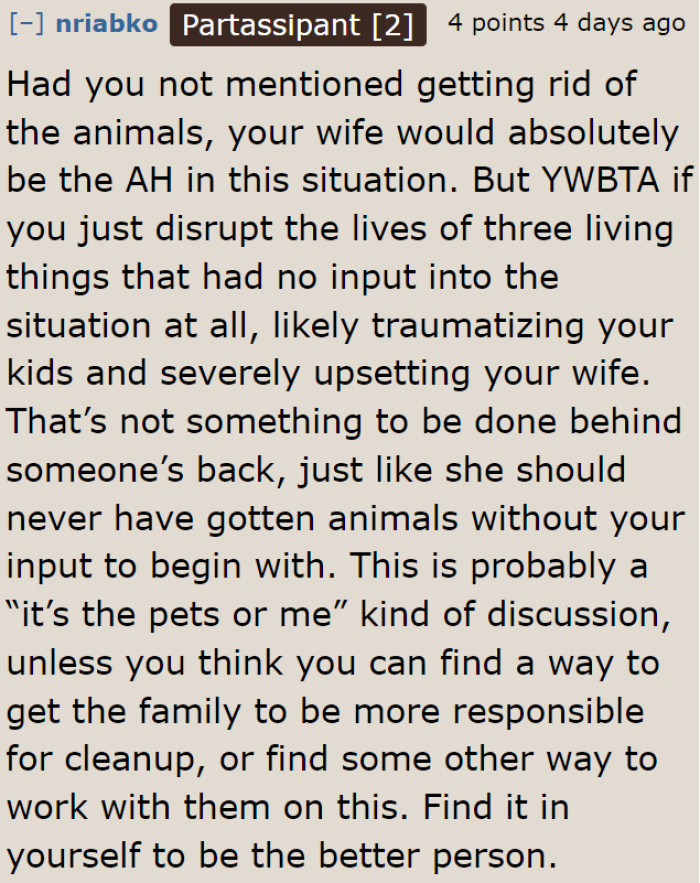
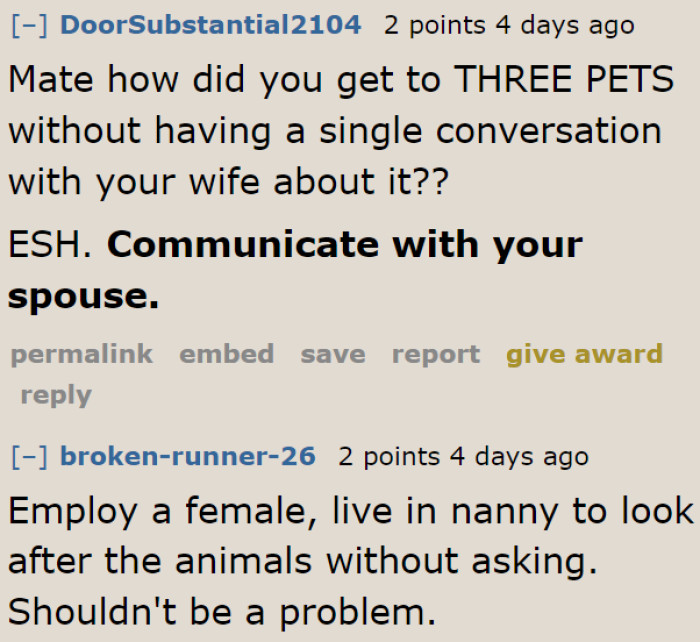
If Only He Communicated with His Wife.
Hiring Someone to Care for the Pets Is a Good Option.
And now the whole household is caught in a power struggle, not just over animals, but over who gets to decide anything at all.
It's important for the OP to communicate with his wife in an open and honest manner.
In the case of the husband who plans to eliminate all pets due to his wife's unilateral decision to bring them home, the lack of communication is glaring. The article highlights how pet ownership requires consensus among family members. When one partner feels overwhelmed by the responsibilities, as this husband does, it breeds resentment rather than shared joy.
The narrative underscores the importance of collaborative decision-making in relationships. The husband's frustration is not just about the pets; it reflects deeper issues of respect and partnership. When partners do not align on significant decisions, such as introducing pets into the household, it can lead to conflict and emotional distance.
Moreover, the need for open dialogue is evident. A culture where both partners can voice their opinions and concerns about shared responsibilities fosters emotional intimacy and can prevent situations like this from escalating. Without such communication, relationships risk becoming strained and unsatisfying.
He might be trying to fix the pet problem, but he’s risking turning it into a forever-problem with his kids.
Wait until you see the husband trying to rehome his pregnant wife’s cats, not his dog, too. Read the full story.
Share this article: