
Boyfriend's Dream To Live With Girlfriend Dashed By Her Decision To Foster Another Puppy In No-Pets Apartment

A 28-year-old boyfriend had a whole plan for his relationship, move in together, spend more time, finally settle into a routine. And honestly, it sounded simple enough, except his girlfriend is the kind of person who treats fostering puppies like a calling.
OP’s apartment is a no-pets situation, so the deal was, she could eventually move in, but she wouldn’t bring another puppy along. She even agreed on that part. Then the rug got pulled out when she took in another puppy to foster anyway, and OP realized his move-in timeline could be delayed by 1.5 years.
Now he’s stuck wondering if he’s being unreasonable, or if she’s straight up ignoring the one thing that affects their future together.
OP is disappointed that the plan for his girlfriend to move in with him isn't going to happen anytime soon.
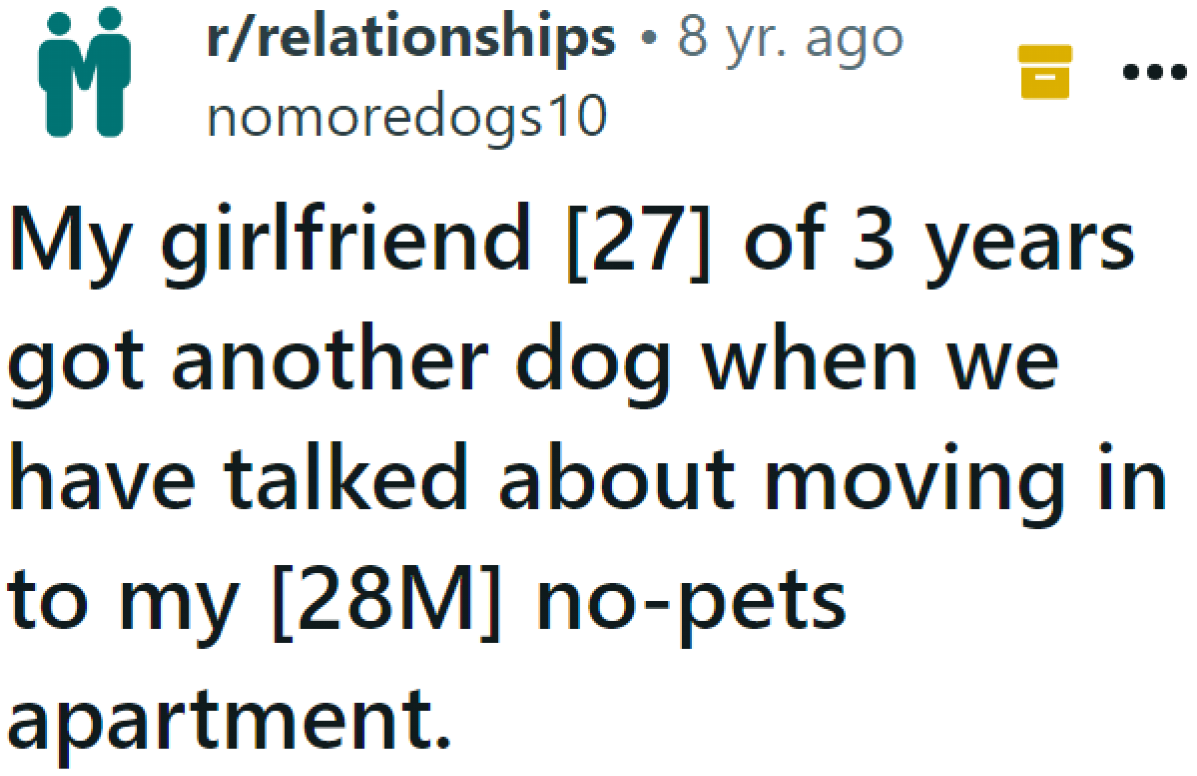
OP admits that although he admires his girlfriend for raising puppies, he isn't a fan of pets.

OP wants to level up the relationship by having his girlfriend move in with him.

OP was already picturing “more time together” until the no-pets apartment rule hit his girlfriend’s fostering plans.
The Challenges of Living with Pets in Relationships
Living situations can become complicated when one partner has a strong attachment to pets while the other does not. Research indicates that individuals often project their preferences and values onto their living environments, which can lead to conflicts over space and priorities. These conflicts can stem from differing attachment styles, where one partner may prioritize companionship over space considerations.
Facilitating open discussions about each partner’s feelings towards pets can help clarify expectations and foster understanding. Couples therapy may provide a space for partners to negotiate their living arrangements while addressing underlying emotional needs.
The OP is looking forward to spending more time with his girlfriend.
She agreed to move in since she doesn't plan on taking care of another puppy.

The OP's heart sank upon hearing that the girlfriend took another puppy to foster.
This means the OP needs to wait for another 1.5 years.

The OP is feeling stuck about the situation and wants some advice from the community.

He admired her for raising puppies, but he still did not want pets in his place, and that mismatch turned awkward fast.
The dynamics of attachment play a crucial role in the unfolding drama between the boyfriend and girlfriend in a no-pets apartment. While fostering pets can be seen as a noble endeavor, it raises complex emotional issues, particularly for those involved in intimate relationships. The boyfriend's disappointment over his girlfriend's decision to take in another puppy underscores how differing priorities can strain a partnership. Individuals with secure attachment styles might navigate this conflict with understanding and compromise, yet the boyfriend’s frustration signals a potential struggle rooted in unmet emotional needs. This situation reflects the real-world implications of how early relationships shape our expectations and responses in adult partnerships, especially when it comes to sharing living spaces and responsibilities. As the couple grapples with this new reality, the challenge lies in finding a balance between the girlfriend's compassionate impulse to foster and the boyfriend's desire for a pet-free home.
This is similar to the man worried his GF would resent him for pushing back on a dog.
You can feel the OP's frustration and disappointment over the situation.

The reality of this relationship is that they're not compatible.
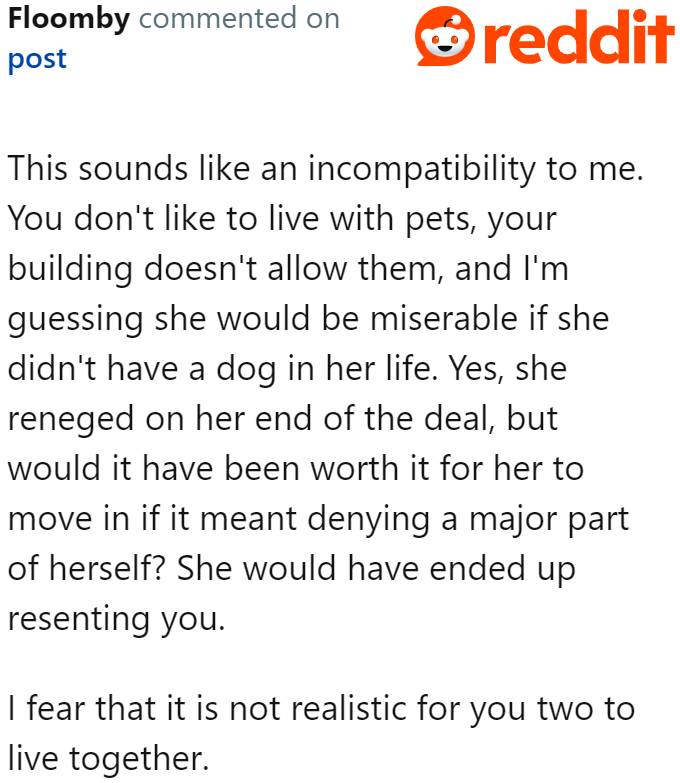
If they want this relationship to work, either of them needs to compromise.
It's either the OP allows dogs to live with them (meaning he has to buy another property), or his girlfriend gives up having pets altogether.
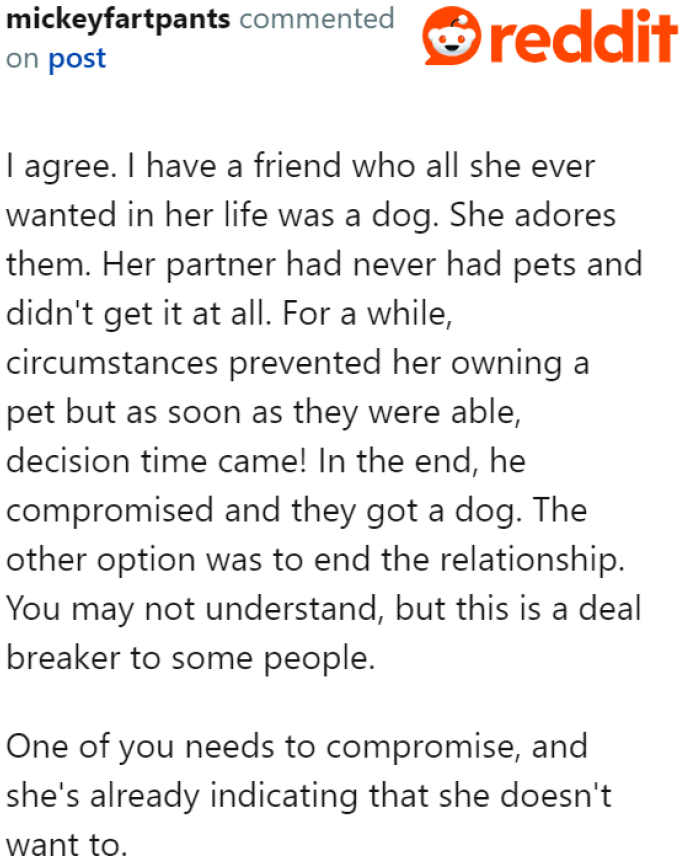
The girlfriend said she wasn’t taking care of another puppy, then she brought one home to foster, crushing his move-in countdown.
The emotional complexity surrounding pets in romantic relationships is evident in the situation of a boyfriend whose dream of living with his girlfriend was shattered by her decision to foster a puppy in their no-pets apartment. This underscores how pets can become focal points of contention, especially when one partner feels their emotional space is compromised. The article highlights that fostering provides crucial support for animals, yet it also raises questions about the balance between compassion for pets and the needs of a relationship.
To navigate the challenges posed by this decision, engaging in open discussions about feelings and boundaries around pet ownership is vital. Effective communication can lead to greater understanding, allowing couples to find common ground even in difficult situations like these. Understanding each other's perspectives on fostering versus living arrangements can help partners reconcile their differing priorities.
If the OP wants to compromise, he needs to do his part.
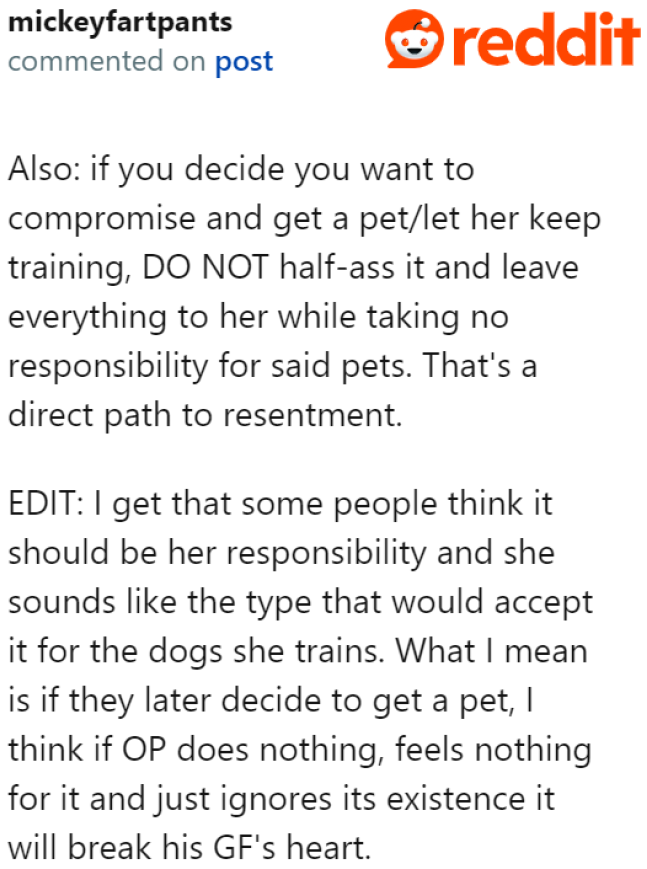
The OP needs to determine his deal breaker and communicate it with his girlfriend.
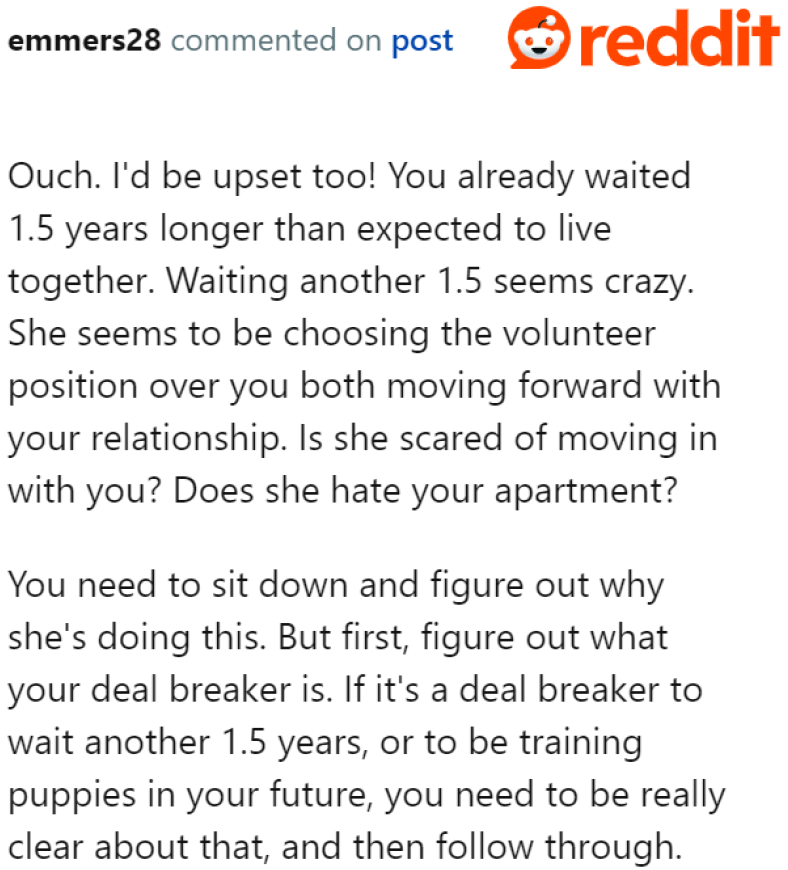
If he really wants to be with this woman, then he needs to make an effort to love dogs too.
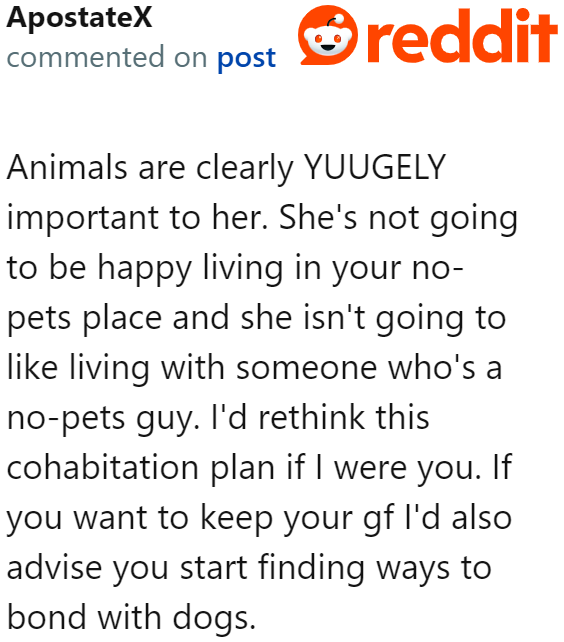
With another 1.5 years on the line, OP is stuck watching his relationship progress in slow motion while the puppy situation keeps moving.</p>
Conflict resolution strategies are essential when partners disagree about living with pets.
The OP needs to weigh his love for this woman against his willingness to compromise. It's not enough that he loves his girlfriend if he cannot stand having dogs in his home. He needs to move on from this relationship.
Compromise is a vital aspect of maintaining harmony in relationships, particularly when differing preferences regarding pets arise.
The situation surrounding the couple's living arrangement highlights the intricate emotional dynamics that often accompany pet ownership in relationships. This scenario underscores the importance of empathy and open communication in addressing such conflicts. By actively engaging in discussions about their respective needs and desires, couples can work towards a resolution that honors both the love for animals and the sanctity of their relationship, ultimately striving for a harmonious coexistence.
He might love her, but living with another foster puppy in a no-pets apartment is a dealbreaker waiting to happen.
Want the full breakup-level version of this, read about the GF who forbade dog plans until they move in.
Share this article:





