
Cat Owner Frees Herself of Litter Cleaning Duties After Her Entitled Roommate, Who Also Owns a Cat, Complained About Her Two Pets

A 28-year-old cat owner refused to keep playing by her roommate’s rules after the roommate’s dad got involved and tried to dictate how many cats everyone was allowed to have. At first, OP’s living situation seemed normal, even friendly, but it didn’t take long for the roommate to start treating her apartment like it came with a “one cat per person” policy.
The complication was personal. OP had two cats, the roommate had one, and the roommate’s dad demanded everyone only keep one. Then the roommate complained about OP’s cats and, somehow, framed the litter-cleaning issue as OP’s problem, not theirs.
So OP hit them with malicious compliance, and it turned into a petty, very effective power move that changed who was stuck doing the dirty work.
The OP is a cat owner who maliciously complied with her roommate's dad's demand.

The OP once had a roommate who is also a cat owner.

OP didn’t argue when the roommate’s dad demanded “one cat each,” she just followed the rule in the most inconvenient way possible for everyone else.
Pet ownership comes with significant responsibilities that can lead to conflicts among roommates.
This girl would show off items she spent hundreds of dollars on.
She was nice at first, but then she started meddling in some of her roommates' affairs.

The roommate is also daddy's girl. She complained about the OP's cats.
She found the OP's cats especially problematic since there were two of them. So the roommate's dad demanded that everyone in the apartment should only have one cat each.

Once the roommate started meddling and complaining about OP’s two cats, OP quietly shifted the entire litter situation off her own plate.
The complaint about cleaning duties reflects deeper issues of fairness and shared responsibility. Studies in social psychology indicate that perceptions of inequity in shared living arrangements can lead to conflict and dissatisfaction.
Recognizing and addressing these feelings can facilitate open communication between roommates, ultimately leading to a more harmonious living environment.
This also echoes the pet parent who ordered her roommate to keep her kitten away from the roommate’s cat’s litter box.
The OP maliciously complied by sending those cats to her parents.
Now, she can get her pet deposit back. She's also free of litter cleaning duties.
Her entitled roommate will continue cleaning the litter, though! She has a cat with her, after all!

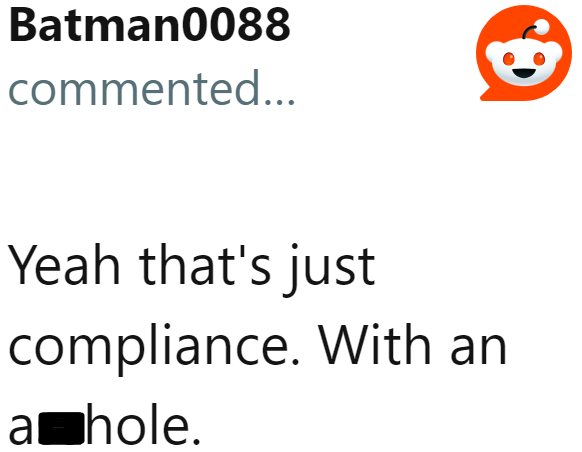
Some Redditors feel that this is just compliance.
The move to send the cats to her parents’ house is where the deposit payoff and the litter-duty switch finally landed.
A number of users felt that the story only contained compliance. But if you think hard about it, the OP also took advantage of the situation in a savvy way.
Firstly, she successfully reclaimed her pet deposit, a financial win resulting from the circumstances. Moreover, by moving her cats to her parents' house temporarily, she not only ensured their well-being but also shifted the responsibility of litter cleaning solely to her entitled roommate and the other cat-owning girls. It's likely that the entitled roommate, who was quick to complain and shift blame, will now have to face the consequences of her actions directly.
One Redditor pointed out that, in the end, the entitled roommate won because all they needed to do was give the OP money.

A fellow Redditor came to save the day and pointed out that what the OP did is indeed malicious compliance.
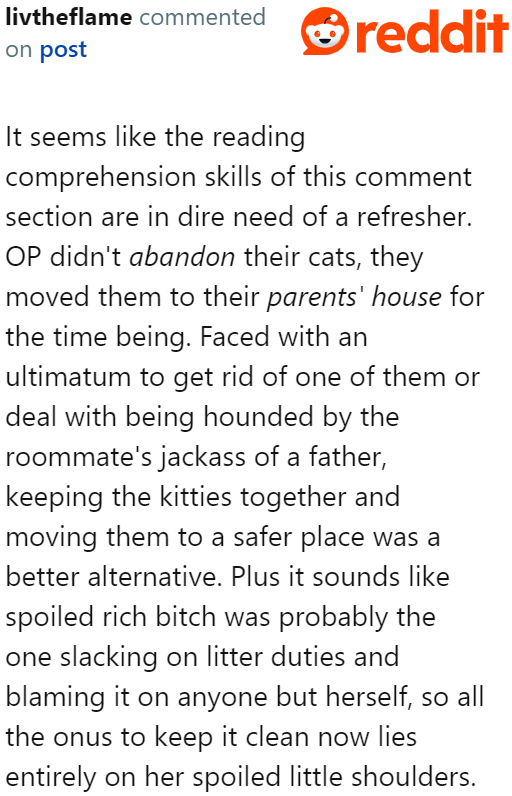
Now the roommate is stuck cleaning because she still has her cat there, while OP is free and clear from the mess she was blamed for.
Strategies for Shared Pet Care
Research suggests that creating a chore chart for pet-related tasks can promote accountability and ensure that all roommates contribute fairly.
For example, setting specific days for each roommate to handle litter cleaning can create a sense of shared responsibility and reduce conflict.
Navigating the intricacies of shared pet ownership can be a minefield, particularly when personal dynamics are skewed by entitlement and lack of communication. The original poster's experience with her roommate underscores the challenges that arise when one party feels entitled to dictate terms without considering the shared nature of their living arrangement. This conflict illustrates that open dialogue is key; when both parties fail to engage in honest conversations about expectations, resentment can build quickly. Ultimately, a collaborative approach to pet care is not just beneficial but necessary for maintaining harmony in shared spaces. Without mutual respect and understanding, the living experience can devolve into chaos, as evidenced by the original poster's frustrations with both her roommate and the meddling influence of the roommate's father.
Moreover, encouraging open discussions about feelings and expectations can enhance roommate relationships.
Creating regular check-ins to discuss pet care responsibilities can help maintain accountability and address any issues that may arise.
The roommate wanted OP to “fix it,” so OP fixed it by removing the cats from the apartment and taking the deposit win with her.
Want more courtroom-style payback after roommates demanded pet-duty changes, read how she beat them at their own game in From Pet Peeves to Court Fees.
Share this article:





