Man Buys Dream Puppy In Retaliation After Wife's Surprise Non-Hunting Dog Gift Years Earlier

Some people don’t recognize a favor. In this Reddit story, a guy’s “dream puppy” purchase comes straight out of a years-old grudge that started with a surprise dog gift from his wife.
Back when OP’s friend was hoping for a hunting dog, his wife went the opposite direction and gave him a non-hunting dog, turning it into a running joke for years. Then, their old dog passed, and the wife dropped a bombshell: no more pets. Suddenly, the same man who had been quietly stewing for ages decided he was done waiting.
Here’s the full story, and it’s about a puppy that shows up like a receipt.
OP's friend wanted a hunting dog, but his wife gave him a non-hunting dog. Years later, it became a running joke until something changed recently.
OP's friend surprised everyone with a puppy after his wife declared no more pets once their old dog passed.
The story of a man purchasing a dream puppy in retaliation for his wife's earlier gift of a non-hunting dog speaks volumes about the complexities of relationship dynamics. The decision to acquire a specific breed, particularly one aligned with his desires, reveals an underlying tension regarding expectations and values within their marriage. This act may symbolize more than just a desire for a particular type of dog; it reflects a struggle for validation and acknowledgment of one’s interests.
The initial gift of a non-hunting dog appears to have ignited a conflict rooted in differing priorities. Such retaliatory actions often stem from feelings of inadequacy, suggesting that the man may feel undervalued in the relationship. Instead of fostering connection, this response risks eroding trust and emotional safety, leading to further alienation rather than resolution. Open communication is essential for navigating these challenges, as without it, the couple may find themselves entrenched in a cycle of retaliatory behavior rather than working towards mutual understanding.
The new puppy wasn't just bought for revenge; it was more of an incentive. Both dogs are loved and well cared for.
Scroll down to see what people had to say...
Maybe she was hinting at retiring her husband!
The joke about the non-hunting dog didn’t die, it just stayed in the background, waiting for the perfect moment when their old dog passed.
Understanding the underlying motivations for purchasing the puppy can illuminate deeper issues within the relationship.
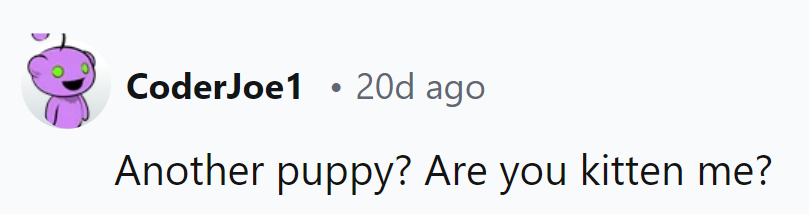
Looks like someone's paw-sitively addicted to furry surprises!
Seems like fate decided to deliver them a furry little CEO with attitude!
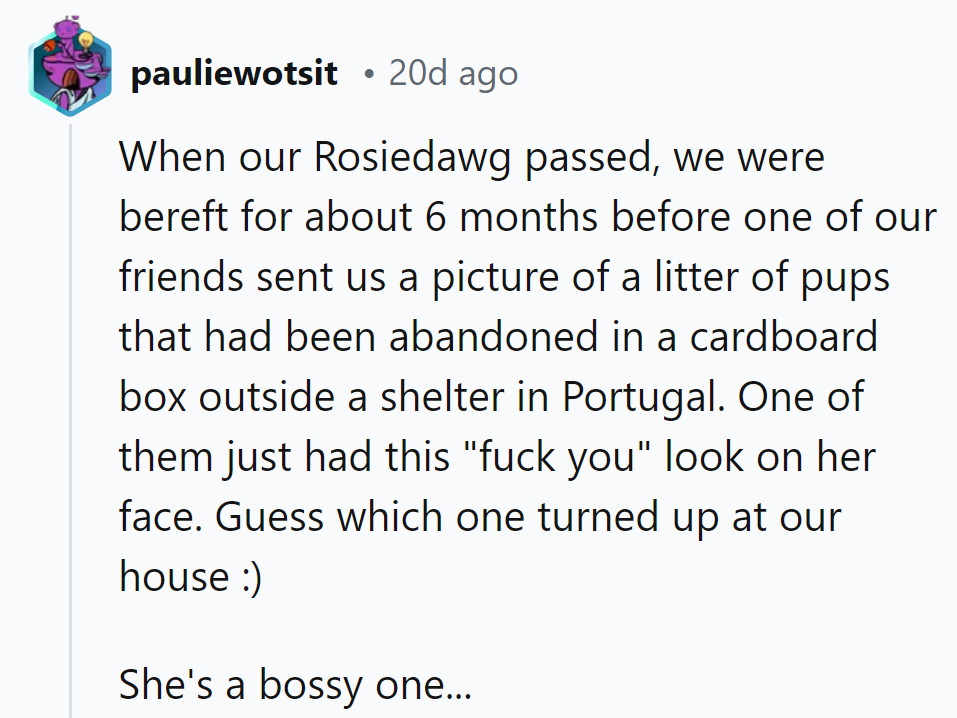
When OP’s friend’s wife said “no more pets,” it didn’t sound like a boundary, it sounded like a challenge to him.
Exploring the Impact of Emotional Responses
Such emotional responses can be better managed through practices like mindfulness and cognitive-behavioral techniques, which help individuals recognize and reframe their emotional triggers, leading to healthier communication patterns.
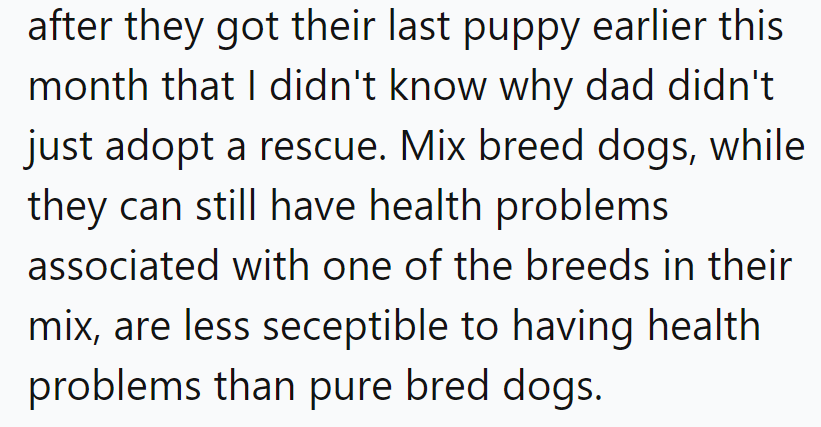
This commenter's dad doesn't waste time getting a new purebred, despite their health risks.
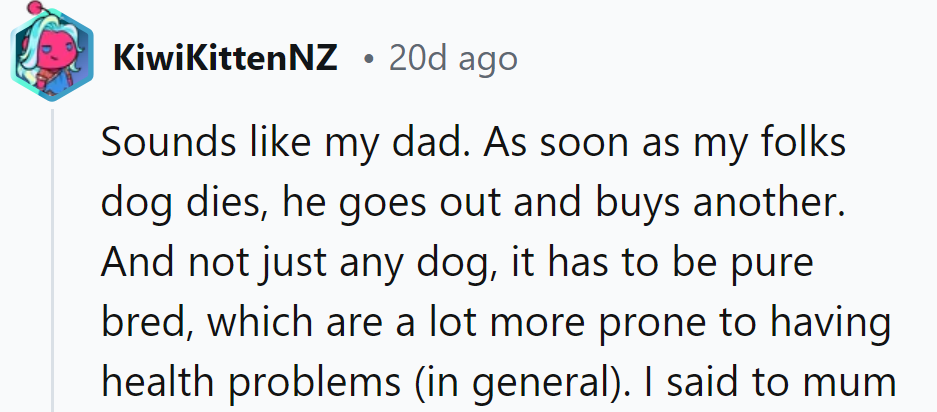
Seems like Dad's got a nose for pedigrees, but maybe Mom's hoping he'll sniff out a rescue next time!
Moreover, this situation encapsulates the importance of understanding attachment styles. Individuals with insecure attachment may be more prone to react defensively in relationships, as they often fear loss or abandonment. Couples can benefit from exploring their attachment styles, gaining insights into their reactions, and learning healthier ways to express their needs and feelings.
It’s a lot like the Redditor asking if it’s disrespectful to buy puppy presents, but not an 18-month baby, for their nephew in this debate about gift priorities.
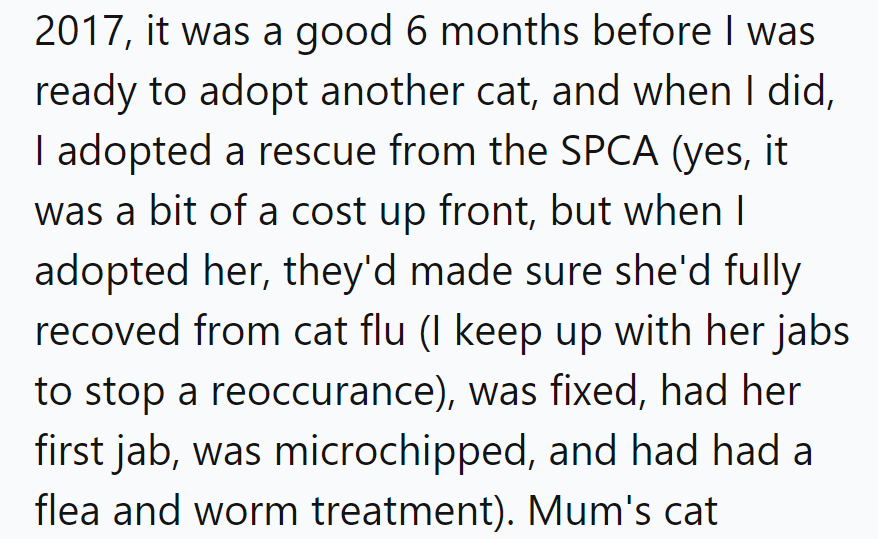
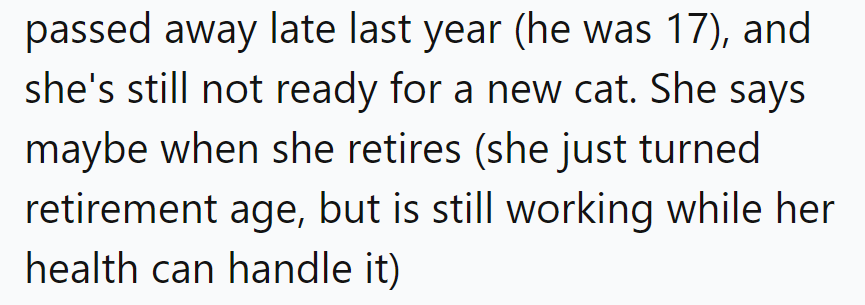
"When my folks' cats pass away, Mum can't just go out and get a new cat right away, and I'm the same."
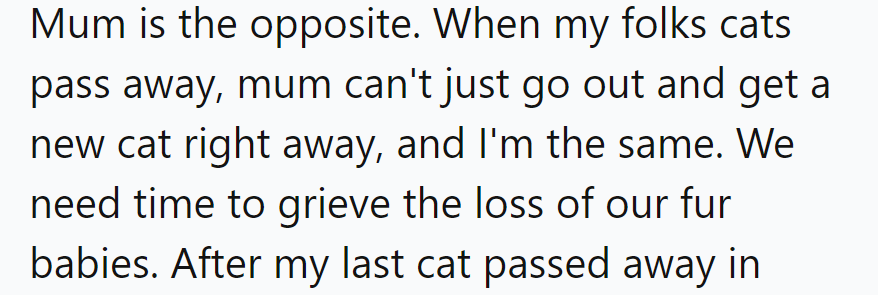
Feline fabulousness comes with perks!
That’s when he went out and bought a puppy he actually wanted, turning his dream breed into a very loud, very furry payoff.
It seems even in the canine world, the adage holds true: sometimes, you have to fetch your own happiness, even if it means waiting a decade to leash your dream. After all, every dog has its day—even in matters of the heart and home.
Comment down your thoughts, or share this article for all your family and friends to see!
Looks like Mom's holding out for the purr-fect retirement plan: cat included!
Here's another tale from the comments...
This is actually so wholesome...
Trash tantrums meet their match: bungee cord chic coming right up!

Thank goodness it's just a tale of puppy love, not 'paws'-itive foul play!
Seems like he found the 'fetch'-est way to get a new pup before the old dog's final bark!
Looks like the birthday surprise came with a 'ruff' dose of reality! Revenge served with a side of puppy love?
People can’t stop talking about how the new puppy feels less like revenge and more like an “I’ll show you” incentive, even though both dogs are loved and well cared for.
This scenario highlights the intricate emotional dynamics at play in relationships, particularly when it comes to meaningful gifts and their implications. The husband's decision to purchase a hunting dog in response to his wife's previous gift of a non-hunting dog illustrates a deeper conflict that extends beyond mere preferences for dog breeds. The article suggests that effective communication is crucial in navigating such tensions. By confronting the unresolved feelings surrounding the wife's choice, which may have felt dismissive of the husband's interests, the couple risks perpetuating a cycle of retaliation. Addressing these underlying issues openly could pave the way for a more harmonious partnership, transforming these moments of conflict into opportunities for growth and understanding.
Now he’s wondering if his wife’s “no more pets” was really about the dogs, or about him.
After the wife’s “no more pets” rule, see how a couple tried to get rid of an unwanted Chihuahua gift from parents in this family feud over a little dog they never wanted.
Share this article: