
Some People Have Extremely Unrealistic Ideas About What Their "Perfect Family Dog" Should Be Like, And This Viral Online Debate Proves It

Some dog people want a companion, some want a hiking buddy, and some seem to want a furry unicorn that can do everything at once.
That is exactly why a Reddit post about the so-called "perfect family dog" took off online. One user laid out a long list of requirements that sounded nice on paper, but impossible in real life, and the internet had plenty to say about it.
The debate quickly turned into a bigger conversation about expectations, responsibility, and why dogs are not built to fit every wish list.
One Redditor shared:

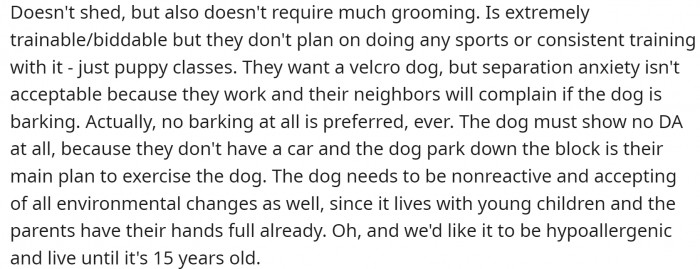
They see the same post very often:

So many requirements that exclude one another
Many individuals project their ideals onto family pets, often resulting in unrealistic expectations. This phenomenon is rooted in psychological theories of idealization, where people impose their desires for perfection onto others. Research shows that these expectations can lead to frustration and disappointment when real-life experiences do not align with these fantasies.
This tendency can stem from a desire for control and predictability in relationships, especially when individuals may feel powerless in other areas of their lives. Understanding that pets, like humans, have their own unique personalities and limitations is crucial for fostering healthy relationships with them.
The ongoing viral debate about the "perfect family dog" reveals a significant gap between expectations and reality.
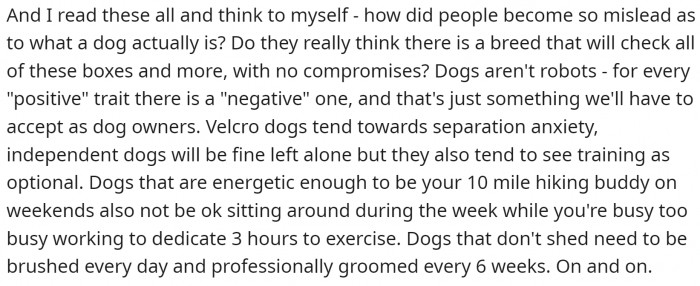
People are so unrealistic
Maybe there should be a dog specifically for urban environments?

Redditors agree:

Social media platforms amplify these unrealistic expectations as individuals curate content that showcases seemingly perfect pet ownership. Exposure to these idealized representations can create a disconnect between reality and expectation, leading to dissatisfaction.
When individuals find themselves unable to achieve these standards, it may exacerbate feelings of inadequacy, especially among those who are already struggling with self-esteem issues. Therefore, promoting realistic portrayals of pet ownership can help mitigate these pressures.
The phenomenon of unrealistic dog expectations can be understood through the lens of social comparison theory, which posits that people determine their own social and personal worth based on how they stack up against others.
This can lead to feelings of inadequacy, especially when individuals see others with seemingly perfect pets, fueling dissatisfaction with their own experiences.
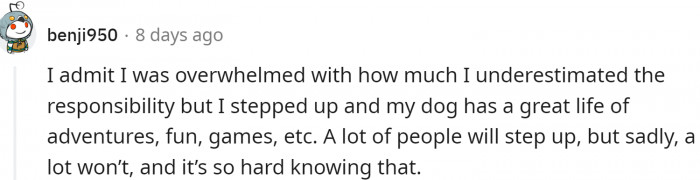
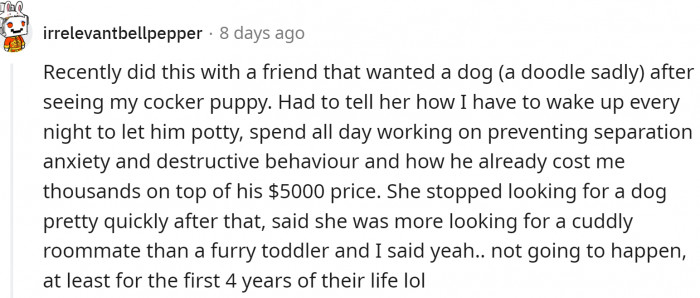
People generally underestimate the responsibility
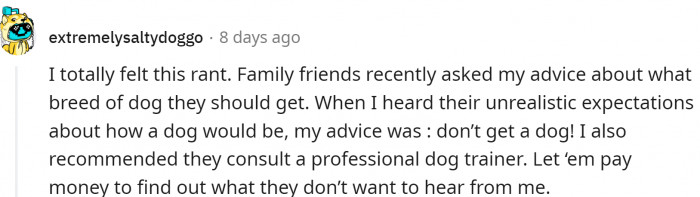
Don't get a dog then
Not gonna happen:
However, when expectations for a 'perfect' pet conflict with the reality of a pet's behavior, it can lead to frustrations that undermine this supportive relationship. It’s vital for pet owners to recognize that training and nurturing a pet requires patience and adjustment, both for the pet and the owner.
And it gets even stranger, like the screenshot where someone insisted single men should only have dogs, but with one condition.
The article highlights how childhood experiences with pets play a significant role in shaping adult preferences for family dogs. It points out that individuals raised in nurturing environments with well-behaved dogs tend to seek out similar traits when choosing pets as adults. This observation underscores the connection between early relationships and later expectations. The attachment theory is particularly relevant here, as it suggests that the dynamics of our formative years influence not only our human connections but also our interactions with animals.
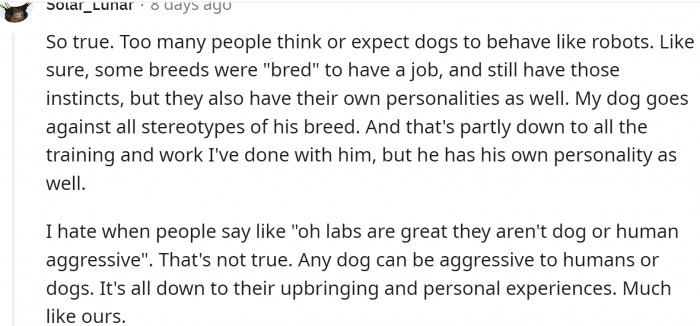
Plain and simple:

Dogs are not robots
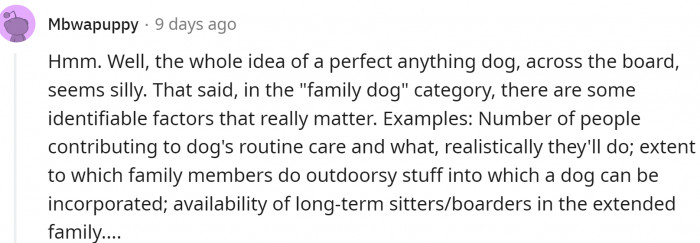
So many factors here:
To foster a healthier relationship with pets, owners should focus on setting realistic expectations and embracing the unique qualities of their animals. Positive reinforcement training methods can enhance the bond between pet and owner while also improving the pet's behavior.
Creating an environment where both the pet and owner can thrive includes providing appropriate outlets for a pet’s energy and instincts, such as regular exercise and mental stimulation. These strategies not only benefit the pet’s well-being but also lead to greater satisfaction for the owner.
From a psychological standpoint, addressing these unrealistic expectations involves reframing how potential pet owners view their future companions.
Individuals are recommended to engage in realistic assessments of their lifestyle, living environment, and the commitment required for pet ownership before making decisions.
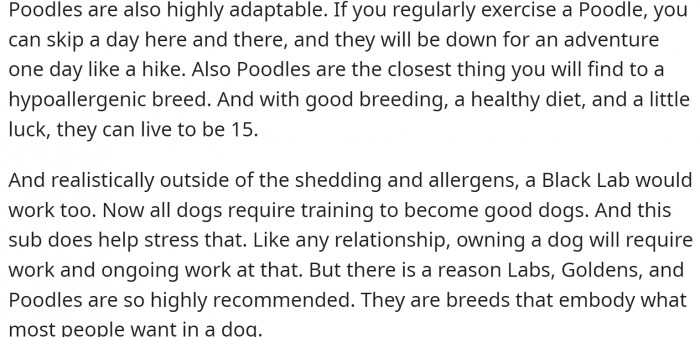
Poodles might tick most of the boxes:
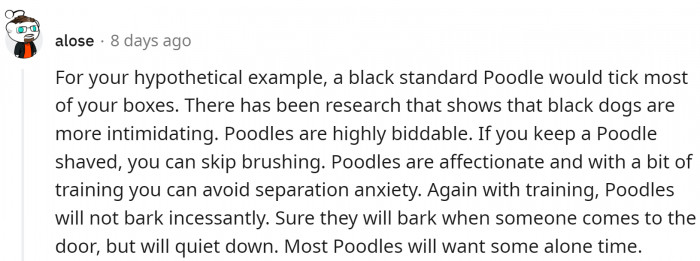
Labs, Goldens, and Poodles are not the most popular without a reason:
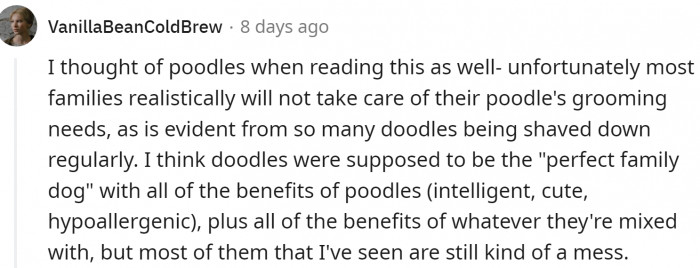
But they need care
Social media platforms play a significant role in shaping perceptions of pet ownership.
Exposure to curated pet content can create unrealistic benchmarks for pet behavior and appearance.
This can lead to disappointment and frustration when real-life pets do not meet these standards, ultimately impacting the pet-owner relationship.
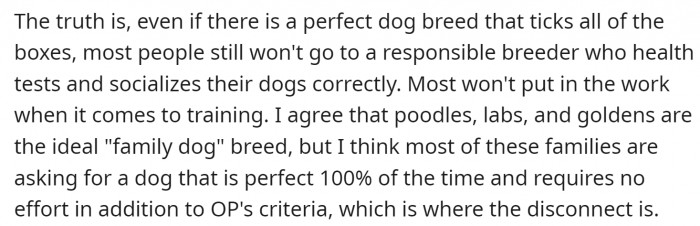
But there is no 100% perfect dog
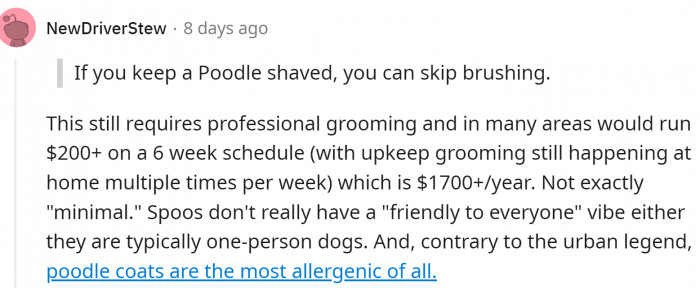
And every dog requires care
Just like with humans:

To mitigate these feelings, fostering a connection with pets based on mutual understanding and realistic expectations can help.
Workshops or support groups for new pet owners can provide valuable insights and community support, helping individuals adjust their expectations and enhance their pet-owning experience.
It is hard not to ask ourselves how people came to be so misinformed about what a dog truly is. Do they genuinely believe that there is a breed that will fulfill each and every one of these requirements without making any compromises?
Dogs aren't machines; therefore, we as dog owners must accept that for every "good" attribute, there is a "bad" one. You can't just turn them on when you want some entertainment and shut them down when you're done.
The ongoing debate surrounding the concept of a "perfect family dog" highlights a significant disconnect between idealized expectations and the realities of pet ownership. Many individuals grapple with unrealistic standards that often lead to disappointment and frustration.
Emphasizing the importance of setting practical and attainable expectations can greatly enhance the bond between pets and their owners. When people approach pet ownership with a grounded perspective, they tend to find greater joy and satisfaction.
This discussion serves as a reminder that meaningful relationships, whether with animals or people, thrive on realistic expectations. The viral nature of this debate underlines the need for greater awareness about the complexities of pet ownership in today's society.
Many individuals envision their perfect companion as a flawless creature, yet this idealization often clashes with the realities of dog behavior and temperament. Recognizing the gap between these expectations and the actual characteristics of various breeds can empower potential pet owners to make informed decisions. By embracing a more realistic perspective, individuals can foster healthier relationships with their pets. This adaptability is crucial, as it allows for the development of a deeper bond that transcends mere ownership and evolves into a meaningful partnership. Ultimately, understanding these dynamics can enhance the overall experience of having a dog in the family.
Want proof of “perfect dog” expectations backfiring, check out how a mom tested her whole family for 60 days to see if they could care for a dog.
Share this article:





