Man Wants His GF’s Parents To Pay For The Damages His Own Puppy Caused

One puppy, one messy house, and one very awkward family argument, that is the kind of situation that can turn a simple favor into a full-blown dispute.
In this Reddit story, a man and his girlfriend are staying with her parents while trying to crate-train their 5-month-old puppy. When the dog was left with the father-in-law, things went sideways fast, and the damage ended up sparking a fight over who should pay for it.
Now the puppy chaos has turned into a blame game, and the comments are split on who really dropped the ball.
OP asks:

He and his GF are staying with her parents, and they have a 5-month-old puppy they are trying to crate-train.
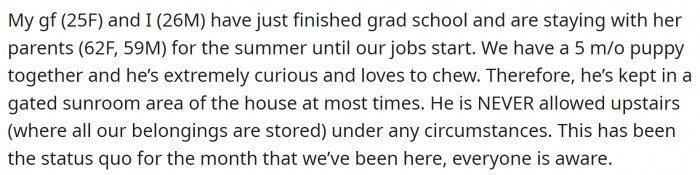
The puppy was left alone with the FIL, and he received somewhat vague instructions on how to handle it.

The dynamics of pet ownership often mirror interpersonal relationships, revealing expectations that can lead to conflict. When individuals bring a pet into their lives, they also bring a set of expectations regarding care and responsibility, which can often be misaligned with the reality of shared living arrangements.
Research indicates that these misalignments can lead to feelings of resentment and frustration. For instance, a study showed that when individuals feel their efforts are undervalued, it can lead to significant emotional distress.
The situation presented in the article highlights the often overlooked complexities of pet ownership as it intertwines with familial relationships. The man's request for his girlfriend's parents to cover the damages caused by his puppy underscores a deeper issue regarding personal responsibility and the expectations that come with caring for a pet.
When pets are involved, they can unexpectedly become the focal point of conflicts, revealing differing perspectives on care and accountability. In this case, the puppy's destructive behavior has escalated into a blame game that not only impacts the man and his girlfriend but also involves her parents, creating a ripple effect of tension.
Such scenarios are often fraught with emotions like guilt and resentment, which can further strain relationships. It is essential to navigate these dynamics thoughtfully to reach a resolution that considers the well-being of both the pet and the people involved.
When OP got home, it was clear that something was wrong.
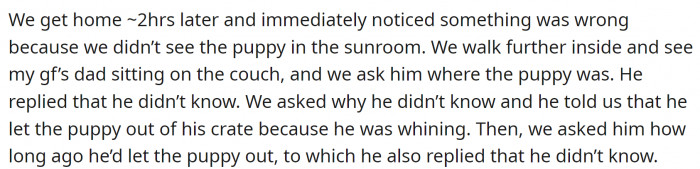
The puppy was upstairs, and there was chaos all around.
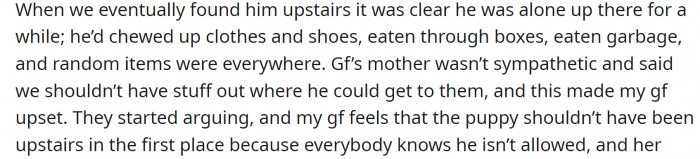
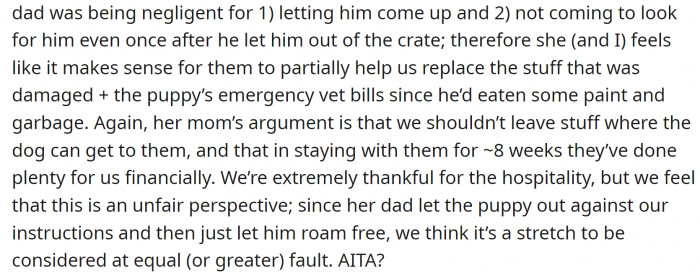
The puppy destroyed plenty of clothes and household items. OP and his GF believe the parents should pay for part of the damages; however, the in-laws have a different opinion.
It's worth noting that the concept of responsibility in shared pet ownership can also reveal deeper psychological patterns.
Studies have shown that individuals often project their frustrations onto others when they feel overwhelmed or inadequate in handling a situation.
This projection can lead to conflicts, especially when financial responsibilities are involved, as seen in this case where one partner expects the parents to shoulder the costs.
Cultivating open communication about expectations and responsibilities is key to mitigating these potential conflicts.
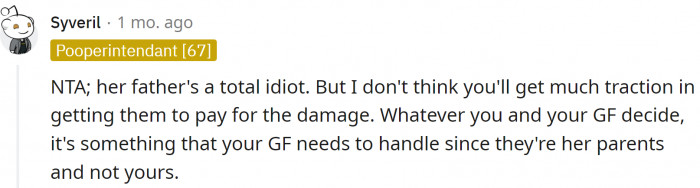
Some Redditors were harsh on the father-in-law.
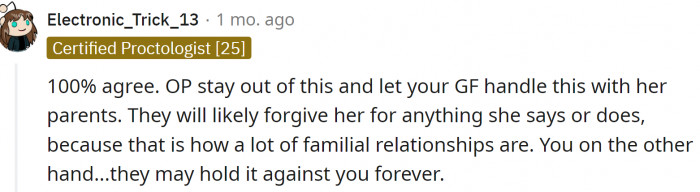
Everyone agrees that OP should stay out of it.
OP agrees:

Effective communication is essential in navigating the complexities of shared pet ownership.
Effective communication is essential in navigating the complexities of pet ownership and shared responsibilities.
Involving all parties in these conversations is crucial, as it fosters a sense of shared responsibility and accountability.
It’s the same kind of preventable chaos as a BF getting her dog high and her questioning everything.
Some Redditors, however, took a more analytical approach:
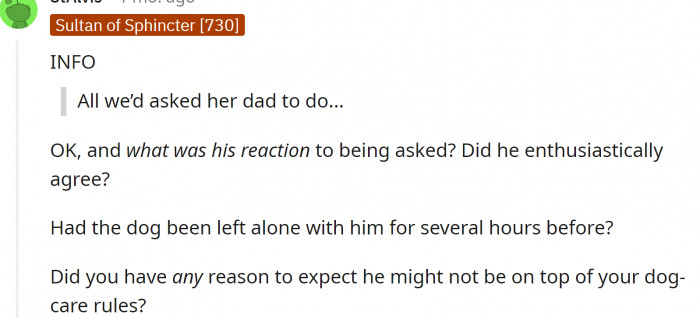
How clear were the instructions?
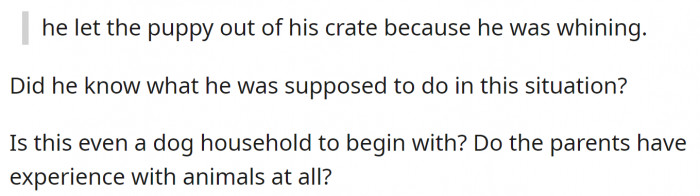
Maybe OP is the AH in this situation?
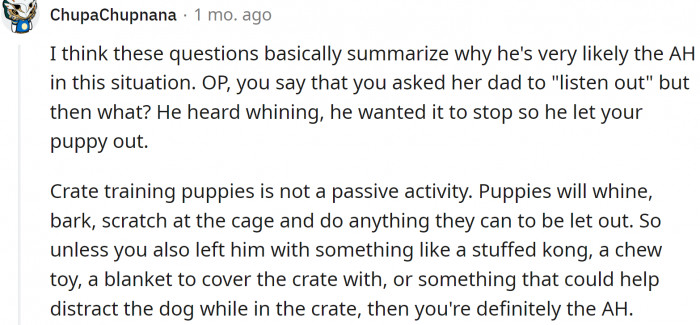
Moreover, establishing a shared agreement on pet care duties can help mitigate potential conflicts. By involving all parties in creating a care plan for the puppy, individuals can develop a sense of ownership and commitment that benefits everyone.
Additionally, recognizing and appreciating each person's contributions can reinforce positive interactions and decrease feelings of resentment.
Therefore, addressing issues promptly and constructively can foster healthier relationships and promote understanding between partners.
Using 'I' statements can help in expressing feelings without assigning blame, which is an effective strategy in conflict resolution.
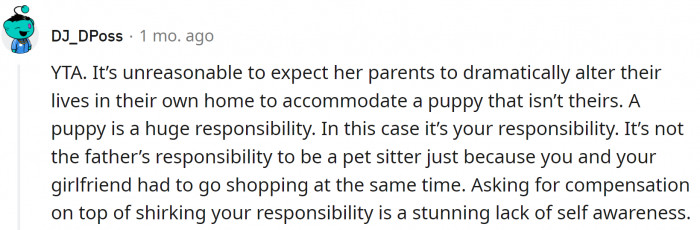
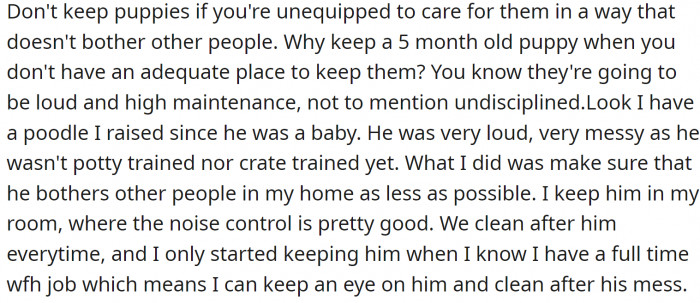
The puppy is their responsibility.
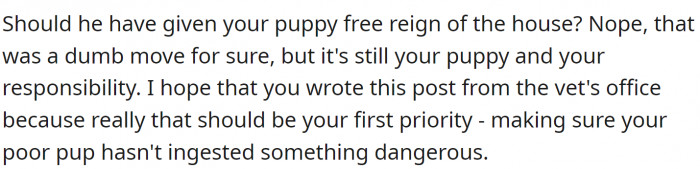
OP provided some explanations:
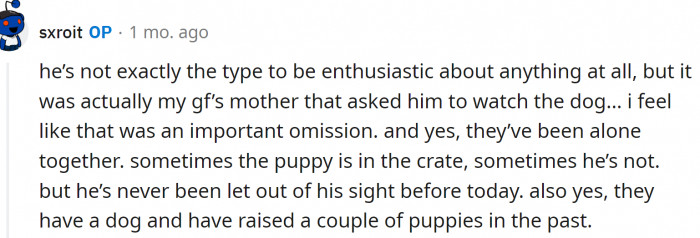
Some people believe OP and his GF were at fault here.
Emotional triggers often play a significant role in how conflicts escalate in shared living situations.
To address the situation effectively, it's important to establish a framework for discussing pet-related responsibilities.
Setting up regular check-ins or discussions can help clarify expectations and prevent future conflicts.
Additionally, involving a neutral third party, like a pet trainer or mediator, can help facilitate these discussions.
This approach not only helps to resolve the current issue but also builds a stronger foundation for future interactions.
This Redditor had enough:
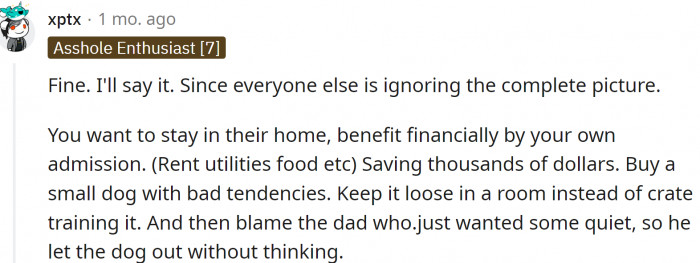
They made some good points:
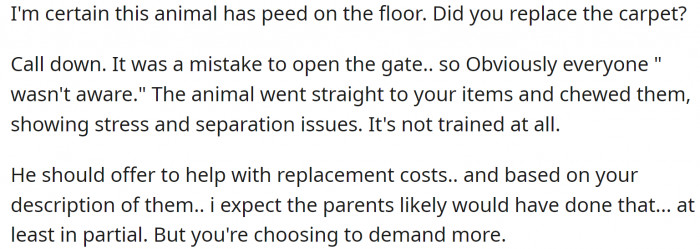
And they had company:
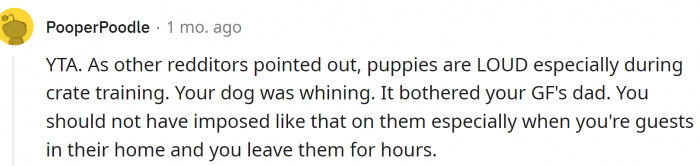
Finally, seeking professional support can be an effective way to navigate these challenges.
Behavioral research suggests that recognizing the emotional state of all parties involved can lead to more effective resolutions.
This is how you do it:
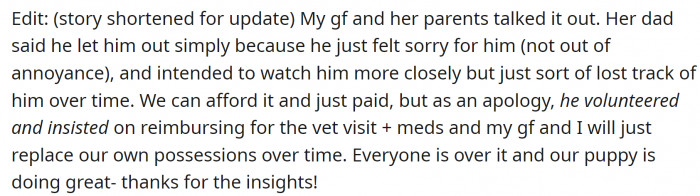
OP posted an update, and it seems they've worked it out:
Even though the majority of Redditors ruled that OP is not the AH here, the commenters raised some interesting questions. It’s like leaving your kid with someone else and expecting them to automatically know upbringing methods simply because they have children.
We somehow believe that it was a shared fault here. The bottom line is, your pets are your responsibility.
Do not expect others to devote time and effort to train them.
Pets often serve as a source of comfort and companionship, but they also require responsibility and commitment.
In this particular scenario, the conflict over the damages caused by the man's puppy highlights the complexities of pet ownership and the responsibilities that come with it. Effective communication and a sense of shared responsibility are crucial for navigating such disputes. The expectation that the girlfriend's parents should cover the costs of the damage reflects a misunderstanding of pet ownership dynamics. It is essential for all parties involved to empathize with each other's perspectives to find a constructive resolution.
The article illustrates that addressing the emotional implications of pet ownership can lead to healthier interactions, not only between humans but also in how we relate to our pets. By fostering understanding and compassion, conflicts like this can be avoided in the future.
The situation surrounding the man seeking compensation from his girlfriend's parents for damages caused by his puppy highlights the complexities of pet ownership within familial dynamics. As pets are often viewed as family members, the expectations and responsibilities associated with their care can lead to misunderstandings.
Moreover, fostering empathy towards one another in these scenarios can greatly improve the chances of reaching a resolution. When individuals acknowledge each other's perspectives, they can better manage the challenges that arise from shared responsibilities in pet ownership, ultimately benefiting both the animals and their human companions.
Before you side with the GF’s parents, see the friend-watching deal that blew up. My puppy’s sitter agreement turned into a girlfriend argument.
Share this article: