
Person Wants To Get A Puppy For Their Little Brother Without Their Mom's Approval, And Redditors Try To Talk Them Out Of It

Some puppy plans sound sweet until the adults in the house get involved. That is exactly where this Reddit story goes, as one person tries to find a dog for their little brother while their mom keeps shutting every option down.
The poster says they have been checking Craigslist and shelters, but their mom keeps rejecting each dog for one reason or another. Now they are thinking about bringing a puppy home anyway, which has Redditors warning that this could blow up fast.
OP asks:

OP wants to get a puppy for their little brother, but Mom keeps saying no to every dog they show her.
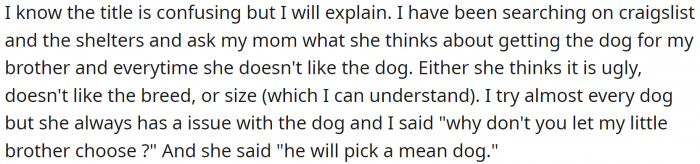
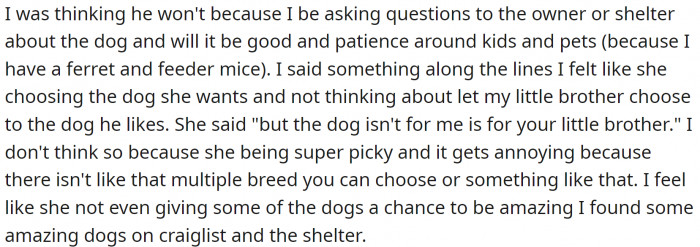
OP believes she is not giving them a chance.
The urge to get a puppy for a younger sibling without the mother's consent showcases a common pattern of impulsive decision-making. The article illustrates how emotions can drive actions, particularly among younger individuals who may not fully grasp the long-term responsibilities that come with pet ownership. This situation underscores the need for young people to develop critical thinking skills and emotional awareness, enabling them to weigh their options carefully before making significant commitments such as bringing a new pet into the home.
Furthermore, the reactions from Redditors serve as a collective reminder of the importance of parental guidance in such matters. The discourse emphasizes that while the excitement of a new puppy is palpable, the reality of caring for an animal requires thoughtful consideration and collaboration with family members.
The dilemma of acquiring a puppy for a little brother without parental consent sheds light on the complexities of child psychology and pet ownership. Children often exhibit fleeting interests, and the excitement of having a puppy can quickly fade, leaving parents to manage the aftermath. This scenario underscores the critical need for parents to educate their children about the long-term responsibilities that come with caring for a pet. Without this preparation, the initial joy of bringing a puppy home could transform into a burden, ultimately affecting both the child and the family dynamic.
OP is considering just getting a puppy and bringing it home as a surprise for the little brother without Mom's approval.

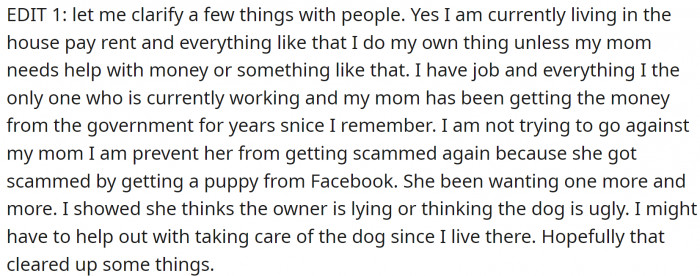
OP posted an edit to clarify some things:
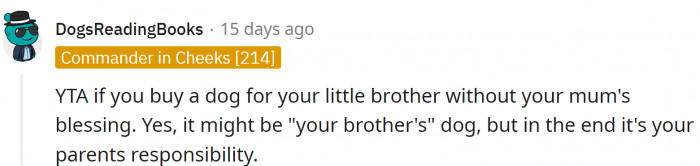
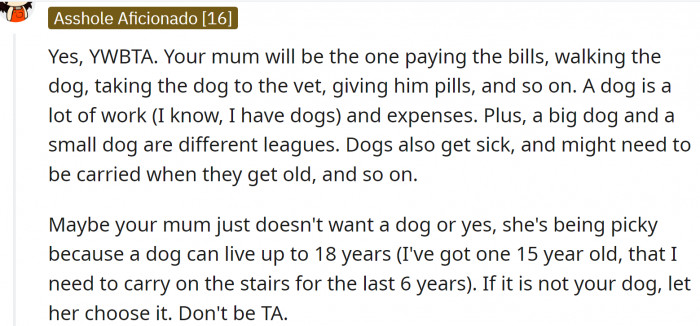
Redditors had no doubt - not a good way to go.
Social pressure can significantly influence impulsive decisions, particularly among adolescents.
Research shows that many children lose interest in pets shortly after adoption, often leading to increased stress for parents who must take on the additional responsibilities. Understanding these dynamics can help families make informed decisions about pet ownership.
Effective communication about the responsibilities involved in pet care is essential for setting realistic expectations.
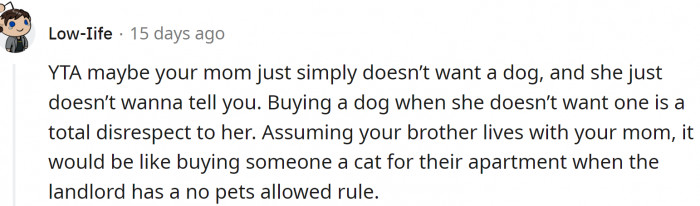
Maybe their mom simply doesn't want a dog.
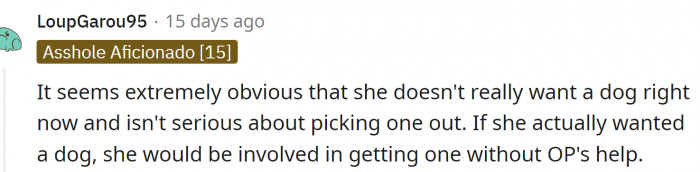
If she actually wanted a dog, she would have been more involved.
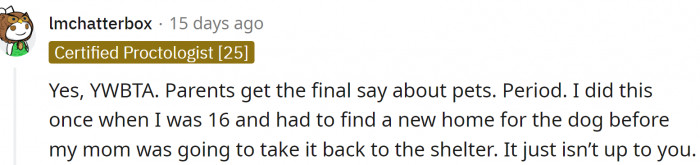
Parents get the final say about pets for their kids.
Owning a pet can evoke strong emotional responses, ranging from joy to anxiety.
It also echoes the “I never wanted that dog” teen facing a vet visit.
In the context of bringing a puppy into the home, it is crucial to recognize the importance of parental guidance in shaping a child's understanding of pet care. The decision to get a dog should not be taken lightly, especially without the mother's approval. Engaging in open discussions about the responsibilities that accompany pet ownership is essential for fostering a healthy environment for both the child and the new pet.
Kids lose interest fast, and then it is up to the parents to do all the work.
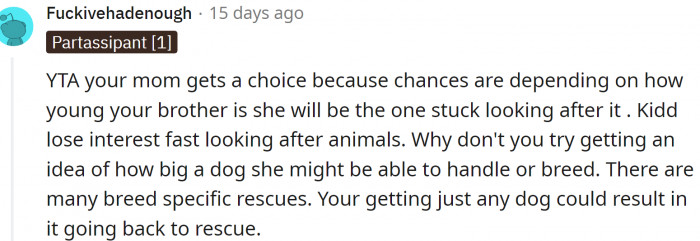
Mom will most likely take care of the dog, so she gets to choose when and how. Quite simple.
Most people love dogs, and it’s not hard to see why. They are so friendly, playful, and cute. Yes, they are great friends and much more.
But they come with a lot of responsibilities and commitments. Kids can’t really take care of them. Yes, they can and should be in charge of some errands and participate in taking care of pets.
However, the majority of tasks will fall on their parents’ shoulders. That’s why gifting a pet to a kid is always a terrible idea if not arranged with their parents first.
You are not giving a pet to a child, but bringing more work for their parents. Just because a kid wants something doesn't mean they have to get it. If the family doesn't have the right conditions for a pet, it would be torture for both the people and the animal.
When children's interests shift, it can create tension around pet ownership.
The article highlights the importance of having a dialogue about what caring for a dog truly involves before any commitments are made. Without this understanding, conflicts can arise, particularly when the puppy is gifted without the mother's approval. Furthermore, the experiences shared by Redditors suggest that families who outline guidelines for pet care often enjoy a smoother transition and greater satisfaction with their new furry family member. This underscores the need for open communication to ensure that everyone, especially the parents, is on the same page before taking such a significant step.
Encouraging children to take ownership of their responsibilities can lead to more fulfilling pet ownership experiences.
By gradually involving children in the process, parents can foster a sense of accountability while ensuring proper pet care.
The situation surrounding the desire for a puppy highlights the importance of collaborative decision-making within families, particularly in matters of pet ownership. Including all family members, especially children, in discussions about welcoming a new pet can cultivate a sense of responsibility and ownership. This is particularly relevant in the context of the article, where the individual’s attempt to acquire a puppy without their mother’s approval raises questions about family dynamics and communication.
Moreover, families that prioritize inclusive decision-making often find that it strengthens their bonds and enhances their ability to resolve conflicts. This reflects the need for open dialogue, especially in scenarios where the well-being of both the family and the prospective pet is at stake.
The situation surrounding the desire to get a puppy for a younger sibling highlights the critical need for open communication about the responsibilities that come with pet ownership. Engaging in regular family discussions can provide a platform for addressing concerns and sharing experiences related to caring for a pet. This is particularly important when considering the long-term commitment involved in bringing a dog into the household.
Furthermore, allowing children to express their thoughts on the matter can give parents valuable insights into their readiness for such a responsibility. This not only helps in assessing the child's accountability but also fosters a sense of teamwork and shared obligation within the family regarding the care of a new pet.
Grasping the responsibilities tied to pet ownership is crucial for maintaining harmony within a family and ensuring enriching experiences for everyone involved. The article emphasizes the importance of establishing realistic expectations regarding the care a puppy requires. Involving all family members in pet care can create a nurturing environment, benefiting both the children and the new canine companion. Without the mother's approval, the potential for discord is evident, highlighting the need for thoughtful dialogue before making such a significant decision.
In the delicate landscape of pet ownership discussions, effective communication between parents and children emerges as a vital component. The situation presented in the article highlights a young individual’s desire to surprise their brother with a puppy, despite lacking parental approval. This scenario underscores the importance of open dialogues about responsibilities and expectations surrounding pet care. Engaging in active listening and expressing concerns can pave the way for fruitful conversations. When families prioritize these skills, they not only enhance understanding but also instill a sense of responsibility in children. This is particularly crucial in scenarios where impulsive decisions, such as acquiring a pet without consent, can lead to long-term consequences for both the family and the animal involved. The narrative serves as a reminder that fostering trust and open communication is essential, especially when it comes to the commitment that pet ownership entails.
Understanding the responsibilities that come with pet ownership is essential for both children and parents.
Encouraging a collaborative approach to pet ownership decisions can lead to healthier family dynamics.
The desire to bring a puppy into the family, especially for a young sibling, is a heartfelt sentiment that many can relate to. However, this story highlights the importance of carefully weighing emotional, social, and practical factors before making such a significant commitment. The conversation around acquiring a pet should not be taken lightly, as it encompasses responsibilities that extend far beyond the joy of companionship. Families need to engage in open discussions about what pet ownership truly entails, ensuring that younger individuals grasp the seriousness of the responsibilities involved. This approach not only fosters a supportive environment but also cultivates responsible decision-making. Understanding the full implications of adding a pet to the household is vital for the well-being of both the new furry friend and the family as a whole.
Want another pushy family dog battle, check out the teen who refused to take no for an answer.
Share this article:





