
Woman Asks The Internet If She Should Kidnap Her Cousin's Dog To Have It Spayed

Some people will do almost anything to stop a bad pet owner from making a worse decision.
That is exactly where one Reddit user found herself after her cousin brought home a stray dog, refused to spay her, and started talking about breeding her for money. The dog is older, has never been to a vet, and is still running loose, which makes the whole situation even messier.
Now the Redditor is wondering if taking the dog for a spay appointment without permission would make her the bad guy, or the only one actually looking out for the animal. Read on.
The Reddit user recently shared a story about wanting to take matters into her own hands concerning her cousin's dog that's not spayed.
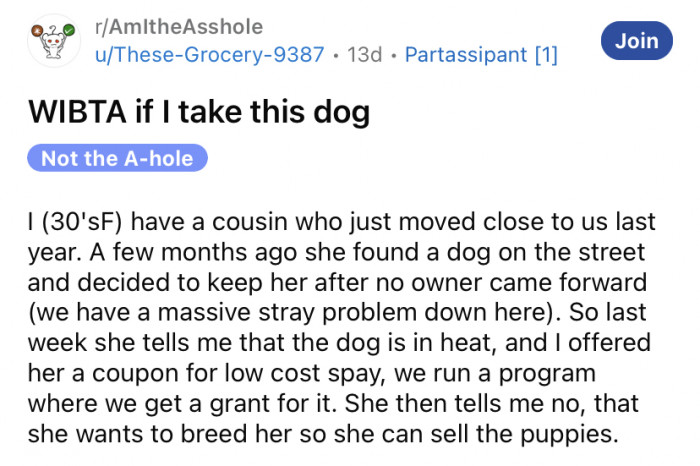
The OP says the dog is at least six years old, and her cousin has never taken her to the vet.
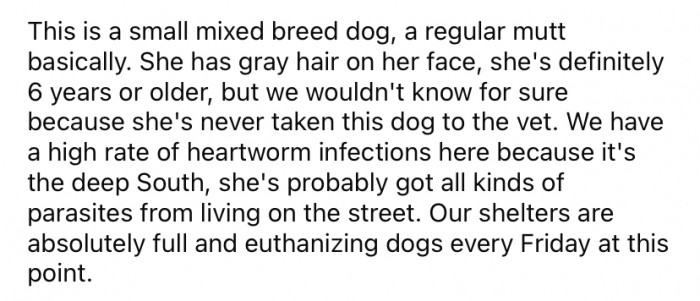
The Reddit user said that she had seen the dog running loose outside and asked her cousin if she was still in heat. Her cousin said she was, and she was hoping the dog would become pregnant.
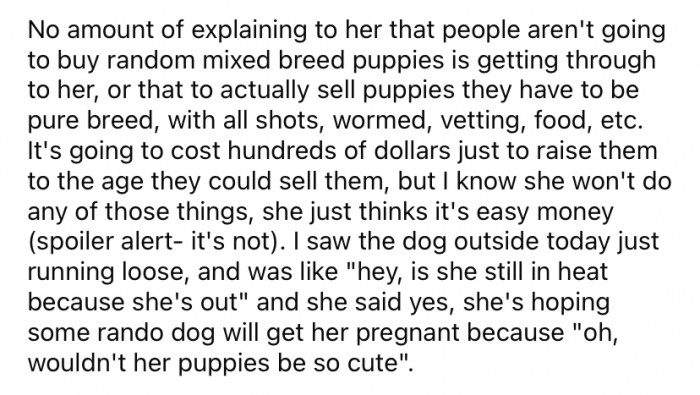
The whole thing comes down to a very bad idea and a very frustrated cousin.
When considering the responsibility of pet ownership, ethical implications come to the forefront.
The conversation only gets more uncomfortable from there.
The ethical implications of pet ownership are significant and often debated within the field of animal ethics.
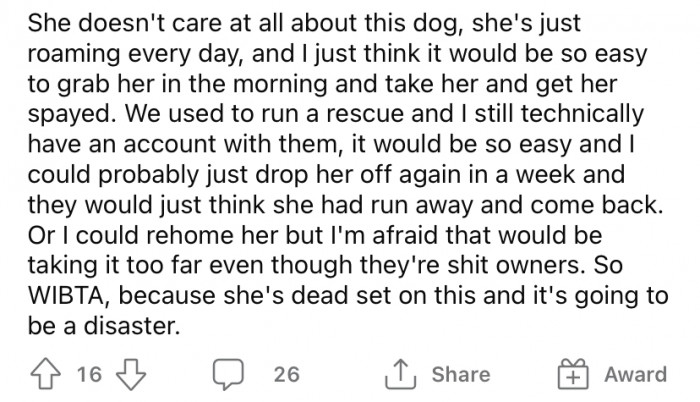
The OP said she's convinced that her cousin doesn't care about this dog at all, and she is considering kidnapping the dog to have her spayed.
Here's how people reacted.
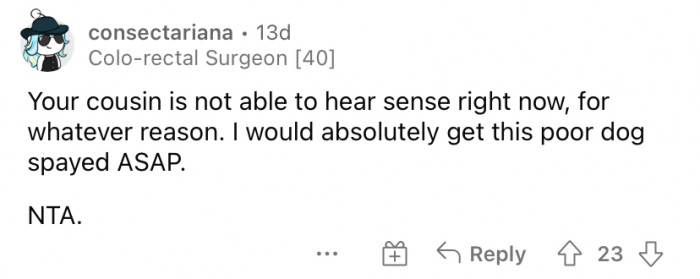
"Absolutely get this poor dog spayed ASAP."
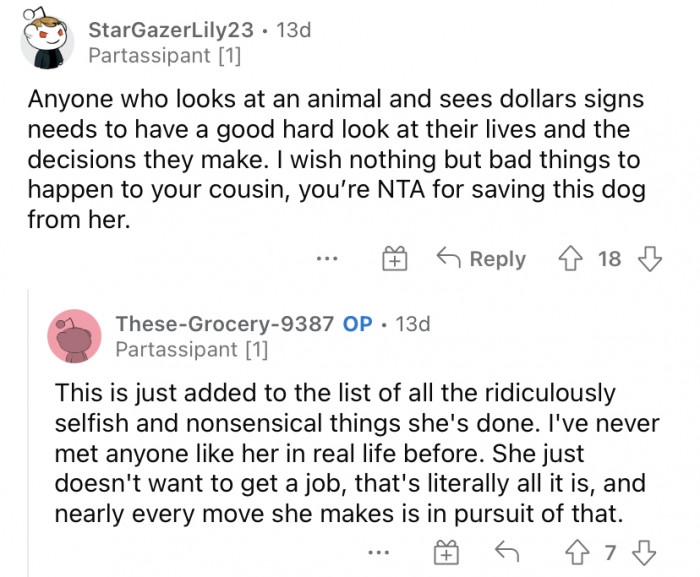
"Ridiculously selfish."
The comments did not hold back.
The concept of 'animal rights' can also be applied here. Research from the University of Chicago indicates that individuals who advocate for animal rights often view pets as sentient beings deserving of protection and care. The Redditor's concerns reflect a growing societal awareness of animal welfare, emphasizing the need for responsible pet ownership that includes spaying.
This awareness can lead to a moral dilemma when the current owner neglects these responsibilities, prompting others to consider intervention.
Pet owners often grapple with the emotional weight of decisions that impact their pets' health and well-being.
This emotional burden highlights the need for education around responsible pet ownership and the implications of such decisions.
"Your cousin is selfish, irresponsible, and delusional."
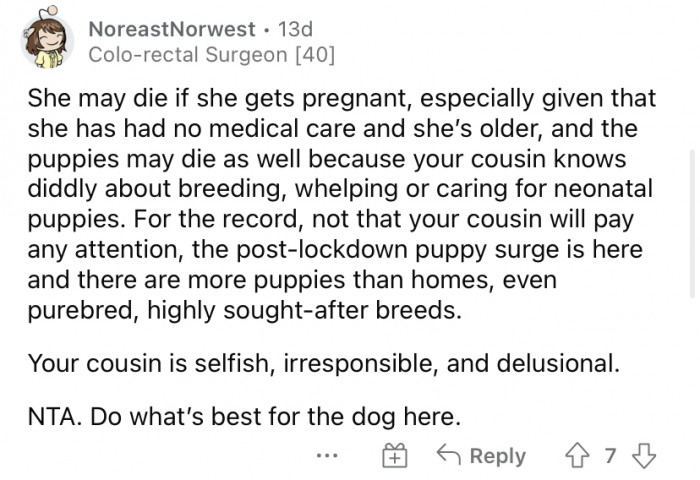
NTA.
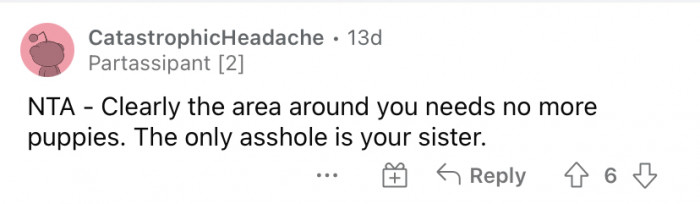
"She's a very negligent owner."
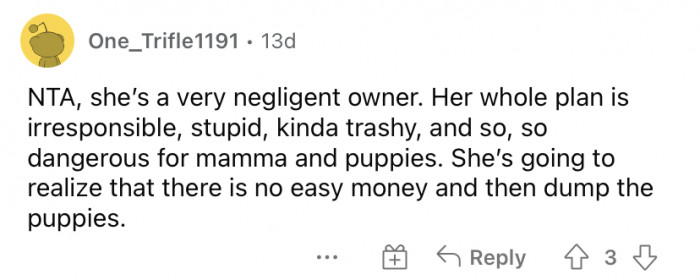
That is a pretty strong consensus.
Psychologically, the desire to act in the dog’s best interest can be seen through the lens of altruism. This inclination can compel individuals to take drastic actions when they perceive an animal is in need of immediate care or protection.
In this case, the Redditor's proposal to kidnap the dog for spaying might stem from a profound sense of responsibility for the dog's well-being.
Research indicates that educating pet owners about the benefits of spaying and neutering can significantly reduce the number of unwanted animals. Programs that provide resources and support, such as subsidized spaying services, can empower pet owners to make informed choices.
By increasing awareness of the long-term benefits for both pets and the community, owners are more likely to take proactive steps to prevent overpopulation.
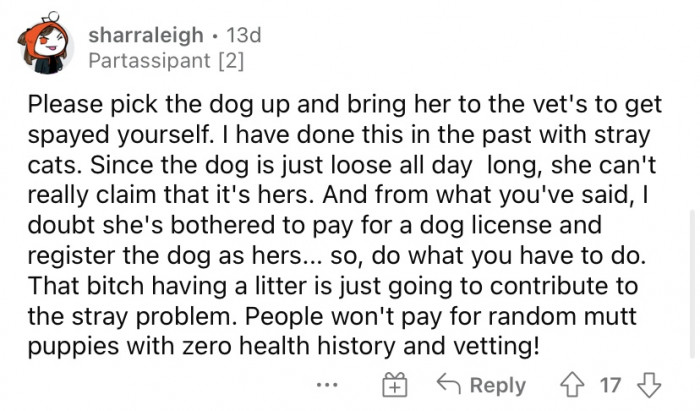
"Do what you have to do."
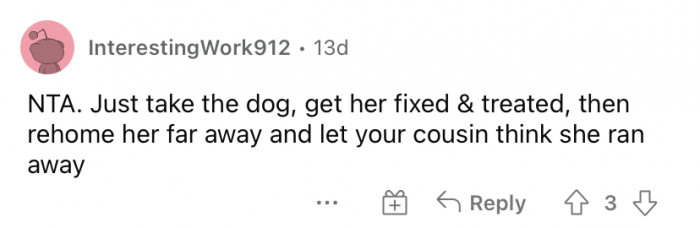
"Rehome her far away."
Do it!

The internet had plenty of opinions on that plan too.
Moreover, the concept of 'moral distress' might be relevant here.
Additionally, the psychological impact of pet ownership decisions can be mitigated by fostering a supportive community among pet owners.
This interconnectedness creates a sense of accountability and encourages responsible practices among pet owners.
Please save the dog!
"It's not someone else's problem when you're the one creating it."
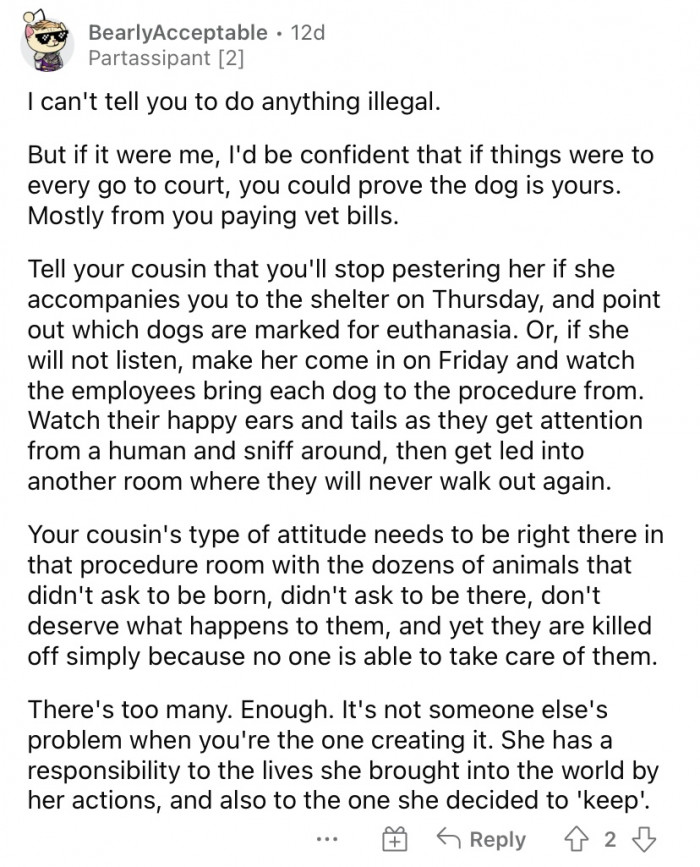
Sometimes it just happens.
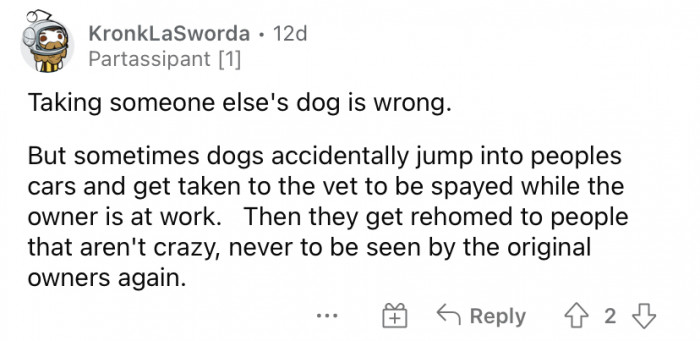
Some commenters were clearly hoping for a rescue mission.
For those experiencing similar dilemmas, it’s essential to approach the situation thoughtfully. Engaging the current owner in a compassionate conversation about the importance of spaying can be a constructive first step. Utilizing educational resources or sharing articles on the benefits of spaying could help convey the seriousness of the matter without resorting to extreme measures.
Additionally, collaborating with local animal welfare organizations can provide support and guidance in advocating for the dog's needs.
Veterinarians play a crucial role in guiding pet owners through the decision-making process regarding spaying and neutering.
Please don't spay her in heat.
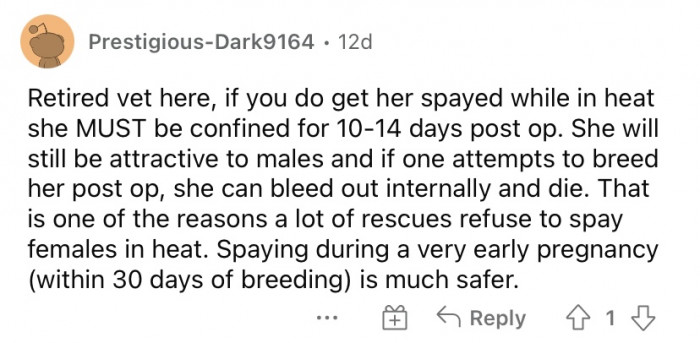
It's an AH move!
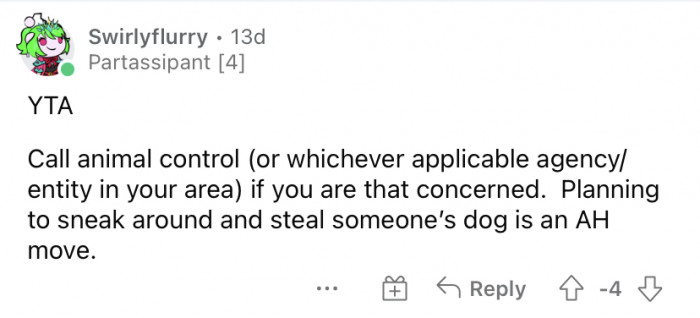
And then came the warning about timing.
What's your take on this situation? Do you think the OP is out of line by planning to take the dog herself, or is she doing the right thing under the circumstances?
Either way, we just hope the dog is okay. Animals are not money-making schemes.
We would love to hear your thoughts on this. You can let us know in the comment section below.
Ultimately, addressing the issue of spaying and neutering requires a multifaceted approach that involves education, community support, and veterinary guidance. By creating a culture of responsible pet ownership, society can work towards reducing the number of stray animals and ensuring the well-being of pets.
As such, pet owners must feel empowered to make informed choices that contribute to both individual pet health and the broader community.
This situation underscores the emotional turmoil that often accompanies pet ownership, especially when it comes to making decisions about spaying and neutering. The dilemma faced by the woman in the article highlights a broader issue of responsibility among dog owners in the Deep South, where stray populations are a pressing concern.
Encouraging education and community engagement around pet care can empower owners to make informed choices that ultimately benefit their pets and help mitigate the growing problem of strays on the streets. Addressing these responsibilities is crucial not just for individual pet owners but for the health of the community as a whole.
It may also be beneficial for the Redditor to consider alternative solutions, such as offering to assist the owner with the financial aspects of the spaying process. Research suggests that financial assistance can motivate individuals to follow through with responsible pet care, reducing the burden of costs that often lead to negligence.
Proposing an arrangement where the Redditor offers support can shift the dynamic from confrontation to collaboration, fostering a more positive outcome for the dog.
This situation raises significant ethical questions about pet ownership and the responsibilities that come with it.
May this never become a normal way to handle a pet dispute.
Before you act, read about the Redditor who considered neutering after a dog park incident.
Share this article:





