Woman Walking Her Dog Encounters Irresponsible Dog Owner Who Unleashed Her Pet Despite It Being Deaf

A 28-year-old woman is walking her dog with her kids when a “friendly” moment turns into a full-on public safety issue. The dog is playful, the night is normal, and then everything changes in seconds.
She tries to handle it the right way, telling the other owner to call the dog back. The problem? The owner’s pet is unleashed, and it’s deaf, so it can’t hear the recall or notice the danger it’s walking into.
What should have been a quick redirect becomes a Reddit post, because the owner still doesn’t seem to get why this was a big deal.
After an encounter with an irresponsible dog owner, the OP decided to seek judgment from the community about the situation.
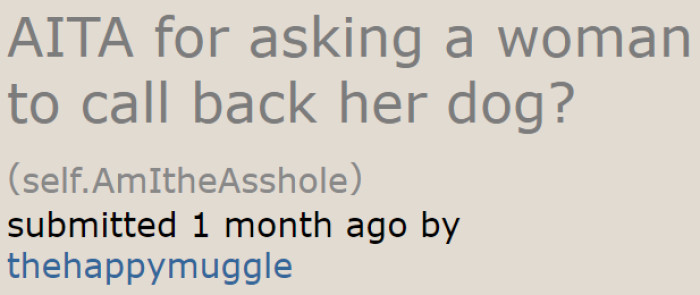
The OP tells the community that she has a playful dog. One night, she took it out for a walk with her children.
The dog suddenly approached them, so she told the owner to call back her dog. However, the unleashed canine was deaf.
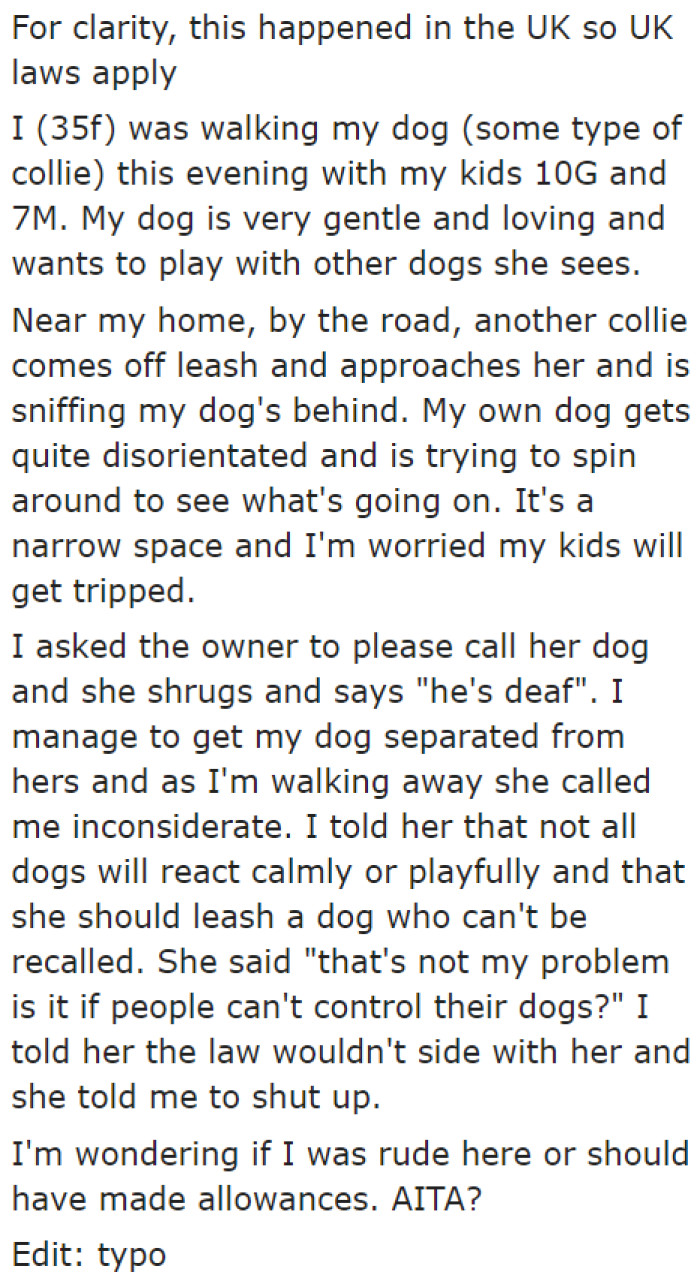
There is nothing wrong with the OP telling off the irresponsible dog owner who unleashed her dog and allowed it to approach the OP's group.
The moment the dog rushes toward OP and her children, you can practically feel the frustration building.
Dog ownership can significantly influence mental health, as numerous studies indicate. This is attributed to the companionship and unconditional love that dogs provide, which can enhance emotional well-being.
Moreover, interacting with dogs releases oxytocin, the 'bonding hormone,' fostering feelings of happiness and reducing cortisol levels, a stress hormone. These benefits highlight the importance of responsible pet ownership, especially for vulnerable animals like deaf dogs.
Deaf dogs require specialized care and understanding, emphasizing the importance of education in responsible pet ownership.
The recent encounter between a woman walking her dog and an irresponsible dog owner highlights a pressing issue in pet ownership and social responsibility. The decision to unleash a deaf dog in a public space, despite the inherent risks, underscores a troubling disregard for the safety of both pets and people. This situation not only reveals the potential for conflict but also evokes strong feelings of frustration among responsible pet owners who strive to maintain the integrity of communal areas. When one pet owner's actions threaten the well-being of others, it raises important questions about accountability and the shared responsibilities that come with pet ownership.
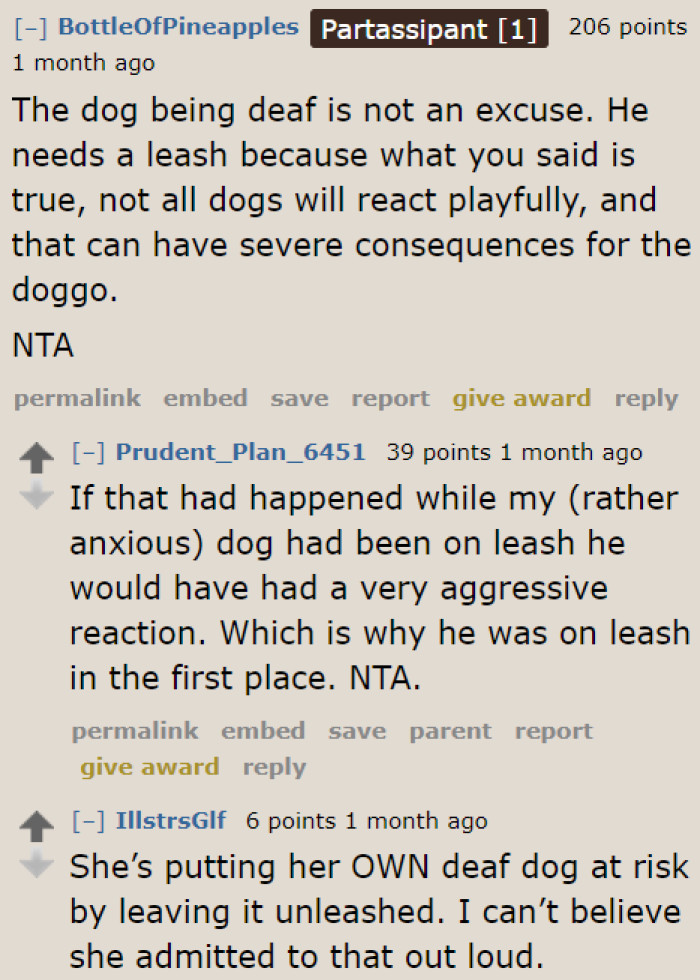
Unleashing the dog could lead to accidents. It might have been harmed if it approached unfriendly dogs.
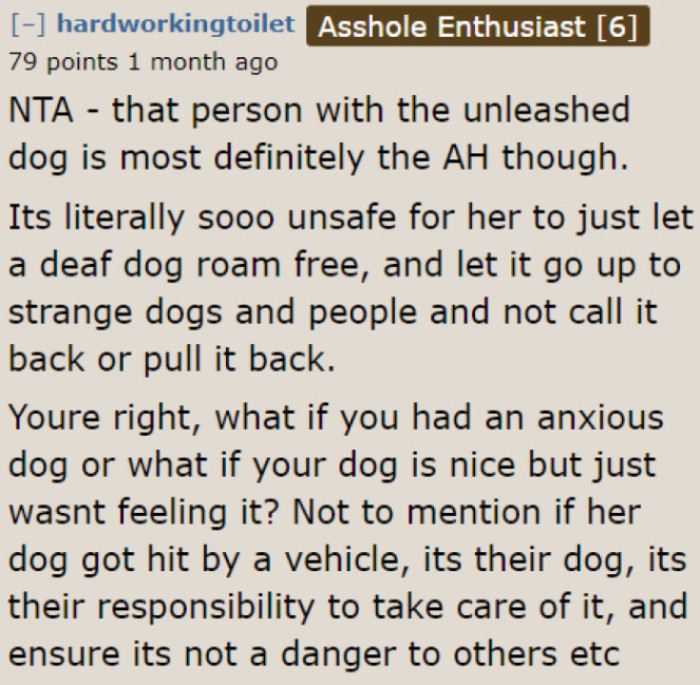
An unleashed dog is unsafe not just for itself, but also for the animals and people in its surroundings.
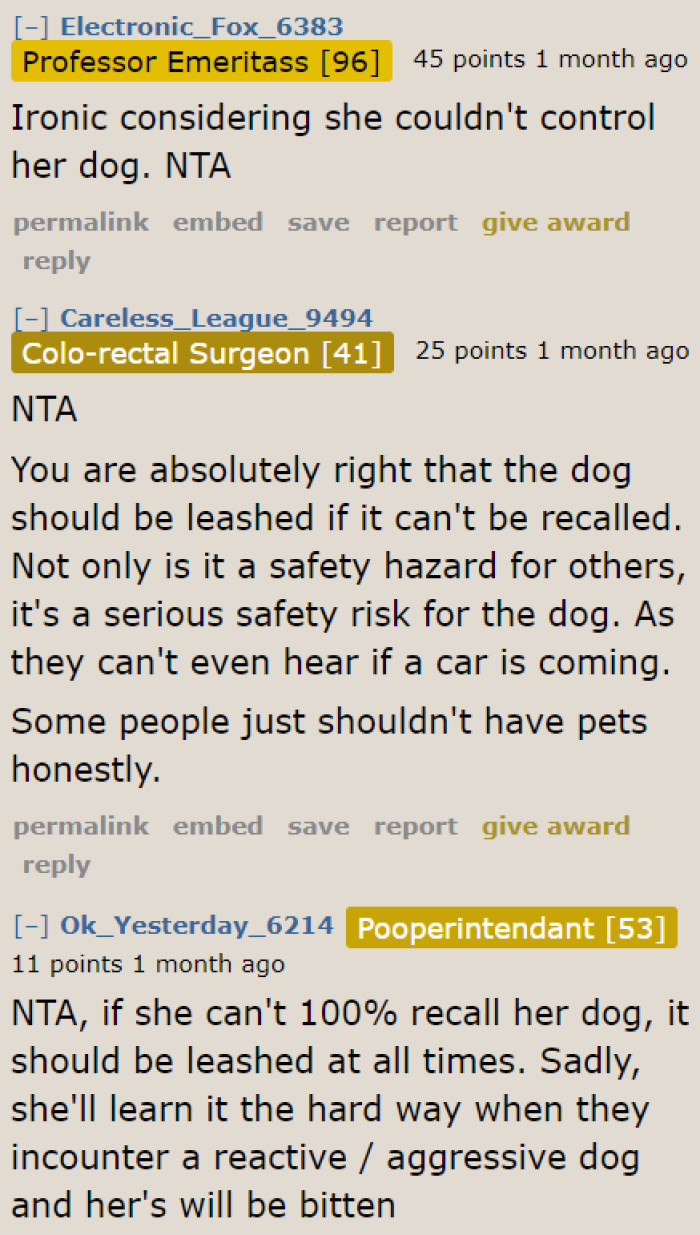
Even if a dog is well-behaved, it still needs to be leashed.
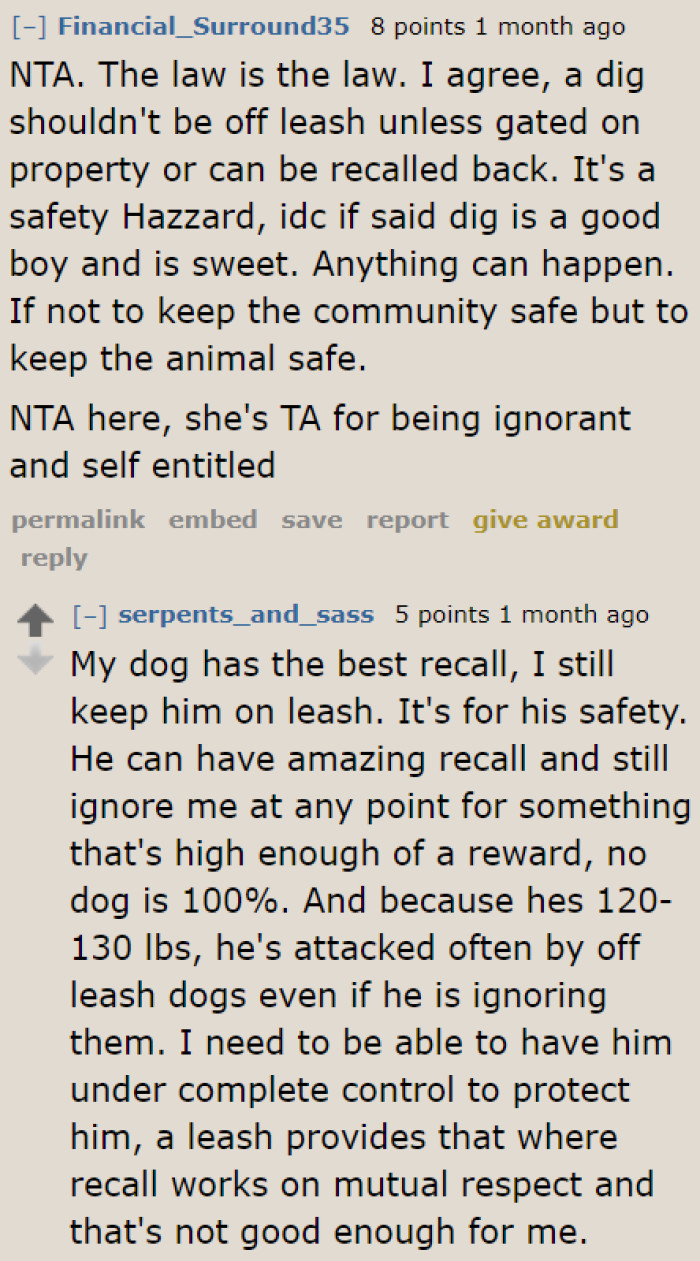
OP tells the owner to call the dog back, but it’s deaf, so the whole “just get it to come” plan falls apart fast.
Speaking of risky dog moments, check out what happened when a woman let go of her partner’s large dog to avoid getting injured, only to be accused of trying to kill it.
When owners neglect proper training and socialization, it creates an unstable environment that can exacerbate a dog's existing vulnerabilities, particularly for special-needs pets like deaf dogs.
Implementing positive reinforcement training can significantly improve behavior, ensuring a safer environment for all pets involved.
The recent encounter between a woman walking her dog and an irresponsible pet owner highlights the profound implications of neglecting responsible pet ownership. Deaf dogs, like any other, deserve to be treated with care and consideration. The failure to keep a deaf dog leashed can not only put the dog at risk but also disrupt the safety of the community. Emotional bonds between humans and their pets are significant, and when these bonds lead to irresponsible behavior, they can create tension within shared spaces. The actions of one pet owner can ripple through the community, affecting not just their own experience but also that of others. This incident serves as a reminder that awareness of our responsibilities toward our pets and neighbors is essential for maintaining harmony in our neighborhoods.
The irresponsible dog owner might also be breaking laws.
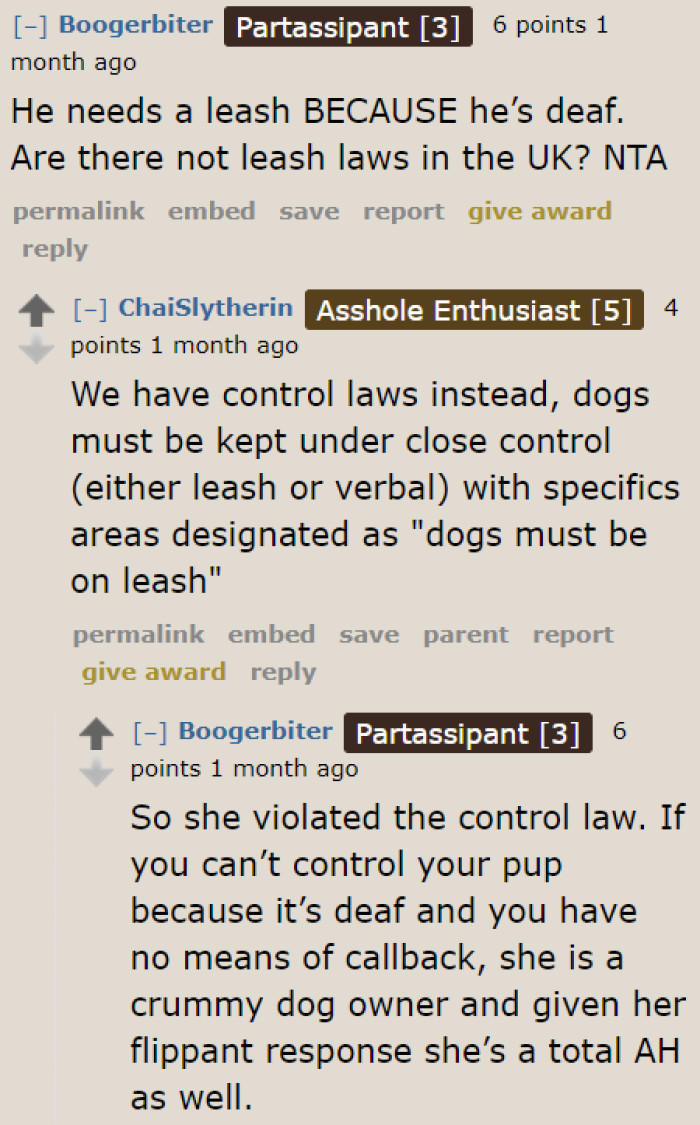
Does she even listen to herself? She's the one who can't control her dog.
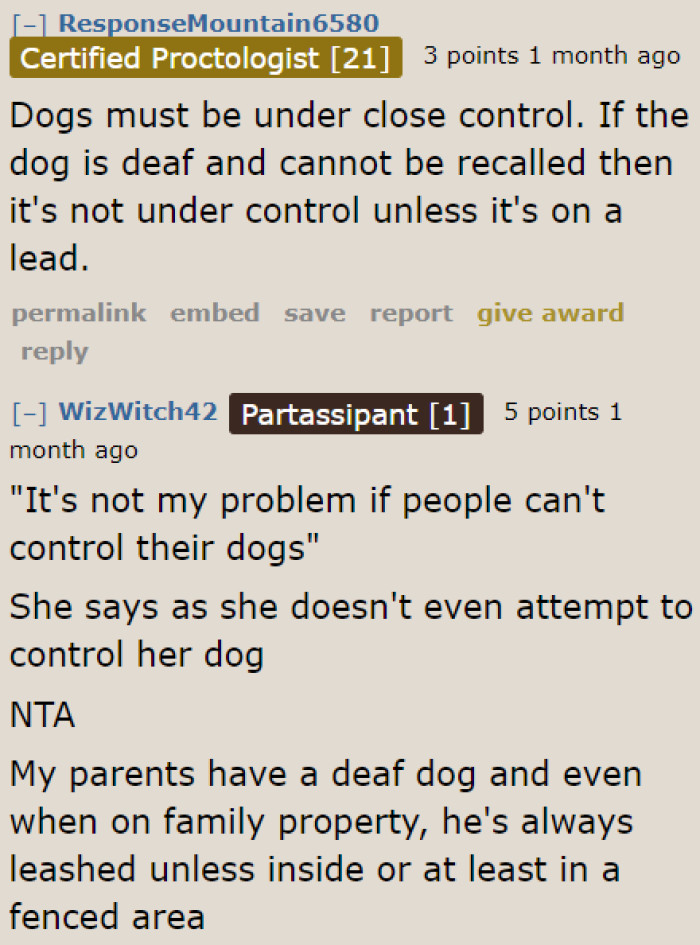
Even other dog owners agree that all dogs, including well-behaved ones, need to be leashed.
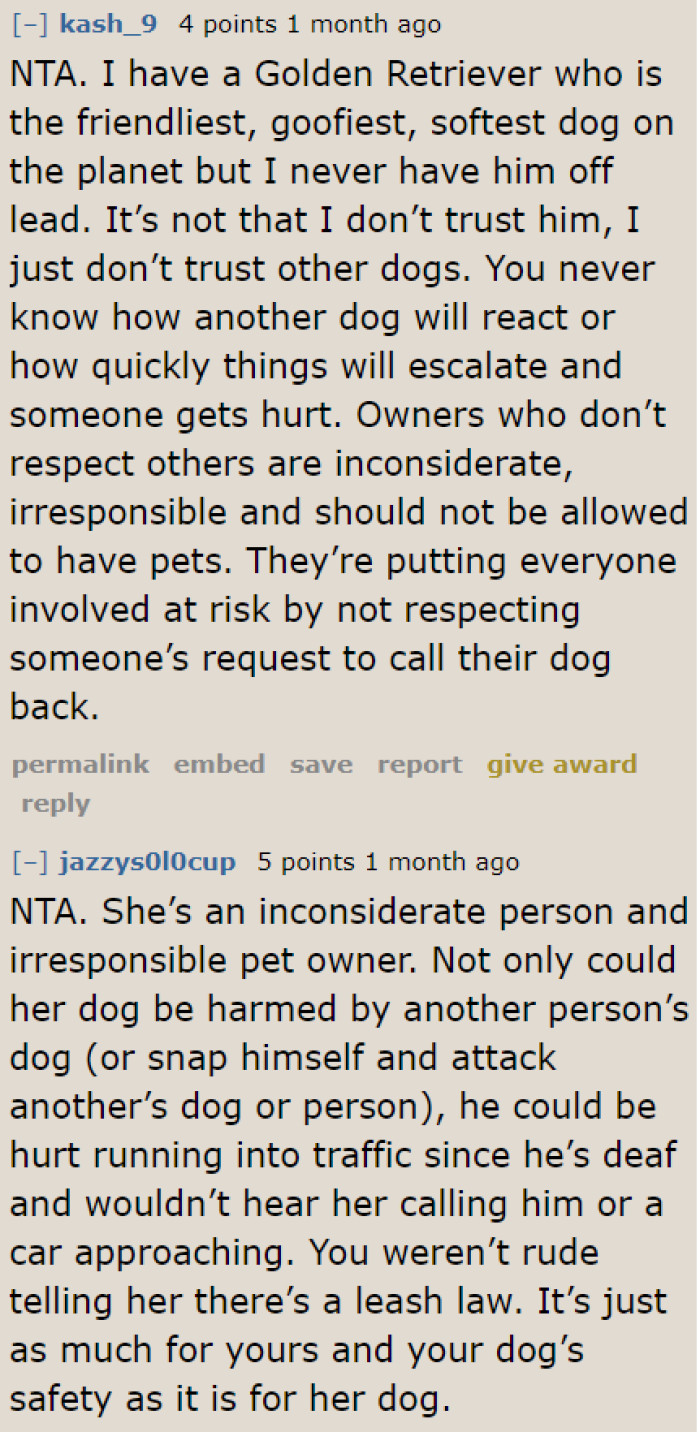
And once the unleashed deaf dog keeps approaching, it stops being “playtime” and starts looking like a preventable accident.
Conflict Resolution Strategies
Dealing with irresponsible pet owners can provoke frustration and stress. Employing conflict resolution strategies can help de-escalate such situations. Active listening and expressing feelings without blame are vital components of effective communication during disputes.
By approaching the situation calmly, you can foster a more cooperative dialogue while advocating for the safety of vulnerable animals.
Responsible pet ownership entails understanding the needs of both the animal and the community.
A user points out the law that the dog owner could be breaking.
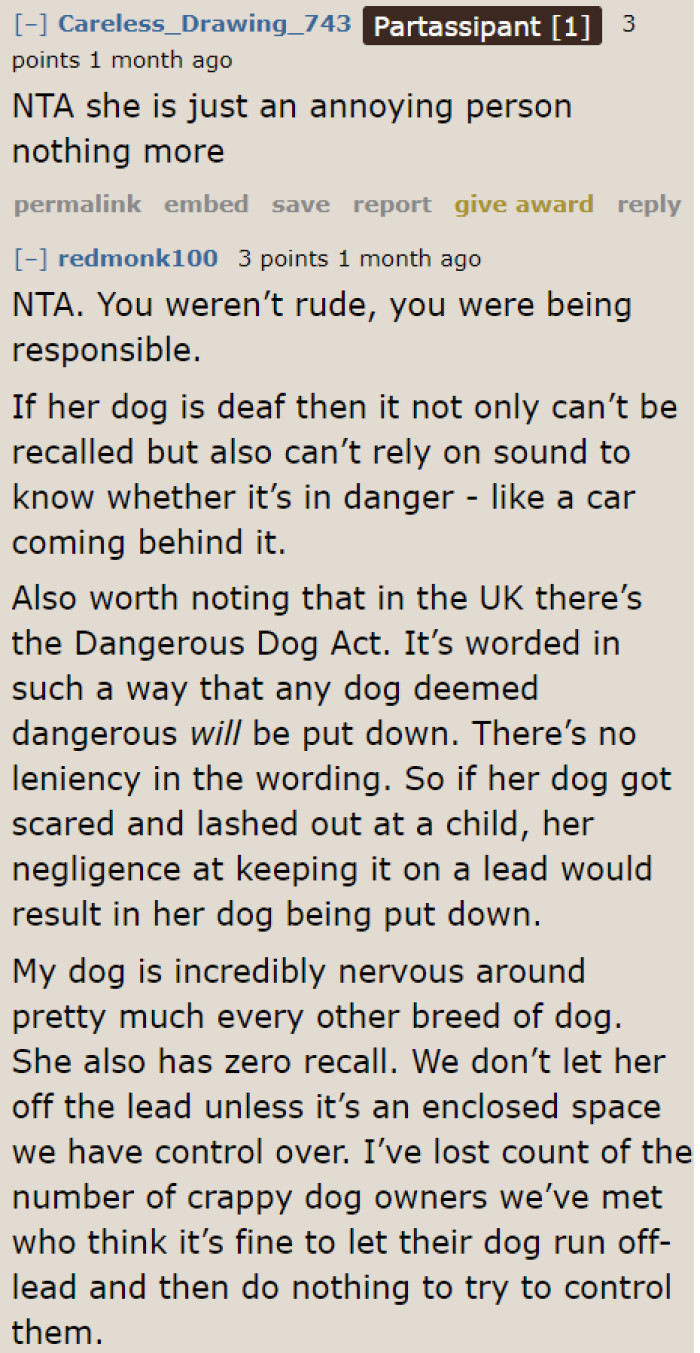
That’s when OP decides to ask Reddit for judgment, because she’s tired of seeing irresponsible choices spill into everyone else’s walk.
There's absolutely nothing wrong with the OP reminding a fellow dog owner how to be responsible when handling canines outdoors. If this owner still refuses to listen, sooner or later, it will be the dog that pays the price for her lack of responsibility.
If the OP continues to see this dog owner, she can check her local ordinances and file a complaint.
To address conflicts arising from irresponsible pet ownership, it is crucial to foster a culture of accountability among pet owners.
Encouraging community discussions about responsible pet care can help cultivate a greater sense of ownership among pet owners.
Additionally, implementing pet training workshops can provide owners with the necessary tools for better control of their pets.
The recent encounter between a woman walking her dog and an irresponsible dog owner underscores the critical importance of responsible pet ownership. Allowing a deaf dog to roam unleashed poses significant risks not only to the dog itself but also to other pets and their owners in the vicinity. The lack of communication methods typically available to dog owners makes it even more imperative that such dogs are kept secure in enclosed spaces.
Promoting responsible pet ownership is essential for creating a safer and more harmonious community for all. Engaging pet owners in discussions about the unique needs of deaf dogs can pave the way for better understanding and cooperation among neighbors. By fostering a sense of accountability, we can strengthen community relationships and help ensure that public spaces are enjoyed by everyone, including our furry companions.
The incident involving the woman and the irresponsible dog owner highlights the critical importance of responsible pet ownership, particularly when it comes to dogs with special needs, such as deafness. The article emphasizes that while deaf dogs can be just as loving and capable as any other dog, their unique communication challenges necessitate careful handling, especially in public spaces. Unleashing a deaf dog without proper precautions not only endangers the pet but also creates potential risks for others.
Promoting safe practices in pet ownership is essential for fostering a community that respects and understands the diverse needs of all animals. This situation serves as a reminder that educating ourselves about responsible pet care can significantly enhance the relationship between pets and their owners, contributing to a more harmonious coexistence. By prioritizing empathy and awareness, we can ensure that all pets, particularly those with special needs, receive the care and attention they deserve.
Nobody wants to be the kid or the dog that pays the price for an owner’s bad decision.
Meanwhile, see how an entitled dad reacted when a dog owner refused to let her dog play with his kids.
Share this article: