Housemates At War Over Untrained Dog's Inside Bathroom Habits

Some housemate drama starts small, then turns into a daily headache. In this Reddit story, a shared apartment has become a battleground over one very untrained dog and the mess she leaves behind.
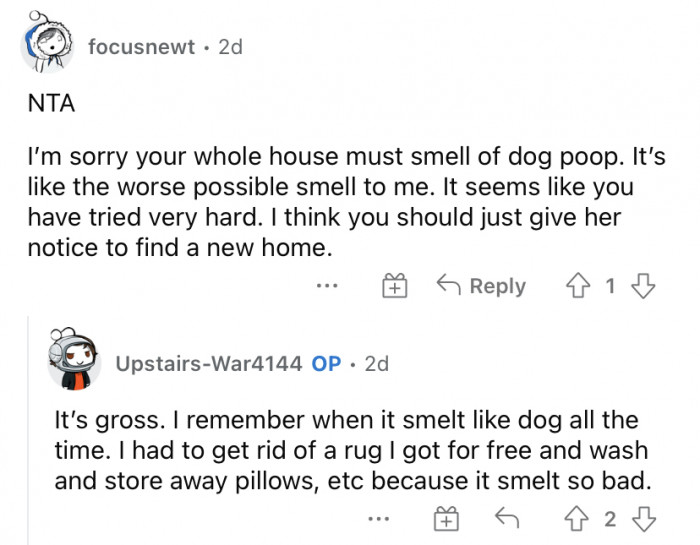
Redditor u/Upstairs-War4144 says they moved in with a friend they have known for ten years, and the friend brought along her four-year-old Staffy. The dog is loved, but she is mostly indoors, uses puppy pads, and still ends up going to the bathroom all over the place, which has made the home smell bad and the tension even worse.
The OP says they are out of patience, the friendship is strained, and the Reddit comments did not hold back. Read on.
The Redditor says that the dog will use puppy pads to go to the bathroom, but once she has done her business on the puppy pad, she will then go and do it everywhere else.
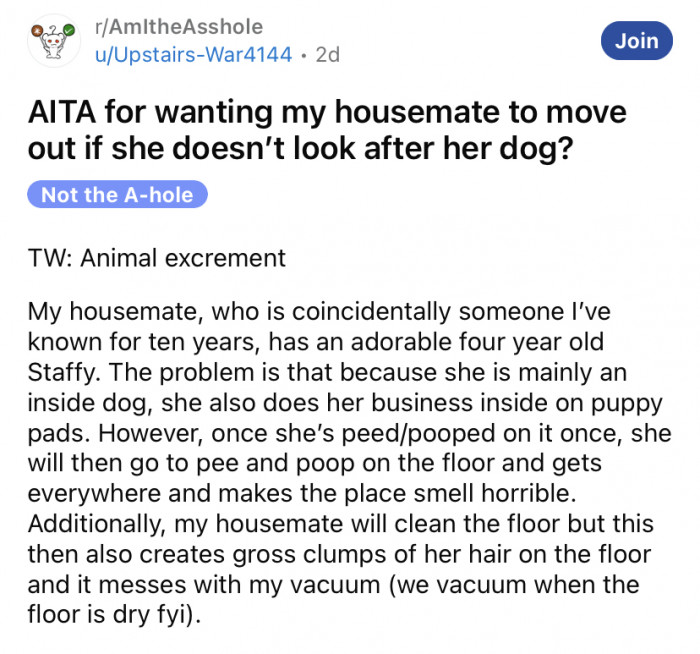
The Redditor says it's "disgusting," and they can't have friends over to their apartment because it's embarrassing.
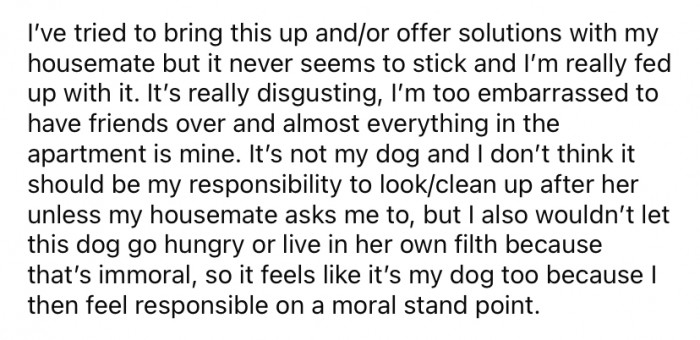
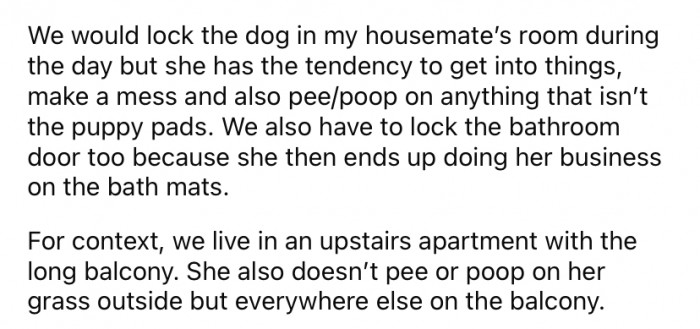
They have considered locking the dog in the housemate's bedroom during the day, but that only results in the dog getting into things she shouldn't and making a big mess.
The issues arising from the untrained dog’s bathroom habits reflect a common behavioral challenge in pet ownership. Many behavioral issues stem from a lack of proper training and socialization.
Understanding that dogs, much like humans, require consistent training and reinforcement can help housemates approach the situation constructively. Behavioral training, when applied correctly, can significantly improve a dog's habits and enhance the living environment.
The ongoing conflict between housemates over an untrained dog's bathroom habits reveals more than just a simple disagreement.
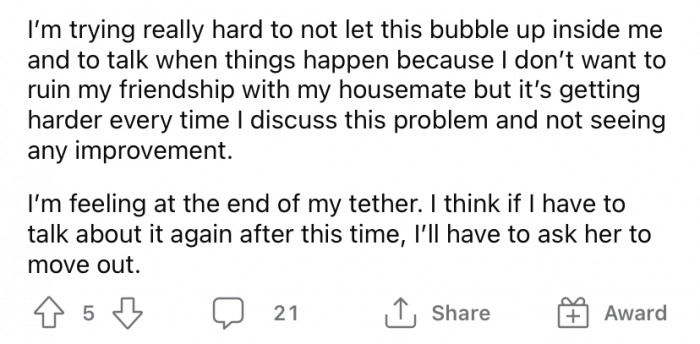
The OP desperately wants to find a solution to this problem without ruining their friendship with the housemate, but it seems to be an uphill battle.
Here's how people reacted.
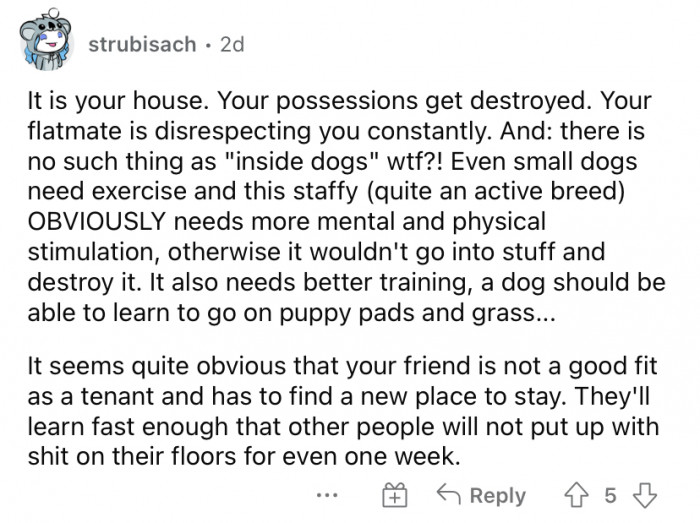
"I wouldn't live like this."

Research shows that stress can exacerbate behavioral problems in pets. A study published in the Journal of Veterinary Behavior indicates that dogs raised in chaotic environments may exhibit increased anxiety and undesirable behaviors.
In this case, the housemates should consider implementing structured routines and training sessions to create a more stable environment for the dog. A consistent approach can help reduce stress for both the dog and the household.
Moreover, the frustration from housemates can also reflect unmet expectations regarding pet care responsibilities.
"That's disgusting!"
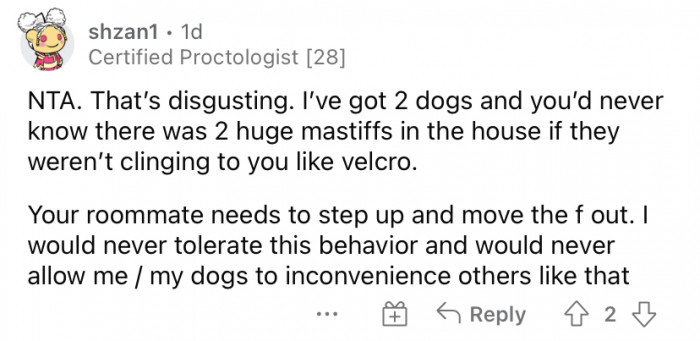
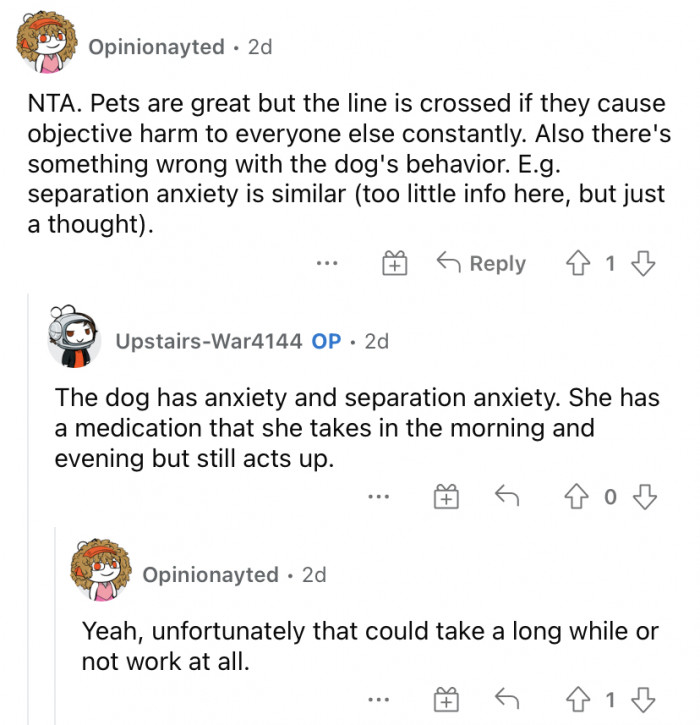
"There's something wrong with the dog's behavior."
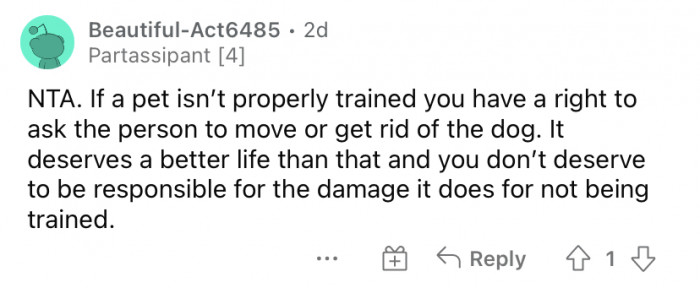
"It deserves a better life than that."
Consistency in training is key to modifying a dog's behavior. Positive reinforcement techniques yield the best results when teaching dogs appropriate habits.
Housemates should collaboratively establish a training schedule and rules regarding the dog's bathroom habits to ensure everyone is on the same page. This approach not only improves the dog's behavior but also fosters teamwork among the housemates.
This is similar to the Redditor dragged for not cleaning up after six grandmother dogs that “poop everywhere”.
In this case, implementing a structured training regimen for the dog can be beneficial. Positive reinforcement strategies, such as rewarding the dog for using designated potty areas, can significantly improve behavior over time.
A study from the Journal of Veterinary Behavior supports the effectiveness of positive reinforcement in modifying canine behavior, highlighting that dogs trained with these methods are less likely to engage in unwanted behaviors.
"There's no such thing as an inside dog."

"Kick the friend out and keep the dog."
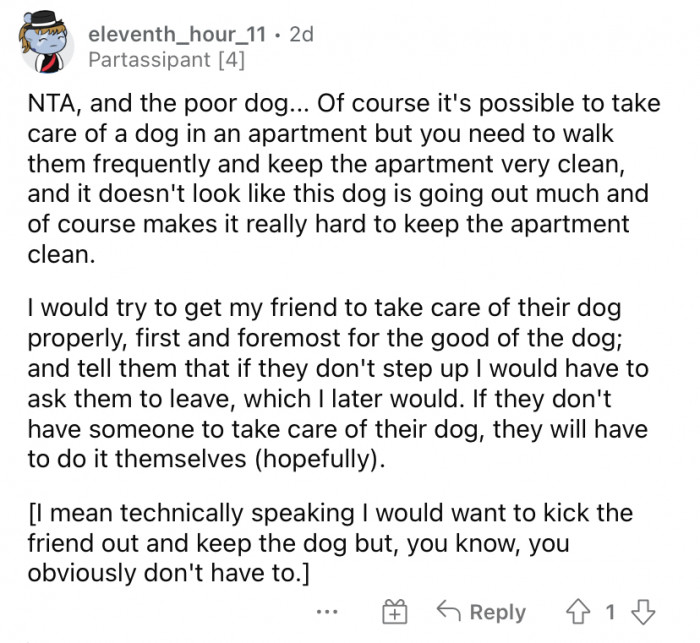
"Give her notice to find a new home."
Housemates should take time to observe the dog's behavior and identify triggers that may lead to accidents, allowing them to address the root cause rather than only the symptoms of the issue.
In the story shared by Redditor u/Upstairs-War4144, the conflict over an untrained dog highlights the importance of establishing a shared responsibility framework among housemates. When housemates fail to communicate and delineate their roles in pet ownership, it often leads to frustration and resentment, as seen in this scenario. Setting these boundaries not only minimizes conflicts but also fosters a more harmonious living environment. Cohabiting individuals should recognize that addressing such issues head-on can significantly enhance their shared experience and promote mutual respect.
"You have every right to be comfortable in your home."

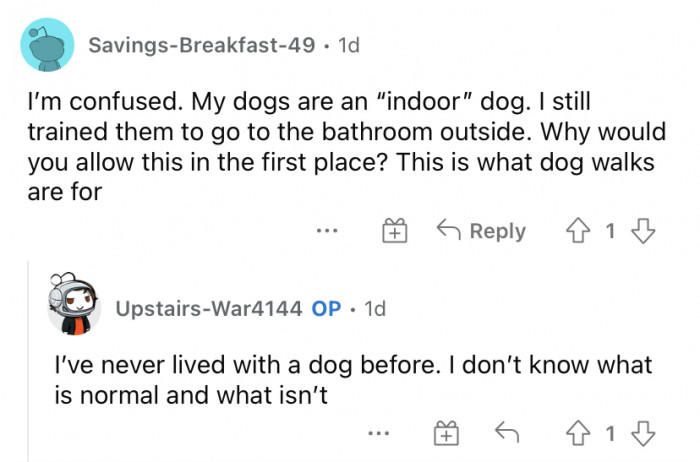
"This is what dog walks are for."
What's your take on this situation? Do you think the OP is overreacting about the dog, or do they have every right to be upset about this?
There's no denying that it's not a healthy situation for anyone involved, and it's not a pleasant living situation for the dog either.
We would love to hear your thoughts on this. You can share them with us in the comment section below.
In the case of the Redditor's struggle with a housemate over an untrained dog's bathroom habits, patience emerges as a critical factor. The article illustrates how understanding the dog's behavior can foster empathy among the involved parties. When one housemate acknowledges that the dog's accidents may stem from anxiety or inadequate training, it has the potential to shift the entire conversation. This recognition can lead to less blame and more collaboration in addressing the issue.
By approaching this conflict with empathy, as shown in the unfolding drama, the housemates could move toward a resolution that satisfies both their needs and the well-being of the dog. This situation underscores the importance of communication and understanding in resolving disputes, especially when they involve a shared living space and a pet's welfare.
The turmoil depicted in the Reddit story highlights a common issue faced by housemates: the clash over pet ownership responsibilities. In this case, the untrained dog’s bathroom habits are not just a nuisance; they serve as a flashpoint for deeper tensions between friends. When housemates fail to align on expectations and training methods, conflicts are likely to escalate. The situation calls for an effective dialogue to address differing views on pet care, which could ultimately lead to a more harmonious living arrangement. Without this crucial understanding, the bond between housemates is at risk of unraveling as the frustrations over the dog’s behavior mount.
The conflict over an untrained dog's bathroom habits highlights the complexities of shared living situations. When housemates disagree on how to manage a pet's behavior, it can lead to frustration and resentment. The story illustrates the importance of understanding and consistency in addressing such issues. Effective communication among housemates is vital to establishing a structured environment that supports both the dog's needs and the peace of the household.
By collaborating on training methods, such as positive reinforcement, housemates can foster a more harmonious living space. This not only helps in mitigating the dog's problematic behavior but also promotes a sense of teamwork that can enhance their relationship.
Want more roommate-level chaos? See how someone chose her room after an allergic couch guest took priority over an ESA.
Share this article: