
Woman Asks If She's An A**hole For Wanting To Walk Her Dog Alone Instead Of Bringing Her Unwilling Boyfriend Along

A 28-year-old woman refused to bring her “unwilling” boyfriend along for their dog walks, and now she’s stuck wondering if that makes her an a-hole. The routine is her lifeline right now, a long walk with her dog that actually helps her get through depression days.
Here’s the messy part: her boyfriend is also dealing with depression, but he’s not exactly helping. He tells her she should do all the dog work because she “does nothing else,” even though she’s on sick leave and already trying to keep their dog’s schedule steady.
After he complained after just 10 minutes and tried to cut the walk short, OP decided the dog deserves consistency, even if her boyfriend doesn’t.
The OP posted a story explaining that she and her boyfriend are both suffering from depression and she is currently on sick leave from her job.
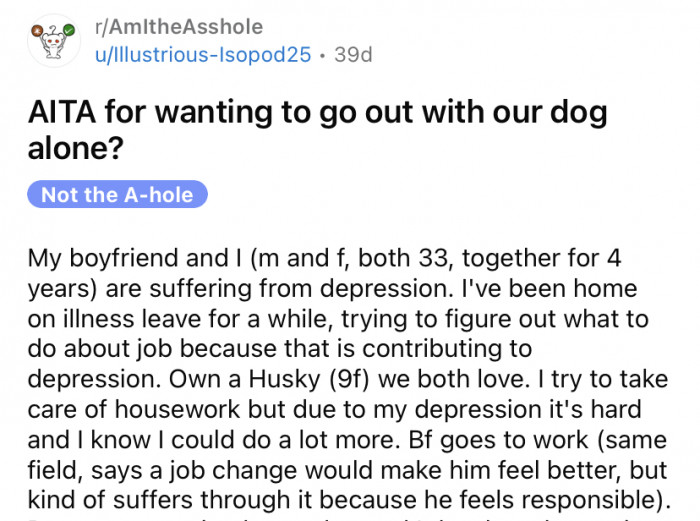
OP says that she and the dog have formed a special routine where they go for long walks together.
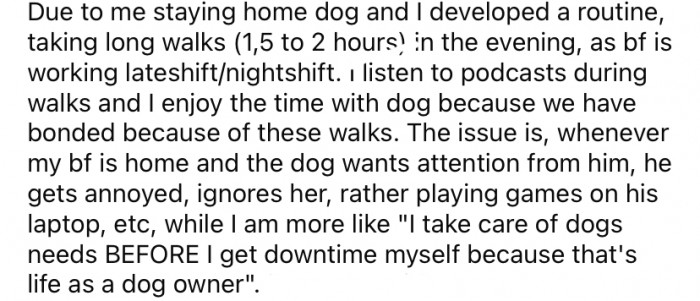
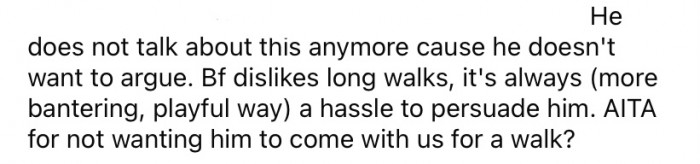
The Redditor's boyfriend says that she should do all the work regarding the dog because she does "nothing else."
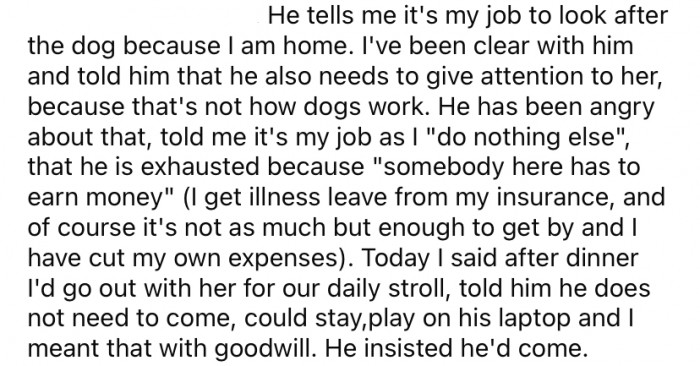
In relationships, perceptions of fairness are crucial for maintaining harmony.
In this case, the boyfriend's expectation for his partner to handle all dog-related responsibilities may stem from a belief that he is contributing more to the relationship financially, leading to an imbalance that can breed tension.
OP’s boyfriend complaining after only 10 minutes is what turns a routine walk into a full-on relationship debate.
In the realm of relationship dynamics, the situation presented by the Reddit user highlights the often overlooked power imbalances that can arise. The woman's desire to walk her dog alone, rather than bringing along her unwilling boyfriend, underscores a potential disconnect in expectations between partners. This scenario illustrates how unvoiced feelings can lead to frustration and resentment, particularly when one partner feels obligated to participate in activities they are not enthusiastic about.
The article suggests that responsibilities, like pet care, should ideally be shared or at least mutually agreed upon. When one partner feels burdened by these responsibilities, it can foster conflict and dissatisfaction. The woman's longing for solitude with her pet indicates a need for personal space, which is crucial for maintaining emotional well-being in any relationship.
After only 10 minutes, OP's boyfriend was complaining that he was tired and that it must be time to head back.
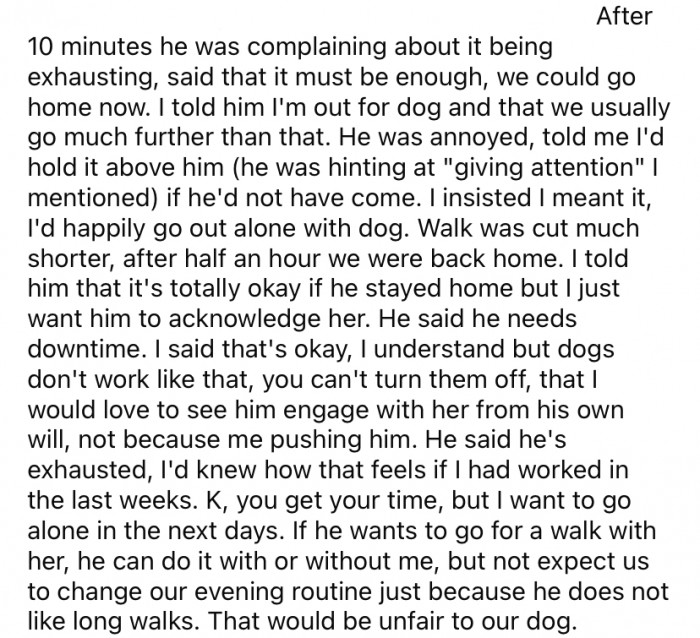
So, OP said that she wants to walk the dog alone from now on because it wouldn't be fair to the dog to change their entire routine and cut her walks short because of him.
Here's how people reacted.
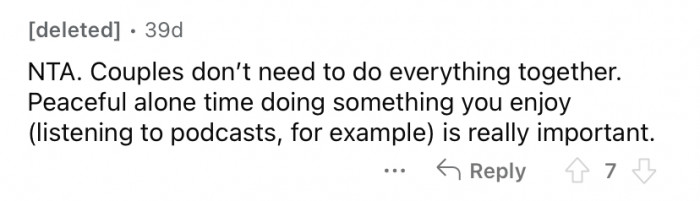
The “you do nothing else” comment lands hard because OP is the one stuck on sick leave, keeping the dog’s schedule alive.
When one partner feels overwhelmed, it can lead to a cycle of blame and resentment, particularly if responsibilities are not shared equitably.
Addressing these feelings directly can help both partners understand each other's perspectives and foster a more collaborative environment in their relationship.
In this case, the boyfriend's assertion that the girlfriend should handle the dog due to his work status reflects a common pattern of projection.
Understanding this can help both parties reflect on their needs and communicate more openly about responsibilities.
This is similar to the Redditor fighting with her boyfriend over not picking up dog poop.
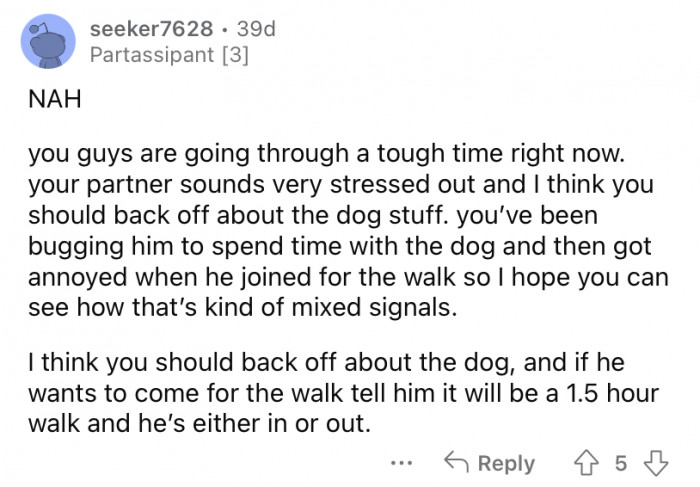
"You guys are going through a tough time right now."
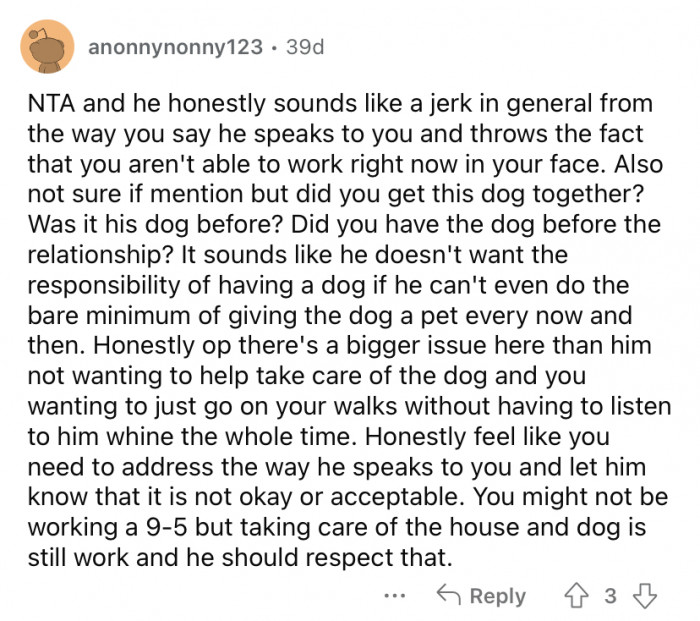
"He honestly sounds like a jerk."
"You're doing what's best for the dog."
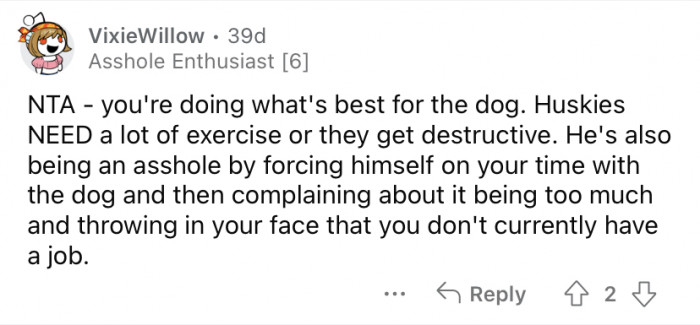
When OP says she wants to walk alone so she won’t shorten the dog’s walks for his mood, the fairness argument gets louder.
The Emotional Dynamics of Shared Responsibilities
Research indicates that shared responsibilities can significantly impact relationship satisfaction. A study from the University of Michigan highlights how couples that negotiate household responsibilities tend to report higher levels of relationship satisfaction.
In this case, the imbalance in pet care responsibilities may be contributing to the girlfriend's feelings of frustration and the boyfriend's perception of being overburdened, both of which can erode relationship quality.
Strategies for Fair Division of Responsibilities
To alleviate tension, both partners need to engage in a candid discussion about shared responsibilities.
By clearly defining who is responsible for what, couples can reduce misunderstandings and feelings of resentment.
It's a free country!

What's your take on this situation? Do you think the OP is overreacting about her boyfriend's relationship with the dog, or is she doing the right thing?
Either way, we're glad that OP is putting the dog's needs first. As for her boyfriend—well, maybe he needs to rethink and rearrange his priorities.
We would love to hear your opinions on this. You can share your thoughts with us in the comment section.
Creating a safe space for these discussions can foster a collaborative partnership where both individuals feel valued.
Active listening techniques, such as reflecting back what was heard, can help both partners feel understood.
And that’s when people start weighing in on whether the dog is the real victim here or if OP is shutting him out too fast.
Recognizing Emotional Needs
It's also important to recognize and validate each other's emotional needs in the relationship.
By showing understanding and compassion, partners can foster a deeper emotional connection that supports collaboration.
Ultimately, navigating relationship dynamics requires open communication and a willingness to adapt.
By encouraging mutual respect and understanding, couples can cultivate a supportive environment for both their relationship and their pets.
In this scenario, the underlying issue revolves around the dynamics of shared responsibilities within the relationship.
Feelings of exhaustion and frustration can be exacerbated by unresolved conflicts. The dynamic of one partner feeling they are doing 'nothing else' can lead to misunderstandings and a lack of appreciation for the other's contributions.
Discussing these feelings openly can help both partners acknowledge their efforts and negotiate a more balanced approach to responsibilities.
Practical Strategies for Fairness in Relationships
This could involve creating a schedule that outlines who does what and when, ensuring both partners feel equally invested in their dog's well-being.
Additionally, regular check-ins to discuss feelings about these responsibilities can help maintain open communication and adjust expectations as needed.
In this situation, finding the right balance in relationship dynamics is crucial to ensure both partners feel valued and understood. The Reddit user’s desire to walk her dog alone highlights a common struggle in relationships where individual needs may conflict with shared obligations.
By recognizing the significance of personal time for mental well-being, couples can create a more supportive atmosphere that respects each partner's desires and contributes to a healthier relationship overall.
Nobody wants to fight about dog walks while everyone’s already struggling.
Want more dog-walk responsibility drama like her boyfriend refusing to share? Read how she demanded he prove he can walk the dog alone.
Share this article:





