
A Marriage Is In Peril After Pregnant Cat-Allergic Wife Surrenders Her Husband's 16-Year-Old Cat To A Shelter Without Him Knowing

A pregnant wife, a 16-year-old cat, and one badly timed allergy diagnosis turned this marriage upside down. The husband had raised the indoor cat since it was a kitten, so when his wife suddenly asked him to rehome it, he pushed back hard.
He offered a temporary fix instead, moving in with her parents nearby so he could keep checking on the cat while they waited to see whether the allergy would stick after the baby arrived. That plan did not go over well, and things got even messier after the cat was taken to a shelter without his knowledge.
Now the internet is split, and the fallout is getting uglier by the minute. Read on.
OP's problem has torn Reddit users apart. What would you have done if you were in OP's case?

Would you be willing to rehome your old cat so he doesn't trigger your wife's allergies?
Or will you insist on keeping your cat in a secluded part of the house so as not to stress him with a move and, at the same time, lessen his interaction with your wife?
In the heart of this story lies a troubling event that could fracture the very foundation of trust in a marriage. The act of surrendering a cherished pet, especially without the knowledge or consent of one's partner, raises significant concerns about emotional safety and mutual respect. The elderly cat, a long-standing member of the family, represents not just a pet but a shared history and commitment. When such a bond is severed unilaterally, it can evoke feelings of abandonment and betrayal, particularly when the emotional stakes are high. The emotional fallout from this decision can lead to deep relational distress, highlighting the necessity of open communication and mutual decision-making in any partnership.
Pets often occupy a unique emotional space in our lives, serving as sources of comfort and companionship.
However, when a partner feels their emotional needs aren't being prioritized, it can lead to significant relational strain.
Research indicates that attachment to pets can sometimes be a reflection of deeper emotional needs, making decisions about their care particularly fraught.
Keep in mind OP's wife is in the third trimester of her pregnancy, which means any undue stress can compromise her vulnerable state.
Unfortunately, OP added an update that is devastating to everyone who has read it.
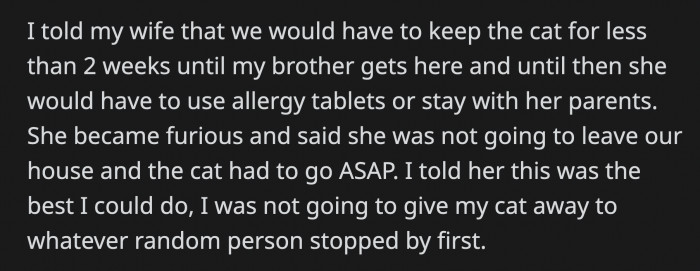
He asked his brother to adopt his cat, and he agreed, but they will have to wait two more weeks because OP's brother was out of town when he called.
In situations where pets are involved, the emotional stakes are often high, and decisions can evoke intense feelings.
When one partner feels blindsided, it can lead to feelings of betrayal and mistrust, which can take a long time to heal.
Emphasizing mutual decision-making is essential in maintaining a healthy partnership.
His wife didn't like this solution either and came up with an unkind solution herself.
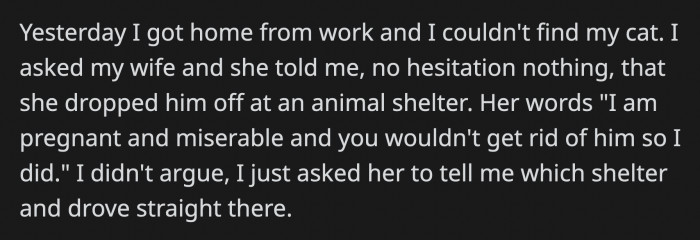
She dropped the cat off at a shelter and encountered an animal that terrified him, which promptly led to a heart attack that killed him.
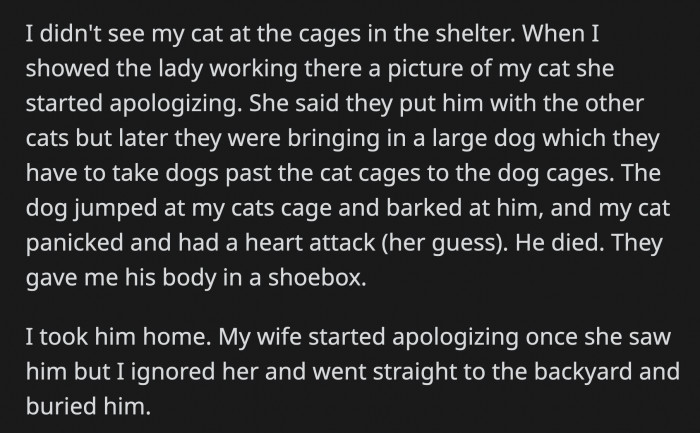
OP's wife apologized to him when she saw the cat long gone in a shoebox. OP can't even look his wife in the eye after what happened, and the situation is just awful for everyone involved.
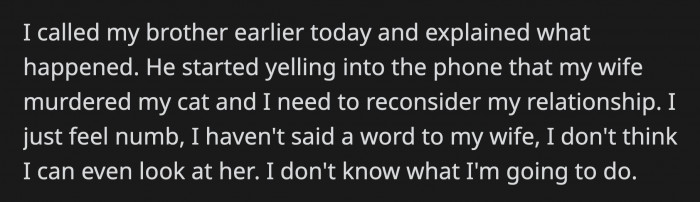
Effective communication is vital in relationships, especially when sensitive decisions regarding pets are involved.
Studies show that feelings of loss and abandonment can arise, impacting overall mental health and relationship satisfaction.
Initially, the comments were mostly against what OP thought was a fair solution to their problems.
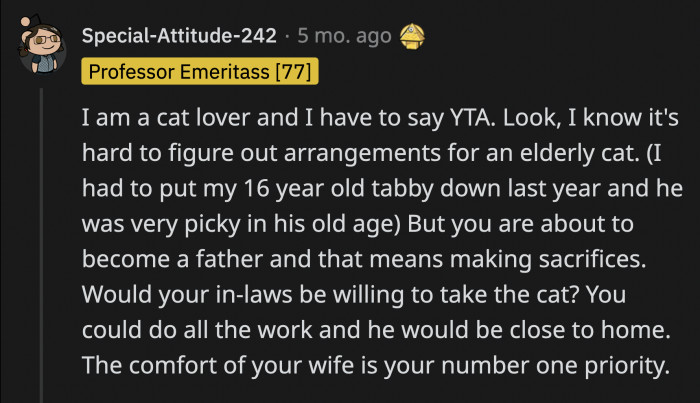
It did seem like OP was choosing his cat over his wife in his first post, so it's not surprising that the commenters were roasting him for it.
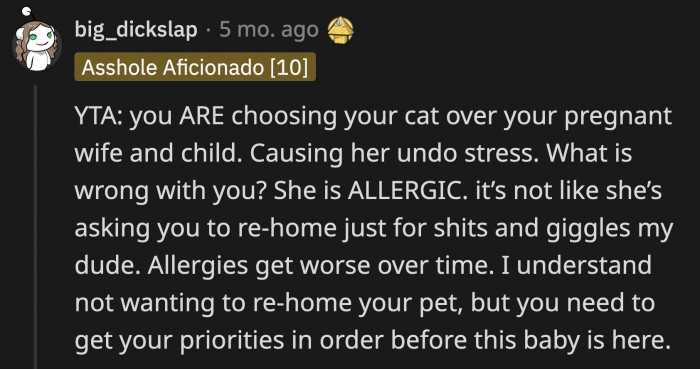
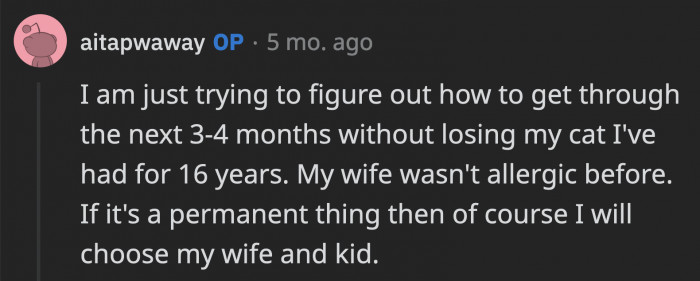
OP did say that he is simply trying to do what he can in a bad situation. He loves his wife as well as his cat, but if the allergy persists, OP said he will choose to rehome his cat, no questions asked.
Couples facing similar dilemmas should consider setting aside time to discuss their values around pet ownership and caregiving.
Creating a shared understanding of each partner's attachment to their pets can lead to more compassionate decision-making.
Additionally, seeking couples therapy might provide a supportive environment for exploring these feelings and rebuilding trust.
Research on attachment theory underscores the importance of pets as emotional support, particularly in stressful times.
Someone had a suggestion that was more practical: OP and his cat temporarily move out of the home instead. Unfortunately, this would mean leaving his very pregnant wife alone, which doesn't seem like a good idea either.
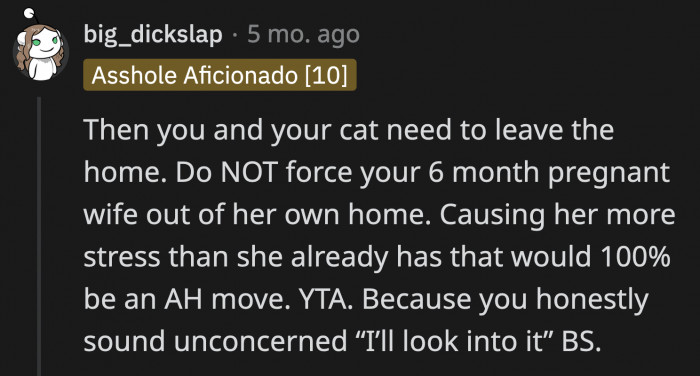
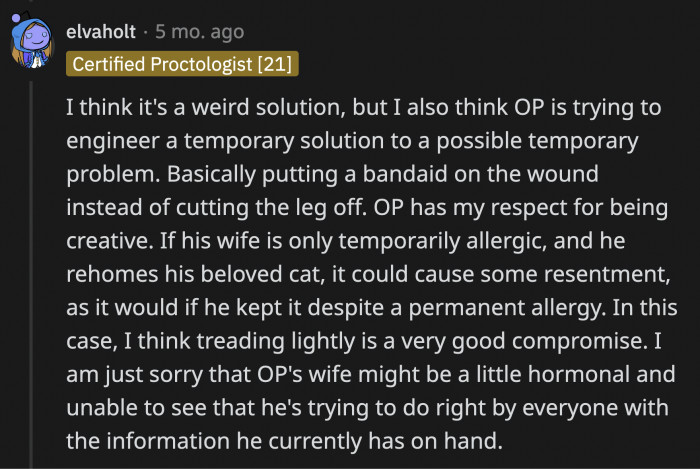
That's the thing; OP's suggestion to move out and leave their cat alone at home was odd. It was strange that this was the first idea that popped into his head.
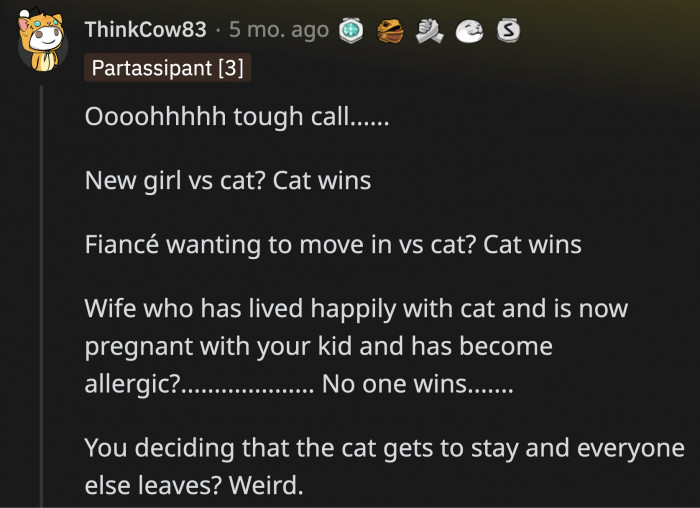
It may be odd, but it could have worked; however, it would have definitely caused a strain in their marriage.
Pet loss can evoke profound grief comparable to human loss, complicating relationships further.
Recognizing this grief can help partners navigate their feelings more effectively and support each other through the healing process.
Effective communication is paramount in resolving conflicts about pets and their care.
Couples are encouraged to engage in open discussions about their feelings and expectations regarding pet ownership.
Utilizing techniques such as active listening and reflecting back what the other has said can help ensure both partners feel heard and understood.
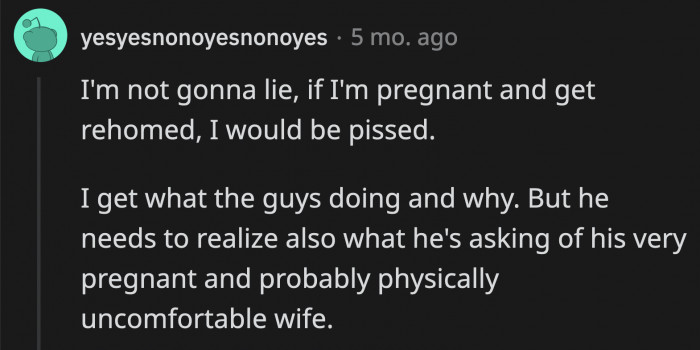
This seemed like the best solution out of all the comments, but we can tell that OP is very hesitant about rehoming his cat, who has only known him, his wife, and their home his whole life.
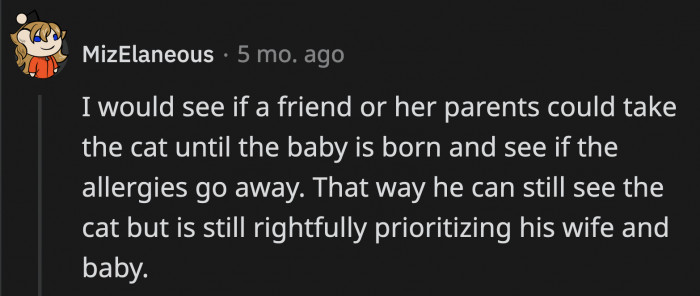
Pets are truly amazing, but when it boils down to it, OP should really prioritize his wife over his cat. Whichever way he chose, it would have been heartbreaking for OP.
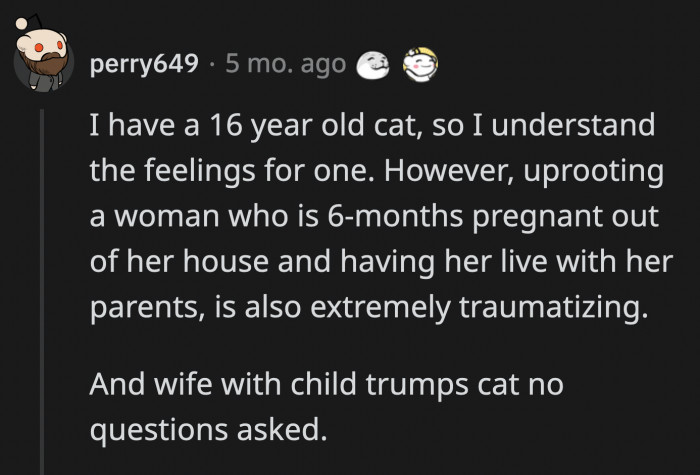
A human may understand better why moving out of the house is necessary, but it doesn't make the move any less stressful, especially for a person who is about to give birth.
Clinical studies show that employing collaborative problem-solving techniques can significantly improve relationship satisfaction.
In this case, both partners should express their feelings about the cat and its future, aiming to reach a resolution that honors both the pet's needs and their own emotional well-being.
Such approaches foster a sense of teamwork rather than competition.
They were right; OP was ridiculed left and right in the comments section, but this man was really just at a loss as to which choice was the better one. Sadly, both choices would have been difficult for him.
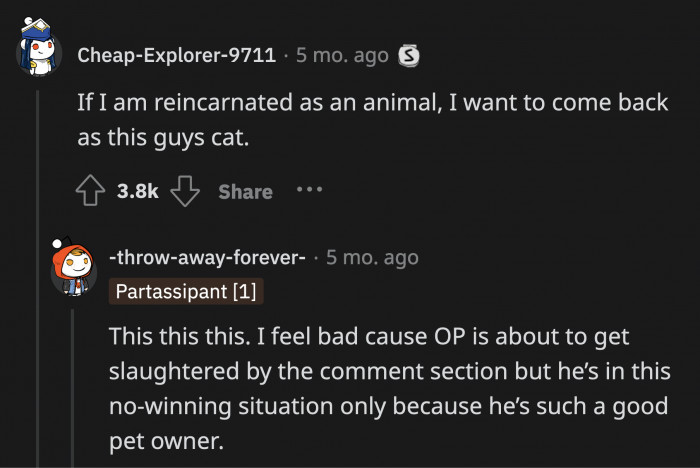
They can opt to do this, but it would really depend on how severe the allergy is and if OP's wife was even willing to hear another option.
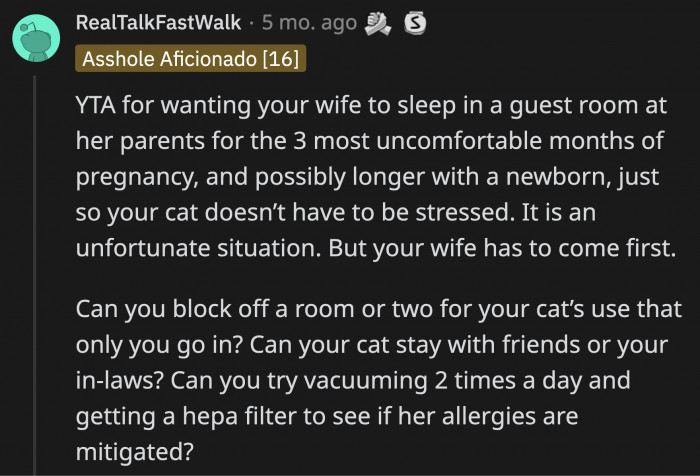
After the devastating update, the commenters were more sympathetic toward OP.
Empathy plays a critical role in how couples navigate difficult decisions, particularly those involving pets.
Some said the previous harsh comments were too harsh on OP and asked him to reflect on whether he wants to work on his marriage after what his wife did.
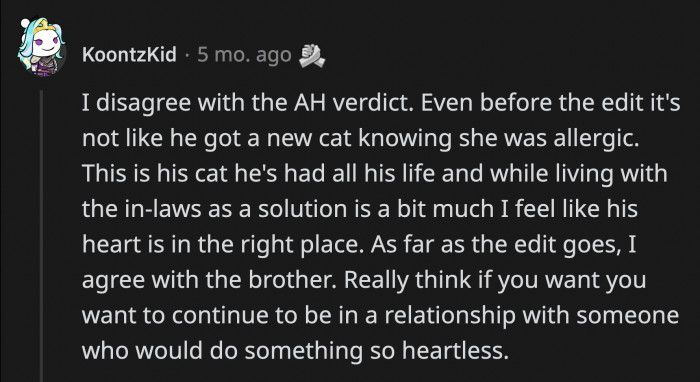
What happened to OP's cat was shocking. Can you imagine how OP felt when he found out his own wife was capable of doing such a thing?
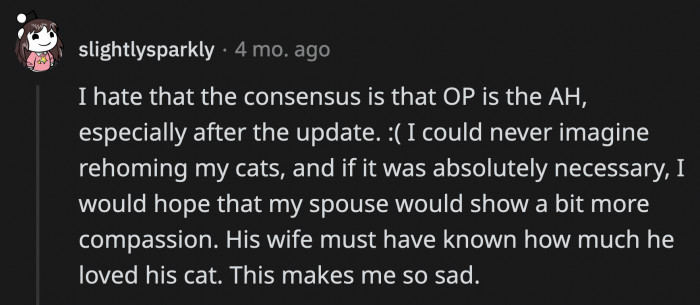
Even if the cat lived, what OP's wife did would have caused a significant rift in their relationship that would have been hard to overcome.
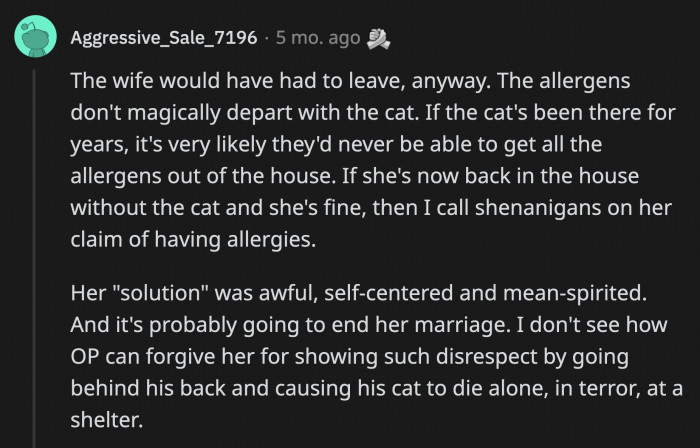
Ultimately, understanding the emotional dimensions of pet ownership can help couples make more informed decisions.
This not only strengthens the relationship but also ensures that both partners feel valued and respected in their shared lives.
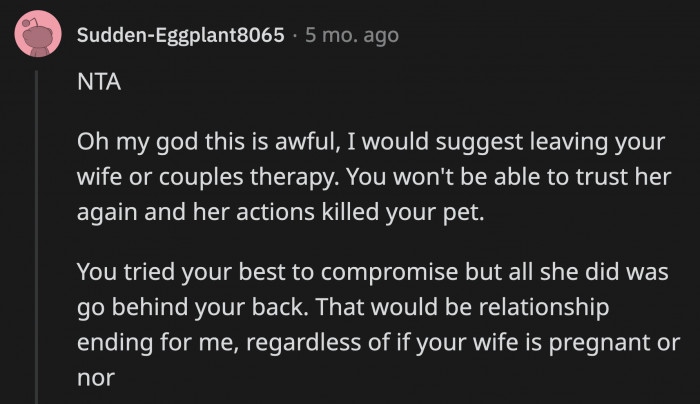
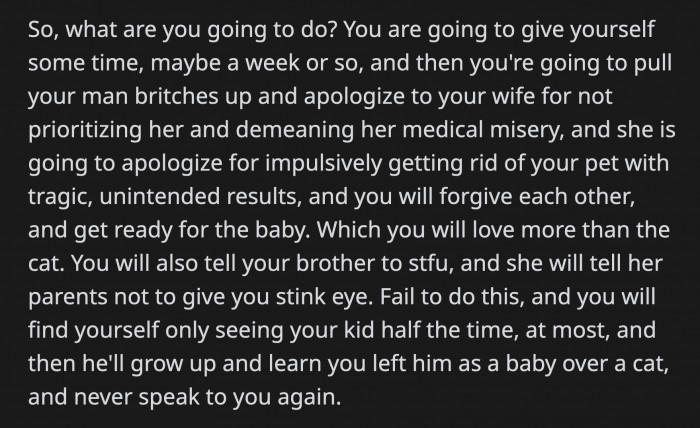
One specific commenter believed that OP was still the a**hole despite the update.
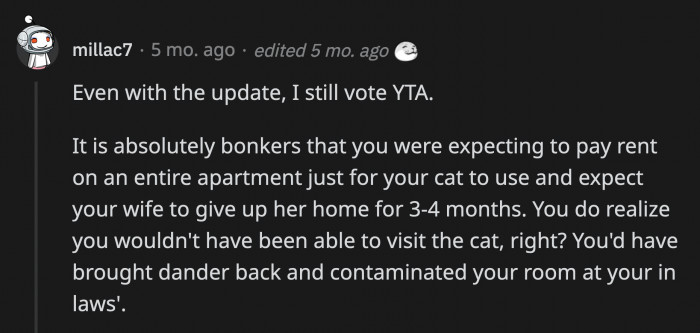
They said OP has a brief window of time to repair the damage in their marriage before his wife realizes that OP chose the cat in the first place.
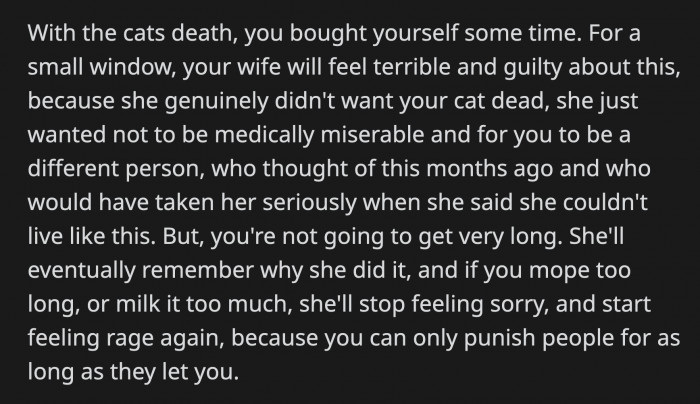
They advised OP to use this time to reconnect with his wife before it's too late.
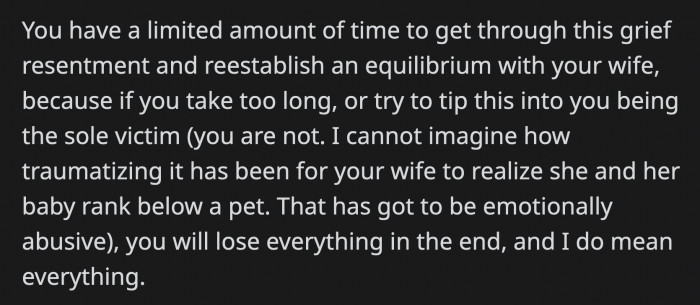
They said both should apologize to each other for how things turned out, or else OP will have a very bleak future with his wife and child.
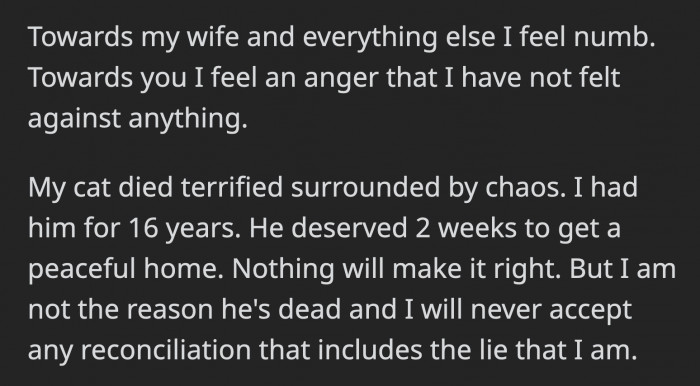
OP replied to the commenter above and said he read the comment several times in an attempt to understand what the person was trying to say.

The comment angered OP because what happened to his cat shouldn't have happened if his wife had the patience to wait for two weeks. OP said he will not let himself be convinced that he is somehow at fault for his cat's unfortunate death.
The series of events has certainly wounded every member of OP's family. His wife is probably wracked with guilt because of what happened to OP's cat.
However, there was a solution in place, but they were unable to reach a compromise, which has now resulted in an even bigger problem in their marriage.
The heart-wrenching situation of a pregnant, cat-allergic wife surrendering her husband's 16-year-old cat to a shelter highlights the critical need for open communication in relationships. The emotional turmoil stemming from such decisions can fracture trust and leave lasting scars. In this case, the wife's action, taken without the husband's knowledge, underscores a failure to prioritize mutual respect and empathy.
When faced with the challenges of pet ownership, particularly when health issues arise, it is essential for couples to engage in honest discussions. This incident serves as a reminder that decisions affecting beloved pets should never be made unilaterally, as they can deeply impact the emotional landscape of the relationship.
The ultimate goal should be to cultivate a partnership where both voices are heard, ensuring that the needs of all family members, including pets, are taken into consideration.
The act of surrendering a beloved pet, especially without the knowledge of a partner, can shatter the foundational trust in a marriage. The emotional safety that comes from shared decisions is crucial, and when one partner unilaterally chooses to give up an elderly cat, it can lead to deep feelings of betrayal and hurt.
In this scenario, the husband's bond with his 16-year-old cat represents more than just companionship; it symbolizes years of love and commitment. The wife’s decision, motivated by her cat allergies, highlights the need for open communication about such significant life choices. Understanding each other's emotional ties to animals can be the key to navigating the turmoil caused by such an unexpected surrender.
By addressing these emotional repercussions with empathy and care, the couple may find a path toward rebuilding trust and improving their relationship satisfaction, despite the difficult circumstances they face.
For another jaw-drop moment, see how an allergic man gave away his girlfriend’s cats.
Share this article:





