Husband Can’t Understand His Wife’s Nervous Reactions To Three Cats And One Dog She Is Unwillingly Taking Care Of For The Past Four Months

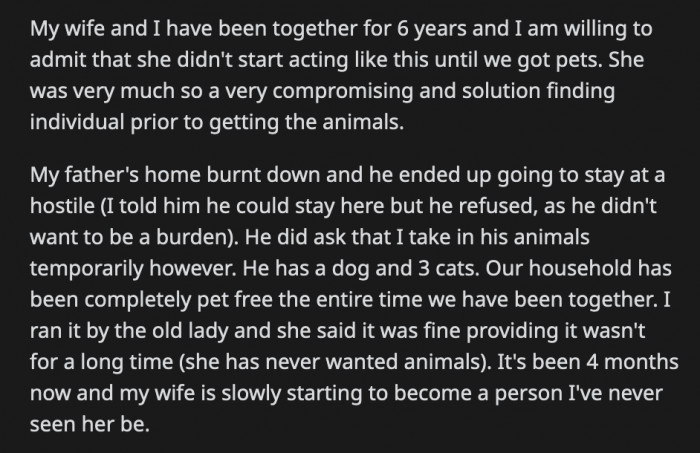
Four months is a long time to pretend a temporary favor is still temporary. In this Reddit story, one husband keeps brushing off his wife’s growing frustration after his dad’s dog and three cats were moved into their home after a fire.
What started as a short-term arrangement has turned into daily stress, with the animals crowding her space, interrupting meals, and even waking her up at night. The husband says she is overreacting, but the way she is reacting suggests she has hit her limit.
Now the pets are still there, the resentment is building, and the marriage is starting to feel the pressure. Read on.
Even the three cats which she significantly tolerates better have been getting on her nerves

The cats will immediately knock anything she holds onto to ask her to play with them. It doesn't matter if it's her phone or a book; they will jump up and swipe it out of her hands.
They also jump on the bed at 3 a.m. to wake her up every single night
The wife's nervous reactions to the pets reveal a deeper emotional struggle that has been overlooked.
This situation underscores the significant anxiety that can emerge when someone is thrust into unfamiliar or overwhelming circumstances. The wife's nervous reactions to caring for three cats and a dog reflect a common struggle many face when dealing with unexpected responsibilities. The article reveals that she has been managing this for four months, suggesting that prolonged exposure to stress can intensify feelings of unease.
Moreover, her discomfort is not just about the animals themselves but also about the pressure of being responsible for their well-being without having prior experience. The husband’s lack of understanding of her struggle highlights a vital aspect of relationships: the need for empathy and recognition of one another’s emotional challenges.
Nervous reactions to animals can often be traced back to past experiences or traumatic encounters.
OP has seen this happen with his own eyes and says her frustration with the cats is understandable, but he believes her "overreaction" is ridiculous

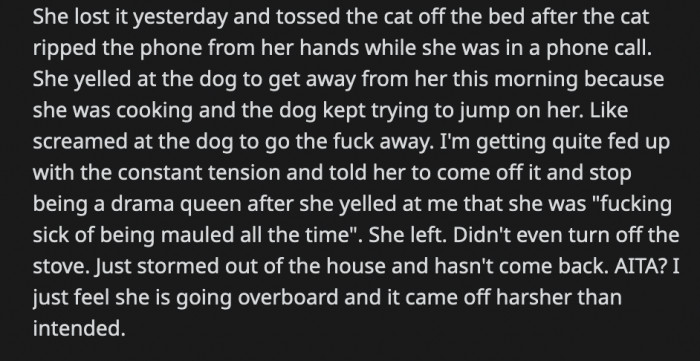
She finally had enough when the cat swiped the phone out of her hand while she was on a call
She also yelled at the dog to get the f*ck away when he kept jumping at her while she was cooking. She yelled at OP that she was tired of being mauled all the time.
OP met her anger with his own frustration and snapped at her to stop being a drama queen. She left the house without turning off the stove, walked away, and hasn't come home since.
Four months with no end in sight is not really a temporary situation
That temporary setup has clearly stopped feeling temporary.
Research shows that individuals with anxiety disorders often experience increased stress in situations involving unfamiliar animals.
In this case, the wife's discomfort around the cats and dog may reflect a broader pattern of anxiety that requires understanding and support.
Recognizing these patterns can help both partners navigate the emotional landscape of their shared living situation more effectively.
Moreover, the wife’s reactions to the pets could reflect an underlying fear of being unable to meet expectations.
Studies in animal behavior psychology suggest that fear responses can significantly affect how individuals interact with pets.
Recognizing the origins of these fears is crucial for addressing them effectively.
OP knows the animals will be staying with them a lot longer than he agreed to, but he still can't see why his wife is so frustrated

OP was busy watching his wife get annoyed by the animals until she snapped

They probably latched onto her because she has been doing the majority of the work that goes into their care

The Role of Compassionate Communication
Effective communication is vital in understanding and addressing anxiety in relationships.
It echoes the woman’s fight to rehome an aggressive dog, despite his late mother being the excuse.
The Importance of Communication in Relationships
Additionally, this situation underscores the significance of effective communication in relationships.
The dynamics at play in this household reveal a significant disconnect between the husband and wife regarding their shared responsibilities towards the pets. The wife's nervous reactions to the three cats and one dog are not just quirks; they signal a deeper struggle that has been overlooked for months. The husband’s apparent lack of awareness of her discomfort highlights a critical need for open communication.
By recognizing and validating her feelings, the husband can contribute to a more supportive atmosphere. It is essential that he actively encourages her to voice her fears and concerns about caring for the animals. This simple act of creating a safe space for dialogue can begin to alleviate her anxiety and strengthen their partnership in navigating the challenges that come with pet ownership.
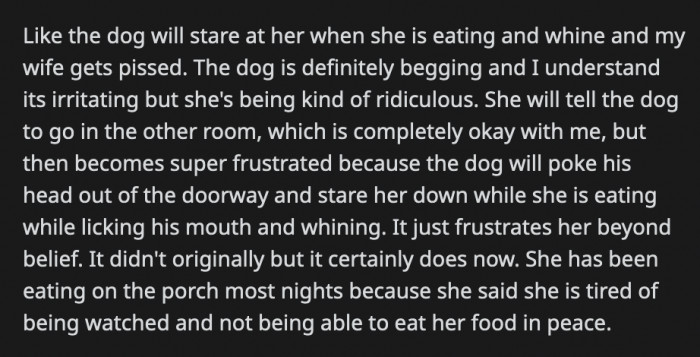
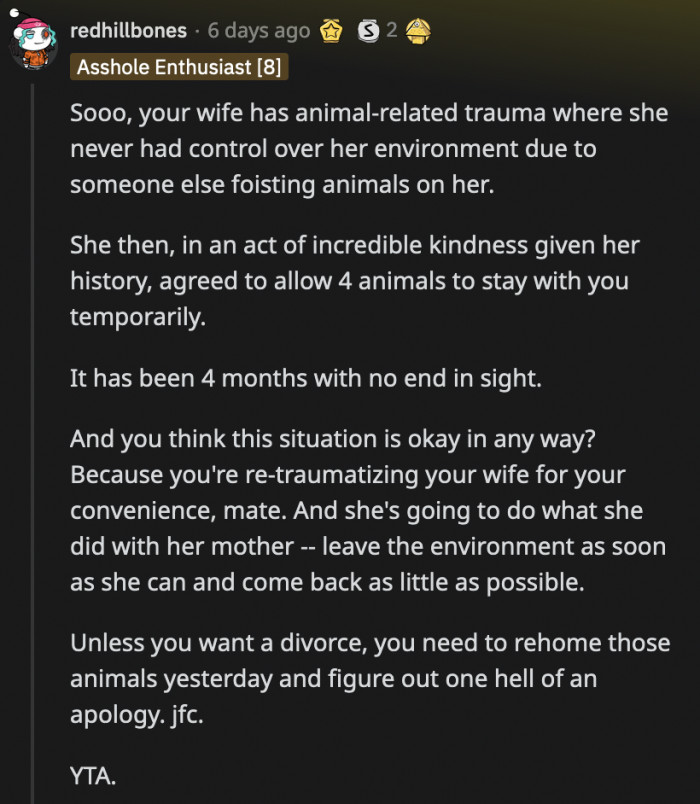
She is understandably frustrated because she is tolerating animals she didn't want in the first place

OP knows how she feels about pets and somehow still sees her as a drama queen

OP showed how little regard he gave his wife when he agreed to foster animals. Her sympathy for his dad's situation can only go so far before her true feelings surface.
To address this issue, the husband might consider having an open conversation with his wife about her feelings toward the pets.
Expressing understanding and validating her feelings can foster a supportive environment where she feels safe to share her anxieties.
Using gentle, non-confrontational language can encourage open dialogue.
To navigate the complexities of this situation, it may be beneficial for both partners to have an open conversation about their feelings regarding the pets. Establishing a shared understanding of responsibilities and discussing concerns can help alleviate anxiety and build a stronger partnership.
Furthermore, seeking support through couples therapy may provide a safe space for both individuals to express their fears and work collaboratively toward a solution.
Practically, implementing gradual exposure techniques could help the wife acclimate to the pets more comfortably.
Encouraging small, positive interactions with the animals might also enhance her comfort and reduce her nervousness.
Her life was disrupted, and she was forced to make adjustments that make her uncomfortable. OP has to apologize now before her resentment grows.
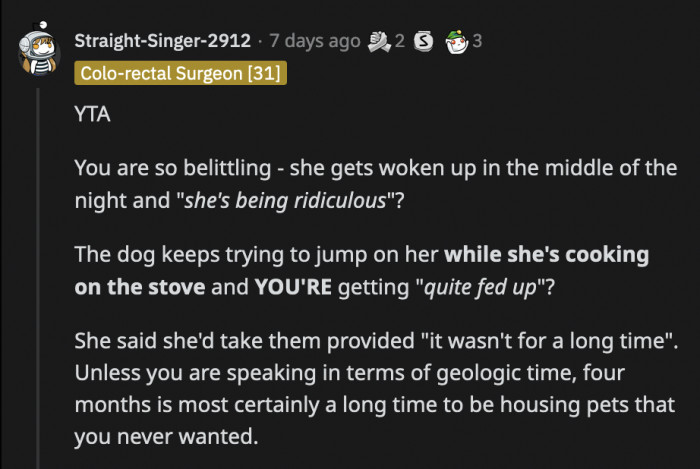
OP's disregard for her feelings just tells her that he is prioritizing the animals over her
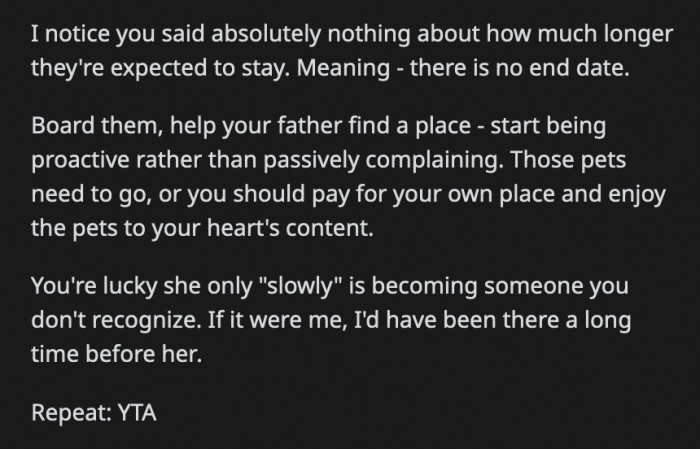
OP has to find a solution before his wife leaves him to deal with the animals by himself

Coping Strategies for Anxiety
Research indicates that developing coping strategies is essential for managing anxiety effectively.
Engaging in mindfulness practices or gradual exposure to the animals in a controlled environment can help reduce anxiety over time.
These approaches can empower individuals to feel more comfortable in situations that trigger anxiety.
This woman has resorted to bringing her food to the porch just so she can eat in peace in her own home
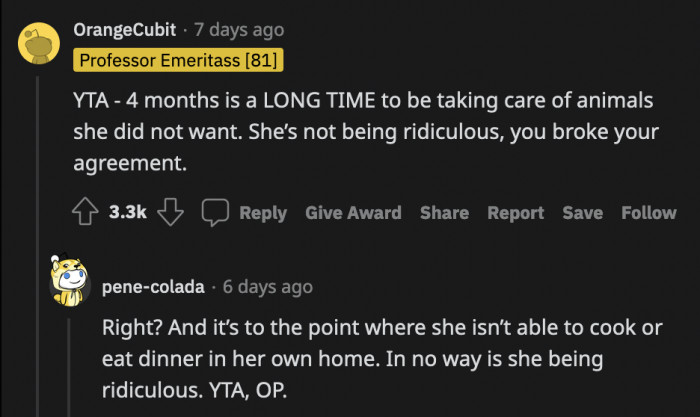
OP should have apologized to her and promised that he would start to find another place to keep the animals safe instead of calling her a drama queen

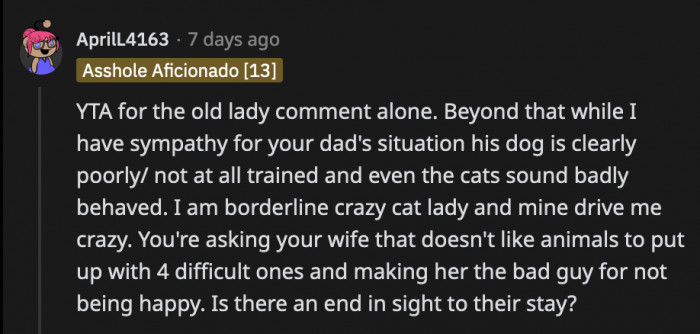
It's one thing to willingly become a pet owner, but to suddenly have four poorly behaved animals given to you is an entirely different subject
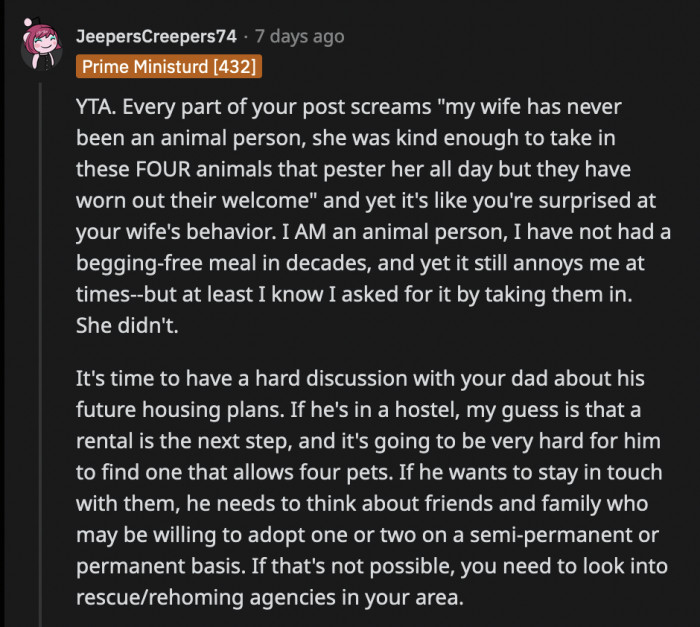
Ultimately, the husband may also want to consider ways to make the pets feel less overwhelming for his wife.
For instance, creating designated safe spaces for the animals or allowing her to engage with them at her own pace can foster a sense of control.
This gradual approach can help her build confidence and reduce anxiety over time.
OP has to realize how much he f*cked up before his wife rehomes more than just the animals. If he doesn't want to be a single man struggling to keep four pets from clawing at him, he has to find the right way to apologize to her.
He either finds another arrangement for the pets or lets his wife slowly realize what an inconsiderate jerk she married. His choice will determine if he will live with his or his dad's pets in the foreseeable future.
In this situation, it is crucial to recognize the emotional toll that caring for pets can take on someone who is already feeling overwhelmed. The husband's failure to acknowledge his wife's discomfort around the three cats and one dog highlights a significant gap in their communication. Instead of dismissing her nervous reactions, he should strive to understand the root of her anxiety. This not only involves listening to her concerns but also providing reassurance and support. By fostering an open dialogue about her feelings and gradually introducing her to the pets, they could cultivate a more harmonious living situation. Ultimately, empathy can pave the way for a more nurturing environment where both partners feel understood and valued.
In this situation, the emotional dynamics between the husband and wife reveal a critical need for empathy and communication. The wife's nervous reactions to the three cats and one dog she has been caring for reflect an underlying struggle that has gone unacknowledged for too long. Recognizing her discomfort is the first step toward addressing the root of the issue.
Instead of dismissing her feelings, the husband should engage in open dialogue about their shared responsibilities. This approach could not only alleviate her anxiety but also reinforce their connection as they work through the challenges of pet care together. By confronting their fears and aligning their expectations, they can navigate this difficult period and ultimately emerge with a stronger bond.
The Importance of Understanding Triggers
Identifying triggers of anxiety is crucial in managing emotional responses effectively.
Understanding these triggers can help the husband support his wife in navigating her feelings toward the pets.
Ultimately, prioritizing open communication and empathy can foster a healthier living environment for both partners.
By acknowledging the wife's feelings and working together to find solutions, they can strengthen their bond and create a more harmonious home.
This collaborative effort can lead to improved emotional well-being for both individuals.
Recognizing the emotional toll of anxiety in the context of pet ownership is crucial for OP as he navigates the complexities of their shared living situation. His wife’s nervous reactions to the three cats and one dog reveal a significant discomfort that has persisted for four months, underscoring the need for OP to acknowledge her feelings. Compassionate communication is vital here; it can help bridge the gap between their perspectives and foster a more supportive environment. By prioritizing empathy and understanding, OP has the opportunity to transform their home into a space where both partners can coexist more harmoniously, alleviating the stress that has taken root in their relationship.
Want to see how the rottweiler trauma clash escalated with his mom moving in? Read his “never dismiss her fear of dogs” promise.
Share this article: