
Self-Proclaimed Animal Lover Rehomes Dogs When They Prove Too Difficult to Train, Gets Upset When Girlfriend Trains New Dog Behind Her Back

A self-proclaimed animal lover can sound like a dream partner, until the moment a dog gets “too much.” In this Reddit story, OP’s girlfriend wasn’t just dealing with a stubborn pup, she was dealing with OP’s habit of rehoming dogs as soon as training gets hard, then acting surprised when the relationship starts cracking.
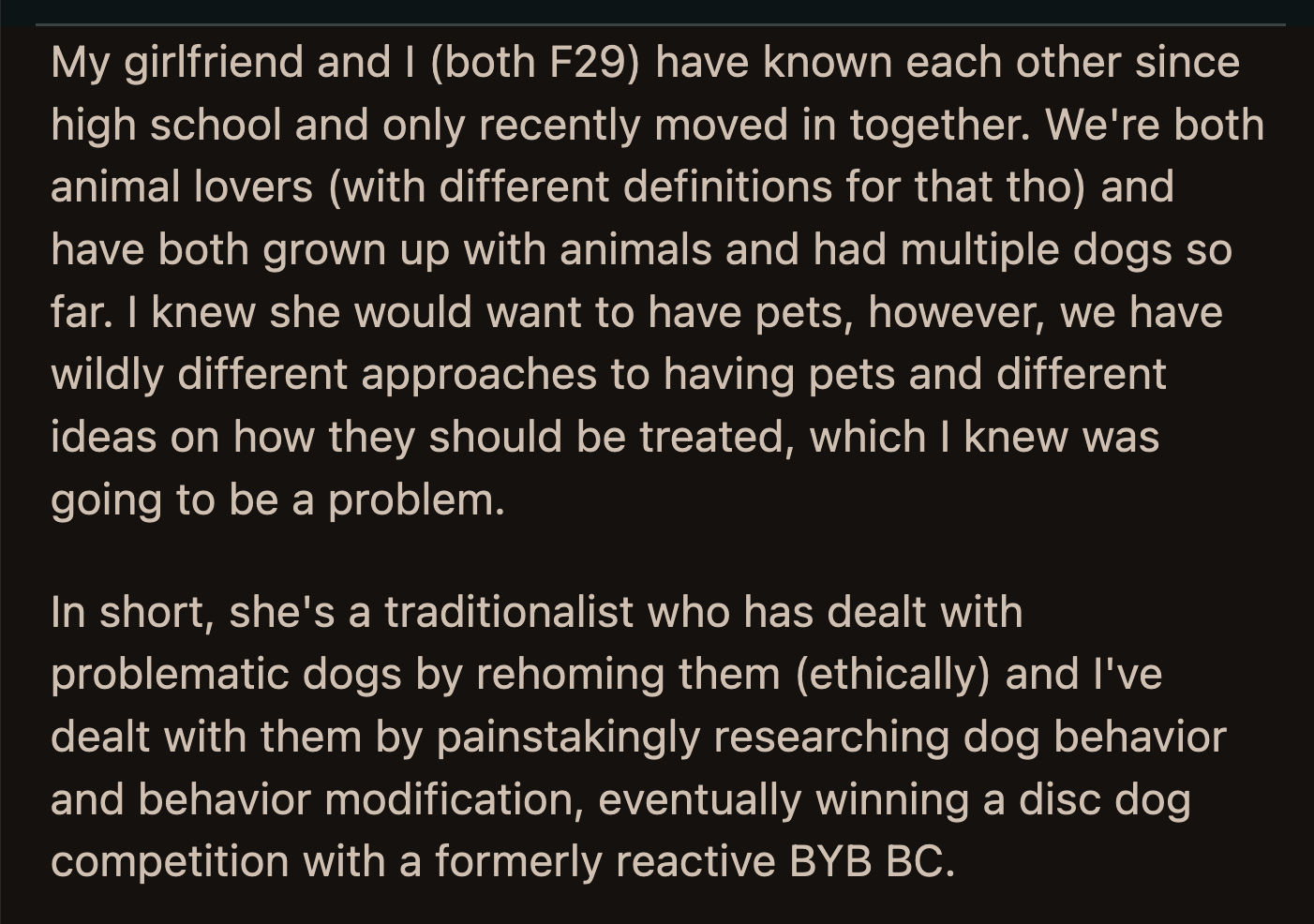
Things get messy fast: OP worked hard to establish basic commands with her own dog, but her girlfriend rushed the training, confused the routine, and effectively unraveled the progress. Instead of talking it out, OP decided to train the new dog in secret while her girlfriend was away, using her remote work setup like it was a covert operation.
And once the dog bonded with OP and started treating her girlfriend like the “spare human,” the conflict turned into something way more personal than dog training.
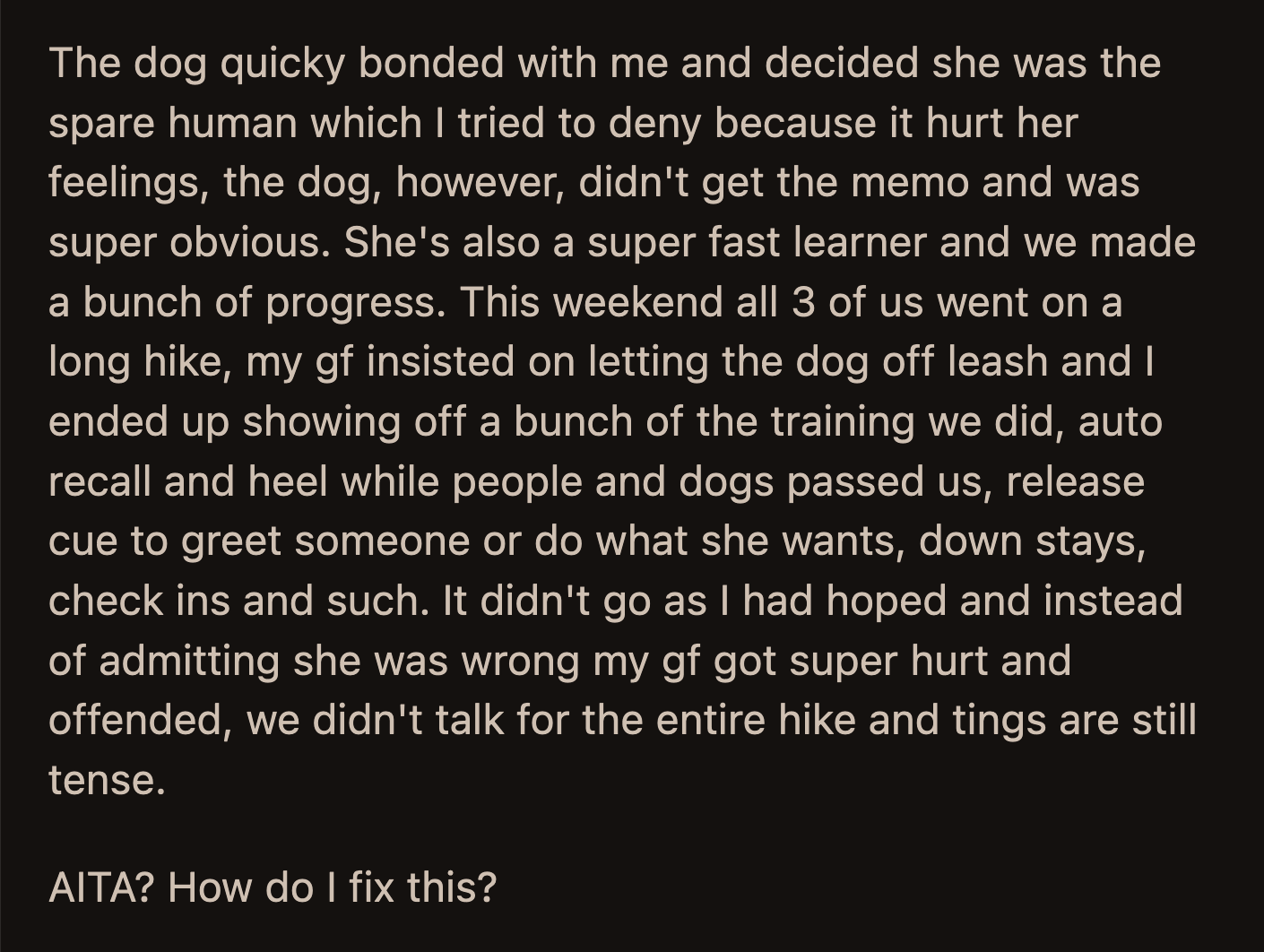
Her girlfriend rushed the training and confused the dog about even the most basic commands OP worked hard to establish.
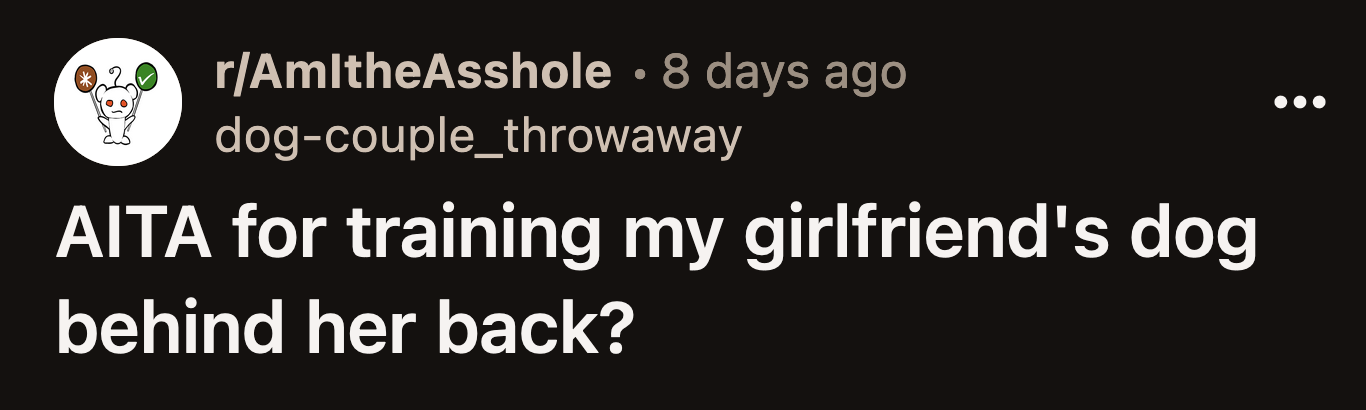
OP didn't communicate her frustrations to her girlfriend because she felt it wouldn't lead to a productive conversation.
The conflict between the couple stems from their fundamentally different views on commitment, particularly in the context of pet ownership. The article highlights how one partner's inclination to rehome dogs when faced with training challenges reveals deeper issues with attachment and commitment. This behavior not only disrupts the relationship but also raises questions about the true nature of being an animal lover.
Rehoming pets can often signal an avoidance of responsibility, driven by a fear of inadequacy in meeting the demands of caregiving. This dynamic plays out starkly in their relationship, where one partner's frustration with the other's willingness to train a new dog in secret underscores a profound misalignment in their values and expectations regarding pet care.
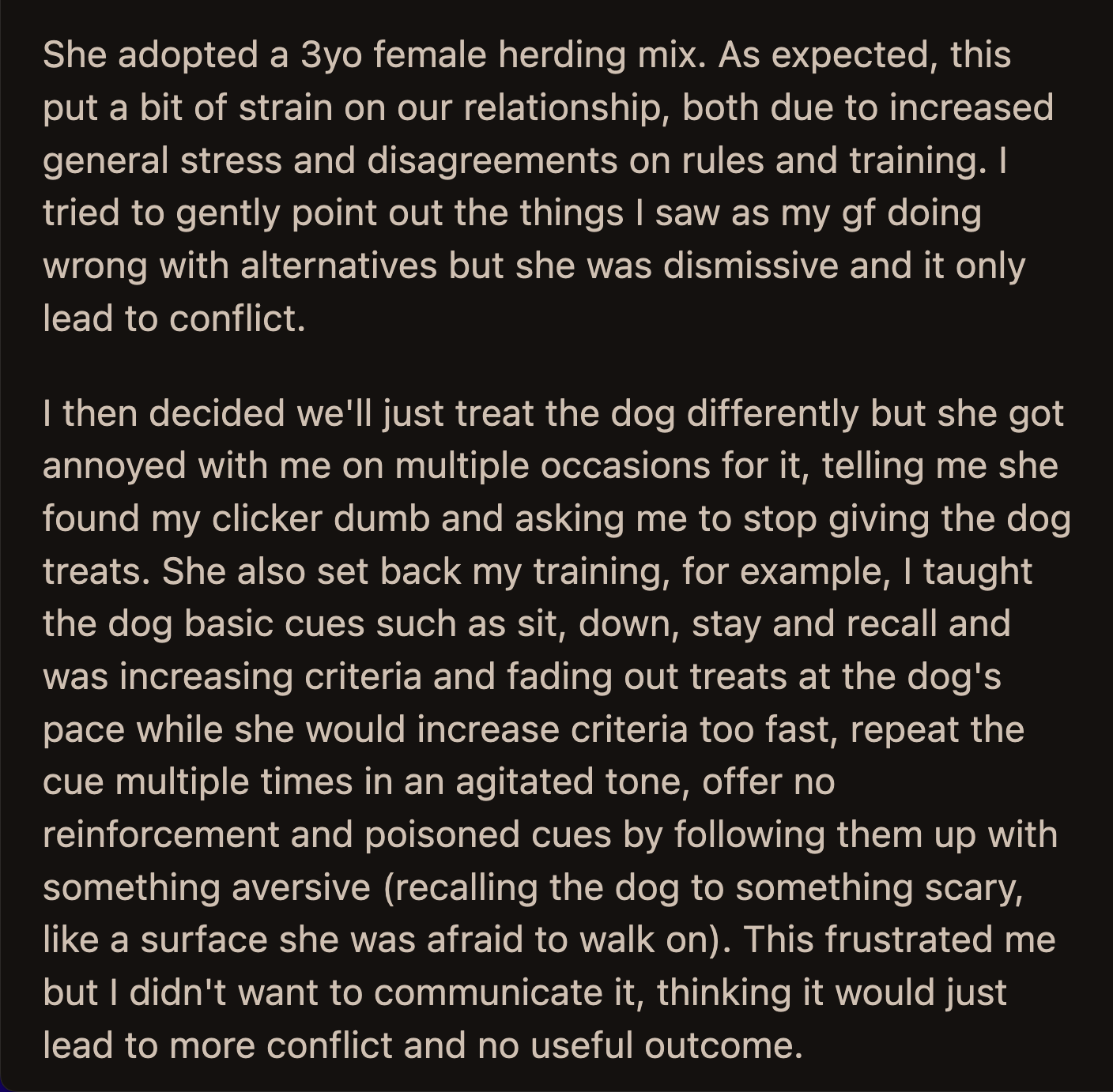
OP decided to train the dog without her girlfriend's knowledge. OP took advantage of her remote work setup while her girlfriend was away and trained the dog during her free time.
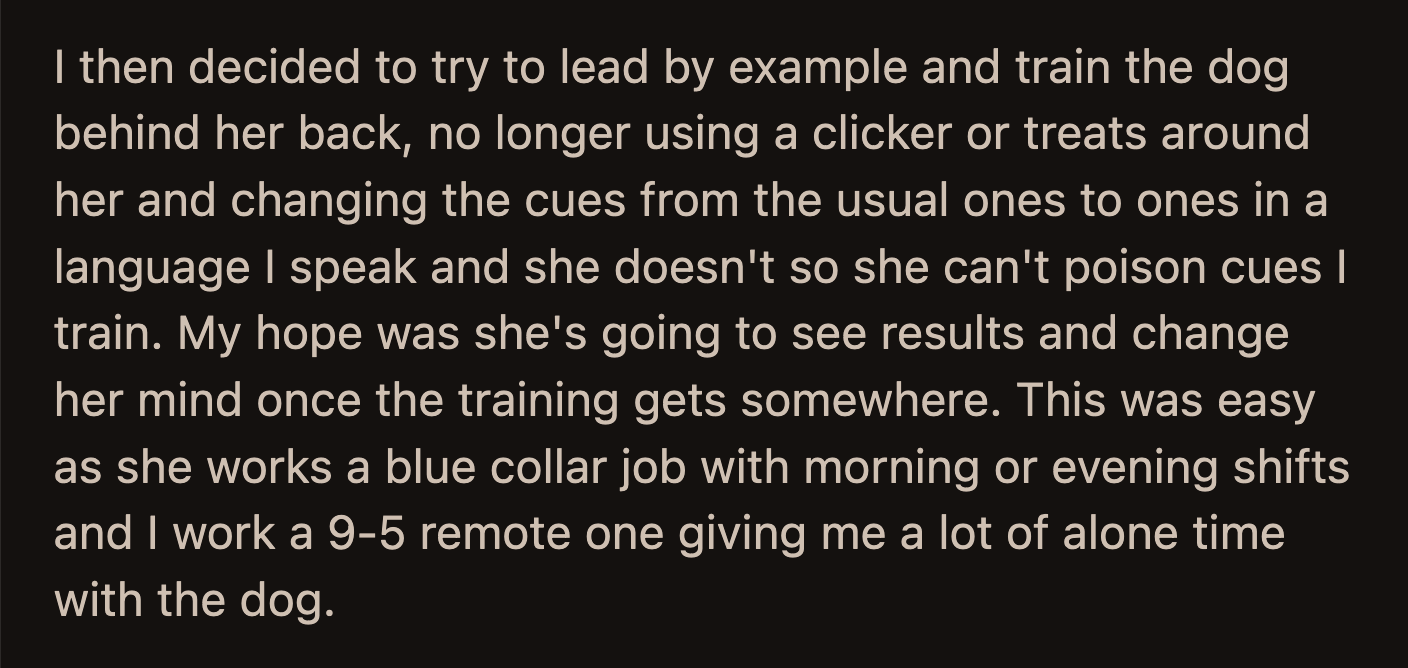
The dog was a fast learner and bonded with OP. The dog treated OP's girlfriend as the "spare human" and was more in sync with OP.
OP kept her frustrations quiet about the messed-up commands, and that silence set the stage for the next move.
The Consequences of Irresponsible Pet Ownership
Irresponsible pet ownership can lead to negative consequences for both animals and their owners. Research conducted by the American Society for the Prevention of Cruelty to Animals indicates that pets require consistent care and training, and failing to provide this can lead to behavioral issues. When owners rehome pets instead of addressing these challenges, it can create a cycle of trauma for the animals involved.
From a psychological perspective, this behavior often stems from avoidance coping mechanisms. Owners may struggle with the emotional weight of training or caring for a pet and choose to distance themselves instead. This pattern can reflect deeper issues related to commitment and responsibility.
OP and the dog showed their progress during a hike with her girlfriend. Instead of admitting that OP's approach was better, her girlfriend became offended and refused to talk to her for the rest of the hike.
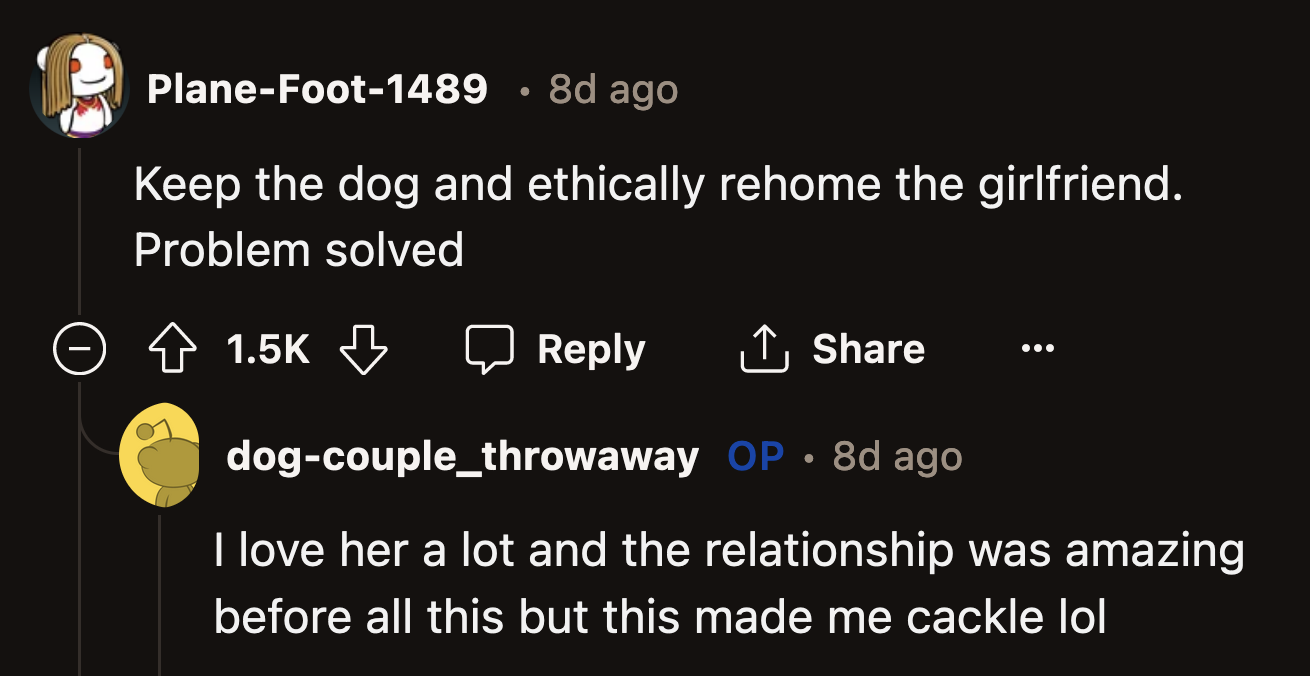
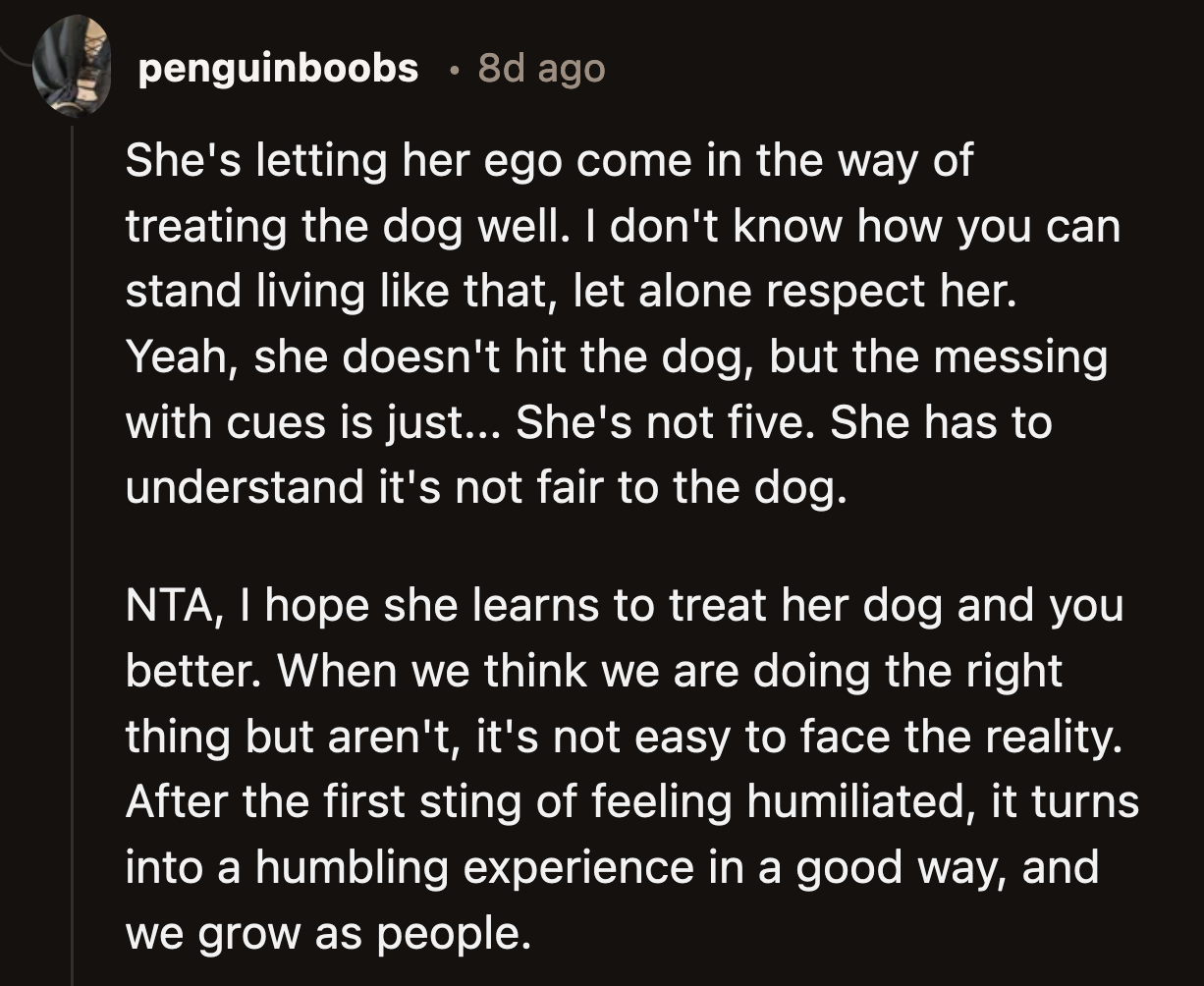
Redditors were disturbed by how casually OP mentioned that her girlfriend rehomes dogs she finds difficult.
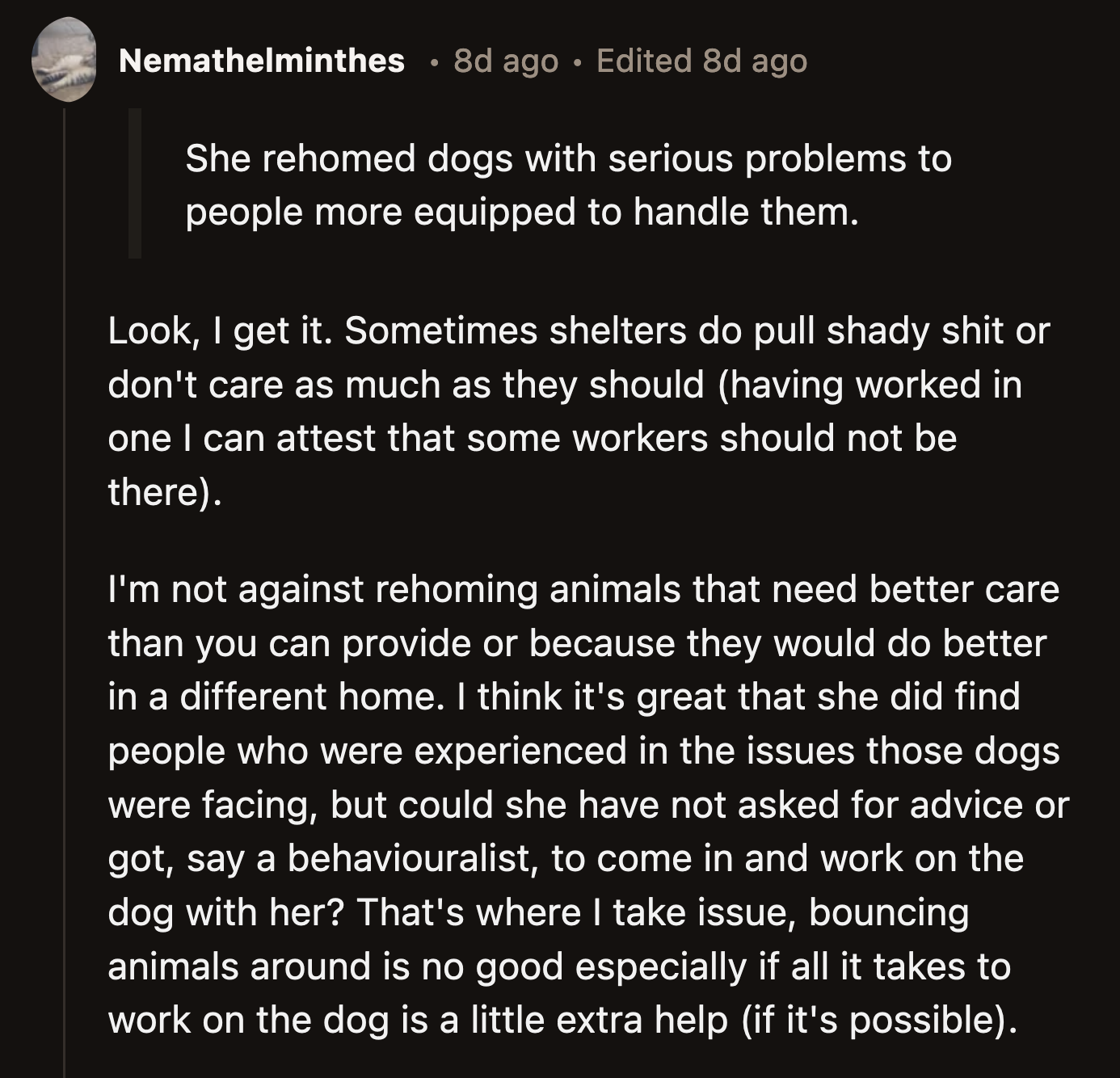
Studies in the Journal of Animal Ethics reveal that individuals who rehome pets often experience conflicting emotions about responsibility and attachment.
The struggle between wanting to provide care and feeling overwhelmed can lead to impulsive decisions that ultimately harm both the pets and their owners.
They called her a terrible pet owner for not exerting a bare minimum amount of effort to rehabilitate the dogs she so easily adopts before rehoming them.
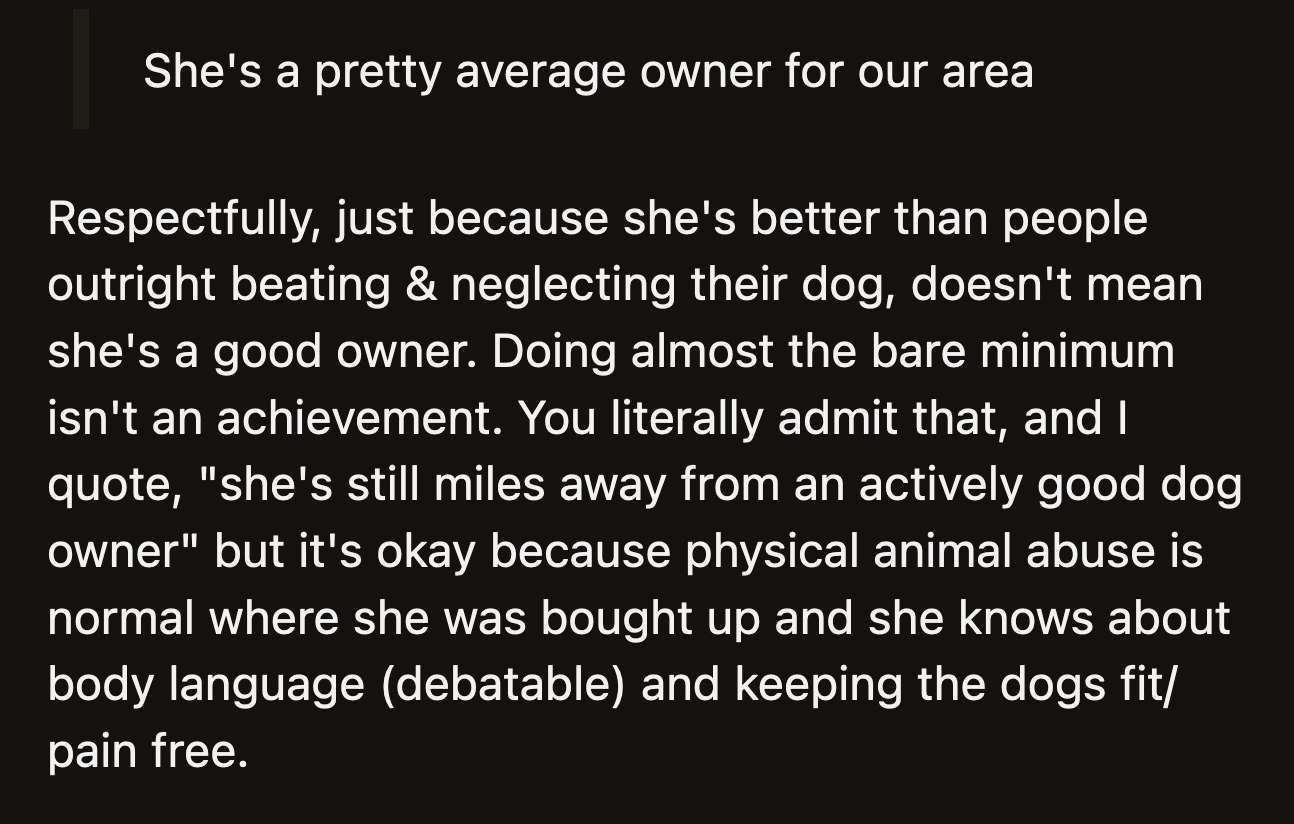
Her inability to accept that she isn't doing right by these animals makes her a bad owner.
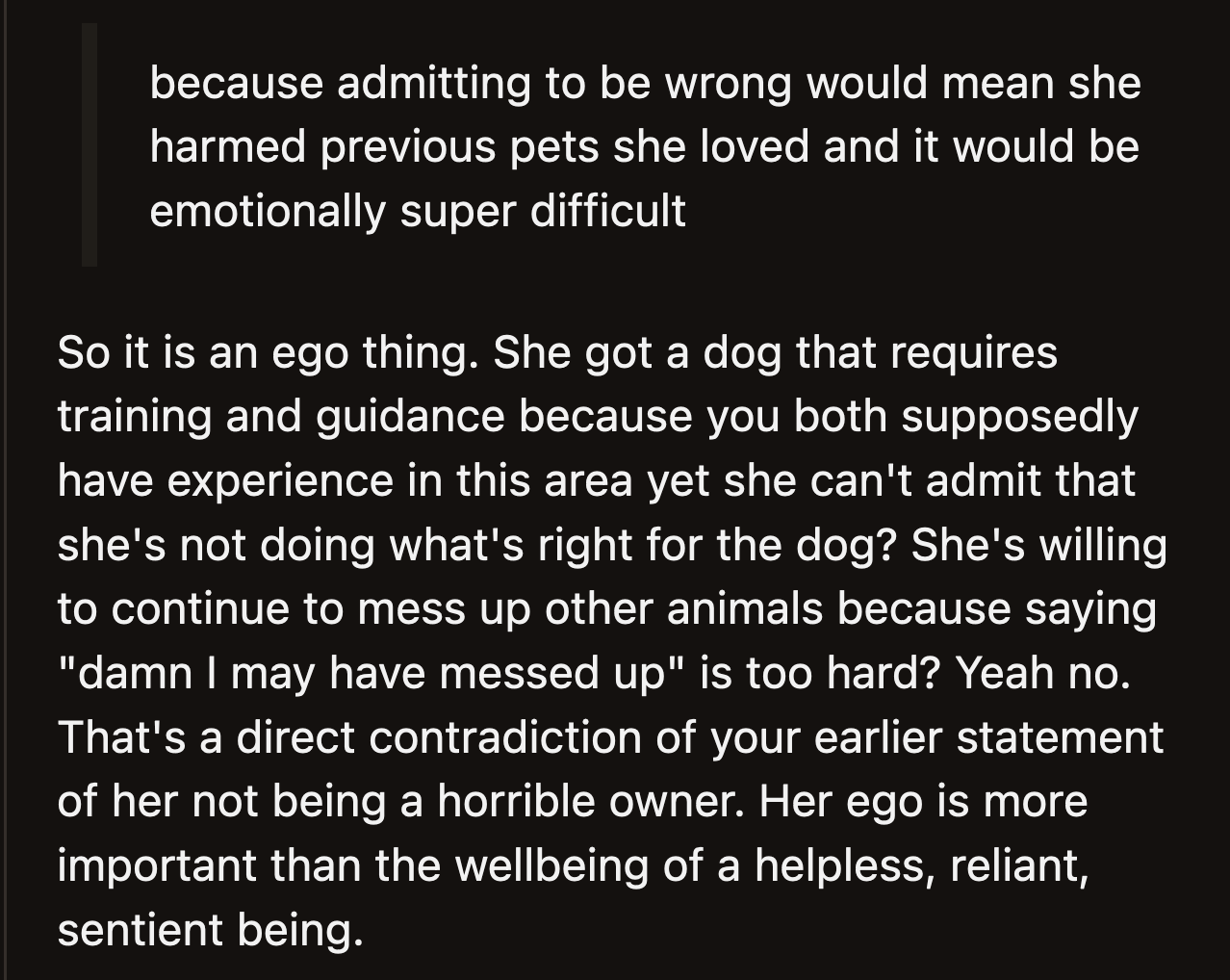
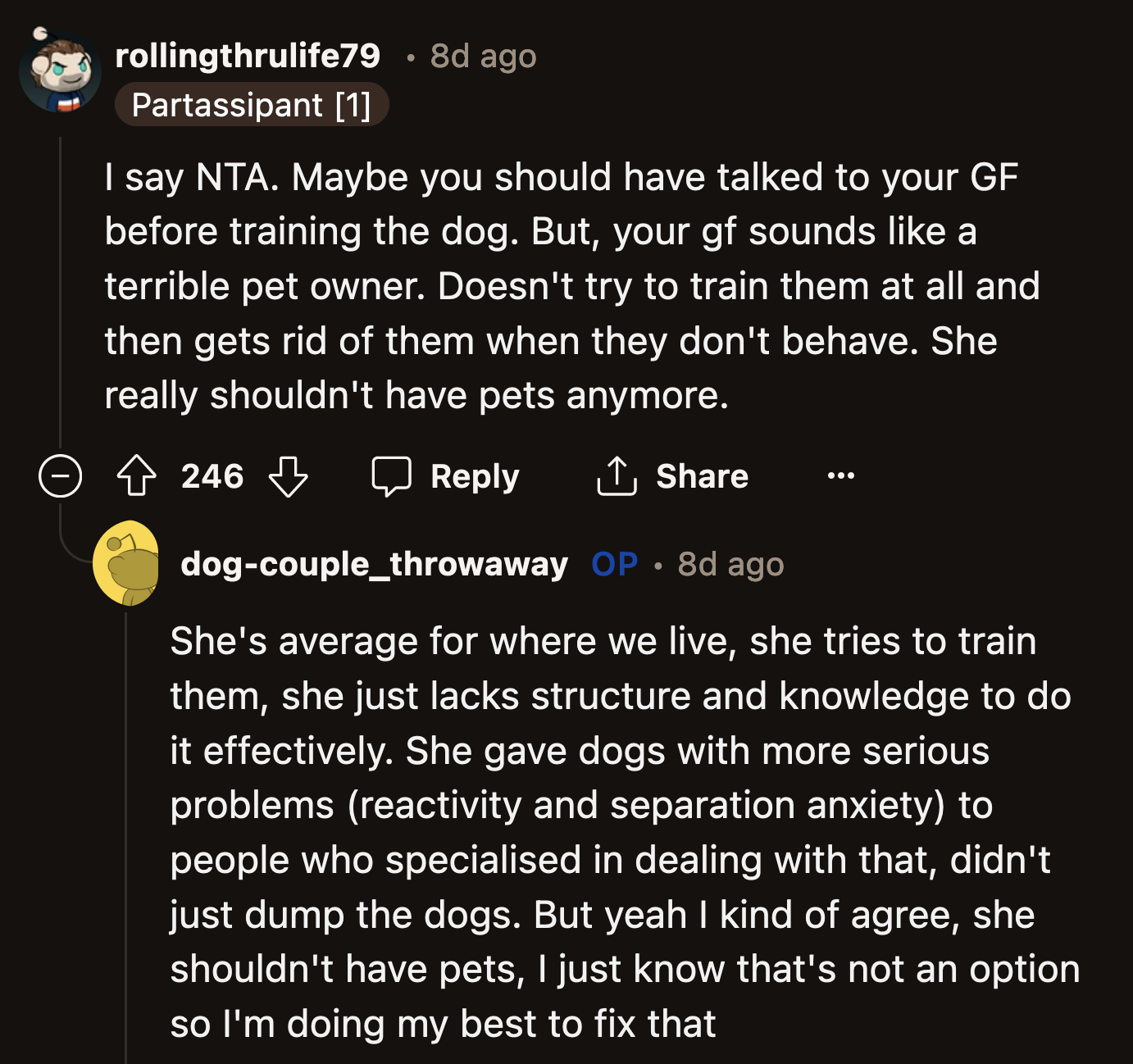
OP has many excuses for why she thinks her girlfriend is better than the average pet owner.
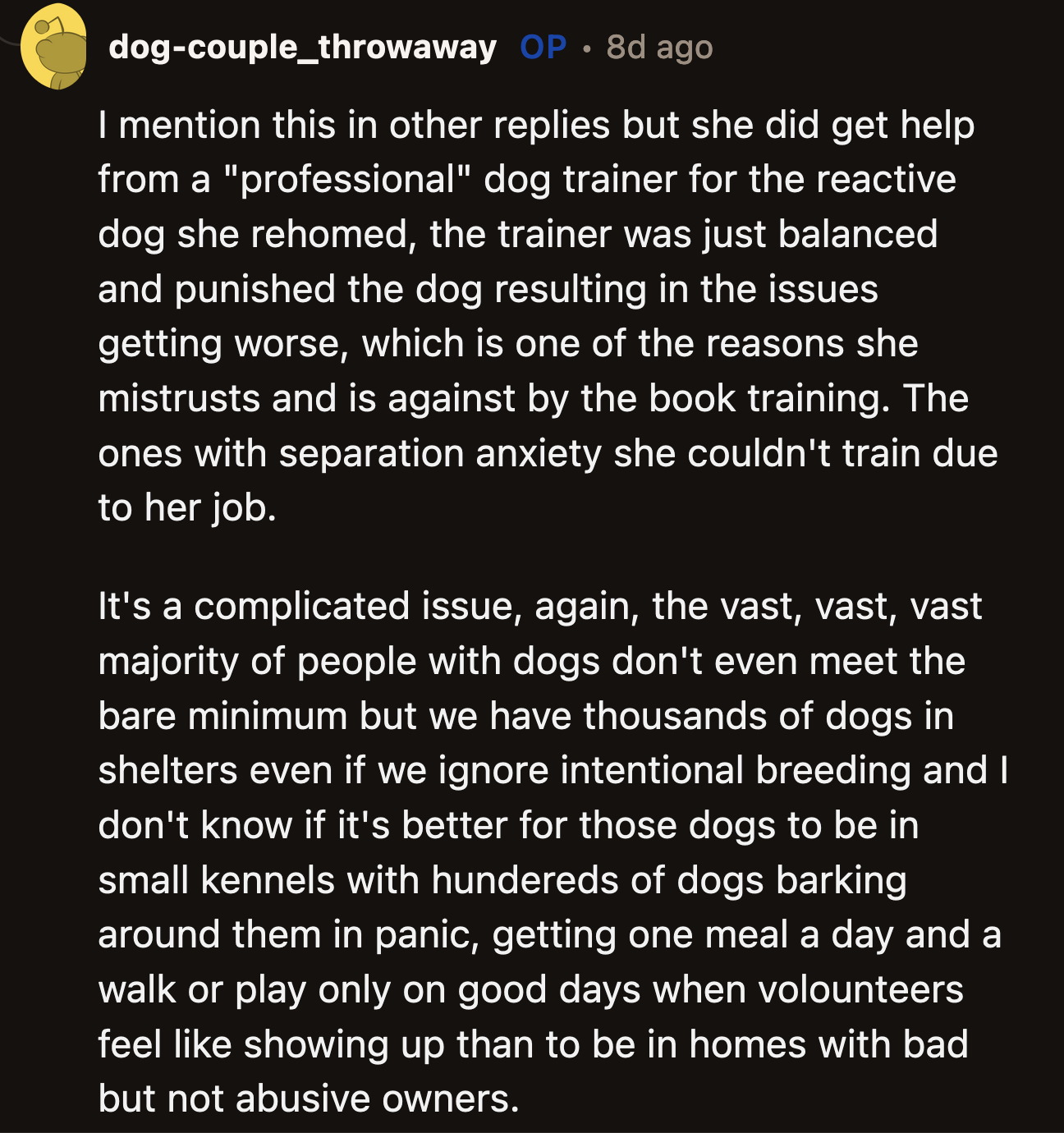
Does OP know why her girlfriend has such a skewed perspective on the proper training of dogs?
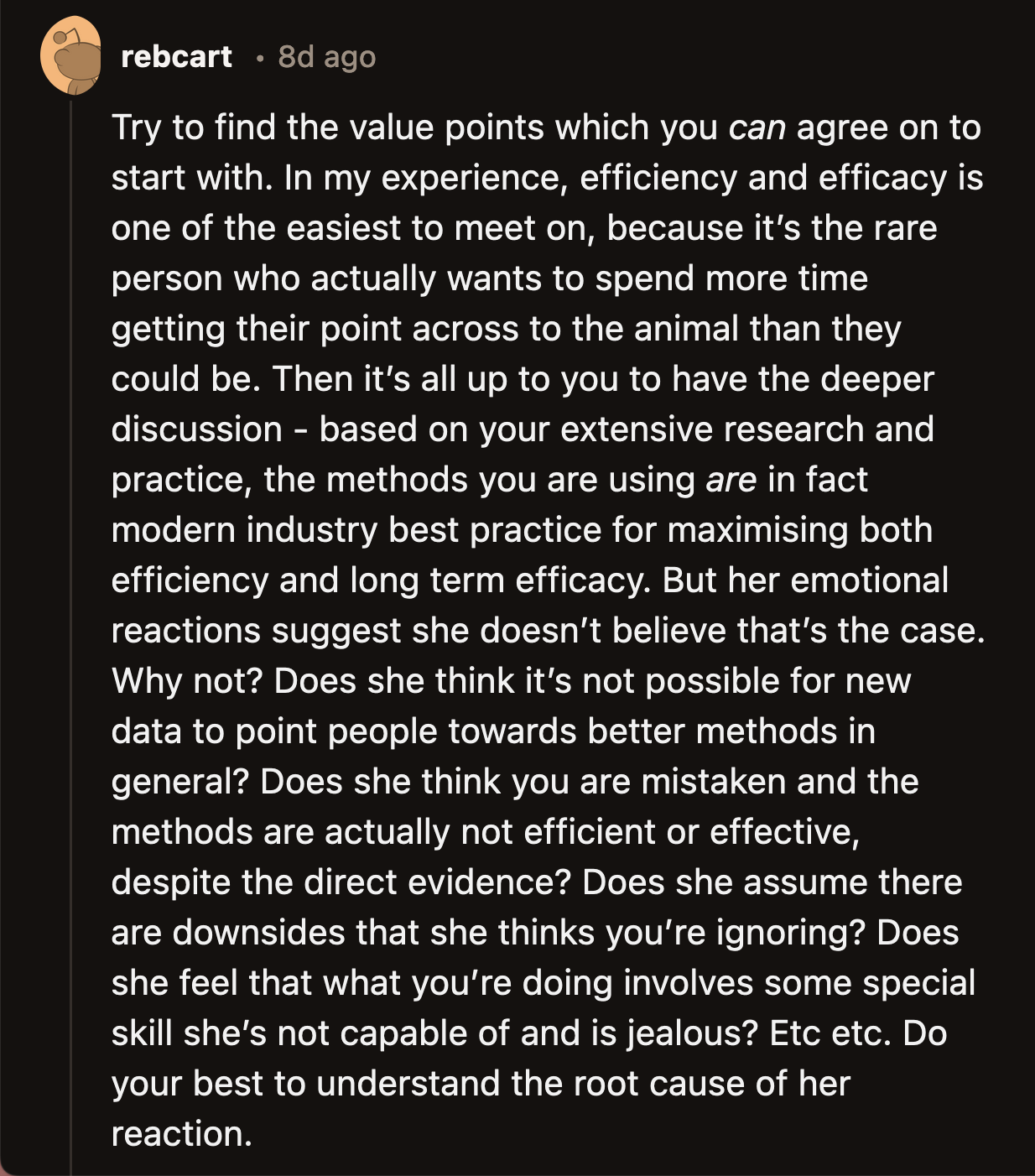
While her girlfriend was away, OP took advantage of her free time to train the dog behind her back, basically rewriting the rules.
This also echoes the teen’s fight with her parents after she sided with her friend on dog training.
Attachment theory provides a framework for understanding these dynamics.
Individuals with insecure attachment styles may exhibit avoidance behaviors when faced with the challenges of pet ownership, leading to repeated rehoming.
Understanding these attachment styles can help individuals develop healthier relationships with their pets and themselves.
If she is an animal lover as she claims, she would research as much as OP does to be a better owner.
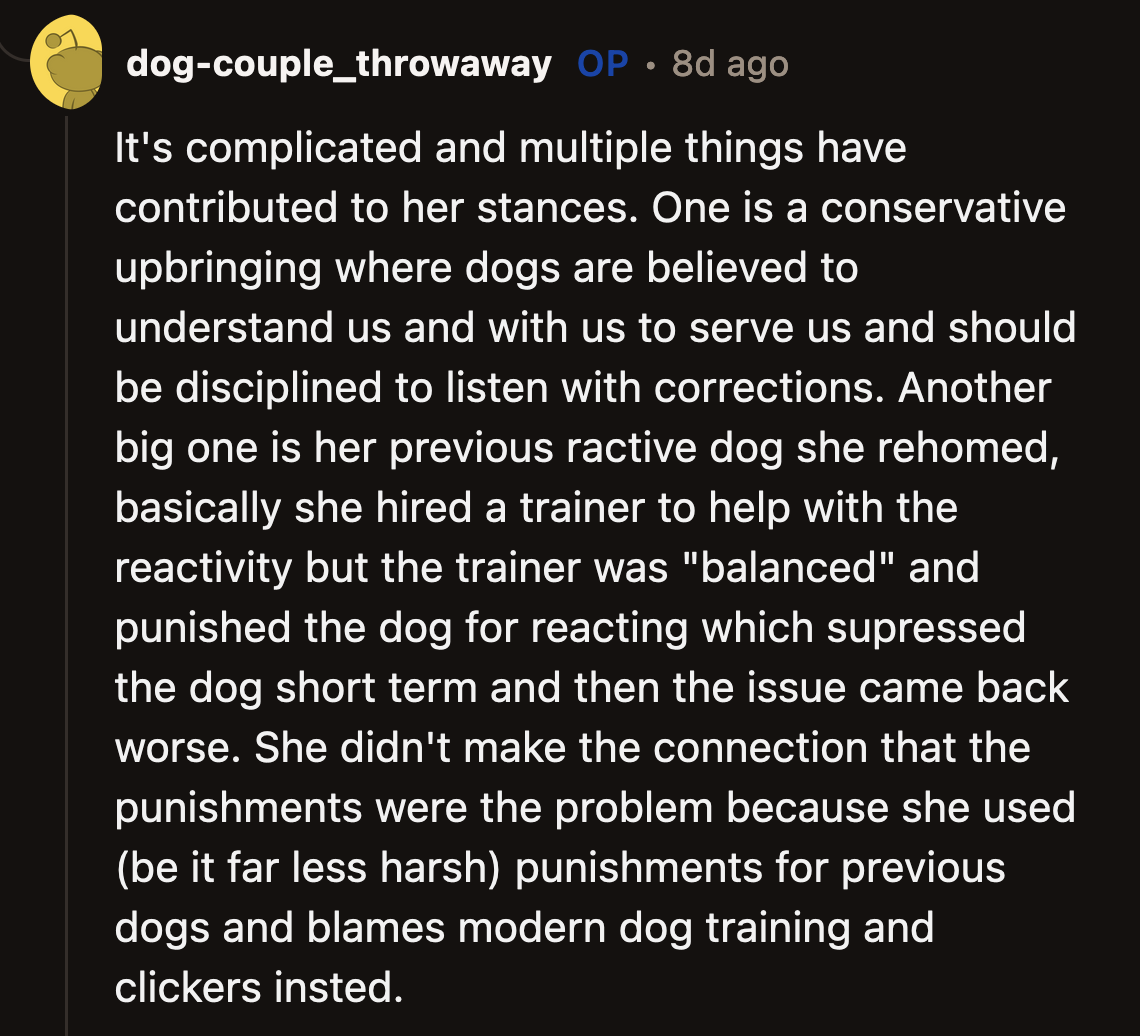
She is old enough to understand that we have the capacity to outgrow the misconceptions we were raised with.
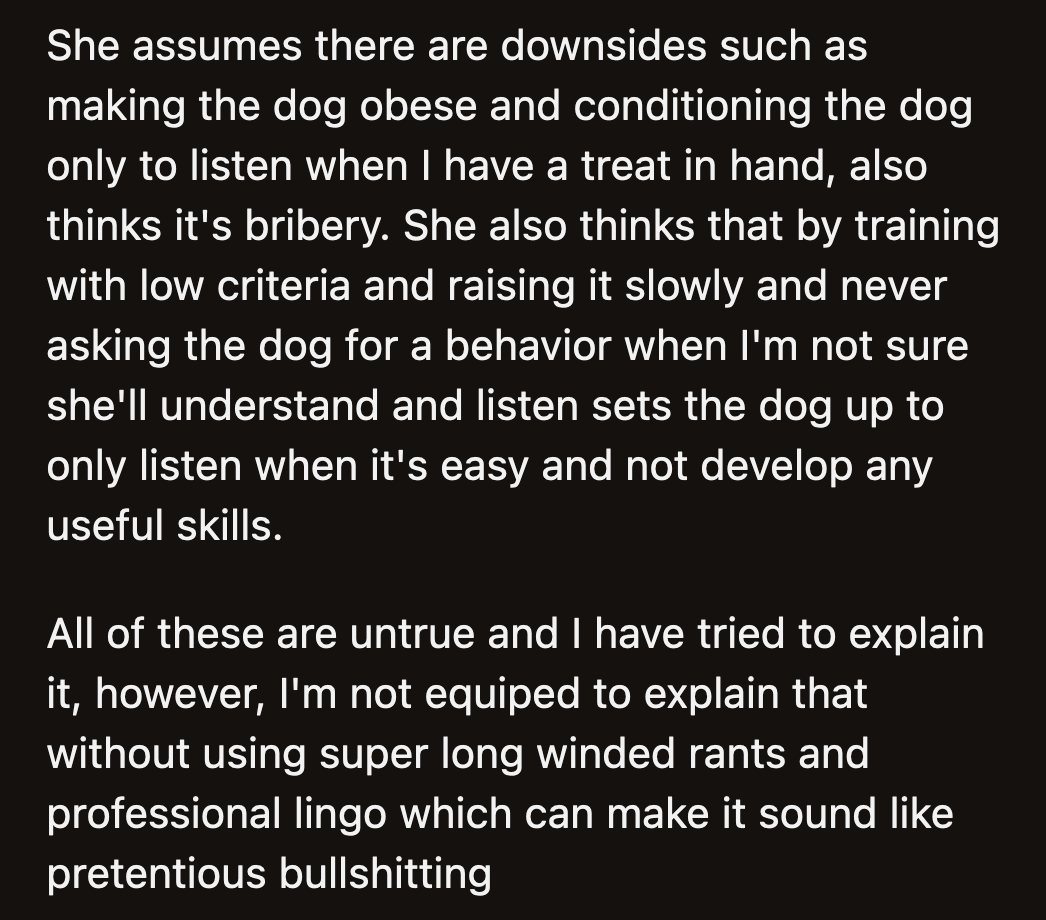
The dog picked up the commands quickly and bonded with OP, leaving the girlfriend staring at a “spare human” situation she did not expect.
The Psychological Impact of Pet Rehoming
The emotional fallout from rehoming pets can be profound. This emotional response can lead to increased anxiety and depression, especially if the owner feels guilt about their decision.
Encouraging responsible pet ownership involves not only training pets but also supporting owners in their emotional journey. Providing resources, such as pet training classes and counseling, can help owners feel more equipped to handle challenges.
OP should be protecting these dogs from her girlfriend. She is not equipped to care for the animals she adopts and rehomes.
If OP is such an animal lover, why is she allowing her girlfriend to treat these dogs this way?
To foster lasting pet ownership, individuals should engage in self-reflection regarding their motivations and capabilities.
Seeking support from pet training resources can also help address behavioral issues that may arise, reducing the temptation to rehome.
Additionally, establishing a support network can facilitate responsible pet ownership and ethical decision-making.
It is possible not to have pets! She shouldn't have pets if her views are this backward.
Now that OP’s training choices and rehoming attitude are on the table, the real fight is about commitment, not obedience.
The situation highlights the profound emotional repercussions of neglecting responsible pet ownership.
The conflict between the couple highlights the psychological factors at play in pet ownership, particularly in how differing philosophies can lead to tension. The OP’s frustration with her girlfriend’s training methods points to a deeper attachment issue that often arises when individuals define their love for animals in contrasting ways. This situation underscores the need for education on responsible pet ownership, which can significantly improve both the emotional well-being of owners and the quality of care pets receive.
In this case, the couple’s inability to reconcile their training philosophies has not only strained their relationship but also jeopardized the welfare of their dogs. Fostering a culture of responsible pet ownership is essential, as it ultimately benefits both animals and their human companions.
Additionally, creating a support network for pet owners can be beneficial.
Promoting Responsible Pet Ownership
Education about the responsibilities of pet ownership is vital for preventing impulsive rehoming behaviors.
The situation unfolding between OP and her girlfriend highlights a fundamental misunderstanding of what it truly means to be an animal lover. Their contrasting approaches to dog training expose a significant gap in empathy, which is essential for effective pet ownership. The article indicates that OP struggles with her girlfriend's methods, particularly when new dogs are rehomed at the first sign of difficulty. This lack of patience not only undermines the bond between owner and pet but also raises ethical questions about the responsibilities that come with pet ownership.
The importance of empathy in training cannot be overstated. The idea that understanding a pet's emotional needs is crucial to fostering a healthy relationship resonates throughout their conflict. Training that prioritizes empathy can lead to better outcomes not just for pets but also for their owners, creating an environment where positive behaviors can flourish. The couple's discord serves as a reminder that when adopting a pet, one must commit to understanding and nurturing their needs, rather than viewing them as mere challenges to be managed or dismissed.
OP's frustrations would fade once she accepts that her girlfriend is not responsible enough to have pets. Instead of training the dogs she brings home behind her back, OP should prevent her from adopting these poor animals in the first place.
Her stubborn belief that she knows more about dogs than OP, even when the evidence proves otherwise, is all that OP needs to stop her. These dogs are not furniture she can leave on the curb when she tires of them.
At the end of this, OP has to wonder if her girlfriend’s the one who should be “rehomed,” or if she’s just the problem in the relationship.
Want more relationship tension, see how Reddit users roasted an unemployed man over training advice.
Share this article:





