
Neighborhood Karens Put Up Fake Signs Restricting Dog Movement And Dog Owners Get Their Petty Revenge

Some neighborhood drama starts small, then somehow turns into a full-on petty war. In this Reddit story, dog owners kept finding fake signs telling them where their pets could and could not walk, and the whole thing got weird fast.
The park beside the OP’s house is split between an off-leash area and a kid-friendly section where dogs are supposed to stay leashed. But as spring rolled in, those warning signs kept showing up, disappearing, and coming back again, until one late-night walk made the situation even messier.
Then the dog owners decided to push back in a way the neighbors definitely did not expect. Read on.
Taking down the "no dog walking" signs

Well, the two guys who were climbing the post happened to spot the OP and told her not to worry, saying, "These are not put up by the city but by a Karen; we’ll fix it." The OP didn't care if they were lying and decided not to call the cops.
Keep scrolling to read the full story in the OP's own words below.
From a behavioral psychology perspective, the reactions of dog owners to the restrictive signs can be understood through the principles of operant conditioning. In this case, the 'Karens' may feel reinforced in their controlling behaviors if they perceive compliance from dog owners or if their actions result in the desired changes in behavior.
To counter this cycle, dog owners might consider employing strategies that discourage such controlling behavior without escalating conflict. One potential solution is to engage in positive reinforcement, where dog owners publicly acknowledge and reward positive community interactions. For instance, complimenting those who promote inclusive behaviors can create a more supportive environment and gradually shift the community dynamics toward collaboration rather than conflict.
We have a lovely park

This happens several times

The phenomenon of 'Karen' behavior, often characterized by entitlement and a lack of empathy, reflects deeper psychological tendencies that can manifest in social settings. This can lead to a defensive posture where they impose their will on others, attempting to reclaim a sense of power. In an environment where people feel their personal space or rights are threatened, they may resort to regulatory measures, such as those fake signs, to assert dominance.
Interestingly, studies also show that this type of behavior can lead to social backlash. Individuals who act in overly controlling ways are often ostracized or ridiculed by their peers, which can exacerbate feelings of isolation and resentment, creating a vicious cycle of behavior and social response.
They started taking them down

On my way out, I see new signs

The following morning, the Karens in the neighborhood were not pleased that their fake sign posts had been torn down. What did they do? They called the police, naturally, as Karens are great at doing that.
However, the joke was on them since they were the ones who set up the initial fake sign posts. Read on for the completion of the story.
They admitted to putting signs up

The concept of 'petty revenge' showcased by the dog owners is an interesting example of social behavior that can be viewed through the lens of psychological reactance theory. When individuals feel their freedoms are being threatened, they are likely to react in ways that restore their autonomy, often through defiance or retaliation. In this context, the dog owners’ actions can be seen as a means of reclaiming their perceived loss of freedom caused by the neighborhood restrictions imposed by the 'Karens.'
While this reaction might provide a temporary sense of satisfaction, it’s essential to consider the long-term implications. Research indicates that engaging in revenge can lead to increased feelings of anger and hostility, which may ultimately perpetuate a cycle of conflict within the community. A more constructive approach might involve seeking mediation or community forums where residents can collaboratively discuss their concerns and develop mutually beneficial guidelines for pet ownership.
The guys glued them with industrial glue

The OP made sure to add an edit stating why dog owners got mad
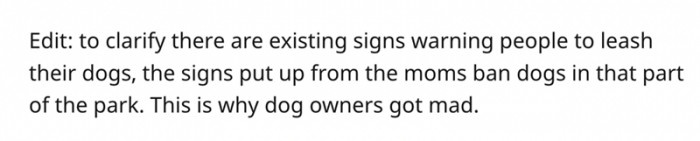
The Reddit thread was upvoted 5K times with close to 200 comments. Some Redditors wanted the OP to get photos of the funny signs before they were taken down, while others supported how the matter was handled.
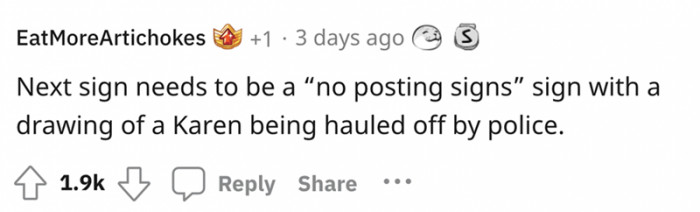
Here are a few of their comments below:
What next signs needs to be
The concept of 'petty revenge' showcased by the dog owners is an interesting example of social behavior that can be viewed through the lens of psychological reactance theory. When individuals feel their freedoms are being threatened, they are likely to react in ways that restore their autonomy, often through defiance or retaliation. In this context, the dog owners’ actions can be seen as a means of reclaiming their perceived loss of freedom caused by the neighborhood restrictions imposed by the 'Karens.'
While this reaction might provide a temporary sense of satisfaction, it’s essential to consider the long-term implications. Research indicates that engaging in revenge can lead to increased feelings of anger and hostility, which may ultimately perpetuate a cycle of conflict within the community. A more constructive approach might involve seeking mediation or community forums where residents can collaboratively discuss their concerns and develop mutually beneficial guidelines for pet ownership.
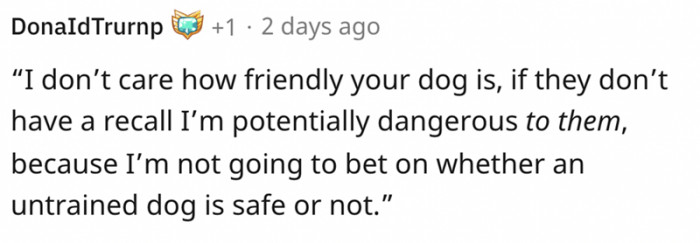
If they don't have a recall
I've owned dogs all my life

Working as a federal park ranger

Community engagement is crucial in fostering healthy relationships among neighbors, particularly when conflicts arise. Research from the University of Chicago emphasizes that active participation in community decision-making processes can significantly enhance social cohesion and reduce tensions. Initiatives that encourage residents to collaborate, such as community meetings or pet owner associations, can create a platform for sharing concerns and finding common ground.
Moreover, studies show that communities that prioritize engagement and open communication experience lower levels of conflict and higher levels of trust among residents. As a practical step, dog owners could initiate regular neighborhood gatherings or online forums where they can not only address concerns but also celebrate shared interests, like pet-friendly events. This proactive approach fosters a sense of belonging and collective responsibility, reducing the likelihood of 'Karen' behaviors and enhancing community spirit.
Dogs are lovely creatures that bring a lot of fun and love to the lives of their owners. So, it’s surprising when people put up unnecessary signs just to limit the movement of dogs.
What are your thoughts on how this Karen's issues were handled? Drop your replies in the comments section below.
The antics of the neighborhood Karens, who put up fake signs to restrict dog movement, highlight a troubling trend in community dynamics. The situation underscores a fundamental truth about neighborhood interactions: they can easily spiral into conflict without open communication and shared understanding. The dog owners' clever and petty revenge serves as a reminder that when individuals feel their freedoms are encroached upon, it can lead to a wave of resistance that fosters community engagement in unexpected ways. This Reddit thread illustrates how a lack of empathy can create a divide, while simultaneously showing that humor and camaraderie among dog owners can transform a negative situation into a shared experience. Ultimately, the saga of the neighborhood Karens reveals that fostering emotional intelligence and collaboration is essential for creating harmonious living environments. As tensions rise, the challenge remains to turn these conflicts into opportunities for connection rather than division.
For “no good deed goes unpunished,” read how entitled people tried enforcing a leash law on private property.
Share this article:





