
How Do Birds Fly? Wings, Feathers, and the Four Forces

It started with a bird doing something that looked effortless, until you notice the tiny details. One wingbeat, and the whole sky is suddenly math: pressure changes, air gets pushed, and the bird rides the reaction.
But here’s the complicated part. In steady level flight, lift has to roughly cancel weight, and thrust has to roughly cancel drag. Then the bird tilts, climbs, turns, or lands, and those neat balances stop being neat. A hummingbird even throws in backward flight, where the wing has to rotate and adjust constantly just to keep things from falling apart.
Here’s the full story of how lift, weight, thrust, and drag get juggled in midair like it’s no big deal.
The Four Forces of Bird Flight
Four forces act on a bird in the air: lift, weight, thrust, and drag. Weight pulls downward through gravity. Lift acts mostly upward. Thrust moves the bird forward, while drag resists movement through air.
In steady level flight, lift roughly balances weight and thrust roughly balances drag. During acceleration, climbing, turning, or landing, those relationships change.
Nothing stays fixed for long.
A bird produces lift and thrust by moving air. The wing’s shape and angle create pressure differences and deflect air downward and backward. The air pushes back on the bird upward and forward.
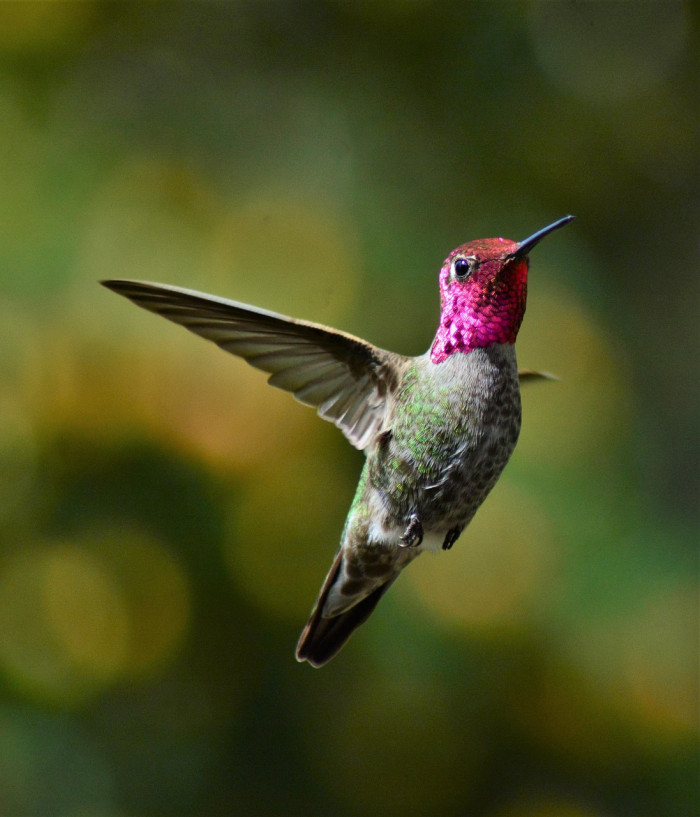
That’s when the bird’s wing geometry starts acting like a cheat code, the curved top and flatter bottom teaming up with the right angle of attack.
How Wings Create Lift
A bird wing has a curved upper surface and a flatter lower profile, but shape alone does not create flight. Angle of attack, speed, airflow, wing area, and active movement all matter.
As air moves around the wing, pressure and momentum change. The wing redirects air downward, and the reaction contributes upward force. Increase angle too far and airflow separates, causing a stall.
Birds avoid or exploit stalls with fast adjustments. They spread primary feathers, change wrist and elbow position, twist the wing, or alter speed. A hummingbird flying backward performs especially complex rotations during every wingbeat.
What Feathers Do During Flight
Primary feathers at the wingtip contribute strongly to thrust and control. Secondary feathers along the inner wing provide much of the lifting surface. Covert feathers smooth airflow across the bases.
Individual feathers overlap like adjustable panels. They can separate during the upstroke, reduce resistance, and close during the power stroke. Wingtip slots on soaring birds help manage vortices and reduce induced drag.
The tail works as a brake, rudder, and extra lifting surface. Spreading it increases drag and stability during landing. Folding it reduces resistance during fast travel.
Feathers wear out, so birds molt and replace them. Many species stagger the process to remain capable of flight, while some waterbirds temporarily lose all major flight feathers together.
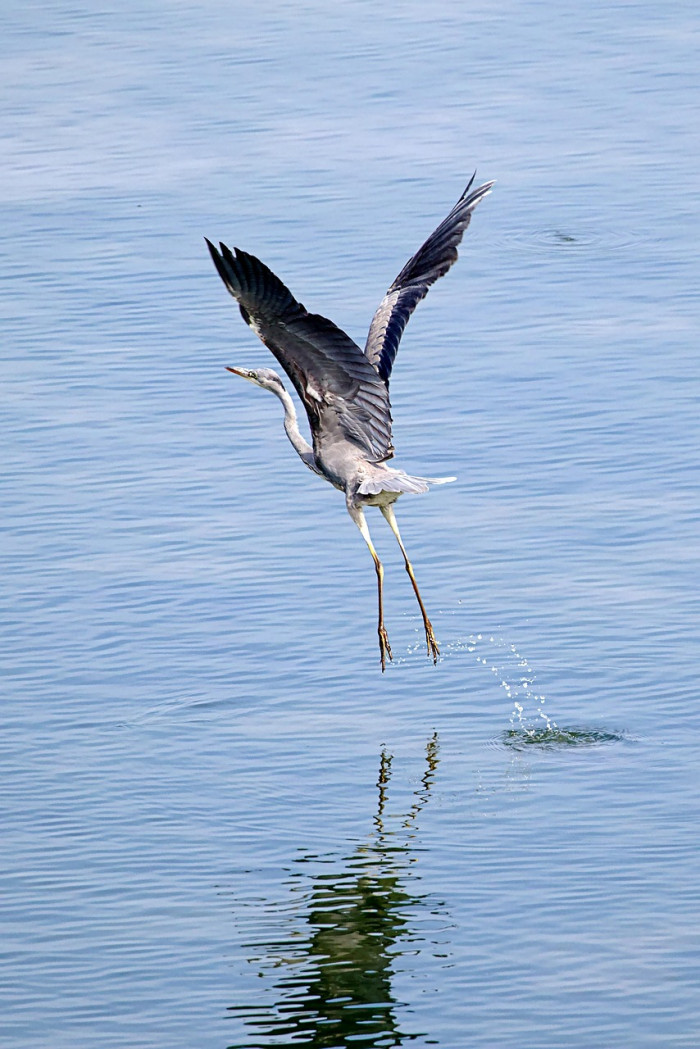
Next thing you know, the bird has to manage stalls, because crank the angle too far and the airflow just quits cooperating.
How Birds Take Off
Takeoff demands rapid acceleration and enough airflow over the wings. Small birds jump, beat their wings, and become airborne quickly. Large birds may run, face into wind, launch from height, or use a strong downward stroke.
A bald eagle lifting from water after snatching a fish must overcome both its own mass and the catch. If the load is too heavy, the bird may swim or release it.
Wind helps by increasing airspeed without requiring equal ground speed. That is why heavy seabirds often launch into a breeze and why calm conditions can make departure awkward.
And just like birds controlling their own heat with feathers and blood flow, flight depends on managing forces constantly.
Flapping, Gliding, and Soaring
Flapping flight generates both lift and thrust through repeated wingbeats. Gliding uses stored height, trading altitude for forward distance. Soaring uses rising air to regain height without continuous flapping.
Thermals form when warm air rises from heated ground. Vultures, eagles, and storks circle inside them, then glide toward the next column. Ridge lift forms where wind is pushed upward by hills or cliffs. Ocean birds exploit wind gradients above waves.
A harpy eagle in dense forest favors broad wings and explosive maneuvering, unlike an albatross built for efficient travel over open sea. Wing design follows habitat.
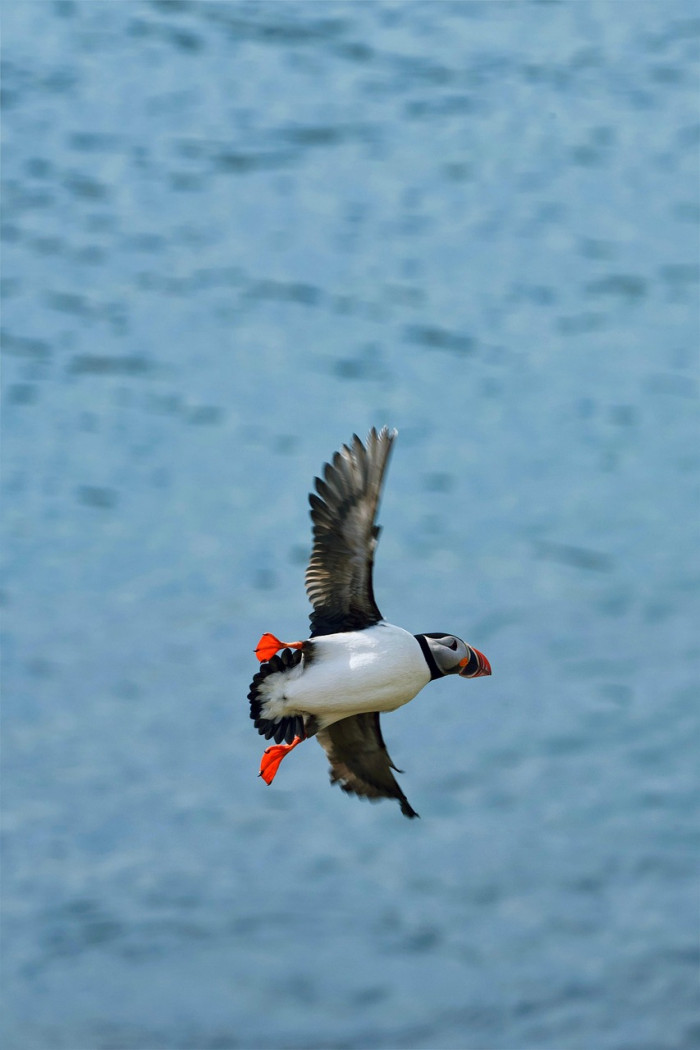
Meanwhile, the primary feathers at the wingtip and the inner secondary feathers are doing two different jobs, thrust and lifting surface, while the wing twists through each beat.
How Hummingbirds Hover
Hummingbirds rotate their wings through a figure-eight-like path and generate useful lift on both the downstroke and upstroke. The shoulder joint allows unusually broad rotation, while large flight muscles power rapid beats.
Hovering costs enormous energy because the bird cannot rely on forward motion to maintain airflow. Hummingbirds feed frequently and can enter torpor when energy is scarce. That demand depends on the heat-producing metabolism of warm-blooded birds, which must power flight and prevent overheating at the same time.
Small changes in body mass matter. Research into hummingbird fat and flight shows why fuel storage creates a tradeoff: more reserve supports migration, but added weight changes performance.
Tiny body. Severe fuel bill.
How Birds Turn, Brake, and Land
Turning requires unequal forces on the two sides. A bird can bank, alter the angle of one wing, adjust individual feathers, and use the tail to control yaw and pitch.
To slow down, it increases drag, reduces forward thrust, raises the body, spreads the tail, and angles the wings. Feet extend near touchdown. The final wingbeats may briefly produce lift forward as well as upward to prevent a hard impact.
Landing is often harder than cruising. A bird must lose speed without stalling too early, judge distance, and place its feet on a target that may be narrow, moving, or surrounded by branches.
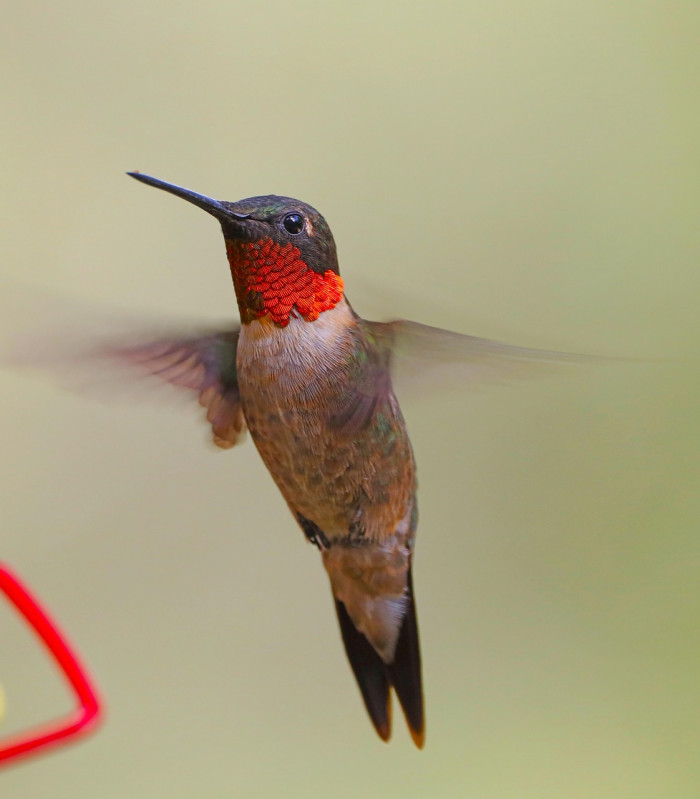
Then the tail jumps in as a brake and rudder during landing, spreading for stability or folding up when it wants to move fast.
Why Some Birds Cannot Fly
Flight can be lost when running, swimming, body size, or island safety makes it less valuable than the energy required to maintain it. Ostriches use powerful legs. Penguins turn wings into flippers. Kiwis retain small hidden wings.
The separate guide to flightless birds explains how often that loss evolved. It also shows that feathers, hollow bones, and bird identity do not depend on active flight.
Even flying species have limits. Molt, injury, wet feathers, excess load, thin air, and weak wind can change what is possible on a given day. One unusual hummingbird trait may look effortless, but every maneuver stays inside physical constraints.
The bird isn’t “just flying,” it’s constantly rewriting the rules of air, one wingbeat at a time.
Want to know how birds stay safe while dozing, even in flight? Then read how birds sleep and where they go at night.
Share this article:





