Are Birds Reptiles? The Answer Depends on Classification

It started with a simple question that should have been easy: are birds reptiles? People toss the word “reptile” around like it’s a neat little box, then they look at a pigeon and a lizard and swear the difference is obvious. But biology does not care about how clean a label feels.
In this family tree mess, the complication is the word “classification” itself. Traditional body-plan thinking says reptiles are scaly, cold-blooded crawlers, while birds are feathered, warm-blooded fliers. Then evolutionary classification steps in and asks a different thing, who shares the most recent common ancestor, and suddenly the old “reptile” category starts breaking the rules.
Here’s the twist, whether birds count as reptiles depends on which kind of “family name” you’re using.
Why Birds Are Reptiles in the Evolutionary Sense
A clade includes an ancestor and all of its descendants. Birds evolved within theropod dinosaurs, dinosaurs evolved within archosaurs, and archosaurs sit within the reptile lineage. Removing birds would cut one living branch out of its own family tree.
Imagine calling every member of a family by the family name except one grandchild because that grandchild dresses differently. The visual difference is obvious, but the ancestry has not changed.
That is the core answer.
Modern birds still retain clues to this past. They lay amniotic eggs, have scales on their feet, use a single occipital condyle where the skull joins the spine, and share numerous skeletal traits with extinct dinosaurs. An ancient amber bird can make the transition look less like a leap and more like a long sequence of modifications.
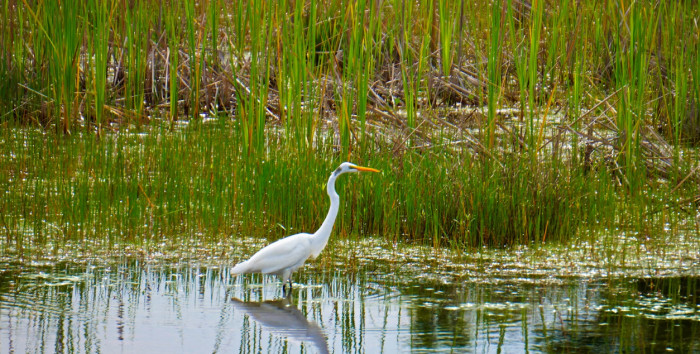
That’s where the “bird looks nothing like a lizard” argument gets loud, right after you picture the obvious differences in feathers, flying, and scales.
Why Most People Do Not Call Birds Reptiles
Traditional zoology separated animals largely by body plan. Reptiles were scaly ectotherms that crawled or walked. Birds were feathered, warm-blooded animals that usually flew. For practical identification, that split still works.
Evolutionary classification asks a different question: who shares the most recent common ancestor? Once that question became central, the old reptile category caused a problem. If Reptilia includes crocodiles and dinosaurs but excludes birds, it leaves out descendants of the same ancestor and becomes what biologists call paraphyletic.
Everyday speech is allowed to be convenient. A scientific family tree has to be consistent.
How Birds Differ From Other Living Reptiles
Birds have feathers, high metabolic rates, four-chambered hearts, air-sac breathing systems, and beaks without true teeth. Most living reptiles are ectothermic, meaning their body temperature depends more strongly on external heat. Their skin covering, growth patterns, and respiratory anatomy also differ.
Those differences are substantial. They reflect more than 150 million years of specialization, not a separate origin.
A crocodilian looks closer to a lizard than to a crane, yet crocodilians are more closely related to birds than to lizards. That relationship gives encounters such as a family of cranes guiding an alligator an odd evolutionary subtext: both belong to the surviving archosaur branches.
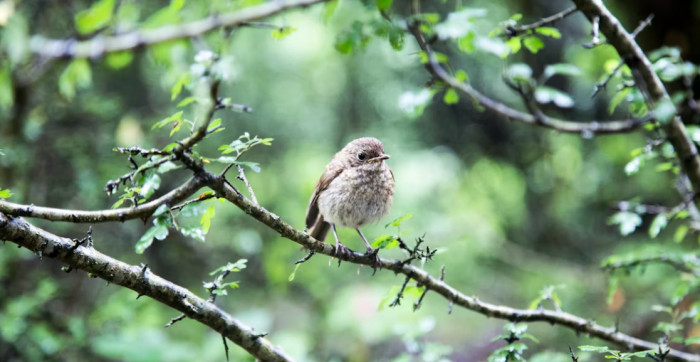
Then the article shifts to the bigger problem, when birds are removed from the reptile lineage and it rips a living branch out of its own family tree.
What Birds Share With Reptiles
Birds and other reptiles share an amniotic egg design that protects the embryo with membranes. Bird eggs have hard, calcium-rich shells, while reptile shells vary from leathery to rigid. Both groups also excrete nitrogen mainly as uric acid, which saves water compared with producing large volumes of dilute urine.
Bird feet remain visibly scaly. Their lower legs and toes are covered in keratinized structures that develop through pathways related to feather formation. Beaks and claws use keratin too.
Behavior overlaps as well. Nest defense, elaborate courtship, parental care, and ambush hunting appear across the broader lineage. A shoebill striking prey can look prehistoric because some of its posture and mechanics echo a much older archosaur body plan.
This classification fight is a bit like python versus boa, where eggs and skull anatomy separate two close constrictors.
Are Birds Dinosaurs Too?
Yes. Reptile is the broader branch, dinosaur is the narrower branch, and bird is the surviving avian dinosaur branch. The relationship can be written as nested groups rather than competing labels.
- Vertebrates include mammals, amphibians, reptiles, and other backbone-bearing groups.
- Reptiles include archosaurs.
- Archosaurs include crocodilians, pterosaurs, dinosaurs, and their relatives.
- Dinosaurs include the theropod line that produced birds.
The guide on birds as dinosaurs follows that lineage through fossils such as Archaeopteryx. The guide on warm-blooded birds explains why being a reptile does not require the cold-blooded physiology people expect.
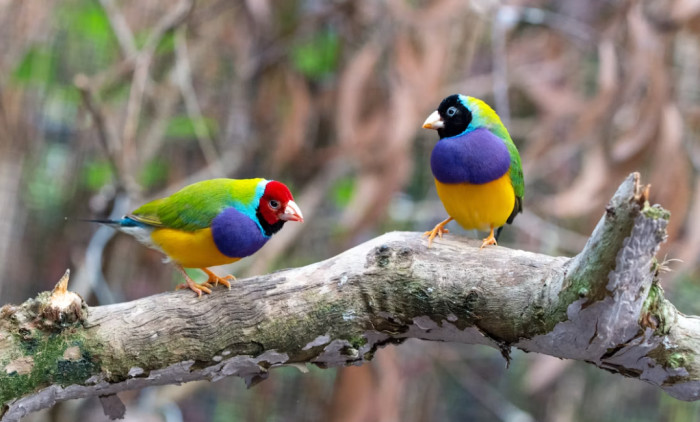
Next comes the messy label math, where calling Reptilia without birds makes the group paraphyletic, like leaving out one grandchild because of their outfit.
Where Eggs and Reproduction Fit
Bird reproduction also preserves reptile ancestry, although it has become highly specialized. Fertilization is internal. The embryo develops in an amniotic egg. A cloaca handles reproductive and waste functions in most species.
Brood parasitism shows how far avian strategies can vary. Cuckoos laying eggs in another species’ nest still use the same basic reproductive architecture as other birds, but turn parental care into an evolutionary contest.
The mechanics are covered in how birds mate. They are distinctly avian in execution and deeply reptilian in origin.
The Best One-Sentence Answer
Birds are reptiles under modern cladistic classification because they evolved within the reptile lineage, but they are usually discussed as a separate group because their anatomy and physiology are so distinctive.
So both reactions make sense. A robin is not the kind of animal people picture when they hear reptile. It is still part of that family tree.
Feathers changed the silhouette, not the ancestry.

Finally, the contrast lands hard, because birds bring feathers, air sacs, and four-chambered hearts to the table, while most living reptiles stay ectothermic.
Common Questions About Birds and Reptiles
Are birds closer to crocodiles or lizard? Birds are closer to crocodilians. Both are surviving archosaurs, while lizards and snakes belong to a different reptile branch called lepidosaurs. The split is ancient, but it is still more recent than the shared ancestry linking birds with lizards.
Do feathers make birds a separate class? Feathers are a defining modern bird feature, but classes are human ranks placed on an evolutionary tree. Aves remains useful and distinctive. It can still sit inside the broader reptile clade without losing its identity.
The family dinner did not end well, because the “reptile” label only works if you pick which rules you want to follow.
Want stranger bird behavior than “birds are reptiles,” check out 50 facts about backward-flying hummingbirds and ant-bathing cardinals.
Share this article: