Gerbil vs Hamster: Which Small Pet Is Right for You?

It starts the same way every time, someone spots a cheap little hamster or gerbil at the store and thinks the price tag is the whole story. Then the cage goes up, the wheel goes in, and suddenly you are watching a tiny animal act totally different than you expected.
Here is the twist, hamsters and gerbils do not just look similar, they run on different social rules and different routines. A Syrian hamster is supposed to live alone, but people still try pairing them and get that “they seemed fine at first” situation. Meanwhile gerbils are usually kept with a bonded same-sex companion, and their burrowing and sleep cycles can make them seem extra active, even during daylight.
So yeah, the “small pet” choice is not small at all.
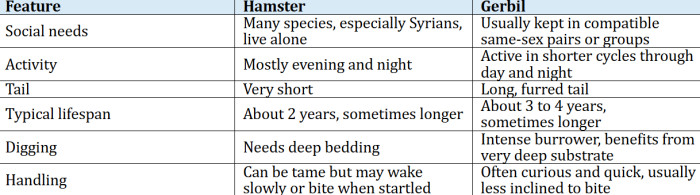
Quick comparison
What is the main difference between a hamster and a gerbil?
The biggest practical difference is social life. Syrian hamsters should live alone. Several dwarf hamster species may tolerate compatible companions under specific conditions, but fighting is still a risk. Gerbils are social and are usually kept with a bonded same-sex companion.
The RSPCA hamster guide notes that hamsters generally live for around two years and that Syrian and Chinese hamsters are naturally solitary. The RSPCA gerbil guide describes gerbils as burrowing animals that often live three to four years and benefit from social housing.
A neglected hamster illustrated in a care comic reflects a common problem: people mistake low purchase cost for low care needs.
Seven differences between gerbils and hamsters

That is when the “low purchase cost” mindset hits the neglected hamster care comic vibe, and everyone assumes the setup will magically cover the hard parts.
1. Gerbils have long tails
A gerbil's tail is usually close to body length and covered in fur, often with a small tuft at the end. A hamster's tail is short and easy to miss.
Never pick up a gerbil by the tail. The skin can be seriously injured.
2. Hamsters are often solitary
Syrian hamsters need individual housing. Putting two together can lead to severe fighting, even when they appear peaceful at first.
Gerbils usually need a compatible companion. Bonding unfamiliar adults can be difficult, so littermates or an established pair are often safer choices. Owners must still watch for conflict and provide enough space and resources.
Different social rules. Same need for observation.

The second someone tries to house two Syrian hamsters together, even after a calm start, the risk of fighting stops being theoretical and becomes the whole problem.
3. Their activity patterns differ
Hamsters are commonly most active in the evening and at night. Waking one during the day can cause stress and make biting more likely.
Gerbils sleep and wake in shorter cycles, so they may appear during daylight as well as after dark. That can make them more visible to a household, although they still need uninterrupted rest.
Sleeping animals can look inactive, but normal sleep schedules should not be interrupted for handling.
This is a lot like choosing miniature farm animals for hobby farms, then realizing full-sized planning still matters.
4. Gerbils are relentless diggers
Both species need deep bedding. Gerbils, however, are exceptional tunnel builders and do best with a substrate deep enough to hold stable burrows.
A glass tank with a secure, ventilated topper can work well because it contains bedding and allows deep digging. Plastic accessories may be destroyed quickly by chewing.
Hamsters also need substantial bedding for burrowing, along with a correctly sized solid wheel, hides, sand bath options where appropriate, and varied enrichment. A well-designed hamster escape course shows how climbing, tunnels, and problem-solving can be turned into supervised enrichment rather than an accidental escape route.

5. Gerbils usually produce less odor
Gerbils evolved in dry environments and produce relatively small amounts of urine. Their enclosures may smell less quickly than hamster housing when both are maintained correctly.
That is not permission to use a tiny cage or avoid cleaning. Overcleaning can also be stressful because it removes familiar scent. Spot cleaning and partial substrate changes often preserve stable tunnels and scent cues better than stripping the enclosure constantly.
6. Hamsters have cheek pouches
Hamsters carry food and bedding in expandable cheek pouches. A loaded hamster can look dramatically wider through the face.
Gerbils do not have the same prominent storage pouches. They transport material with the mouth and forepaws and may stash food inside burrows.
A wild hamster photographed among flowers looks very different from the round pet-store stereotype, but the cheek pouches and compact body remain recognizable.

Then you notice the activity difference, the hamster is cranky from daytime waking, while the gerbil pops up in shorter cycles like it never got the memo about quiet hours.
7. Gerbils often live longer
Pet gerbils commonly reach three to four years. Many hamsters live around two years, although species, genetics, diet, housing, and veterinary care affect individual lifespan.
The extra year matters. Children and adults should understand the full commitment before bringing either animal home.
Which pet is easier to handle?
Gerbils are often curious and may approach a hand readily, but they are quick and can jump. Hamsters may become calm with patient handling, yet a sleeping or frightened hamster can bite.
Neither is a plush toy.
Begin with short sessions in a secure area close to the floor. Let the animal approach rather than grabbing from above, which can resemble a predator attack. Cupped hands provide better support than pinching around the body. Secure containment matters: when 130 hamsters escaped from a transport plane, the search grounded operations and showed how quickly small rodents can disappear.
The hamster rescued by police officers was tiny enough to fit in a hand, which is exactly why safe containment matters. A fall from human height can cause injury.

And right as you think you finally understand, you learn the tail rule, because grabbing a gerbil by the tail is a fast track to serious injury.
Which pet is better for children?
The better question is whether an adult will take full responsibility. Children may lose interest, handle too roughly, or expect the animal to be awake during the day.
Gerbils can be easier to observe because of their repeated activity cycles and social behavior. Hamsters may suit a quiet household that can respect evening activity and solitary housing.
A pet should not be selected only because it is inexpensive or takes up little room. Veterinary care for small mammals can be difficult to find and may cost more than the animal itself.
Similar-looking animals can require very different decisions once biology enters the picture. A python vs boa comparison starts with reproduction and range, while salamander vs newt starts with taxonomy. Correct identification needs to come before care advice.
Gerbil vs hamster FAQs
Are gerbils friendlier than hamsters?
Gerbils are often social, curious, and less likely to bite, but individual temperament and handling history matter. A well-socialized hamster can also become calm and comfortable around people.
Which pet needs a bigger enclosure?
Both need large, enriched housing. Gerbils particularly benefit from deep digging space, while hamsters need enough floor area for foraging, hiding, and a large wheel.
Can hamsters and gerbils live together?
No. They have different communication, social behavior, and care needs. Housing them together can lead to stress, fighting, and injury.
Do gerbils need a wheel?
A suitable solid-surface wheel can provide exercise, but it should supplement, not replace, deep bedding, tunnels, chew materials, and space to explore.
The practical choice
Choose a hamster when you can support a mostly solitary pet, respect nighttime activity, and provide a spacious enclosure for one animal. Choose gerbils when you can maintain a compatible pair, offer very deep bedding, and manage quick, social animals that chew constantly.
A family argument over renaming a child's hamster may sound minor, but the animal's housing, health, and daily care deserve more attention than the name.
If you pick the wrong vibe for your home, you will be the one stuck managing chaos in a tiny cage.
Still curious about tiny nocturnal drama, read hedgehogs’ strange scent ritual and surprise climbing skills.
Share this article: