
Flightless Birds From Around the World

Flightless birds look like they broke the rules on purpose, but the real story is messier. It starts with wings that stopped paying rent, and ends with species that can sprint, kick, and survive even after new dangers show up.
On islands and in places where big mammalian predators were scarce, birds that landed on the ground had options. They could invest in stronger legs and better heat management instead of expensive flight gear, like ostriches turning wings into balance tools and emus using hidden wings plus shaggy feathers to move through Australia’s wide spaces.
Then humans arrived, and the same “saves energy” trick became a target.
Why Some Birds Lost the Ability to Fly
Flight is valuable, but expensive. Birds need large chest muscles, specialized feathers, light skeletons, and constant energy to maintain it. When food sits on the ground, predators are scarce, or another movement style works better, natural selection can reduce that investment.
Islands produced many flightless species because arriving birds sometimes found no mammalian predators. Wings and strong flight muscles became less important, while larger bodies, stronger legs, or reduced energy use offered advantages.
Then humans arrived with hunting, cats, rats, pigs, and habitat change. The same loss of flight that once saved energy became a serious vulnerability.
1. Ostriches
Ostriches are the largest living birds. They cannot fly, but powerful legs carry them at high speed across African grasslands. Two-toed feet, long strides, and large eyes suit an open landscape where early detection and running matter. They also lead the living biggest birds by both height and mass.
Their wings assist with balance, turning, courtship, and shading chicks. Loose symmetrical feathers are poorly shaped for aerodynamic flight but useful for display and insulation.
Big does not mean clumsy.
A six-foot rhea loose on a walk can look ostrich-like, yet rheas belong to a separate South American branch of large flightless birds.

2. Emus and Cassowaries
Emus live in Australia and cover large distances on strong legs. Their small wings are mostly hidden, while shaggy double-shafted feathers help with heat management.
Cassowaries occupy tropical forests in New Guinea and northeastern Australia. They have a tall casque on the head, vivid bare skin, and a long inner toe claw. They usually avoid people, but a cornered bird can kick with force.
Both groups belong to the paleognaths, along with ostriches, rheas, kiwis, and tinamous. Modern evidence suggests flightlessness evolved more than once among their ancestors rather than descending from one giant flightless supercontinent bird.

3. Rheas
Greater and lesser rheas roam South American grasslands and scrub. Males build nests, incubate eggs from several females, and guard the chicks.
Wings act like sails and stabilizers during sharp turns. The birds may zigzag when threatened, using speed and agility instead of takeoff.
Pet rheas can create problems far outside their native habitat. Two rheas roaming Venice show why an animal built for open terrain is difficult to contain in a city.

4. Kiwis
Kiwis are nocturnal New Zealand birds with hair-like feathers, strong legs, and nostrils near the tip of the bill. Their tiny wings are hidden beneath plumage.
Smell and touch help them locate invertebrates underground. Females lay unusually large eggs relative to body size, while parental roles vary by species.
Kiwis survived in a land with few native mammalian predators, then declined after introduced animals reached the islands. Conservation now relies on predator control, protected habitats, captive support, and careful monitoring.

5. Penguins
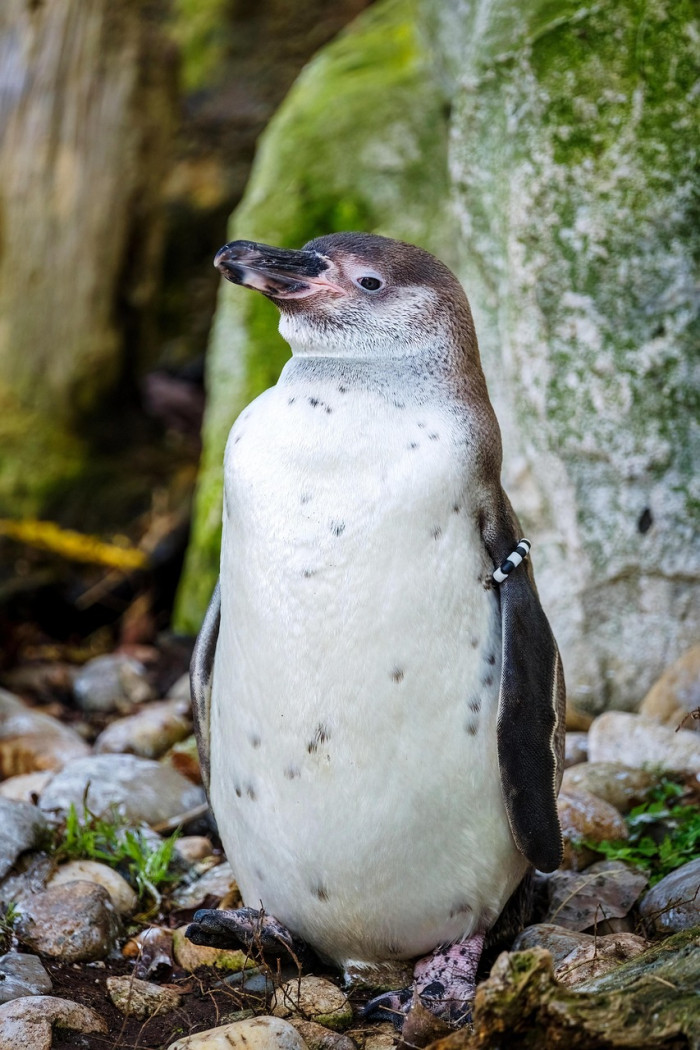
Penguins did not simply lose useful wings. Their forelimbs evolved into stiff flippers that drive the body through water. Dense bones reduce buoyancy, streamlined feathers control drag, and feet steer or brake.
Underwater, a penguin is effectively flying through a denser fluid. The tradeoff is complete loss of aerial flight.
Penguins range from the small little blue penguin to the emperor penguin. Their social behavior varies too, which is why one famous pair cannot represent every species or colony.
6. Kakapos and Takahē
The kakapo is a heavy nocturnal parrot from New Zealand. It climbs, walks, and may glide downward, but cannot perform powered flight. Males gather at display sites and produce low booming calls during breeding season.
Kakapos also appear in lists of the world’s slowest animals, although their main problem is not pace. Introduced predators can follow scent and catch a ground-dwelling bird with limited escape options.
Takahē are large rails with strong legs and reduced wings. They were once thought extinct, then rediscovered in 1948. Intensive conservation keeps the remaining population alive.

7. Flightless Rails, Ducks, and Cormorants
Rails repeatedly lose flight on isolated islands. Their flying relatives are good colonizers, so they reach remote land, establish populations, and may later become heavier with shorter wings.
Steamer ducks include both flying and flightless species. Flightless forms use strong wings in aggressive surface paddling that resembles a paddle-wheel steamer. The Galápagos cormorant uses reduced wings while powerful feet propel it underwater.
These species show that flightlessness can evolve relatively quickly when conditions favor it. Bodies often change before every flight-related feature disappears.

Those big African grasslands are where ostriches turned flightlessness into a speed advantage, but the moment predators changed, the math shifted.
Flight mechanics work like how birds generate lift, thrust, drag, and weight.
Meanwhile, in Australia, emus kept their small wings tucked while their legs did the heavy lifting, and that strategy did not care whether the threat came from a fox or a fence line.
Up in New Guinea and northeastern Australia, cassowaries relied on forest cover and a powerful kick, until hunting pressure and habitat change made “avoid people” harder to pull off.
And when people brought cats, rats, pigs, and disruption, even paleognaths that evolved flightlessness more than once suddenly shared the same vulnerability.
Extinct Flightless Birds
The dodo was a large flightless pigeon from Mauritius, not a primitive failure. Its closest living relatives include the colorful Nicobar pigeon. Hunting, introduced animals, and ecosystem disruption drove the dodo extinct after human settlement.
Moas included several New Zealand species, from turkey-sized forms to giants around three meters tall. The history of moas hunted to extinction shows how quickly a successful island lineage can disappear.
Elephant birds in Madagascar reached even greater mass. None lived alongside non-avian dinosaurs. Every one was a modern avian dinosaur, a point explained in are birds dinosaurs.
Flightlessness worked for millions of years. Sudden new predators changed the equation.
The birds didn’t lose flight by accident, but they sure did lose safety when the world changed.
Next, meet the walking fish and tiny possums in these rare Australian animals beyond kangaroos and koalas.
Share this article:





