
How Do Birds Mate and Reproduce?

Bird mating looks romantic from the outside, until you realize it is basically a high-stakes compatibility test with a built-in stopwatch. One second it is a male bird-of-paradise doing a display court routine like it is Broadway, the next it is a bowerbird hauling random objects like they are love letters.
And the “how” gets weirder fast. Some species trade food, some lock talons in flight, and some species seem to flip the script entirely, like phalaropes where females are the flashier competitors and males do the heavy lifting with incubation and chick care. Then comes the actual hookup, the cloacal kiss, where balance on a branch or on the water matters, and repeated matings are common because success is brief and not guaranteed.
By the time you get to the question of a male bird’s anatomy, the story stops being cute and starts being complicated in the most bird way possible.
Bird Courtship Comes First
Courtship helps birds identify the correct species, assess health, coordinate breeding condition, and establish a pair bond. Plumage, voice, movement, territory, and food can all become part of the test.
Male birds-of-paradise clean display courts and perform precise dances. Bowerbirds arrange objects. Grebes run across water together. Some raptors exchange food or lock talons in flight. A bird mating documentary can look theatrical because selection has rewarded displays that are hard to ignore.
Females often choose, but roles differ. In phalaropes, females are more colorful and compete for males, while males perform most incubation and chick care. Evolution has no obligation to follow the familiar script.
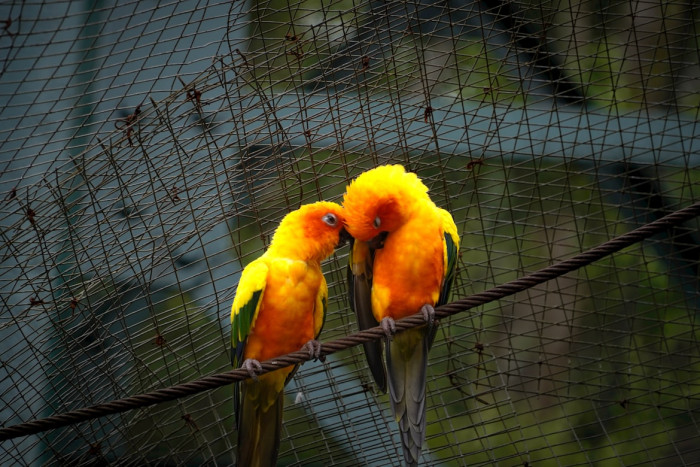
That’s the part where the courtship shows off, plumage, voice, movement, and territory all turned up to pass the species-and-health test.
What Is a Cloacal Kiss?
The cloaca is the chamber and external opening used by the digestive, urinary, and reproductive systems. During mating, the male usually balances on the female’s back while both move tail feathers aside and turn their vents toward each other.
The cloacas touch. Sperm transfers. Done.
Balance can be awkward, especially on narrow branches or water. Wings may spread for stability, and repeated matings are common because each contact is brief and successful sperm transfer is not guaranteed.
The cloaca also explains why birds pee differently, although urine, feces, eggs, and sperm follow separate internal paths before reaching the shared exit.
Do Any Male Birds Have Penises?
Yes, but they are a minority. Ducks, geese, swans, ostriches, emus, rheas, and a few other groups have an intromittent organ. Its structure and use vary, and in many waterfowl it can be long and rapidly everted.
Most bird lineages lost an external penis during evolution. Why that happened is still studied, with hypotheses involving development, mate choice, weight, infection risk, and reproductive conflict.
Waterfowl also show some of the most intense sexual conflict in birds, including forced copulation and coevolution between male and female anatomy. The subject is less romantic than the pair-bond imagery associated with ducks and swans.
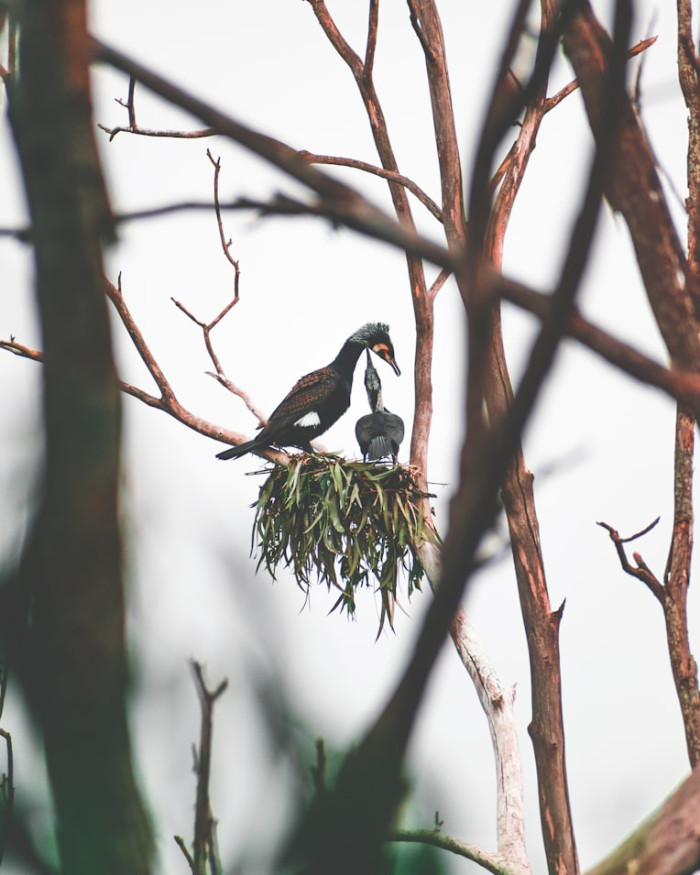
Then the documentary vibe hits a speed bump, because the “kiss” is really the cloaca, a brief touch that depends on perfect tail-feather timing.
How Fertilization Happens Inside the Female
After sperm enters the cloaca, it moves upward through the female reproductive tract. Fertilization usually occurs near the top of the oviduct when an ovulated yolk is present.
Female birds in many species can store viable sperm in specialized tubules for days or weeks. That allows a clutch of eggs to be fertilized after earlier matings and reduces the need for perfect timing on every ovulation.
One mating can matter later.
Sperm competition is common. A female may mate with more than one male, and males may guard partners, mate repeatedly, or remove rival sperm through behavior and anatomy. Genetic parentage can therefore differ from the social pair seen at the nest.
And just like birds manage waste efficiently, see why bird droppings look different, since birds pee as uric acid.
How an Egg Is Built
The yolk begins in the ovary. After ovulation and fertilization, it travels through the oviduct, where layers are added in sequence: albumen, membranes, and finally the mineralized shell. Pigments create spots and colors late in the process.
Most female birds develop mainly the left ovary and oviduct, a weight-saving arrangement. The complete trip commonly takes about a day, although timing differs by species.
An egg is laid through the cloaca with muscular contractions. The blunt end often emerges first after the egg rotates in the lower tract. A normal shell protects the embryo while still allowing gas exchange through microscopic pores.
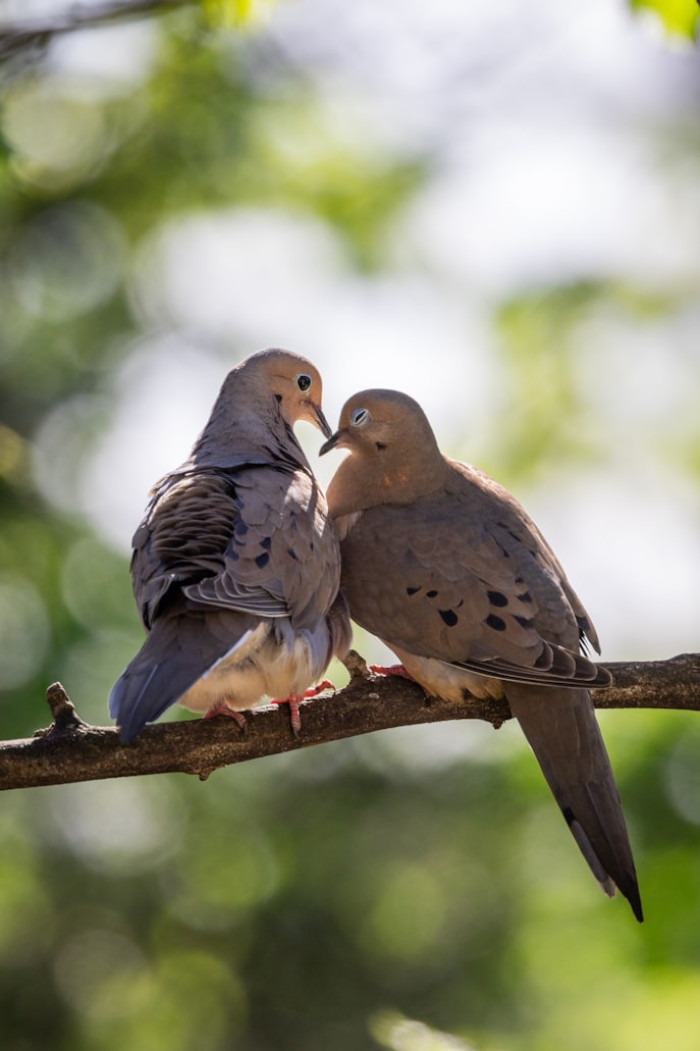
After you picture the awkward balancing on narrow branches, the pee-part detail suddenly makes sense, urine and feces still follow separate internal paths before that shared exit.
How Often Do Birds Mate?
Frequency varies enormously. Some pairs copulate many times during nest building and egg laying. Others mate less often but benefit from sperm storage. The number of contacts cannot be used alone to predict the number of chicks.
Anna’s hummingbirds offer one brief system: males perform dramatic dives and displays, mating occurs, and females handle nest building and parental care alone. The Anna’s hummingbird courtship is intensive even though the social partnership is short.
Splendid fairy-wrens provide another complication. Social pairs raise young together, but extra-pair mating is common, and bright fairy-wren plumage participates in a more complicated reproductive network than a simple couple suggests.
Do Birds Mate for Life?
Some species form long-term social bonds, including many albatrosses, cranes, geese, and parrots. “For life” still needs care. A bird may find a new partner after death, divorce after breeding failure, or produce chicks with an extra-pair mate while maintaining the social bond.
The article on birds that mate for life separates social monogamy, sexual exclusivity, and lifelong partnership. Those ideas overlap less neatly in birds than popular captions imply.
Pair bonds are strategies, not vows.
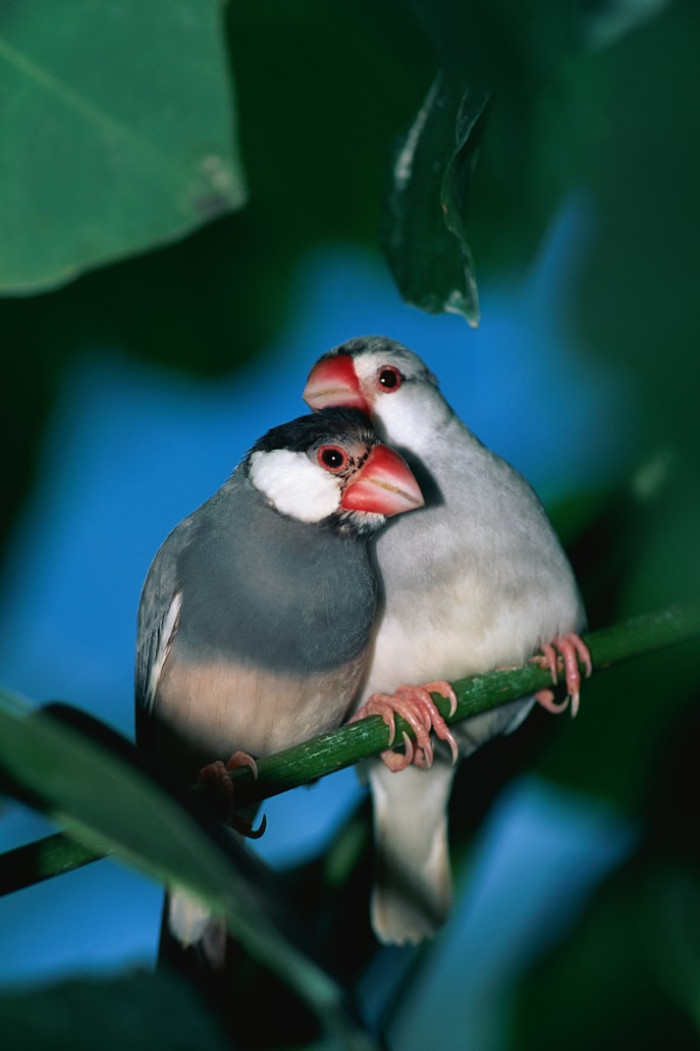
And just when you think you’ve got it, the story pivots again with waterfowl, where some males have an intromittent organ and sexual conflict can get intense fast.
What Happens After Mating?
Once eggs are laid, one or both parents may incubate them. Warmth keeps embryonic development moving, while turning prevents membranes and tissues from settling incorrectly. Parents also defend nests and manage humidity or shade.
Care after hatching ranges from almost none to months of feeding and teaching. Precocial chicks, such as ducklings, hatch relatively mobile. Altricial chicks, such as many songbirds, hatch helpless and depend on frequent meals.
The bright flame bowerbird dance may win attention at the beginning, but reproductive success ultimately depends on fertilization, safe development, and enough surviving young to reach adulthood.
Can Different Bird Species Mate?
Closely related species sometimes hybridize if they meet, recognize each other as possible partners, and produce compatible sperm and eggs. Ducks, gulls, finches, and hummingbirds include documented hybrids.
Many crosses fail before or after fertilization, and some hybrid offspring are infertile. Behavior, geography, timing, and genetic differences usually keep species separate.
Unusual plumage is not automatic proof of a hybrid. A red bird with an abnormality may instead show mutation, pigment loss, diet effects, or another developmental change.
The birds do not just mate, they run a messy, precision-built system that leaves no room for human expectations.
Those “made up” bird behaviors are wilder than you think, like backward-flying hummingbirds. Read 50 Facts About Birds That Sound Made Up.
Share this article:





