
Do Birds Have Ears? How Bird Hearing Works

It started with a backyard mystery, the kind that makes you stare at a bird like it owes you an explanation. You hear the chirp, you swear it came from one direction, but when you turn your head, the sound seems to have moved too.
Now picture the real complication: a bird is basically wearing its hearing system like hidden plumbing. The “ear” is not a big flappy thing on the side of the head, it is a tiny opening behind the eye, tucked under special feathers that can blend in like regular face plumage on some species, or pop with contrasting color on others.
And once that sound hits the eardrum, the bird’s brain has to sort timing, pitch, and direction fast enough to find mates, dodge predators, and keep a flock together.
Where Are a Bird’s Ears?
A bird has one ear opening on each side of its head. Lift the feathers behind the eye and a small hole becomes visible. That opening leads into a short ear canal and then to the eardrum, also called the tympanic membrane.
Feathers over the opening are called auriculars or ear coverts. They are arranged loosely enough for sound waves to pass through. On some species, such as the chestnut-breasted mannikin, the patch can look like ordinary face plumage. On others, contrasting colors make the ear-coverts visually distinctive even though the opening remains concealed.
Mammalian pinnae, the folds people normally call ears, help collect and funnel sound. Birds use head shape, feather structure, and internal anatomy to perform much of that work instead.

That’s why the hole behind the eye matters, it is the whole entry point for the bird’s sound story.
How Bird Hearing Works
Sound enters the external opening and vibrates the eardrum. A single middle-ear bone, the columella, carries those vibrations toward the fluid-filled inner ear. Mammals use three middle-ear bones, one of the anatomical differences behind the answer to are birds mammals.
Inside the ear, sensory hair cells convert mechanical movement into nerve signals. The brain then interprets pitch, timing, loudness, and direction. Birds use that information to recognize mates, detect rivals, locate chicks, avoid predators, and coordinate flocks.
Some calls are simple. Others are packed with detail.
A small songbird can separate its own species’ notes from a noisy dawn chorus, while colonial seabirds may recognize an individual partner or chick among thousands of voices.
Can Birds Hear Better Than Humans?
The answer depends on the species and the sound. Many birds hear a frequency range broadly similar to humans, rather than extending far into ultrasound. Their advantage often lies in sensitivity to timing, pitch changes, and biologically important patterns.
Songbirds can distinguish extremely quick changes in notes. Pigeons detect very low-frequency sounds called infrasound, which may contribute to long-distance orientation. Some owls locate prey from tiny differences in when a sound reaches the left and right ears.
Hearing ability matches lifestyle. A colorful tit-warbler living among branches faces different acoustic problems from a seabird calling across a windy colony or a nocturnal hunter listening through snow.
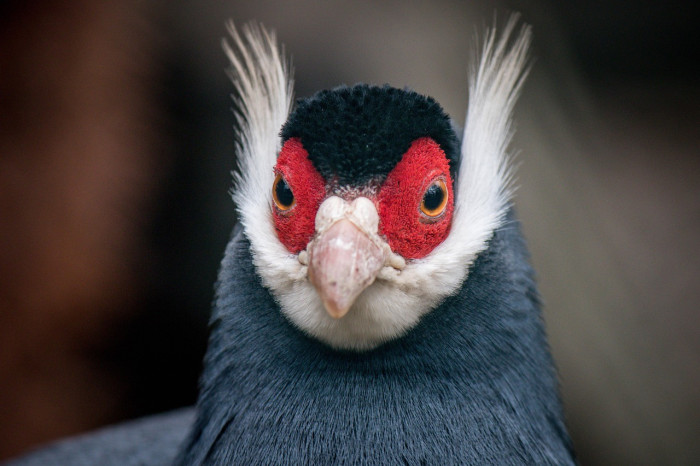
Then the vibrations travel inward, with the columella doing the middle-ear job birds handle with one bone instead of three.
Bird hearing is cooler than it sounds, because birds are warm-blooded, not cold-blooded, and manage that heat through feathers and behavior.
Why Owl Ears Are So Accurate
Owls provide the best-known example of specialized bird hearing. In several species, the left and right ear openings are positioned at different heights or have differently shaped surrounding structures. Sound reaches each side with a slightly different timing and intensity.
The owl’s brain compares those differences to build a three-dimensional estimate of where the noise began. A facial disc helps direct sound toward the ears, acting more like a movable acoustic surface than a decorative ring of feathers.
That is why an owl can strike prey it cannot clearly see. The stare of an owl at a window may get all the attention, but its concealed ears are doing equally impressive work.
Not every owl has strongly asymmetrical ears, and not every nocturnal bird hunts by sound. The feature is an adaptation, not a universal owl rule.
Do “Ear Tufts” Help Birds Hear?
Great horned owls, screech-owls, and several other species have feather tufts that look like pointed ears. Those tufts do not contain the ear openings and do not function like mammalian pinnae.
They may help with display, communication, camouflage, or breaking up the outline of the head. The actual ears sit lower and remain covered by feathers.
Pure visual misdirection.
The dramatic tufts on a devil-like owl tell a viewer more about the bird’s silhouette and mood than its hearing equipment.
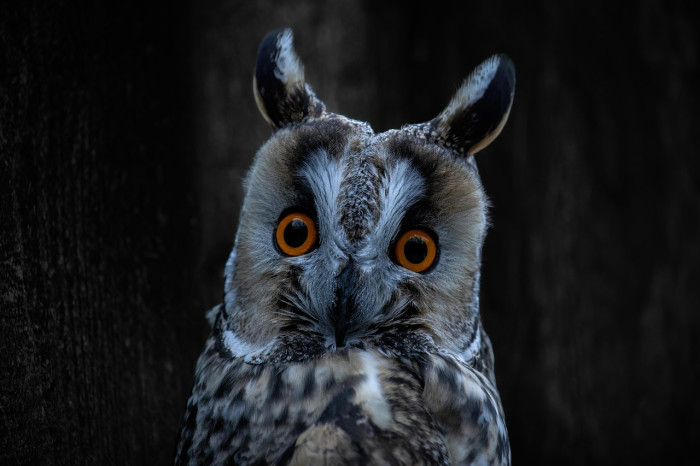
Meanwhile, those sensory hair cells turn motion into nerve signals, and the brain uses them to pick out a partner’s call in a noisy crowd.
So when a songbird filters its own species’ notes from the dawn chorus, it is not magic, it is hearing tuned to timing and pitch shifts.
Bird Ears Also Control Balance
The inner ear contains semicircular canals that sense head movement and orientation. This vestibular system helps birds balance on narrow perches, stabilize the head while the body moves, and coordinate turns in flight. The same balance system supports the rapid midair corrections described in how birds fly.
Flight demands rapid corrections. A bird banking through branches must combine information from vision, muscles, joints, and the inner ear in fractions of a second. Even a flightless species relies on the same basic balance system while running or swimming.
The link between hearing and balance explains why severe ear problems can affect posture as well as responses to sound. For wild birds, either loss can be dangerous.
Can Birds Move Their Ears?
Birds cannot swivel visible ear flaps because they have none. They can turn the entire head, alter facial feathers, and in some species adjust structures that influence how sound reaches the opening.
Head movement is useful because it changes the angle and timing of incoming sound. Owls combine this with unusually flexible necks. Other birds make quick head turns while listening from a perch.
The basic answer remains straightforward: birds have fully functional ears, but most of the hardware is hidden. Even species with a strange black grin reveal far more with their face feathers than with the openings underneath.
Next time you “can’t locate” the chirp, remember the bird is doing the math, while you are just guessing the direction.
Still skeptical? Read how modern birds “chew” with serrated beaks, not teeth, in Do Birds Have Teeth? What Those Spikes Really Are.
Share this article:





