
Shrimp vs Prawn: What Is the Difference?

It starts the same way every time, someone points at a tray of shelled seafood and says, “Shrimp, right?” Then the label, the menu, and the person ordering all insist it’s something else entirely, prawn, shrimp, same thing, different name, nobody agrees.
And the problem is, they really can look identical at first glance. Both are decapods with ten legs, hard outer shells, elongated bodies, antennae, and swimmerets, so the “quick comparison” everyone wants turns into a guessing game the second you get past the marketing.
Here’s the part that gets messy: the differences that matter are mostly hiding in the anatomy, not the vibe.
Quick comparison
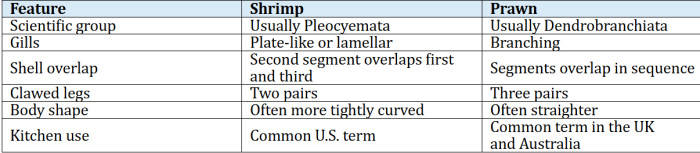
Are shrimp and prawns the same thing?
Not exactly. Both are decapods, meaning they have ten legs, and both have elongated bodies, antennae, swimmerets, and a hard outer shell. Yet the animals commonly identified as true shrimp and true prawns are generally placed in different suborders.
The Australian Museum notes that close identification can involve the way body segments overlap, how appendages are arranged, and other details that are easy to miss without handling the animal. To a shopper, they can look nearly identical. The same problem appears in seal vs sea lion identification, where familiar names hide useful anatomical differences.
That visual overlap is why shelled animals such as prawns and crabs are often grouped by appearance even when their biology is quite different.
Six differences between shrimp and prawns
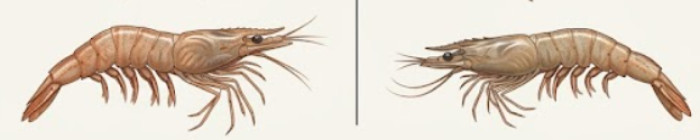
That tray of “shrimp” that looks exactly like “prawns” is why the naming confusion sticks so hard in the first place.
1. Their gills are built differently
Prawns in the suborder Dendrobranchiata have branching gills. Shrimp in the suborder Pleocyemata usually have plate-like, or lamellar, gills.
Not a feature you can check at dinner.
It is still one of the most meaningful biological differences because it reflects their scientific classification rather than an unreliable rule about size or taste.
2. Their shell segments overlap in different patterns
A shrimp's second abdominal segment overlaps both the first and third segments. This creates a more pronounced bend in the body.
On a prawn, the abdominal segments usually overlap in a more orderly sequence, with each plate covering the one behind it. The body may therefore look straighter.
This clue is more useful on a whole, uncooked specimen. Once the shell is removed, the evidence is gone.

Once you start comparing the gills, the whole “they’re basically the same” idea starts to wobble fast.
3. Prawns usually have three pairs of clawed legs
Prawns typically carry claws on three pairs of legs. Shrimp generally have claws on two pairs, with the front pair often more prominent.
Small detail. Strong evidence.
The arrangement also shows why calling every small crustacean a shrimp based on appearance can fail. The same broad body plan appears across many decapods, including lobsters and crabs, yet their specialized limbs differ sharply. A rare blue lobster is still recognizably part of that wider ten-legged group. Beetle vs cockroach identification follows the same structure-first rule.
For more “looks similar, not the same” drama, compare penguins with different crests, markings, and ranges.
4. Size is not a reliable rule
Prawns are often described as larger than shrimp, and many products sold as prawns are indeed large. But species overlap in size. A large shrimp can exceed a small prawn.
Retail naming makes this even less reliable. Terms such as jumbo shrimp, king prawn, spot prawn, and tiger prawn may reflect market categories or common names instead of a clean taxonomic divide.
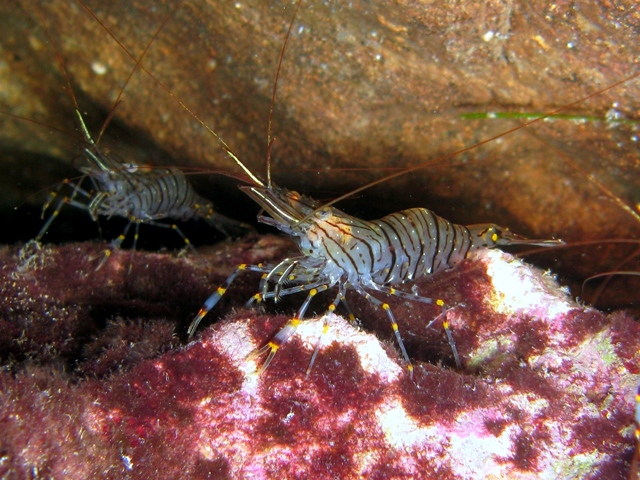
5. Habitat offers a clue, not a verdict
People often say shrimp live in saltwater and prawns live in freshwater. That pattern fits some familiar species, but exceptions are common. Both labels include animals found across marine, estuarine, and freshwater environments.
The eastern king prawn profile from the Australian Museum describes a species that moves between offshore waters and estuaries as it develops. A single freshwater-versus-saltwater rule cannot capture that life cycle.
6. The words change by country
In the United States, shrimp is the dominant culinary term. In the United Kingdom, Australia, and several other countries, prawn is used more broadly, including for animals that an American market may sell as shrimp.
Regional language wins in the kitchen.
This is why two packages can contain similar animals but use different names. It also explains why internet arguments about shrimp vs prawn sometimes involve language rather than biology.
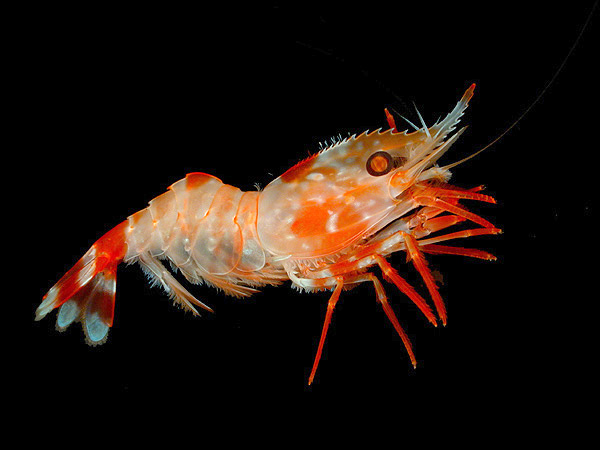
Then you notice the overlap pattern on the abdominal segments, and suddenly the body shape tells a different story.
Do shrimp and prawns taste different?
Most people would struggle to identify them by flavor alone. Species, freshness, diet, harvest location, freezing, and cooking method usually influence taste and texture more than the label on the package.
Larger individuals may feel firmer or meatier, which can create the impression that prawns are sweeter or more substantial. Yet that is often a size and preparation difference, not a universal prawn trait.
Both cook quickly. Overcooking either one turns tender flesh rubbery.
Scientific grouping helps where common names do not. Salamander vs newt presents a similar naming problem because newts sit within the broader salamander group, while shrimp and prawn usage varies more by region.
How shrimp and prawns reproduce
A common biological distinction involves egg carrying. Many shrimp in Pleocyemata brood eggs on appendages beneath the abdomen. Dendrobranchiate prawns generally release eggs into the water rather than carrying them until hatching.
That difference is reflected in the group names. Pleocyemata refers to brooding eggs on swimming legs, while Dendrobranchiata refers to branching gills.
Tiny names. Useful history.
Life cycles vary by species, so a comparison article should not turn those patterns into absolute rules for every animal sold under either name.

By the time you get to the clawed legs, the menu language feels less like labels and more like a cover-up.
Which one should you buy?
Choose based on source, freshness, size, and the dish you are making. The words shrimp and prawn provide less practical information than the species name, harvest method, country of origin, and whether the product was farmed or wild caught.
For quick sautés or pasta, smaller animals may cook more evenly. Larger shrimp or prawns work well for grilling because they are easier to turn and less likely to overcook instantly. Shell-on products often retain more flavor, while peeled products save time.
Sustainability matters too. Aquaculture and wild fisheries vary widely in habitat impact, bycatch, feed use, and management. A broad label cannot tell you whether one product is a responsible purchase.
Ocean conditions can change seafood populations quickly. The disappearance of billions of snow crabs from Alaska waters shows how temperature and ecosystem shifts can affect crustaceans on a huge scale.
Shrimp vs prawn FAQs
Why do Americans say shrimp instead of prawn?
Shrimp became the standard market and culinary term in the United States. Prawn is more common in British and Australian English, although both words appear in species names and specialty products.
Is a king prawn just a large shrimp?
Not always. King prawn may refer to specific prawn species, but retail use varies. Check the scientific or species name when precise identification matters.
Can shrimp and prawns be substituted in recipes?
Usually, yes. Match them by size and adjust cooking time. A larger animal needs longer than a small one, regardless of the name on the package.
Are prawns healthier than shrimp?
Their nutritional profiles are broadly similar. Preparation matters more. Frying, heavy sauces, or added salt can change the final dish far more than the shrimp or prawn distinction.
The practical answer
Scientifically, shrimp and prawns are not identical. Look to gill structure, clawed legs, shell overlap, and reproductive biology for the strongest distinction. In everyday food language, the terms overlap so much that size, species, and source are more useful buying clues.
A cleaner shrimp approaching a diver shows how specialized these small crustaceans can be, while a picnic invaded by robber crabs makes the wider decapod family look far less subtle. Same basic plan. Very different animals.
The family dinner did not end well, but at least now you know why the “shrimp” argument never had a fair shot.
Want another matchup, check out the differences between seals and sea lions, from ears to sound.
Share this article:





