
How Do Birds Sleep and Where Do They Go at Night?

It’s 11:47 p.m., the yard goes quiet, and a sleepy little bird is out there doing something that looks impossible. One minute it’s hopping between branches like it owns the place, the next minute it’s parked in a hedge or tucked into a cavity, somehow staying put without toppling over.
Then you notice the complication, the part that makes the whole thing feel like a mystery novel. Some birds vanish into dense shrubs or evergreen foliage, others squeeze into urban leftovers like ledges, signs, bridges, and sheltered gaps in buildings, and a few species pile into massive communal roosts where thousands of bodies share the same safe spot.
And the real mind-bender is how they sleep while staying locked onto their perch, heads tucked in like they’re hiding from the cold.
Where Do Birds Sleep at Night?
Many songbirds choose dense shrubs, tree cavities, evergreen foliage, reed beds, or protected branches. The best roost blocks wind, reduces heat loss, and makes approach difficult for predators.
Some return to the same area nightly. Others shift with weather or food. Urban birds use ledges, signs, bridges, roofs, and sheltered building gaps. Large communal roosts may contain hundreds or thousands of birds, creating safety through extra eyes and diluting the chance that one individual is caught.
A small songbird may disappear into vegetation close to where it fed, while a flock of blackbirds can travel farther to a shared roost. The contrast between solitary and group rest appears throughout galleries of sleepy animals. “Where did they go?” rarely has one answer.
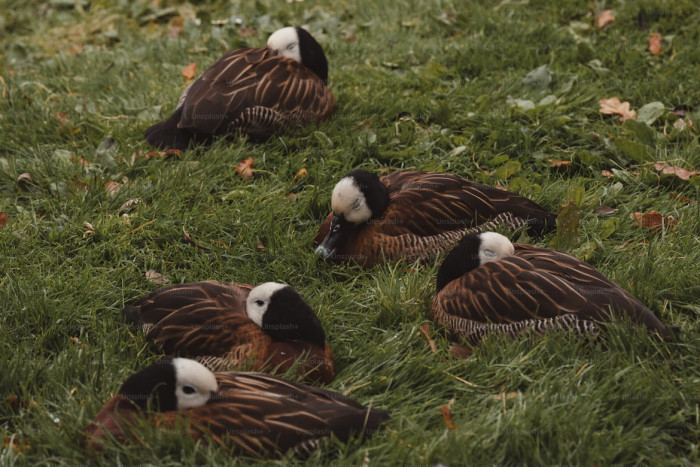
That’s why a small songbird can disappear into vegetation close to where it fed, while blackbirds can fly farther to a shared roost.
How Can Birds Sleep Without Falling?
Perching birds have tendons that tighten around a branch when the legs bend under body weight. The toes close with little continuous muscle effort, helping the bird maintain a grip while relaxed.
The mechanism is often called a perching reflex or tendon-locking system. It is secure, but not magical. A sick, injured, deeply chilled, or startled bird can still lose balance.
Grip first. Sleep second.
Foot shape matters too. Songbirds usually have three toes forward and one back, creating a clamp around narrow branches. Parrots use two forward and two back, while raptors add powerful curved talons. The ability to perch is separate from how birds fly, but both depend on coordinated muscles, tendons, balance, and sensory feedback.
Why Birds Tuck Their Heads Back
Tucking the bill into shoulder or back feathers reduces exposed surface area and lets warm air from the body surround the nostrils. The position may look uncomfortable to a human, yet a flexible neck makes it routine.
Birds also fluff feathers to trap insulating air and may stand on one leg while pulling the other into belly plumage. These adjustments matter most on cold nights, when small birds can lose heat quickly.
Photos of sleeping owls show another posture: some rest upright, some lean into a surface, and young owls may lie forward because their heads are proportionally heavy.
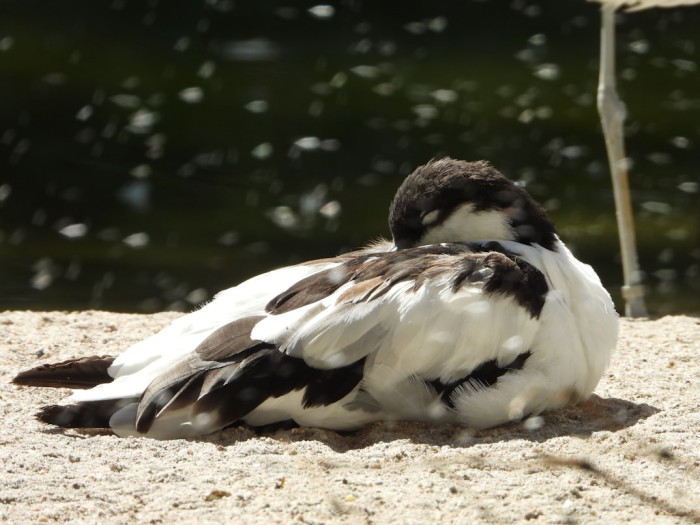
Once they pick that spot, the “how” gets wild, because perching birds use tendons that tighten and lock when their legs bend under body weight.
Can Birds Sleep With One Eye Open?
Yes. Some birds use unihemispheric slow-wave sleep, allowing one half of the brain to sleep while the other remains more alert. The eye connected mainly to the awake hemisphere can stay open.
Ducks at the edge of a group use more one-eyed sleep than birds protected in the center. The open eye often faces outward toward possible danger. As positions change, sleep strategy can change too.
This is not full wakefulness. It is a compromise between rest and vigilance.
The ability appears in several bird groups and also in some marine mammals. A rescued owl named Bertie may look watchful while resting, but eye position alone cannot reveal exactly which sleep stage is active.
And just like the brief cloacal kiss during courtship in How Do Birds Mate and Reproduce?, timing matters.
Do Birds Dream?
Birds experience REM sleep, the stage strongly associated with vivid dreaming in humans, although no one can directly report a bird’s dream content. Their REM periods are usually short and can include relaxed muscles, rapid eye movements, and small twitches.
Songbirds show sleep-related brain activity connected to learned vocal patterns. That suggests sleep helps process and refine songs, much as sleep supports memory in mammals.
Whether a macaw replays a day with its family or a hawk visualizes a hunt remains unknown. The cautious claim is that birds have sleep states compatible with dreaming, not that researchers know the plot.
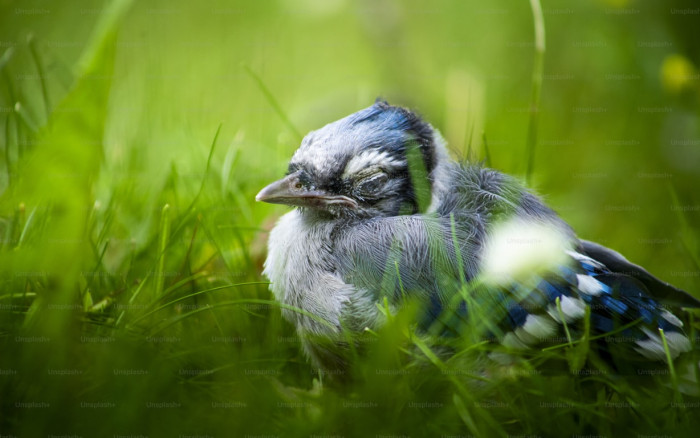
But even the best tendon-locking setup is not invincible, because a sick, injured, deeply chilled, or startled bird can still lose balance.
Do Birds Sleep in Nests?
Adults often use nests mainly for eggs and chicks. Outside the breeding period, many sleep elsewhere because an exposed nest can attract predators, collect parasites, or offer less shelter than a cavity or dense branch.
Exceptions are common. Cavity nesters may reuse boxes or holes as winter roosts. Parents sleep on or beside eggs during incubation, and a mother macaw sleeping near her chick reflects the demands of guarding and warming young.
Nests are nurseries first. Bedrooms sometimes.
Can Birds Sleep While Flying?
Research on great frigatebirds found brief periods of sleep during long flights, including one-hemisphere and two-hemisphere sleep. They slept far less in the air than on land, usually while circling in rising air rather than actively flapping.
Swifts are also widely believed to sleep during extended airborne periods, although measuring the details is difficult. Flight sleep is therefore possible, but it is not the nightly routine for most birds.
The finding fits species that remain aloft for exceptional stretches. A penguin from a famously mischievous colony has a very different problem: safe rest on land or water without aerial options.
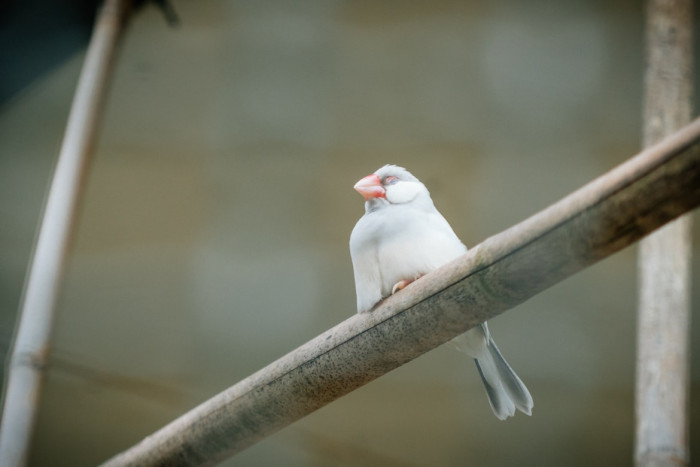
Then comes the cute-but-clever routine, the head tuck into shoulder or back feathers, plus fluffing that traps warm air around the nostrils.
How Much Sleep Do Birds Need?
Total sleep varies by species, season, location, threat level, and opportunity. Captive birds may sleep longer and more continuously than wild birds facing weather and predators. Migrants can temporarily reduce sleep and compensate with short bouts or altered brain activity.
Daylight length also matters. A diurnal bird has more darkness available in winter, while polar species may breed under near-continuous daylight. Hormones and internal clocks help organize rest even when external cues are unusual.
One universal number would be misleading. The better question is whether the bird can obtain enough safe, undisturbed rest for its lifestyle. The same principle applies across animal nap time, although each group solves it differently.
Next time you see one bird napping in plain sight, you’ll realize it’s not resting, it’s performing a full nighttime survival setup.
Wondering how birds stay warm in the cold night air, read how birds control their body heat.
Share this article:





