Seal vs Sea Lion: 8 Differences You Can Spot

A seal and a sea lion look like they’re from the same ocean club, until you see them doing the same thing in totally different ways. One is basically a wriggly, bouncing beach mammal, the other looks like it’s posing for a wildlife documentary while it hauls itself around like it owns the dock.
It gets confusing fast when people are trying to ID what they’re seeing from shore, or worse, when a “baby fur seal” slips into a home and suddenly everyone is watching how it moves through human space. Meanwhile, harbor seals are often just sprawled out on sandbars, and sea lions can look athletic on land, so your brain mixes them up even if you’ve seen both before.
Once you know the body clues, the sightings stop blending together, and the beach starts telling on itself.
Quick comparison
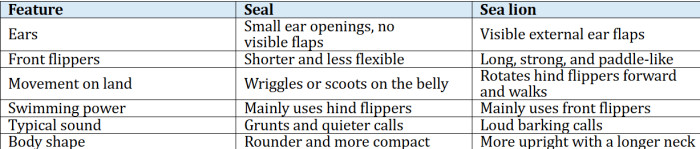
What is the main difference between a seal and a sea lion?
The clearest seal vs sea lion difference is anatomy. Sea lions belong to the eared seal family, Otariidae, while the animals commonly called true seals belong to Phocidae. The NOAA Ocean Service highlights the visible ears, large front flippers, and land movement of sea lions as the most useful field marks.
A seal has short front flippers and rear flippers that point backward. Those rear limbs work well in water but cannot rotate beneath the body for walking. On a beach, the result can look like a mix of wriggling, bouncing, and sliding.
Sea lions look more athletic on land. They can lift the chest, turn the rear flippers forward, and step over rocks or crowded docks. This is why the baby fur seal that entered a home moved through a human space very differently from the sleek harbor seals people often see resting on sandbars.
Eight ways to tell seals and sea lions apart
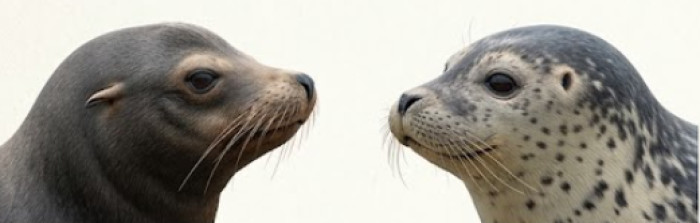
That’s why the “baby fur seal in a home” story matters, because the movement pattern is the first giveaway before you even get a good look at the head.
1. Sea lions have visible ear flaps
Look at the side of the head. A sea lion has a small external ear flap. A seal does not, although it still has an ear opening.
Easy when you are close. Harder from a boat.
2. Their front flippers are different
Sea lions have long front flippers that provide most of their power in the water. Seals have shorter front flippers and depend more heavily on side-to-side movement of the rear body and hind flippers.
This also changes their silhouette. A sea lion resting upright often looks broad through the shoulders, while a seal tends to look rounder and lower to the ground.

Then you notice the NOAA-style field marks people usually spot, like the sea lion’s visible ear flaps and how its front flippers power the whole act.
3. Sea lions can walk on land
A sea lion rotates its rear flippers beneath the body, which allows it to stand and move on four limbs. A seal cannot do this. It may pull with the front flippers, flex the body, or bounce forward.
That difference matters around crowded colonies. Sea lions can climb onto docks, boats, and rocky ledges with surprising control, a talent that makes the walrus that took over a boat look less unusual within the wider pinniped family.
4. Seals are quieter
Sea lions are known for loud, repetitive barking. Entire colonies can sound like a busy kennel. Seals produce grunts, growls, and other calls, but many species are less consistently noisy above water.
No need to see the animal. Sometimes the sound answers first.

5. Sea lions are often more social on shore
Both groups can gather in large numbers, particularly during breeding or molting periods. Sea lions, however, are commonly seen packed together in noisy colonies on beaches, piers, and floating structures. Two Steller sea lions that climbed onto a boat show how confidently they can occupy human-made platforms.
Seals are often more spread out when resting. That is a tendency, not a rule. Species, season, food supply, and available space all affect grouping behavior.
Sea lions and seals have field marks, like llamas versus alpacas, where banana-shaped ears and size do the talking.
6. Their swimming styles differ
Sea lions use powerful strokes of their front flippers, almost like underwater wings. Seals generate propulsion mainly with their hind flippers and lower body while steering with the front limbs.
Both are fast and capable swimmers. The difference is the engine.
Swimming style also affects how sea lions maneuver around boats and docks. A pair of huge sea lions that borrowed a boat could haul themselves aboard because their front flippers and rotating hind limbs work together above water.

After that, the silhouette does the talking, a sea lion resting upright looks broad and confident, while a seal tends to look rounder and lower to the sand.
7. Their faces and necks look different
Sea lions often have a more dog-like face, a longer neck, and a posture that raises the head and chest. Seals usually have a shorter neck and a rounder head that blends smoothly into the body.
Whiskers are not a reliable separator because both groups have highly sensitive facial whiskers. Those whiskers help detect movement in the water, including trails left by fish.
8. Fur seals are actually closer to sea lions
The name causes confusion. Fur seals are not true seals. They belong to the same eared seal family as sea lions and share visible ear flaps and rotating hind flippers.
A similar naming trap appears in salamander vs newt, where one label sits inside the broader group. That detail catches many people.
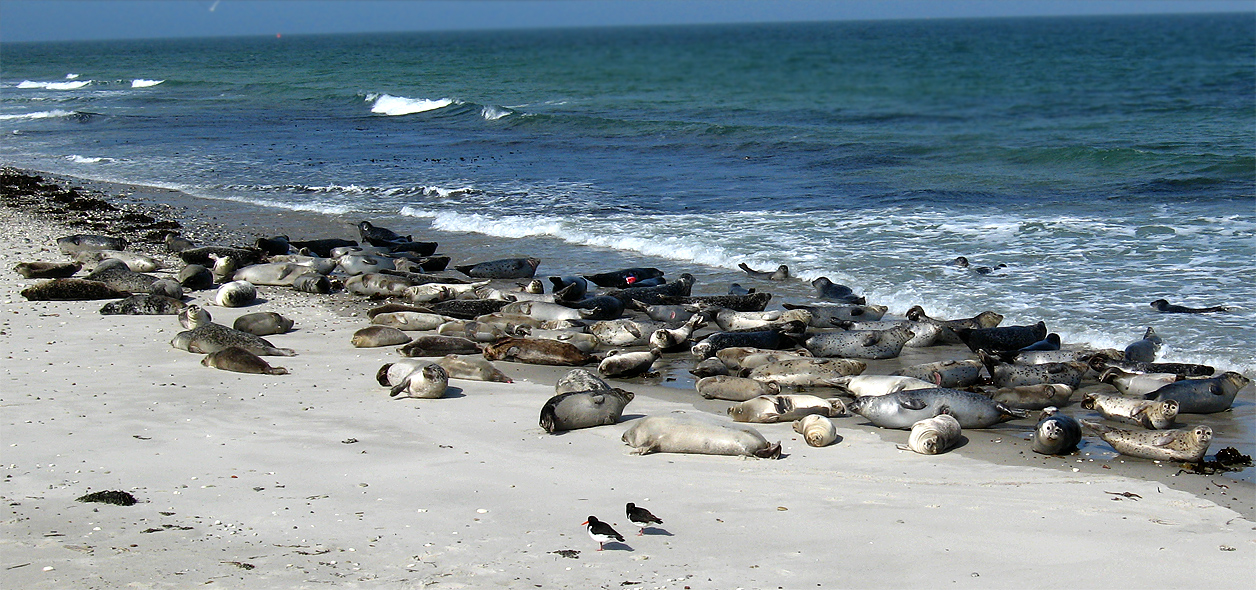
And finally, the dock test seals the deal, sea lions can rotate those rear flippers and step around, while seals bounce and slide like they’re stuck in beach-mode.
Are seals and sea lions the same animal family?
They share the broader pinniped group, but they are not the same family. Smithsonian Ocean explains that pinnipeds include true seals, eared seals, and walruses. Sea lions and fur seals are eared seals. Harbor seals, gray seals, elephant seals, and monk seals are true seals.
This relationship explains why they still share so many features. Both have streamlined bodies, thick insulation, sensitive whiskers, and limbs modified into flippers. Both must also return to land or ice for important parts of their life cycle, including giving birth.
Common names do not always match anatomy. The shrimp vs prawn distinction also depends on small structural clues that casual labels tend to hide.
Are sea lions more aggressive than seals?
Neither label predicts every encounter. A large wild seal can be dangerous, and a sea lion defending territory can charge or bite. Sea lions may appear more confrontational because they are mobile on land, vocal, and often close to people around docks.
Wild means wild.
Keep distance, never block the animal's route to the water, and do not attempt to feed or touch it. A marine mammal resting on a beach may be healthy and simply conserving energy. Crowding it can force the animal back into the water before it is ready.
Sanctuary animals may become accustomed to controlled care. A 31-year-old seal receiving an ice-fish birthday cake lived under professional supervision, which is very different from approaching a wild animal on a beach.

Seal vs sea lion FAQs
Can seals and sea lions mate?
They are related, but true seals and sea lions belong to different families and do not normally produce hybrids. Even closely related species usually need compatible genetics, behavior, range, and breeding timing.
Which is bigger, a seal or a sea lion?
It depends on the species. Some elephant seals are far larger than any sea lion. When comparing commonly seen coastal species, sea lions may look larger because they sit upright and have broad shoulders.
Do seals have ears?
Yes. They have internal ears and visible ear openings, but no external ear flaps.
Which animal is better on land?
Sea lions. Their rear flippers rotate under the body, allowing them to stand and walk. Seals are more limited and usually move by wriggling or scooting.
The quickest identification rule
Check the ears, then the rear flippers. Visible ear flaps and a four-limbed walk point to a sea lion. No ear flaps and a belly-first shuffle point to a seal.
After that, sound confirms it. Barking from an upright animal is a strong sea lion clue, while a quieter, rounder animal resting low on the beach is more likely a true seal. Rare black seal pups show why coat color is unreliable, so return to ears, posture, and movement.
The next time you see one “walking” instead of wriggling, you’ll know exactly which animal is crashing the scene.
Before you dive back in, check out 15 types of jellyfish, including glowing and dangerous species.
Share this article: