
Do Birds Have Teeth? What Those Spikes Really Are

A 28-year-old woman swears she saw “teeth” in a goose’s beak, and honestly, the evidence looked convincing. Those little spikes along the bill edges look like a mouth full of tiny chompers, especially when the bird is snapping at grass like it owes it money.
But when you zoom in, the “teeth” aren’t enamel crowns, they are keratin ridges, the same tough stuff that makes up beaks, claws, and fingernails. Add in other bird weirdness, lamellae that filter food, penguin tongue papillae that herd slippery prey, and ancient birds that actually had real teeth, and the whole story gets way stranger than the first glance.
Here’s the twist: the spikes are doing a job, and it is not dental.
Why Modern Birds Do Not Have True Teeth
True vertebrate teeth develop from specialized tissues, including enamel and dentin, and sit in or attach to the jaws. No living bird produces them. Instead, the jaws are covered by a keratin sheath that forms the beak.
Keratin also forms feathers, claws, human fingernails, and the outer layer of many animal structures. It can produce sharp edges and hard points, but it does not turn those points into teeth.
That is the test. Material matters.
A heavy barbet beak and the narrow bill of a hummingbird solve different feeding problems without a single enamel crown between them.
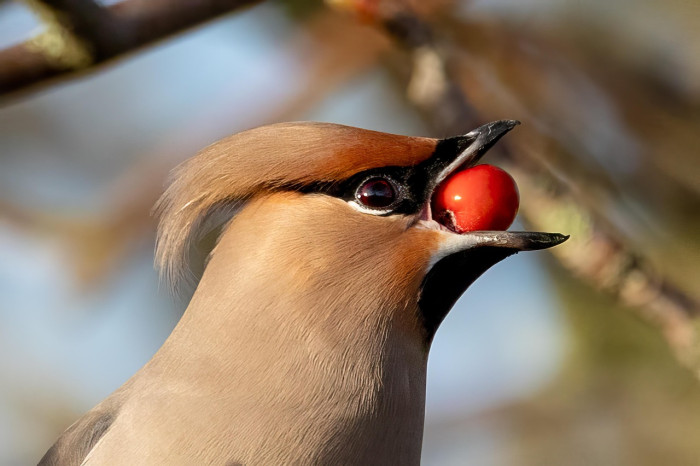
That goose “chomp” moment is exactly why the bill can look like it has rows of teeth, even though it is really keratin lamellae gripping and filtering food.
What Looks Like Teeth in a Goose’s Beak?
Geese and many ducks have rows of comb-like structures called lamellae along the edges of the bill. The ridges help grip vegetation and filter small food items from water or mud. The tongue can have matching projections.
Up close, the pattern looks like a mouth full of tiny teeth. It is not. Lamellae are part of the keratinized bill and tongue surface.
That does not make a bite harmless. A strong bill, sharp edges, neck muscles, and defensive behavior can produce a painful pinch. Anyone meeting an assertive goose learns quickly that enamel is optional.
Do Penguins Have Teeth?
Penguins have no teeth. Their mouths contain stiff, backward-facing papillae that line the tongue and palate. These projections help guide slippery fish and squid toward the throat and make escape difficult.
The arrangement is practical for an animal that catches moving prey underwater and usually swallows it whole. Chewing would add time and mechanical complexity.
Other fish-eating birds rely on different bill shapes. A broad kingfisher dive ends with a straight, pointed bill closing on prey, while pelicans use a pouch and hooked tip.
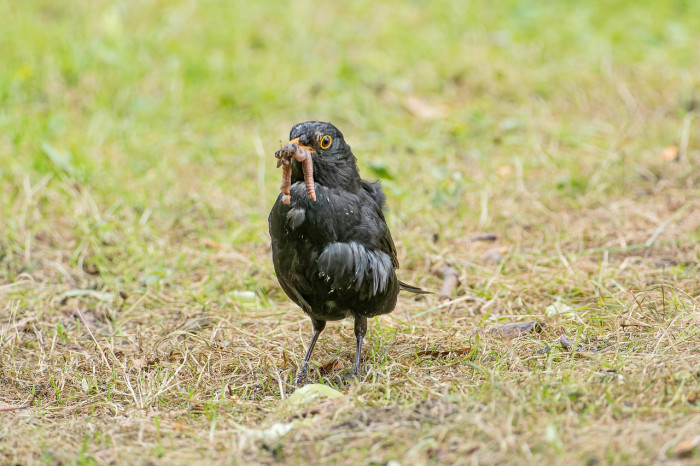
Then the story gets messy, because the same keratin that forms a beak can still deliver a painful pinch, even without enamel.
Did Ancient Birds Have Teeth?
Yes. Several extinct bird groups had true teeth. Archaeopteryx carried small teeth in its jaws, and later Cretaceous birds such as Ichthyornis and Hesperornis also retained them.
The fossil record shows that tooth loss happened during bird evolution rather than at the instant the first feathers or wings appeared. Different early lineages combined beaks and teeth in different ways.
By the time the common ancestor of modern birds emerged, true teeth had disappeared. The genetic pathways for tooth development were degraded over millions of years.
And if you love weird bird behavior, these “made-up” facts include hummingbirds flying backward and cardinals ant-bathing.
Why Did Birds Lose Their Teeth?
No single explanation has closed the case. Beaks are lighter than jaws carrying repeated rows of mineralized teeth, but weight alone may not explain the transition. Tooth development also takes time, and faster embryo development could have favored a beak-based feeding system.
Beaks are extremely versatile. They can grow continuously, repair wear, support delicate sensory structures, and evolve rapidly into specialized shapes. A crested duck, an eagle, and a flamingo all share the same basic toothless plan while using it very differently.
Evolution did not simply remove a tool. It replaced the tool kit.
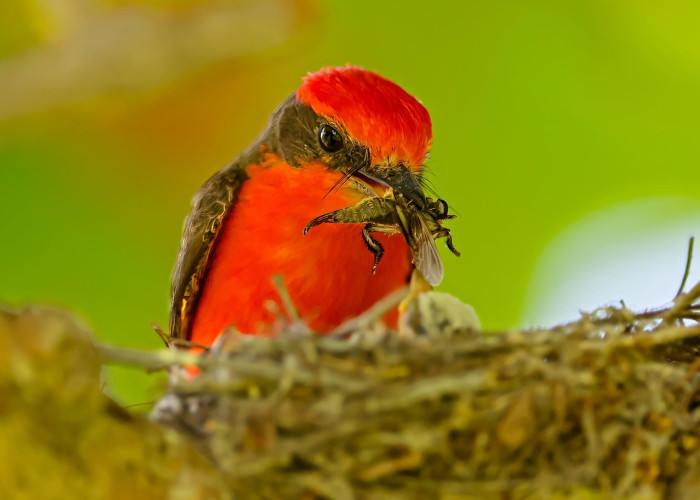
Next comes the penguin comparison, where the mouth is lined with stiff, backward-facing papillae that guide fish and squid, not chew them.
How Birds Process Food Without Chewing
Many birds swallow food whole or tear it into manageable pieces. The digestive tract then performs work that mammal teeth handle before swallowing.
The crop can store food. The glandular stomach adds digestive chemicals. The muscular gizzard grinds material, sometimes with swallowed grit. Carnivorous birds may later cough up compact pellets containing fur, bones, or insect parts that could not be digested.
The bill still matters at every stage. Broadbills, including the vividly colored black-and-yellow broadbill, use shape and gape to capture particular foods. Parrots use powerful curved beaks and mobile tongues to open seeds and manipulate objects.
What About “Tooth-Billed” Birds?
Names can mislead. The tooth-billed bowerbird, tooth-billed pigeon, and double-toothed kite do not have true teeth. The names refer to notches, projections, or bill shapes that reminded observers of teeth.
The same caution applies to photos online. A bird with a spiky tongue or serrated bill may look like a biological exception. It is usually a close-up view of keratin structures.
Birds have ears without outer ear flaps, another anatomical feature that is easy to miss. The guide on whether birds have ears explains how feathers cover the openings without blocking sound.
The answer remains no. Modern birds do not have teeth, but their beaks and mouths have evolved enough substitutes that many never seem to miss them.
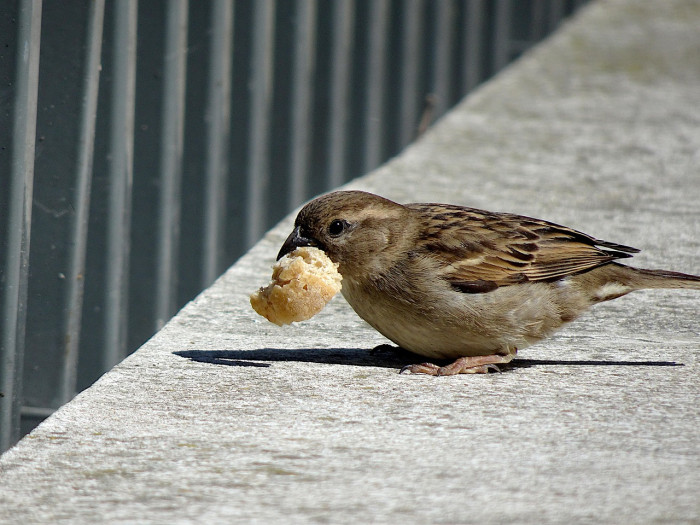
And just when you think the “no teeth” rule is universal, the ancient birds part shows up, with Archaeopteryx, Ichthyornis, and Hesperornis carrying true teeth in their jaws.
Common Questions About Bird Mouths
Can a bird grow teeth through a mutation? Living birds retain parts of the developmental machinery inherited from toothed ancestors, and experiments have produced tooth-like structures in embryos. That does not mean a modern bird can naturally replace its beak with a functional set of teeth.
Why do baby birds have an egg tooth? An egg tooth is a temporary hard projection used to break the shell during hatching. It is located on the beak and is not a true tooth. The structure falls off or is reabsorbed after it has done its job.
She might have seen “teeth,” but the birds were only trying to eat, not start a fight.
Think birds evolved from teeth, not dinosaurs,? Here’s why scientists say they are.
Share this article:





