50 Facts About Birds That Sound Made Up

Some birds don’t sweat, they pant. Some don’t have bladders, they just get rid of waste in a way that looks like a science fair project. And some, somehow, still manage to be gorgeous, poisonous, or tiny enough to make you question what “small” even means.
It starts with the body stuff, the droppings that split into white urates and darker digestive bits, the males who mostly skip the whole penis situation, and the way cloacas get pressed together like nature’s weirdest handshake. Then it gets even stranger: eggs can be laid in 20 to 60 minutes, cuckoos can do it in seconds, and a Laysan albatross tagged in 1956 is still out there raising chicks in her seventies.
By the time you reach the bee hummingbird and its bill-long-than-its-body flex, you realize the “facts” part is the easy story.
Fun Facts About Birds and Their Bodies
- Birds do not sweat. They release heat through their respiratory system, which is why an overheated bird may pant or rapidly flutter the floor of its mouth.
- Most birds skip the bladder. Carrying a tank of liquid would add weight, so nitrogen waste leaves the body as concentrated uric acid instead.
- The white part of bird droppings is urine waste. It is made mainly of urates, while the darker portion contains material from the digestive tract.
- About 97 percent of male bird species lack a penis. In most species, sperm is transferred when the male and female briefly press their cloacas together.
- Bird reproduction can be remarkably quick. Many birds take 20 to 60 minutes to lay an egg, while brood parasites such as cuckoos may finish in seconds. The full process is covered in how birds mate.
- Some birds really do mate for life. Long-term pair bonds occur in species including albatrosses, black vultures, mute swans, and some puffins, although the details vary by species.
- Flamingos are pink because of food. Carotenoid pigments from algae and crustaceans color their feathers and can also tint their skin, tissues, blood, and egg yolks.
- A few birds are poisonous. The hooded pitohui and blue-capped ifrita carry toxins in their skin and feathers, something local communities knew long before scientists documented it.
- Some birds appear able to count their eggs. Many sense a complete clutch through contact with a brood patch, but experiments suggest that certain species also use sight.
- The oldest known wild bird is still raising chicks. Wisdom, a Laysan albatross first banded in 1956, has survived into her seventies.
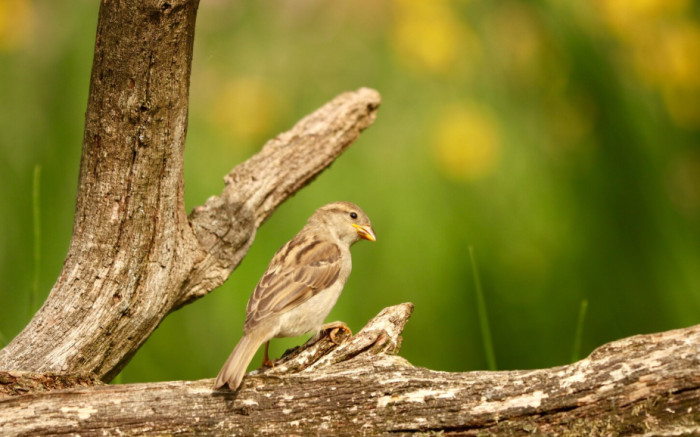
That’s when the “no sweat” detail turns into a whole heat-management plot, with panting and floor-fluttering showing up like emergency behavior in bird form.
Interesting Facts About Bird Size and Anatomy
- The bee hummingbird is the smallest bird on Earth. Males measure roughly 5.5 centimeters long. Other tiny hummingbirds can look large beside it.
- One hummingbird has a bill longer than its body. The sword-billed hummingbird uses its extreme bill to reach flowers that shorter-billed competitors cannot access.
- A toco toucan’s bill covers a huge share of its body. Relative to its size, the bill accounts for as much as one-third of the bird’s surface area.
- Ostriches have the largest eyes of any land animal. Each eye is around the size of a billiard ball and is larger than the bird’s brain.
- Kiwis have nostrils near the tip of their bill. Their heavy, marrow-filled bones and loose, hair-like feathers are also unusual among birds.
- Owls cannot roll their eyes. Their eyes are tube-shaped and fixed in place, so they turn their heads to shift their field of view.
- Owls often swallow prey whole. Bones, fur, and feathers are compacted inside the digestive system and later coughed up as pellets.
- Woodpeckers handle repeated impacts through several adaptations. Their beak, skull, muscles, and posture work together during high-speed hammering.
- Penguin colors work as underwater camouflage. A dark back blends with deep water from above, while a pale belly is harder to see against the bright surface from below.
- Young hoatzins have claws on their wings. The chicks use them to climb branches and pull themselves from the water. The claws disappear as they grow.
Bird Facts About Behavior and Intelligence
- Crow “funerals” are danger investigations. Crows gather around a dead bird, call loudly, and study the area, apparently learning what threat may have caused the death.
- More than 200 bird species have been seen using ants on their feathers. This behavior, called anting, may help with parasites or irritated skin. Pupperish has a closer look at why birds use ants.
- Some ducks sleep with one eye open. Mallards at the edge of a resting group can keep one brain hemisphere alert. More examples appear in how birds sleep.
- Budgies can catch a yawn. Researchers have documented contagious yawning in budgerigars, making them the first non-mammal reported with the behavior.
- Ravens can imitate human speech and mechanical sounds. Captive birds have copied voices, engines, and other noises with unnerving accuracy.
- African grey parrots can learn hundreds of words. Studied birds have also linked words with colors, shapes, quantities, and requests.
- Parrots do not own the talking-bird category. Starlings, mynahs, lyrebirds, Australian magpies, bowerbirds, corvids, and even a captive musk duck have copied human sounds.
- Jacanas look as though they walk on water. Their extremely long toes spread their weight across lily pads and other floating plants. A neat visual trick, backed by physics.
- Shrikes store prey on spikes. These predatory songbirds impale insects, small mammals, and other birds on thorns or barbed wire, earning the name “butcher birds.”
- Acorn woodpeckers build enormous food stores. A single “granary tree” may contain tens of thousands of individually drilled holes, each holding an acorn.
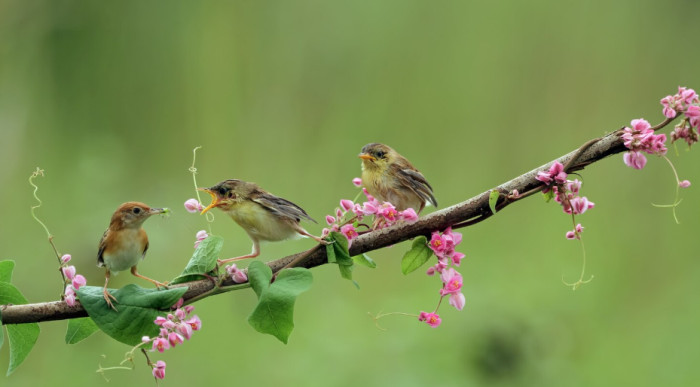
Next, the nitrogen waste story drags you straight into the droppings mystery, where the white part is basically the urates doing their exit.
Birds aside, Socotra’s rare creatures are a reminder of how isolation can create entirely new species, like the island’s endemic animals.
Then the timeline goes off the rails, because male birds transfer sperm via cloaca contact and some birds can go from nothing to an egg in seconds.
Amazing Facts About Bird Flight and Migration
- Hummingbirds can fly backward. Their shoulder joints and wing strokes also let them hover, rise vertically, and make tight midair turns.
- Some birds sleep while flying. They use brief rest periods and can keep one side of the brain alert when conditions demand it.
- The common poorwill is the only bird known to truly hibernate. During prolonged torpor, its metabolism, oxygen use, and body temperature fall sharply.
- Arctic terns make one of the longest migrations on the planet. A tracked bird covered close to 97,000 kilometers in a single round trip.
- Bar-tailed godwits reshape their bodies for migration. They add fat and temporarily shrink parts of organs less useful during a nonstop flight.
- Blackpoll warblers cross open ocean for days. Their nonstop migration is one of the most demanding journeys made by a small songbird.
- Emperor penguins dive hundreds of meters. They conserve oxygen by changing heart activity and controlling where oxygen-rich blood flows during a dive.
- Starling flocks do not follow one leader. Each bird tracks a small set of neighbors, allowing thousands of individuals to turn almost as one.
- The kori bustard is among the heaviest birds capable of flight. Large males may approach 19 kilograms and usually take off only when necessary.
- Wings do not guarantee air travel. Penguins use theirs as underwater flippers, while ostriches use wings for balance and steering. Many more examples appear among flightless birds.
Strange Bird Facts About Food, Nests, and Survival
- Flamingos feed with their heads upside down. Their specialized bills filter small organisms from water while the upper part of the bill sits below the lower part.
- Edible-nest swiftlets build with saliva. Their hardened nests are harvested for bird’s nest soup and can command very high prices.
- Bassian thrushes may use gas to expose worms. By directing puffs into leaf litter, they can disturb hiding prey and make movement easier to detect.
- Bohemian waxwings can become intoxicated. Fermented berries sometimes leave the birds unable to fly or walk normally.
- Pigeons carried vital messages long before radio. They delivered military information, race results, and other news, including during both world wars.
- Australia sent soldiers against emus in 1932. The campaign failed to reduce the birds as planned, producing the lasting nickname “the Emu War.”
- A bald eagle pair built a nest weighing more than two tons. The Florida structure measured about 2.9 meters across and 6 meters deep.
- Cassowaries can seriously injure people. Their long inner toe claw and powerful kick have caused documented human deaths, though attacks remain rare.
- The great auk could swim but not fly. Hunting pushed the species to extinction in the 19th century, a story preserved in the record of the last great auks.
- Bird evolution is still producing surprises. Fossils, genetics, and field observations continue to reveal unexpected branches in the avian family tree, including a parrot species rediscovered after a century.
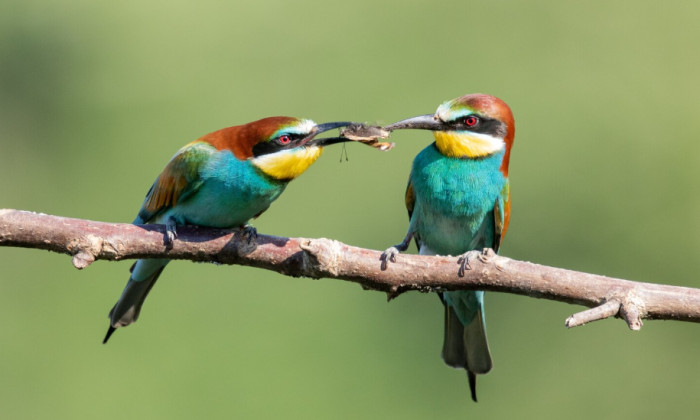
Finally, it all clicks with the long-billed sword-billed hummingbird and the bee hummingbird’s tiny size, making the whole “how birds survive” angle feel personal.
What Are Birds Known For?
Flight gets most of the attention. Birds are also known for long migrations, complex communication, parental care, tool use, and rapid adaptation.
Even familiar species can be odd. Pigeons navigate, crows learn socially, and a roadrunner, the fastest running bird that can also fly, uses its tail for balance and steering.
That is the real pattern behind these bird facts: the closer the look, the less ordinary the animal becomes.
Nobody will look at a bird’s droppings, mating speed, or weirdly perfect bill length the same way again.
Want another body-survival fact? See how butterflies taste with their feet.
Share this article: