
Why Do Birds Migrate? Food, Seasons, and Survival

A blackpoll warbler doesn’t just “go south” when the calendar flips, it makes a high-stakes decision based on timing, food, and survival math that changes every year. One day it’s packing on fat reserves, the next it’s launching off the northeastern coast, aiming for South America with nothing but nonstop muscle and a sky full of risk.
And that’s where the whole thing gets complicated. Birds are juggling seasonal insect booms at high latitudes, harsher winters with steadier food but tougher competition, and brutal interruptions like storms, late freezes, and predators. Even within the same species, some birds stay put in one region and migrate in another, because local conditions rewrite the rules.
So the real question is not “why migrate,” it’s how they pull off the timing, the route, and the escape plan before the best food window shuts.
Food Is the Main Driver
Breeding regions at high latitudes can produce huge seasonal bursts of insects, plants, and daylight. Birds arrive to exploit that abundance, raise young quickly, and leave when the supply contracts.
Wintering regions offer more stable food but may have stronger competition and more predators. Migration lets birds use the best parts of two places rather than endure the worst part of either.
A blackpoll warbler migration illustrates the payoff and the risk. The tiny bird builds fat reserves, departs the northeastern coast, and can fly nonstop over the Atlantic toward South America.
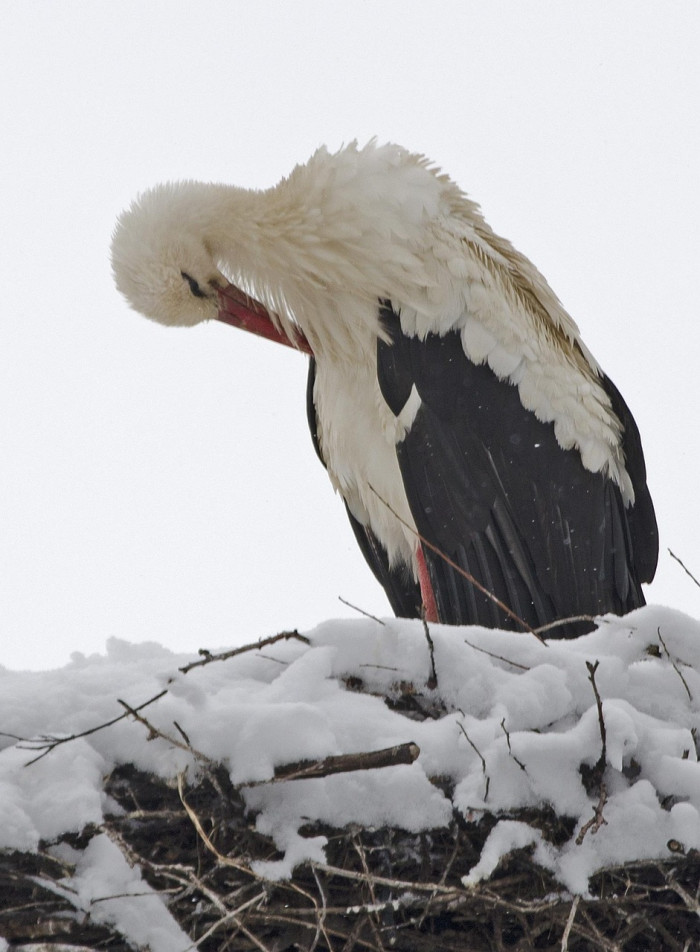
That’s the part most people miss when they picture migration as one simple flight, because the blackpoll warbler’s nonstop Atlantic gamble starts with fat reserves and a shrinking deadline.
Why Migrate North to Breed?
Long summer days provide more feeding time. Insect numbers can explode, and seasonal habitats offer nest sites with fewer permanent competitors. Those conditions allow some migrants to raise large broods.
The north is not automatically safer. Storms, late freezes, predators, and short breeding windows create pressure. Birds time arrival to match food peaks, and climate change can shift those peaks faster than inherited schedules adjust.
No free season.
A familiar European robin may be resident in one part of its range and migratory in another. The same species can use different strategies depending on latitude and local conditions.
How Birds Know When to Leave
Day length is a dependable seasonal cue. Changes in light influence hormones, appetite, fat storage, restlessness, and reproductive condition. Temperature, storms, food, social signals, and local experience refine the timing.
Migratory restlessness in captive birds can appear even when they have never completed the route. They become active at the season and in the direction expected for migration, evidence that inherited programs contribute.
Experience still matters. Older birds often improve route choice, stopover use, and timing. Young geese and cranes may learn from adults, while many songbirds travel independently on their first migration.
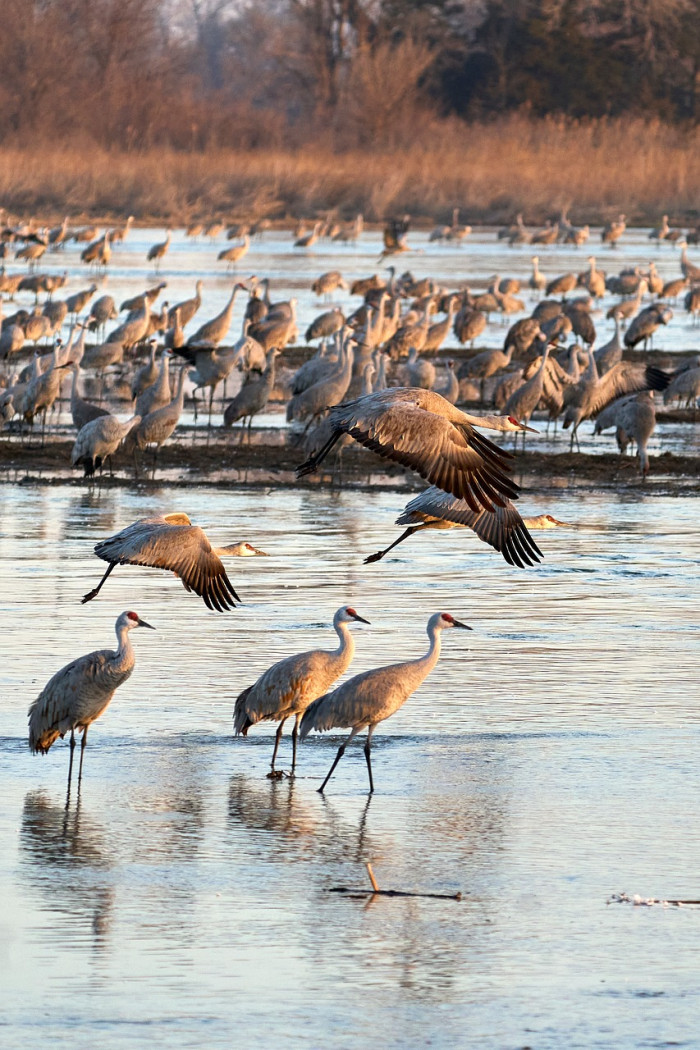
Meanwhile, breeding farther north can mean longer summer days and exploding insect numbers, but it also means storms and late freezes that can wreck a brooding schedule.
How Birds Find Their Way
Birds combine several navigation systems: the sun, stars, Earth’s magnetic field, polarized light, odors, landmarks, wind, and memory. The mix differs by species, age, weather, and location. The role of atmospheric odor is covered in can birds smell, one part of a wider navigation toolkit.
A built-in compass provides direction. A map sense provides position. Following “southwest” is useful, but knowing when to turn or stop requires additional information.
Clouds can hide stars and the sun. Magnetic cues remain available, while coastlines, rivers, mountain chains, and familiar stopovers help experienced birds. A purple finch moving irregularly in response to food may use a less fixed route than a long-distance ocean crosser.
Migration is a survival strategy, and lifespan matters too, like finches that live only a few years versus parrots and seabirds that can last decades.
Do All Birds Migrate?
No. Residents remain in roughly the same region all year. Partial migrants include populations where some individuals leave and others stay. Irruptive migrants move unpredictably when food fails or becomes abundant elsewhere.
Altitudinal migrants travel up and down mountains rather than between continents. Nomadic birds track rain, flowering, seed crops, or temporary wetlands without a fixed annual path.
The categories can change. Young birds may migrate farther than adults, females farther than males, or northern populations farther than southern ones. One species name can hide several strategies.
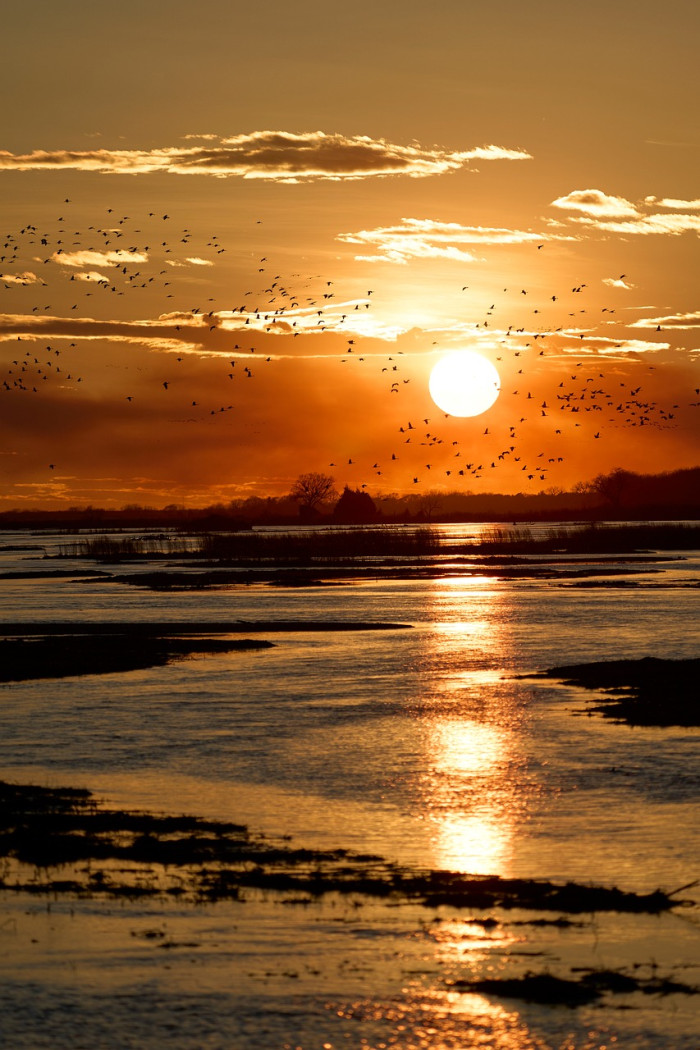
Then there’s the timing cue problem, day length nudges hormones and appetite, but temperature and food shifts can outrun whatever “schedule” a bird was born with.
How Far Can Birds Migrate?
Arctic terns travel between high northern and southern latitudes, creating one of the longest annual migrations. Bar-tailed godwits perform extraordinary nonstop flights across the Pacific. Albatrosses range vast distances over ocean winds.
Distance is only one measure of difficulty. A short crossing over desert, a high mountain pass, or a stormy sea can be more dangerous than a longer route with rich stopovers. Every route remains constrained by the aerodynamics and energy costs behind how birds fly.
A stork carrying an old spear wound through its neck helped nineteenth-century Europeans understand that birds reached Africa rather than hibernating locally. Migration science has advanced, but individual journeys still expose birds to severe hazards.
What Happens at Stopover Sites?
Migrants land to rest, feed, replace water, and rebuild fat. A small patch of coastal woodland or urban green space can become critical because it is the first safe habitat after a long barrier crossing. Safe stopovers also give migrants time to use the resting strategies described in how birds sleep.
Birds may double their body mass before departure, then burn much of it in flight. Digestion organs can shrink during nonstop travel and rebuild during refueling. The body is actively reorganized around the journey.
Stopovers are not optional pauses. Remove enough of them and the route fails, even if breeding and wintering habitats remain intact.
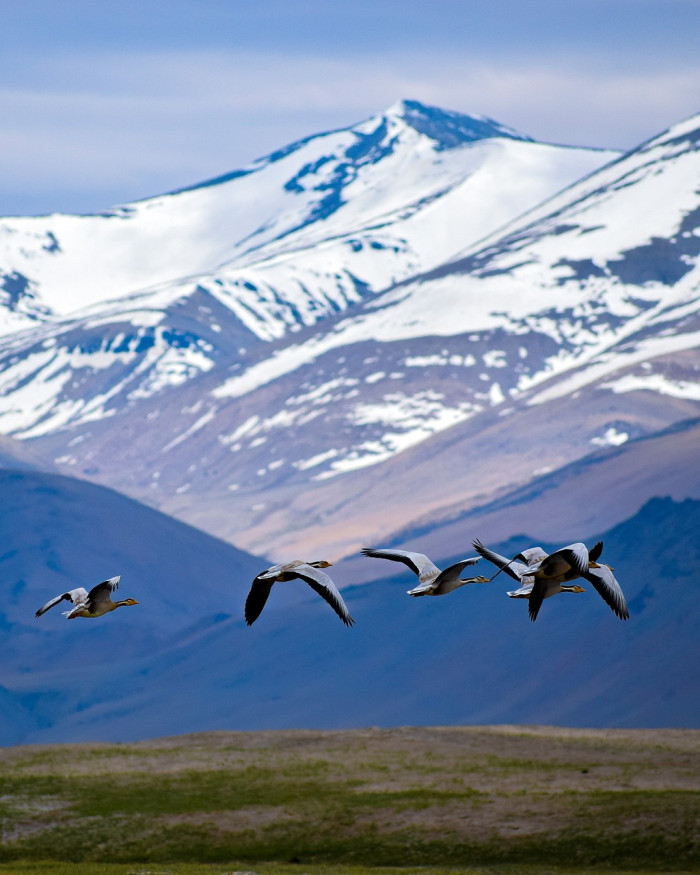
And once the bird is actually in motion, experience matters too, older geese and cranes learn stopover use and timing, while many songbirds have to figure it out on their first big trip.
What Threatens Migrating Birds?
Window collisions, light pollution, habitat loss, storms, drought, hunting, power lines, wind facilities in poorly chosen locations, and domestic cats all add mortality. Climate change alters winds, coastlines, flowering times, insect emergence, and water availability.
Bright lights can draw nocturnal migrants into cities, where they circle, collide, or exhaust themselves. Turning off unnecessary lights during peak migration can reduce risk.
Protecting a route therefore means more than saving two endpoints. It requires a chain of workable habitats and safer passage between them. Even a delicate rose robin depends on conditions spread across a much larger map than its breeding territory.
The bird doesn’t just chase warmer places, it chases the exact moment food beats danger.
Ever wonder where birds go to sleep, even in flight, to stay safe? Check out how birds sleep on branches, cliffs, nests, and in the air.
Share this article:





