Online Users Criticize Choosing Beggar Who Wants House/Pet Sitter For Free

Some people don’t recognize a favor, and one Reddit post turned that into a full-on house and pet-sitting saga.
A user shared an ad that basically asked someone to be an unpaid dogsitter, with “requirements” included, for a situation involving a sick dog and a puppy. The owners even claimed the dog “wrote” the ad, which is already wild, but the real problem was the pay: they wanted free labor.
To make it worse, commenters also picked apart the rules about what could be cooked, and the whole thing spiraled into classic “choosing beggars” chaos.
"Dogsitter required - Unpaid of course - Some requirements within. (Also the dog wrote the 'ad')"

Redditors are finding the demands ridiculous.
It's given that the pet sitter will face some challenges with the sick dog and the puppy, yet the owners have no intention of paying them.
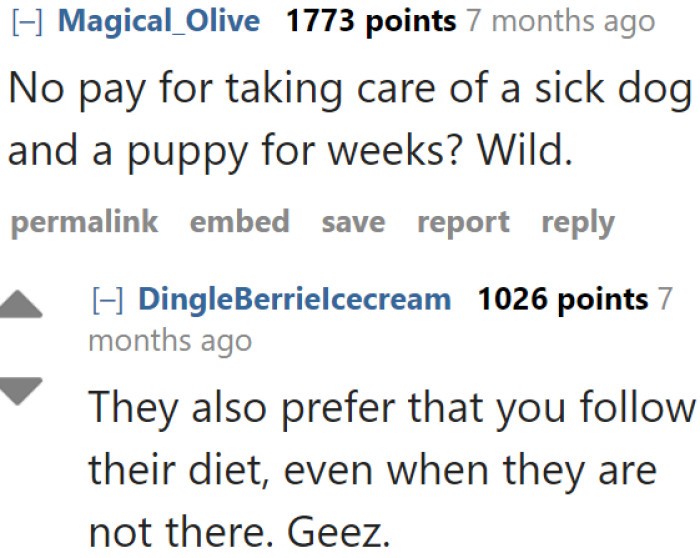
To some users, preventing non-vegans from cooking meat seemed too much.
But one of the Redditors explains that the lingering smell of meat might bother the pet owners.
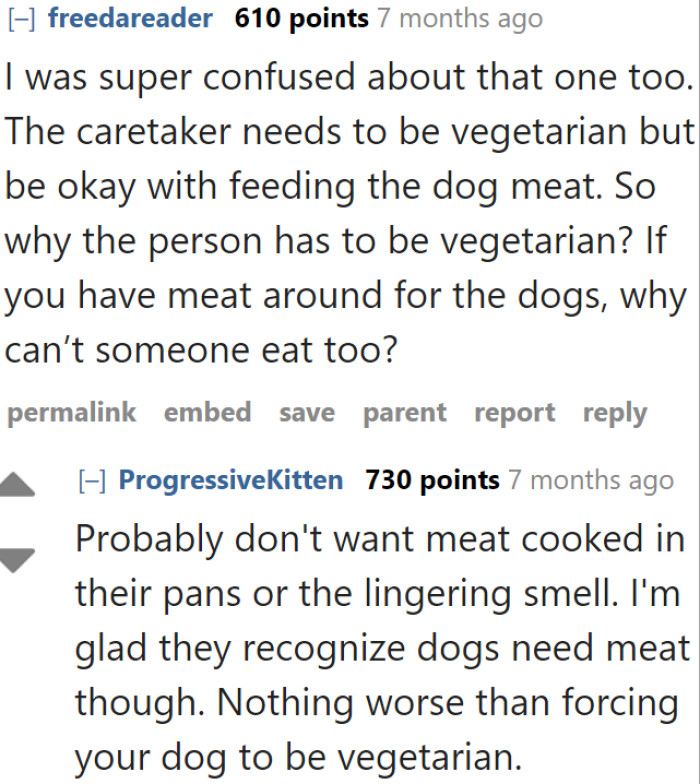
The sick dog and the puppy were supposed to be the hard part, but the unpaid part is what made everyone’s eyes roll.
The recent incident involving a user seeking a free pet sitter highlights a troubling trend often referred to as 'choosing beggars.' In an era marked by financial strain, such requests are not only unrealistic but also reflect a significant sense of entitlement. It is crucial to consider that these behaviors may be rooted in deeper psychological issues, including an inflated sense of worth or a lack of self-esteem. This creates a distorted perception of what one is entitled to from others. As society grapples with these dynamics, it becomes essential to recognize and address the implications of such attitudes on community relationships and mutual support systems.
The phenomenon of 'choosing beggars' often reveals deeper psychological issues related to entitlement and unrealistic expectations. Such behaviors are frequently linked to generational differences in upbringing, where many individuals feel entitled to receive without reciprocating. This sense of entitlement can stem from being raised in environments that emphasize instant gratification rather than the value of hard work and mutual support.
These behaviors often manifest in social situations where individuals demand more than what is reasonable, leading to frustration and resentment among their peers. Understanding these underlying motivations can help in addressing the issue constructively.
How a vegan person manages to have a carnivorous pet

People don't see where it says that the dog owner isn't paying for the pet sitter.
The OP confirms that it is indeed an unpaid pet-sitting job.

As soon as others realize the ad is written from a dog's perspective, their immediate response is typically 'no.'

When the owners demanded pet sitting for free and still listed “requirements,” Redditors treated it like a prank that refused to be funny.
Studies in behavioral psychology show that individuals often engage in bargaining or haggling behaviors as a means of asserting control in situations where they feel powerless.
This can be particularly evident in requests for services or favors, where the act of negotiating can serve as a psychological coping mechanism.
Recognizing this pattern helps to frame the behavior not simply as laziness but as a complex interplay of emotional needs and social expectations.
It’s giving the same energy as the woman who charged to walk other people’s dogs, then demanded her dog walked for free.
Social psychologists have noted that choosing beggar behavior can also be linked to a lack of empathy or awareness of others’ perspectives. Research suggests that individuals who struggle with empathy may not recognize the social and emotional costs of their demands on others. A study published in the Journal of Social Psychology found that enhancing empathy through specific training can lead to more prosocial behaviors and reduced entitlement.
Encouraging empathy can foster healthier interpersonal dynamics and reduce the prevalence of choosing beggar behavior.
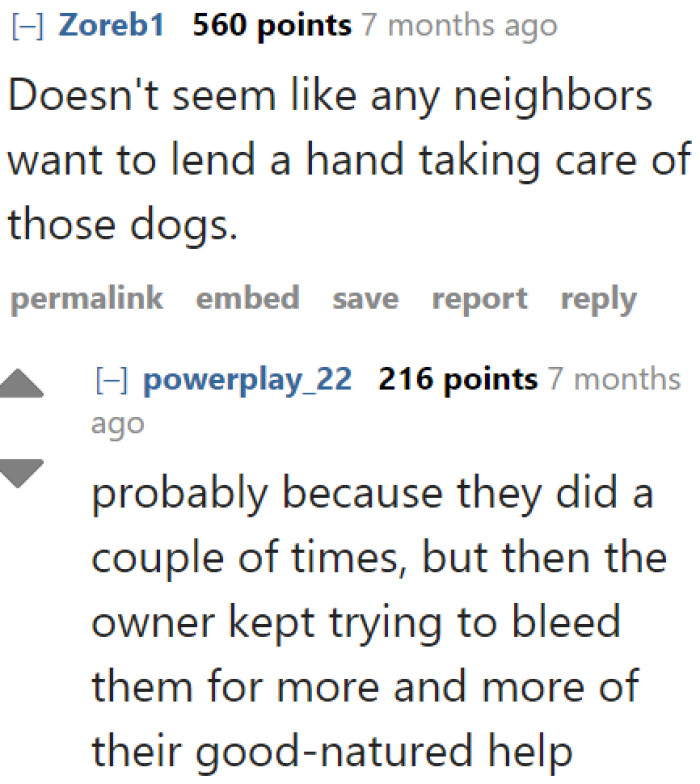
Why are there no neighbors willing to watch over the dogs?
A Redditor thinks these dog owners probably took advantage of the neighbors' kindness.
Is the job really unpaid? More people are wondering.
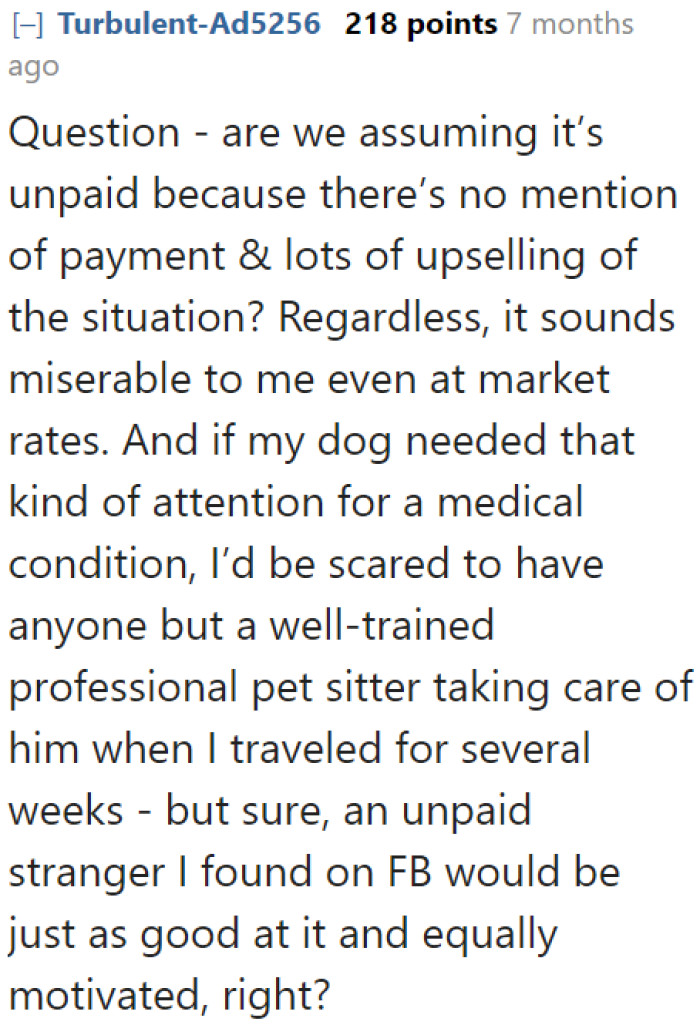
Another Redditor confirms that it is indeed unpaid because it was posted on a good karma group.
But even if it's a good karma group, what this dog owner is asking is just too much. They're asking for hours of work, yet they have no intention to pay.
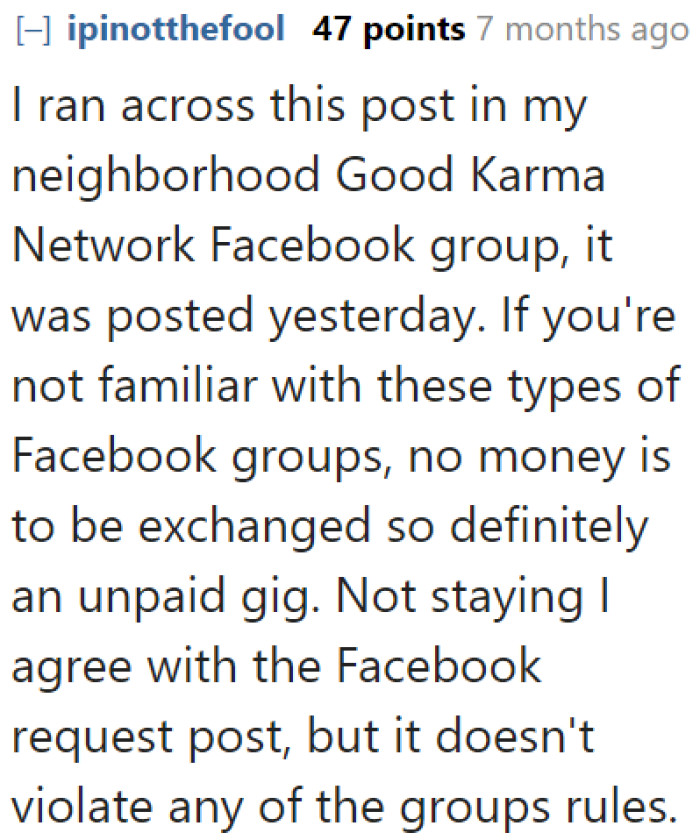
The debate got even messier when people argued about the no-meat rule and whether the smell could “bother the pet owners.”
Exploring the Impact of Social Media on Expectations
The rise of social media has shifted societal expectations around generosity and support, often leading to unrealistic demands from others.
Platforms like Reddit create an environment where individuals feel empowered to voice their desires and expectations, regardless of how reasonable they are.
This trend can lead to a culture of entitlement, where individuals expect to receive services without compensating for them, potentially damaging interpersonal relationships.
To effectively navigate situations with choosing beggars, it's essential to communicate boundaries clearly and assertively.
Doggie Howser
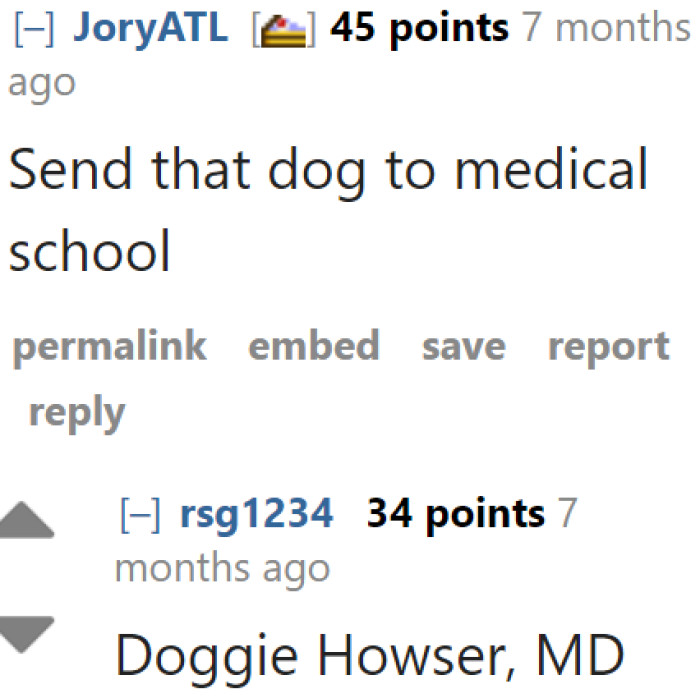
Then OP confirmed the owners truly weren’t paying, and the comments shifted from “that’s unreasonable” to “that’s entitlement.”
It's pretty crazy that people still think they can ask for pet sitting without paying or giving something in return. Moreover, the task the dog owner has posted isn't just a straightforward pet-sitting job.
It involves taking care of two dogs, one with a health problem and the other a puppy. The pet sitter isn't even allowed to cook meat since the owners are vegans.
Moreover, addressing the underlying issues of entitlement and choosing beggar behavior often requires a shift in perspective. Encouraging individuals to engage in gratitude practices can significantly improve their outlook.
Implementing gratitude exercises, such as writing thank-you notes or keeping a gratitude journal, can help cultivate a sense of appreciation for what one has, rather than focusing on what others should provide.
The situation surrounding the choosing beggar seeking a free house and pet sitter highlights a troubling sense of entitlement that many online users find difficult to understand. In an era where financial constraints are a common concern, asking for free services without any form of compensation appears not only unreasonable but also disconnected from the realities faced by others. Instead of expecting friends or acquaintances to shoulder the burden of such costs, it would be more productive to cultivate a sense of gratitude and mutual respect. By acknowledging the value of others' time and resources, individuals can foster healthier relationships built on appreciation rather than demands, ultimately leading to more positive interactions in their communities.
To counteract these behaviors, experts advocate for developing clearer boundaries in personal and professional interactions.
The phenomenon of 'choosing beggar' behavior highlights the intricate dynamics at play in social interactions, especially in times of economic strain. This case illustrates the perception of entitlement that arises when individuals expect services, such as pet sitting, without compensation. In an era where financial challenges are prevalent, it is crucial for pet owners to recognize their responsibilities and seek alternative support from friends or family instead of relying on the kindness of strangers.
Nobody wants to babysit a sick dog and a puppy for free.
Wait until you see how she demanded vet references while asking for a free foster for four dogs.
Share this article: