Choosing Beggar With Four Dogs Looking For Free Pet Sitter Because Of Financial Constraints, Lists Down Unreasonable Demands To Prospective Foster

Some people don’t recognize a favor when it’s offered, and this Reddit post is proof. OP jumped into r/ChoosingBeggars after a dog owner tried to recruit a foster pet sitter for free, even though she had four dogs in the mix.
Here’s where it gets messy: the owner laid out a full list of demands for the prospective foster, basically expecting premium service without paying a dime. OP, understandably, was facepalming, because the request didn’t match reality. Caring for multiple dogs is already a huge commitment, and the entitlement in the message made it worse.
By the time you read the demands, you’ll see why OP couldn’t just scroll past it.
The original poster (OP) decided to share a dog's owner's unreasonable demands on r/ChoosingBeggars.
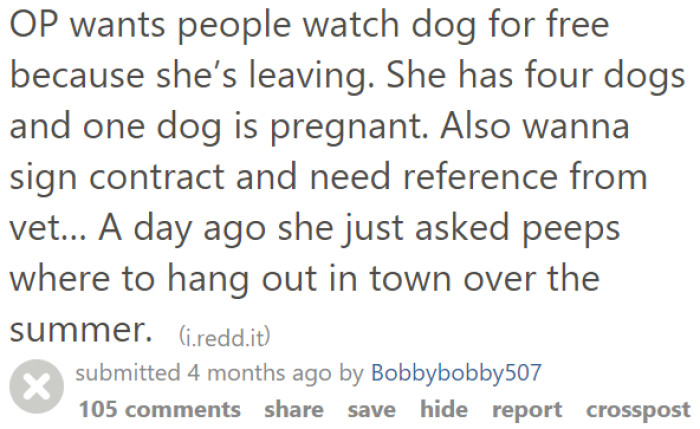
Here's the social media post by the pet owner.
She wants the foster to do it for free. And just look at that list of demands!

The OP provides additional context, and it's clear she's facepalming in response to the actions of the choosing beggar.

OP didn’t just share a rant, she posted the owner’s message with the exact “free foster” pitch and the unreasonable requirements for four dogs.
The situation surrounding the individual seeking a free pet sitter with four dogs illustrates a troubling dynamic often seen in those under financial strain. The unreasonable demands outlined in their request may signal a deeper emotional struggle. When faced with overwhelming responsibilities, such as caring for multiple pets, some people might inadvertently project their anxieties onto others, leading them to expect excessive support without any obligation to reciprocate.
This behavior can be traced back to feelings of powerlessness, where the individual, in a misguided effort to regain control, develops a sense of entitlement. It raises questions about the balance between seeking help and recognizing the responsibilities that come with pet ownership, especially when it involves multiple animals. This scenario serves as a reminder that financial woes can create complex emotional responses that influence our interactions with others.
The situation described in the article highlights a troubling intersection of entitlement and unrealistic expectations. The individual seeking a pet sitter for four dogs, despite their financial constraints, demands an extensive list of requirements that seem to overlook the practical realities of pet care. This reflects a mindset where personal needs are prioritized without consideration for the potential caregiver's circumstances.
The unreasonable demands presented to prospective sitters suggest a disconnection from the responsibilities that come with owning multiple pets. This behavior indicates a lack of empathy, as it fails to acknowledge the significant time, effort, and resources required to care for four dogs effectively. Such entitlement not only complicates the search for help but also raises questions about the individual's understanding of mutual respect and the boundaries necessary in caregiving relationships.
Imagine all the stress that these dogs have to go through. They'll have to handle being in different living situations.
It's better for this choosing beggar to surrender the dogs and find each one a forever home. She doesn't deserve these dogs.

The next advisable step for this dog owner would be to consider seeking out no-kill shelters for their pets.
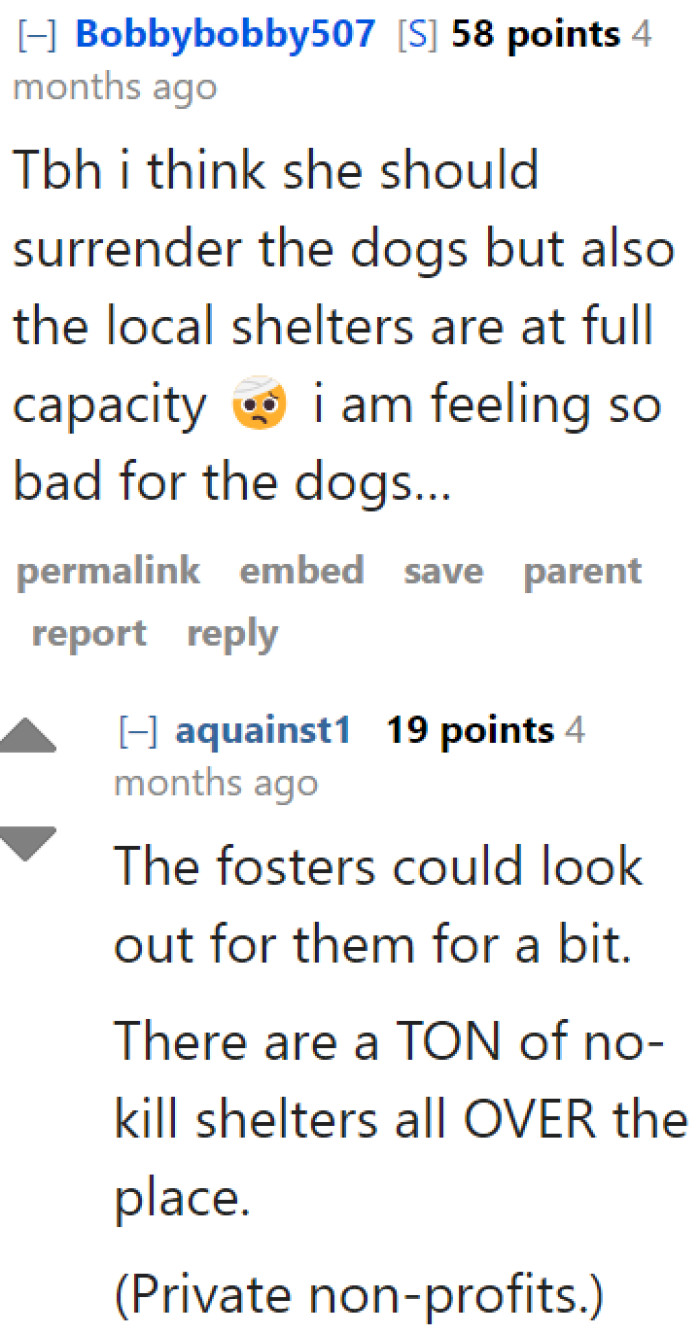
Another choosing beggar
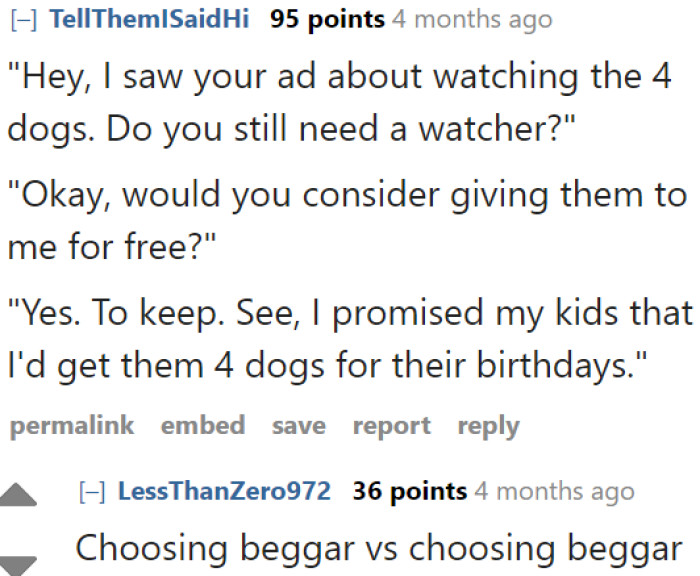
The complication hit fast, because the owner’s list treated a stranger’s time and resources like they were already promised.
Social psychologists have long studied the phenomenon of 'choosing beggars,' where individuals make unreasonable demands while lacking the means to meet them. Research indicates that this behavior can be linked to feelings of inadequacy, where the individual compensates by exerting power in the only way they feel they can – through demands.
This pattern can serve as a coping mechanism, but it ultimately alienates potential helpers, creating a cycle of isolation and resentment.
It also echoes the Redditor who initially dogsat for free, then asked for money.
Understanding the role of financial stress in this scenario is crucial. Financial strain can significantly affect a person's mental well-being, leading to increased anxiety and a distorted perception of reality. Research shows that individuals under financial pressure are more likely to engage in irrational behaviors as a coping mechanism, often projecting their desperation onto others.
Furthermore, a study from the Journal of Economic Psychology highlights that financial stress can reduce cognitive function, making it challenging for individuals to think logically about their demands. This could explain the unreasonable expectations placed on the prospective pet sitter.
The dog owner shouldn't have brought home four pets.
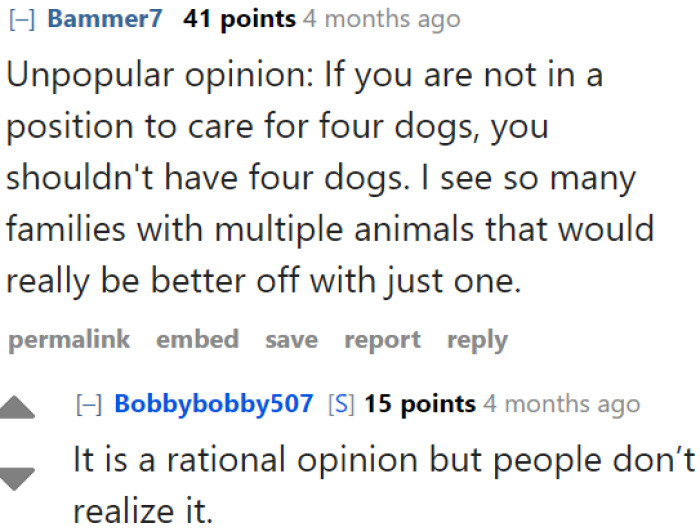
A Redditor believes that if the foster gets the dogs, they shouldn't return them to the owner anymore.
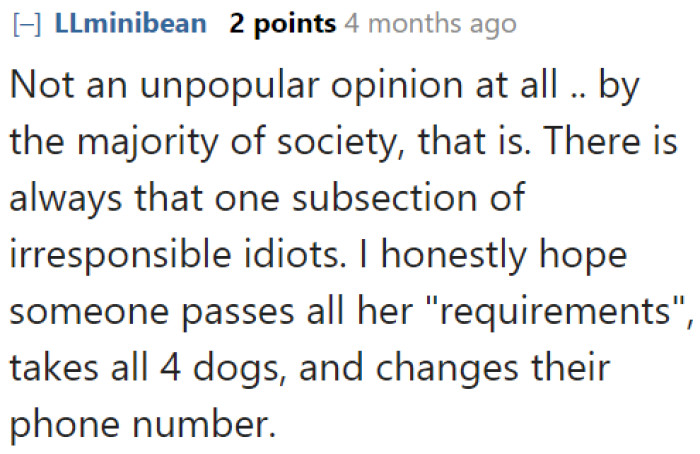
Is this owner definitely expecting the foster to shoulder all the costs, including vet care?

OP’s facepalm makes sense when you realize the owner wanted the foster to take on a lot, while the only thing she offered was “free.”
The situation presented in the article highlights a crucial aspect of community dynamics: the balance between need and reciprocity. When an individual, in this case a pet owner seeking a free pet sitter for four dogs, sets forth unreasonable demands, it risks alienating potential helpers. Community ties thrive on mutual understanding and respect, yet entitlement can create friction. The pet owner's insistence on specific requirements for the prospective foster not only disregards the time and effort involved in caring for multiple dogs but also undermines the spirit of generosity that typically binds community members together. This approach can foster resentment rather than support, leading to a breakdown in relationships that could otherwise flourish through empathy and shared responsibility.
Healthy Boundaries and Assertiveness
Setting healthy boundaries is essential in helping individuals manage entitlement and unrealistic demands.
The dog owner even wants to waste a vet's time. Yikes!
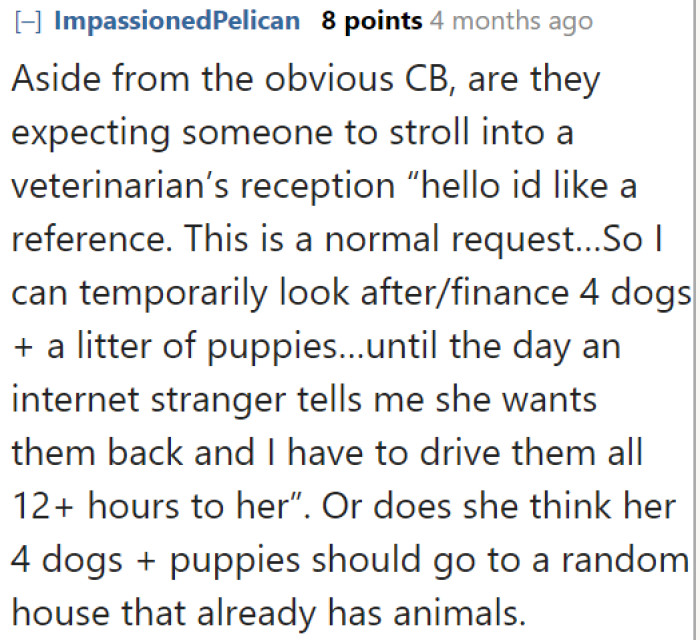
Once the four-dog situation and the demand list are side by side, the whole thing reads like entitlement dressed up as “financial constraints.”
The OP's mistake was getting four dogs, and now she's looking for a foster to take them all in. But with her list of demands, the community ended up labeling her as a choosing beggar.
Now, her dogs have to deal with changing environments because she doesn't have the means to take them all with her and settle into the new place. Others believe she should just give up the dogs since she can't take care of them all properly.
In this scenario, the lack of empathy from the individual seeking a free pet sitter for four dogs is striking. The demands outlined in the request not only reflect a disregard for the time and effort required to care for multiple pets but also an insensitivity to the financial realities that many potential sitters face. Asking others to take on such a significant responsibility, especially under the guise of financial constraints, raises questions about the balance of expectations in relationships. The situation underscores the need for a more compassionate approach, where individuals recognize the weight of their requests on others. By understanding the emotional and logistical burdens of pet care, we can build a community that values mutual support rather than one-sided demands.
This situation highlights the intersection of entitlement and financial hardship as it plays out in the pet ownership landscape. The individual seeking a free pet sitter for four dogs, while listing unreasonable demands, exemplifies how financial constraints can warp one's expectations and interactions. It serves as a reminder that personal challenges often influence behavior, even leading to a sense of entitlement in contexts where responsibilities should be shared. Understanding this dynamic can encourage a more empathetic conversation about the responsibilities associated with pet ownership and the expectations placed on others.
Experts advise practicing assertive communication, where individuals can express their limits respectfully yet firmly.
Understanding the dynamics of pet ownership is crucial in this situation, especially when financial constraints lead to unreasonable demands. The article highlights the complexity of caring for multiple dogs, which not only increases the financial burden but also the emotional and logistical challenges involved. Recognizing the emotional triggers behind the choice to seek a free pet sitter can foster empathy from potential caregivers. This scenario underscores the importance of emotional intelligence in navigating such demanding social interactions, where the balance between responsibility and capability is often skewed.
Nobody wants to be a free pet sitter on a four-dog boss list.
Want more pet-sitting entitlement? See the choosing beggar who banned meat cooking too.
Share this article: