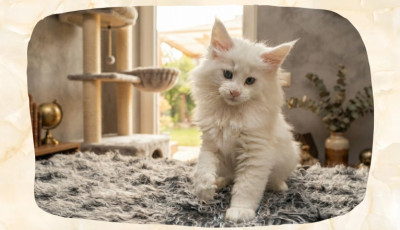
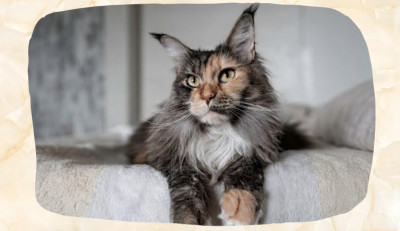
Redditor Refuses To Let Her BF Bring Baby Pigeon To Her Aunt's House Because Her Cat Has A High Prey Drive

Springtime can bring out all kinds of tiny wildlife dramas, and this one started with a baby pigeon and a very firm no. A Redditor said her boyfriend wanted to bring the bird to her aunt's house, but she worried her cat's high prey drive would turn the whole visit into a disaster.
That put her in the middle of a messy choice, protect the bird, protect the cat, or deal with a boyfriend who thought everyone could just hang out and figure it out later. The post quickly turned into a bigger debate about common sense, animal safety, and whether he was really listening at all.
By the time she asked Reddit for a verdict, the situation had already gotten awkward. Here's how it played out.
Here's the original post by Reddit user u/Low-Organization7977:
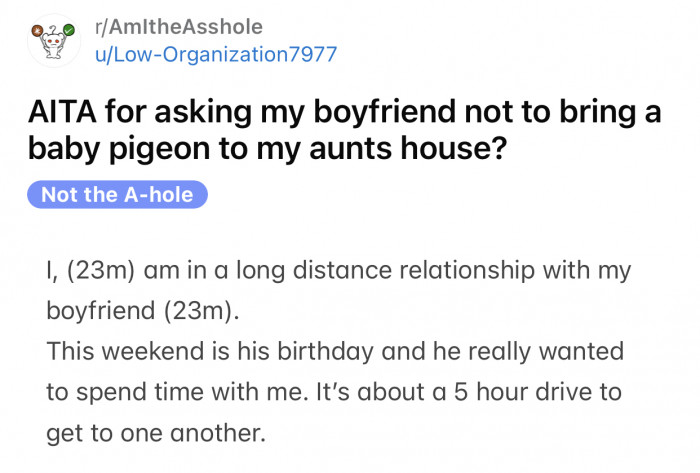
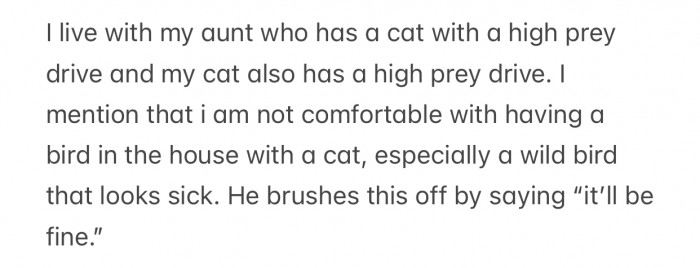
OP's boyfriend wanted to bring the bird along so everyone could just “hang out.”
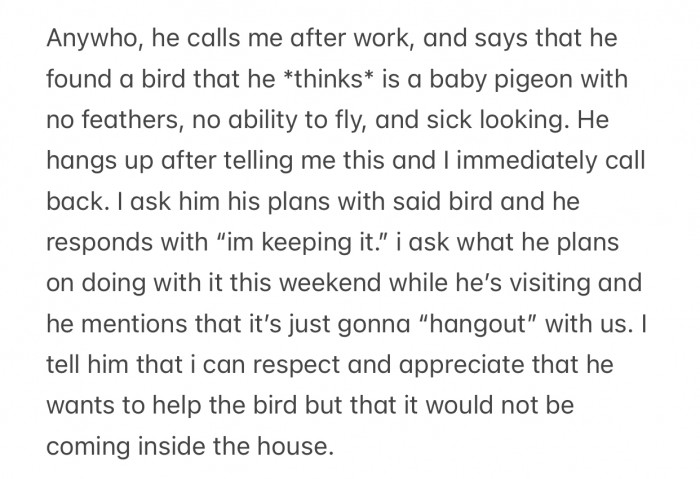
OP worried that her aunt's cat might hurt the bird.
The conflict between the Redditor's concern for her cat's prey drive and her boyfriend's desire to bring a baby pigeon into the home highlights a fundamental aspect of animal behavior. Prey drive, a natural instinct in cats, is influenced by both genetic factors and individual experiences. This instinct can create significant stress for pet owners when introducing new animals into the home. Understanding the underlying psychology of prey drive can help pet owners make informed decisions that enhance the safety and comfort of all animals in the household.
The situation surrounding the Redditor's reluctance to allow her boyfriend to bring a baby pigeon to her aunt's house highlights the complexities of managing household dynamics when pets are involved. Cats, known for their high prey drive, possess an innate instinct to chase smaller creatures, and this behavior is deeply rooted in their evolutionary history. As the article illustrates, it is essential for pet owners to recognize and respect these instincts when introducing new animals into their homes.
In this case, the Redditor's concern for her cat's natural behaviors is not just about a simple preference; it reflects a deeper understanding of how these instincts can impact the safety of both the cat and the baby pigeon. By prioritizing the well-being of her pet, the Redditor emphasizes the importance of informed decision-making in pet ownership, ensuring that all animals in the household can coexist peacefully.
That's where the boyfriend's plan started to fall apart.
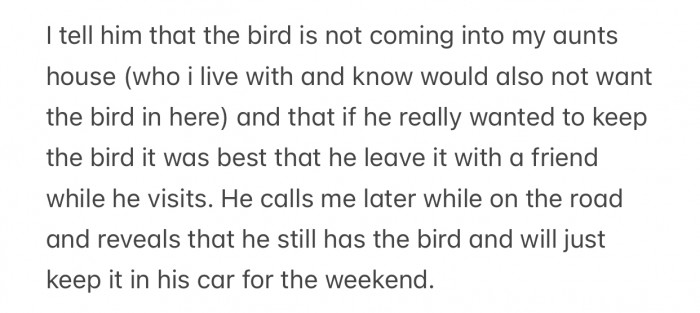
The boyfriend came up with a new plan, but OP didn't approve of it.
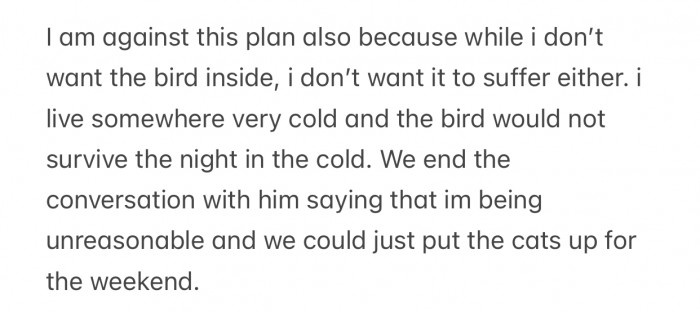
OP feared the bird would suffer in those conditions.
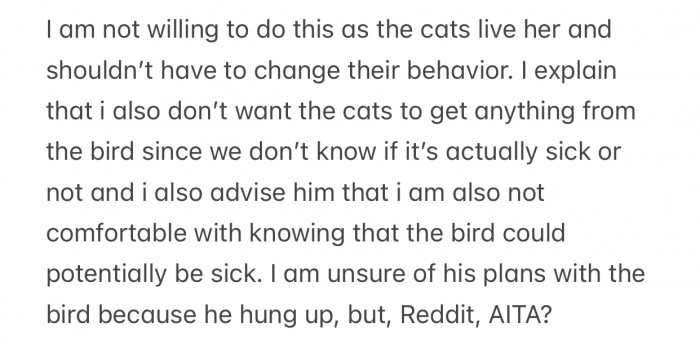
OP felt unsure about how she dealt with the situation, so she decided to consult with the Reddit community.
This scenario also illustrates a common dynamic in relationships where one partner's emotional needs can clash with the other's values or preferences. A clinical psychologist might describe this as a situation of relational negotiation, where both partners need to express their views and reach a compromise.
For the couple in this scenario, establishing open lines of communication about their feelings towards the baby pigeon and the cat's behavior is crucial. They could benefit from using 'I' statements to express their feelings without blaming the other, fostering a more collaborative dialogue.
Research in animal behavior indicates that managing a pet's prey drive is essential for ensuring the safety of both the pet and other animals in the household.
Recognizing and accommodating these instincts can create a safer environment for all pets involved.
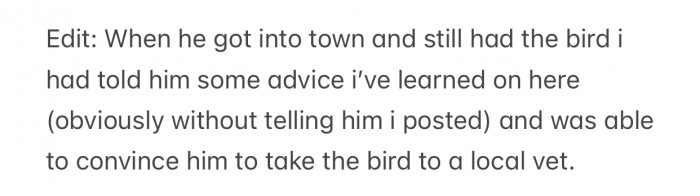
OP eventually modified the post to include an “Edit” with more context about the situation.
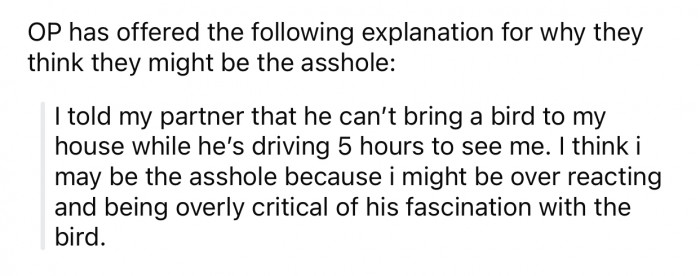
OP thinks she might potentially be the a-hole for the following reason:
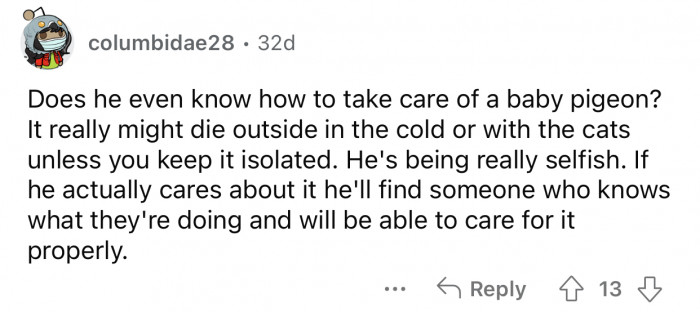
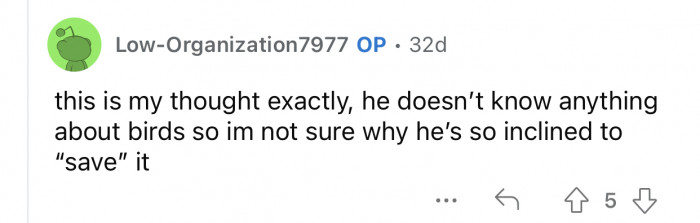
Here's how the Reddit community reacted to u/Low-Organization7977's post:
Considering the cat's high prey drive, it’s essential to provide environmental enrichment that can help redirect this instinctual behavior. Research in animal psychology emphasizes that enrichment can significantly enhance a pet's quality of life, providing both mental stimulation and physical exercise. A study published in Applied Animal Behaviour Science found that cats with access to toys that mimic prey behavior had reduced stress and improved overall well-being.
Pet owners can implement strategies such as interactive play sessions with feather wands or laser pointers to engage their cats in predatory play safely. Moreover, creating vertical spaces and hiding spots in the home can help satisfy their natural instincts while reducing the likelihood of confrontations with smaller animals.
This is similar to the lady who gave her friend an ultimatum after a caring-for-the-pet-bird situation became unbearable.
Creating safe spaces for both the cat and the new pet can prevent conflicts and ensure everyone's safety.
He might end up achieving the exact opposite.
This is not the proper way to deal with the situation.
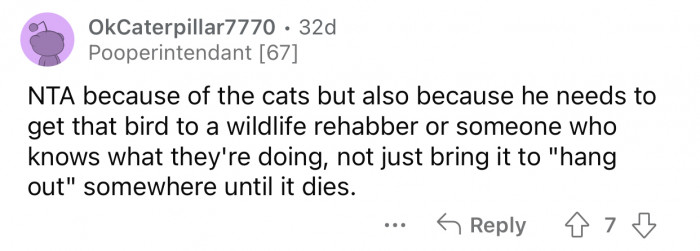
OP's boyfriend does not have sound judgment.
The Redditor's refusal to allow the baby pigeon into her home can also be seen through the lens of attachment theory, which posits that early experiences with caregivers shape our emotional responses and relationships. Individuals who develop secure attachments tend to display greater empathy and a willingness to take risks in relationships. On the other hand, those with anxious or avoidant attachment styles may struggle with compromise.
In this case, the Redditor's attachment style might influence her reaction to the potential introduction of a vulnerable animal. If she has a history of feeling responsible for the well-being of others' animals, this could lead to an instinctual protective response. Understanding her attachment style could provide insight into her decision-making process and enhance her relationship dynamics with her boyfriend.
Furthermore, engaging in training and behavioral modification techniques can be beneficial in managing prey drive.
Utilizing positive reinforcement strategies can help redirect a cat's focus and promote more positive interactions with other animals.
Ultimately, understanding and addressing these instincts with compassion can lead to a more harmonious household.
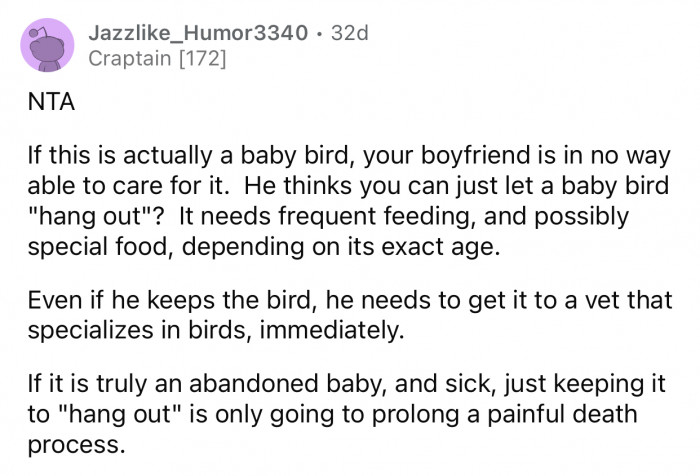
OP's boyfriend needs to take the bird to a vet as soon as possible.
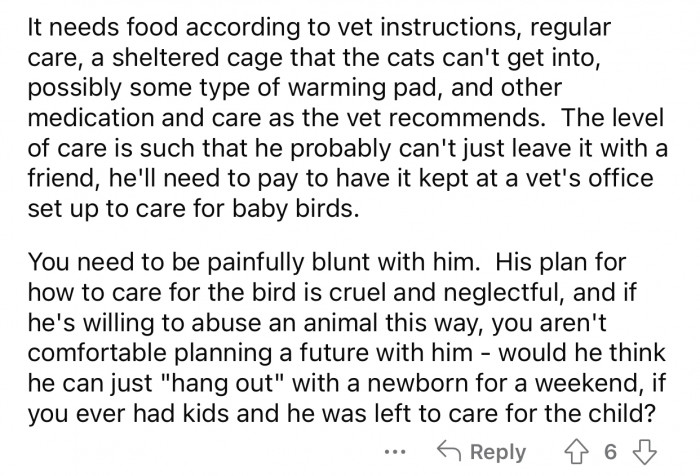
“You need to be painfully blunt with him.”
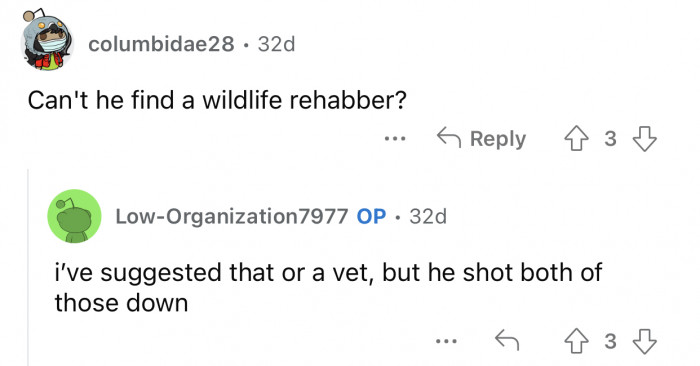
OP's boyfriend refuses all alternative solutions.
The situation brings to light the concept of empathy, particularly how it informs our behaviors toward animals.
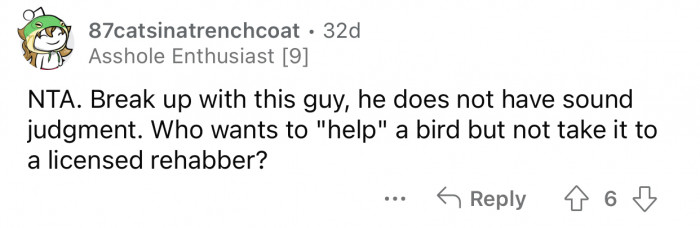
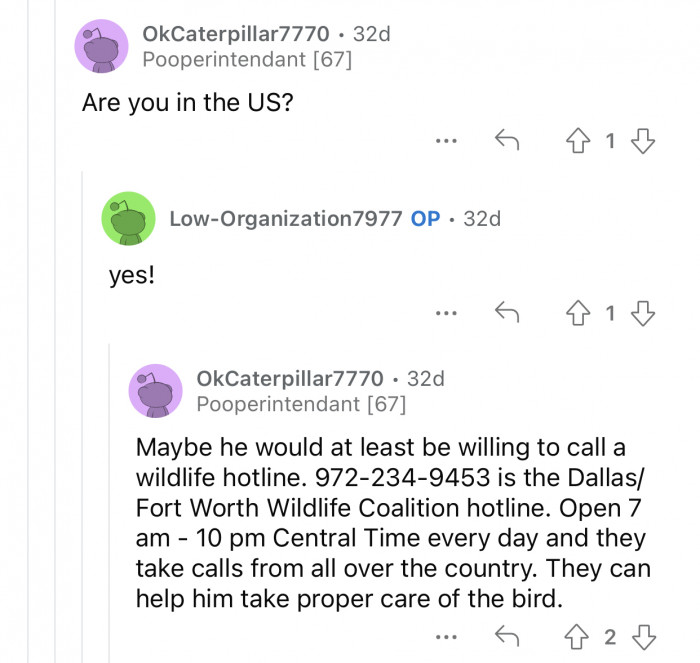
The bird needs proper care by professionals.
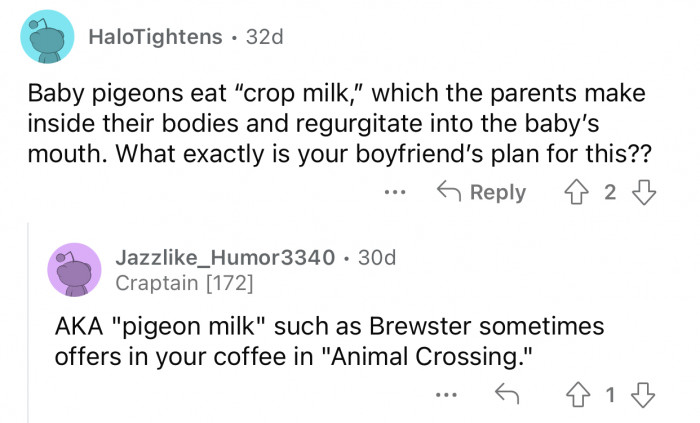
The boyfriend's behavior is selfish and childish.

OP's boyfriend needs to be extra careful with the bird.
Another psychological principle at play here is cognitive dissonance, which occurs when a person experiences conflicting beliefs or behaviors. The Redditor may experience discomfort stemming from her desire to protect her cat while also wanting to support her boyfriend's intention to save the pigeon.
To manage this tension, the couple could explore compromises that allow for both the cat's safety and the boyfriend's desire to help the pigeon. For example, they might consider keeping the pigeon in a separate, secure environment until it can be safely released back into the wild, allowing both interests to be addressed without causing undue stress for the cat.
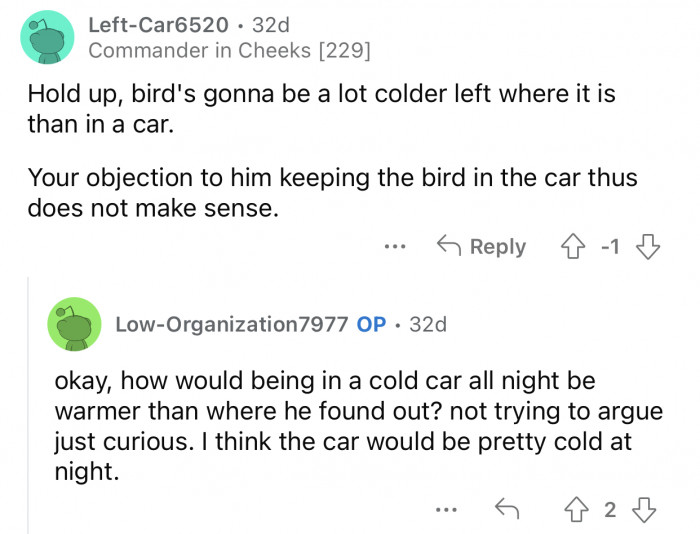
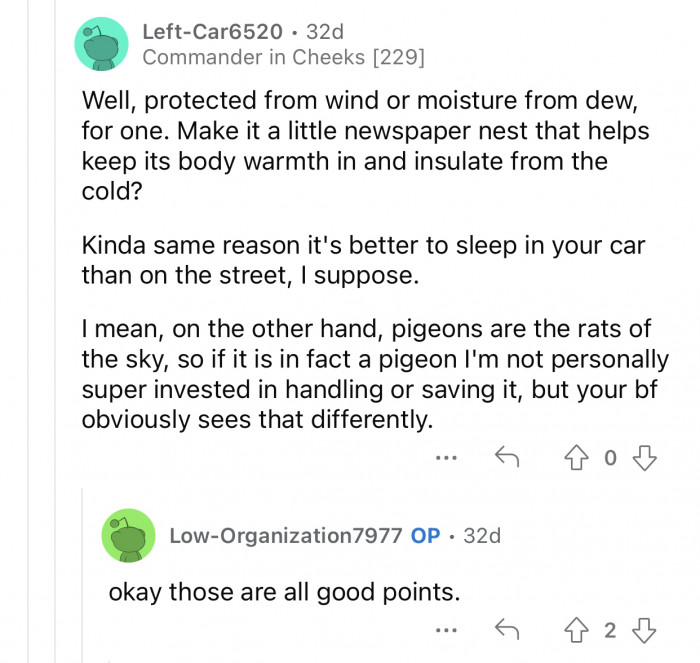
The bird will surely suffer inside the car.
“It's better to sleep in your car than on the street.”
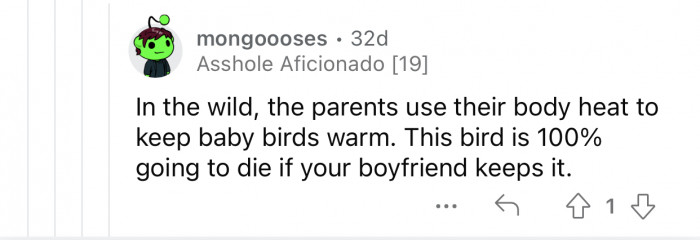
The boyfriend's stubbornness can lead to the bird's death.
The disagreement between the Redditor and her boyfriend over bringing a baby pigeon to her aunt's house highlights a common tension in relationships, particularly when it involves the well-being of pets. The Redditor's concern for her cat's high prey drive is valid; it underscores the importance of considering all pets' safety in such situations. This scenario serves as a reminder that understanding and compromise are essential when navigating differing viewpoints in a relationship.
To address conflicts like this one, couples can benefit from employing strategies that prioritize effective communication. Active listening is key; it allows both partners to fully grasp each other's concerns and motivations. By acknowledging the risks associated with introducing a baby pigeon into a household with a predatory cat, the Redditor is looking out for her feline companion, which is a responsible stance.
Moreover, maintaining a calm demeanor during discussions can prevent tensions from escalating. This approach not only nurtures healthier communication but also fosters a more harmonious dynamic, enabling couples to work together in making decisions that affect their shared lives.
OP needs to have a serious talk with her boyfriend and explain to him how his stubbornness will only worsen the poor bird's situation. He is not trained to deal with these kinds of situations and needs to understand that you can't just “hang out” with a baby bird.
If you enjoyed reading this story, make sure to check out similar content on our platform.
Sometimes the simplest answer is the one people fight the hardest.
Understanding the instincts behind pets' behaviors is crucial for creating a safe and harmonious environment, especially when it comes to the delicate balance between pets and wildlife. The situation described, where a Redditor refuses to allow her boyfriend to bring a baby pigeon to her aunt's house due to her cat's high prey drive, underscores the importance of recognizing the natural instincts of animals. Cats are instinctively driven to hunt, and introducing a defenseless bird into that mix can lead to chaos. This understanding not only prevents potential harm to the baby pigeon but also protects the household dynamics. By prioritizing the well-being of both pets and wildlife, pet owners can navigate these sensitive situations with compassion and foresight.
The situation involving the Redditor, her boyfriend, and the baby pigeon brings to the forefront the intricate dynamics of animal behavior and the emotional nuances in relationships. The decision to prevent her boyfriend from bringing the defenseless bird into her aunt's house is not merely about the cat's high prey drive; it reflects deeper issues of empathy and understanding within their relationship. The article emphasizes that while the boyfriend's intentions are rooted in compassion, the potential risks posed by the cat cannot be overlooked. This scenario highlights the need for effective communication and conflict resolution, suggesting that both parties must navigate their differing priorities with sensitivity. Acknowledging the instincts of the cat alongside the boyfriend's desire to nurture the baby pigeon can foster a more harmonious living environment, ultimately leading to a stronger bond between them.
Want more fallout from pet boundaries, see how a Facebook friend accused her of being “selfish” and got asked to leave.
Share this article: