College Student Gets Ripped For Spying On Her Hallmate's "Illicit Cat"

Some dorm drama starts small, then turns into a full-blown hallway scandal. That is exactly what happened when one college student noticed meowing coming from across the hall and started wondering whether her neighbor was hiding a cat.
Pets are not allowed in the dorms unless they are support animals, so the Redditor thought the situation was pretty straightforward at first. But after asking the girl about it and getting denied, she decided to investigate for herself, and that is where things got awkward fast.
Now the hallmate is furious, the cat is still in the room, and Reddit has plenty to say about who crossed the line. Read on.
The Reddit user asked for advice on whether she had overstepped when she discovered a fellow student in her dorm was keeping an "illicit cat" in her room.
She explained that no pets are allowed in the dorms, with the exception of support animals. Therefore, when she discovered a fellow student was keeping a cat in her room, she decided to interfere.
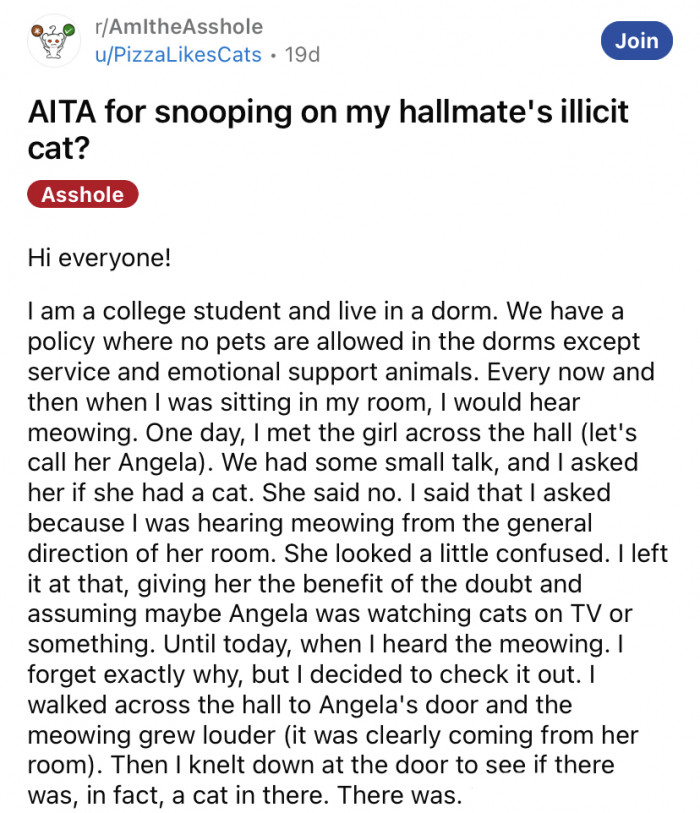
While the OP was still kneeling next to the door, the girl came back and caught her in the act.
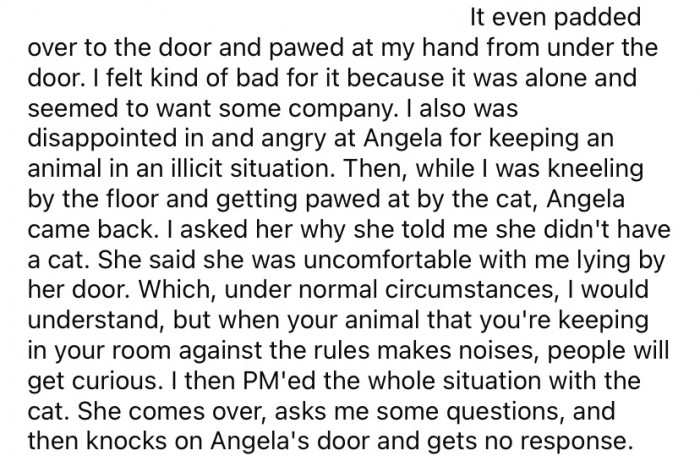
The Redditor confronted her about the cat, but the girl said she felt uncomfortable with the OP lying by her door.
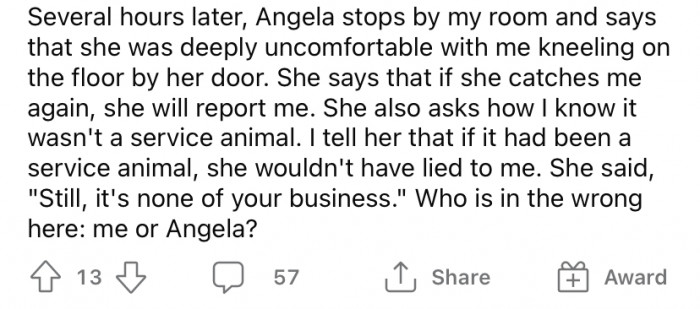
This is where the hallway drama starts to get messy.
This situation raises important ethical questions about the boundaries of personal responsibility and community intervention. "The decision to intervene often hinges on how we perceive the consequences of inaction on others." In this case, the student's feelings of obligation to report her hallmate stem from a desire to uphold community standards.
Psychological studies indicate that individuals often struggle with the dilemma of whether to intervene or remain passive, especially when the behavior in question is perceived as harmful or irresponsible.
The act of spying on a hallmate raises significant ethical questions about privacy and personal boundaries.
Here's how people reacted.
"You heard meowing. So what?"
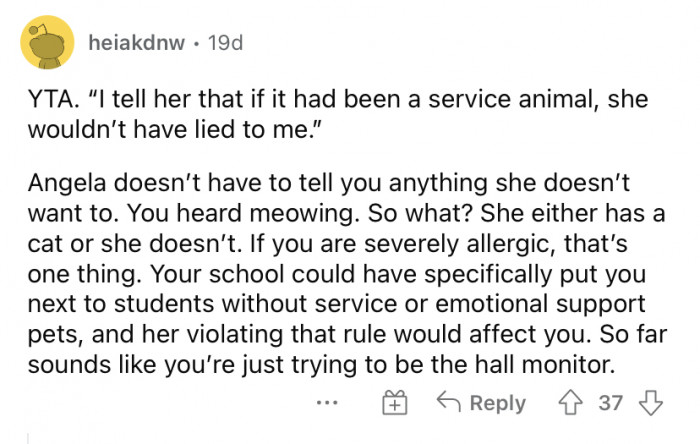
"How does this affect you? Mind your own business!"
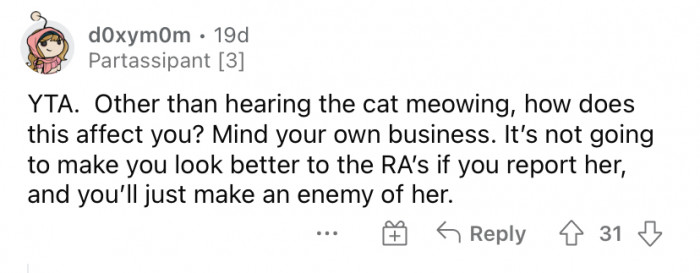
"As long as it's loved, fed, clean, and has a place to poop, it's fine."
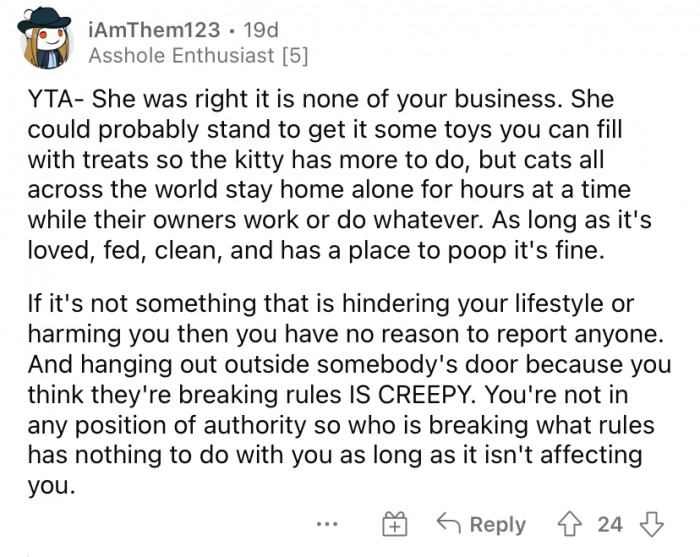
That did not stop people from weighing in.
Moreover, the motivations behind spying can be complex. In this case, the college student’s decision to spy reflects deeper concerns about the implications of her hallmate's actions on their shared living environment.
This behavior can often arise from a desire to maintain control in uncertain situations, highlighting the importance of addressing underlying fears rather than merely the behaviors observed.
Understanding the motivations behind such behaviors can provide insight into human psychology. A study published in the Journal of Social Issues found that while people generally desire to help others, their methods of intervention can vary significantly based on their personal beliefs and values.
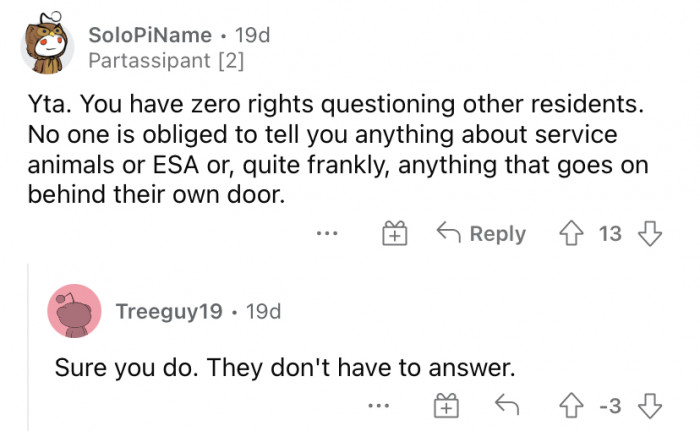
"No one is obliged to tell you anything."
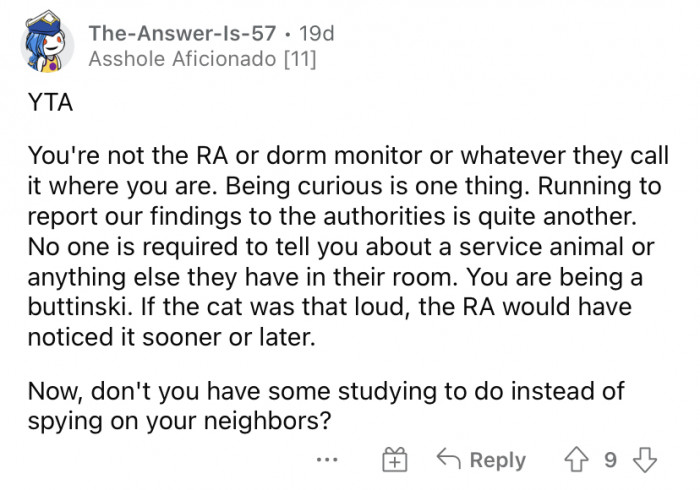
"Don't you have some studying to do instead of spying on your neighbors?"
"Looking under the door makes you pretty creepy."
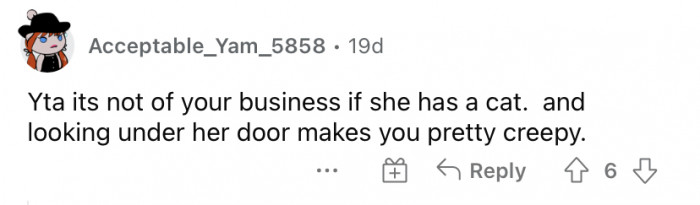
Some commenters were not subtle at all.
Talk about escalating fast, check out the sister who secretly re-homed her aggressive ESA cat.
Effective communication is essential in resolving these types of conflicts. Instead of spying, the student could have approached her hallmate directly to express her concerns about the pet's welfare. Open conversations can help foster understanding and collaboration instead of conflict.
Research in conflict resolution supports this notion, indicating that addressing concerns directly can lead to mutually beneficial outcomes, enhancing both relationships and living environments.
To address similar situations in the future, it's essential to approach ethical dilemmas with a balanced mindset.
YTA!

"Snitchy."
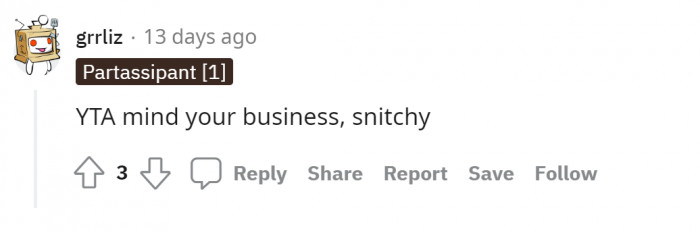
"I don't think you had any business peeking through the door."
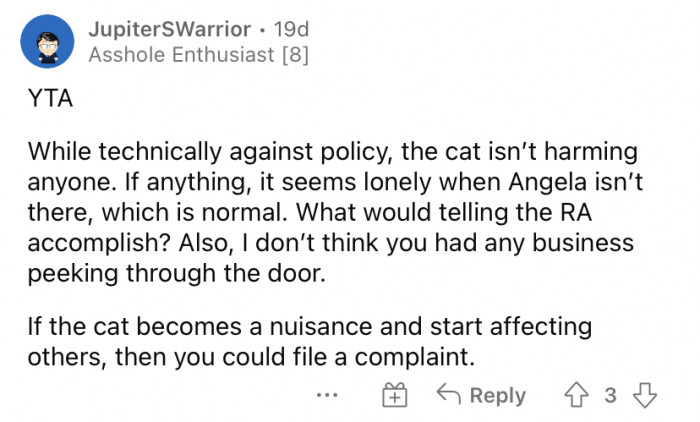
Not everyone thought the cat was the real issue.
Understanding personal triggers is key to navigating interpersonal conflicts. The student's decision to spy may reflect unresolved issues from her past or deeply held beliefs about responsibility and community standards. Exploring these triggers can help the student develop emotional resilience and a clearer understanding of her motivations.
Therapists often encourage individuals to examine their emotional responses to better manage their reactions and make informed decisions in the future.
Living in shared spaces can complicate personal boundaries, and it's essential to understand how to navigate these dynamics.
Everyone sucks here!
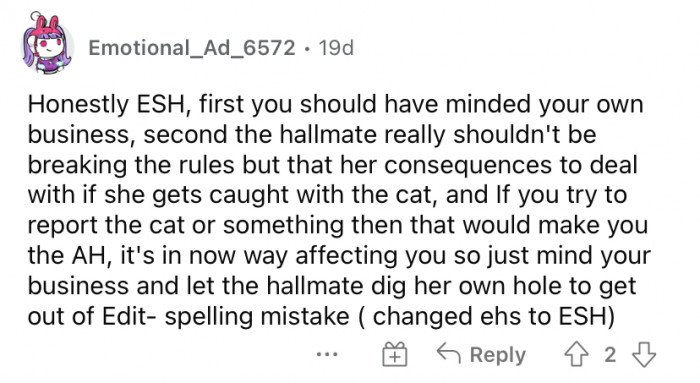
"Mind your own business!"
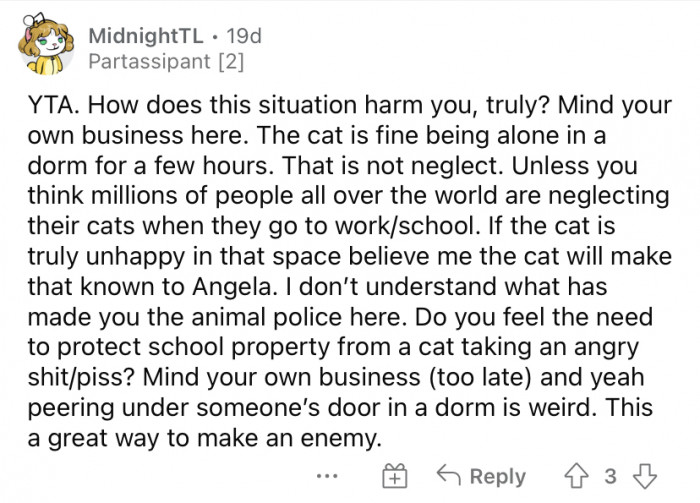
"Disgraceful!"

And then the verdict split right down the middle.
Lastly, it's essential to consider the broader implications of such behaviors on community dynamics.
Ultimately, fostering an environment of respect and understanding is key when dealing with ethical dilemmas. Engaging in conflict resolution strategies, such as active listening and compromise, can create a foundation for healthier interactions within shared living situations.
NTA.
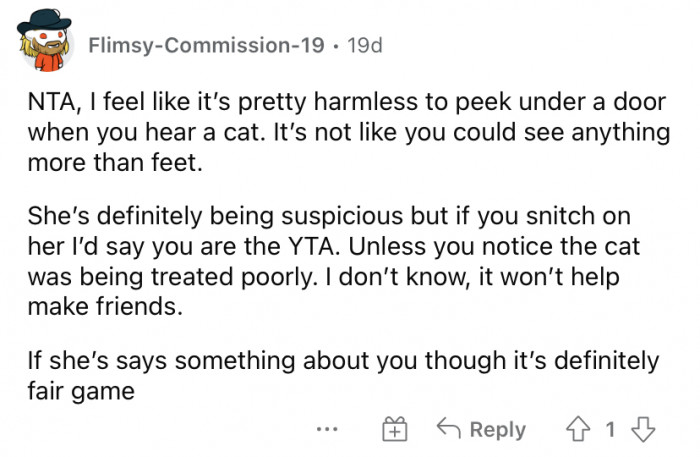
"Stop being a snitch."
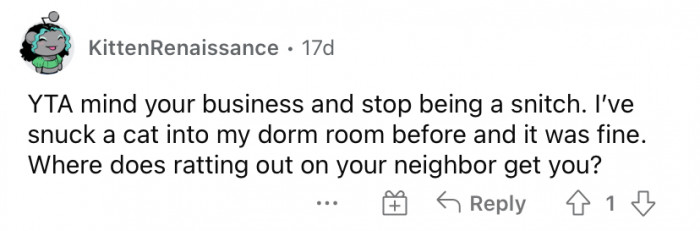
So, was she right to snoop, or should she have stayed out of it?
Surely the cat wasn't causing that much of an issue. But, on the other hand, if everyone broke the rules, it could definitely be a problem.
We would love to know your thoughts on this. Let us know in the comment section below.
The recent incident involving a college student spying on her hallmate's "illicit cat" highlights the delicate balance required in shared living situations. The rules surrounding pet ownership in dorms are clearly defined, yet the actions of the student raise questions about respect for personal boundaries. When one resident feels compelled to monitor another, it reflects a deeper issue of trust and communication. This situation underscores the necessity for open dialogue among roommates. Instead of resorting to surveillance, addressing concerns directly could pave the way for a more harmonious living environment, allowing individuals to navigate the complexities of shared spaces without compromising their integrity or the well-being of their peers.
In this situation, the ethical complexities cannot be overlooked.
Want the guilt spiral too, read how a roommate got an unregistered pet $250+ fine.
Share this article: