
Woman Asks If She's An A**hole For Using A Bark Controller On Her Neighbor's Dog

One barking dog can turn an ordinary neighborhood into a full-on standoff, and that is exactly what happened in this Reddit story.
A woman on Reddit says her neighbor's dog had been barking for hours, frustrating not just her, but other people nearby too. After one neighbor already tried calling the police and the barking started up again, she reached for a sonic bark controller and used it on the dog herself.
Now the neighbors are angry, the Reddit comments are loud, and the whole thing has turned into a messy question about boundaries, noise, and who crossed the line first.
Reddit user u/babyjo18 posted the story to the AITA subreddit.

One of the other neighbors had tried to resolve the issue with the dog owners, but to no avail. So, they decided to call the police.
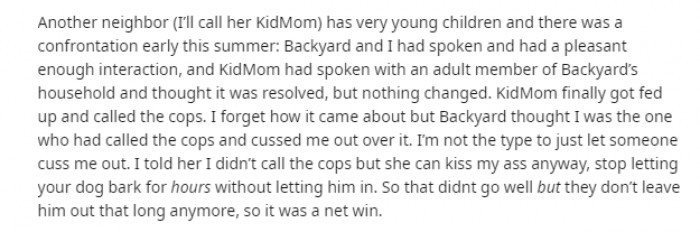
Recently, the Redditor decided to take matters into her own hands and try a sonic bark controller on the neighbor's dog.

The neighbors were already fed up before the bark controller even came out.
The use of bark control devices raises significant ethical questions surrounding animal welfare and owner responsibility.
From a psychological perspective, the use of bark control devices raises important ethical questions about animal welfare and the responsibilities of pet ownership.
This aligns with findings in behavioral psychology, which indicate that animals, like humans, can experience distress from aversive stimuli, potentially leading to long-term behavioral issues.
Ironically, one of the Reddit user's other neighbors was also trying the same thing at the same time.
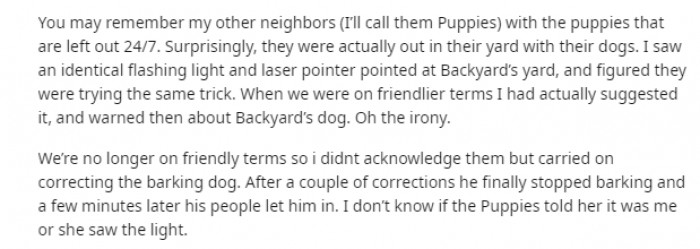
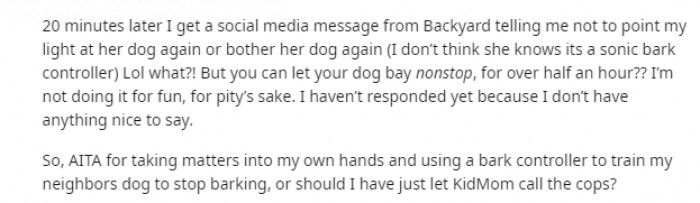
The dog was eventually let in by its owners and stopped barking, but not long after, the OP received a nasty message from them.
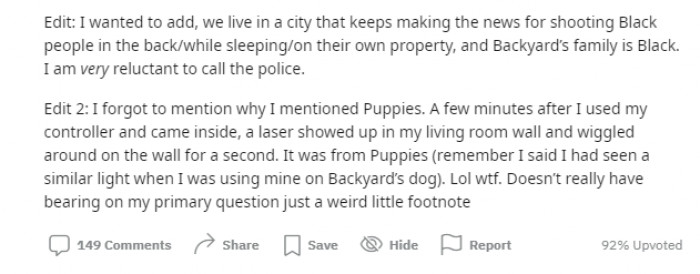
She later added that she has been reluctant to get the police involved because the barking dog's owners are Black, and they live in an area where police are renowned for shooting Black people for no reason.
The situation surrounding the use of a bark controller on a neighbor's dog raises important questions about responsible pet ownership and the psychological impact on animals. Prolonged exposure to aversive stimuli, such as bark control devices, can result in significant stress responses in dogs. This stress can lead to behavioral issues, including heightened sensitivity and fear-based reactions. It is crucial for pet owners and their neighbors to be mindful of how their actions affect the emotional well-being of pets. Understanding that dogs are sensitive beings who may experience distress from such interventions is vital in navigating community relations and ensuring a harmonious living environment.
Research shows that consistent barking is often a reflection of a dog's needs, whether for attention, exercise, or response to environmental stimuli.
Ignoring these needs in favor of quick fixes like bark control devices can lead to more significant behavioral problems, as pets may develop anxiety or aggression when their communication is silenced.
Understanding the root causes of barking is critical in addressing the issue effectively and humanely.
Here's how people reacted.

NTA!
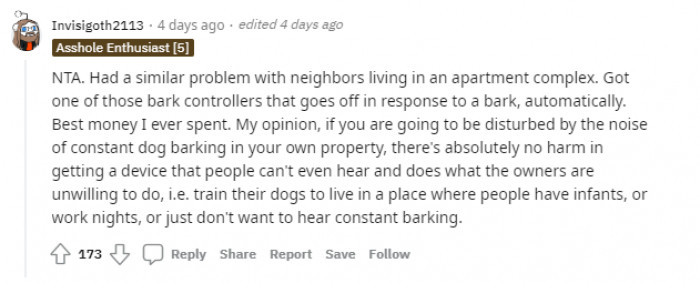
The vet says it's okay.
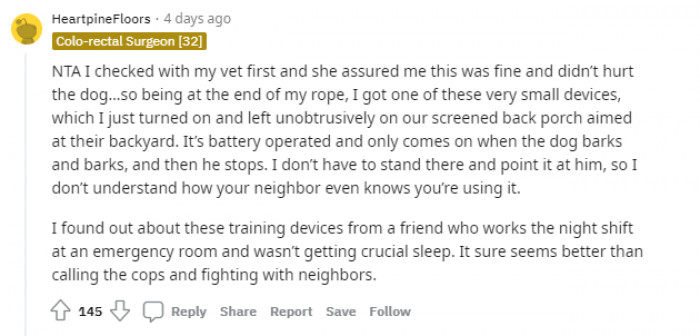
Neighbor drama like this usually gets messy fast.
Conflicts between neighbors often stem from miscommunication and differing expectations. Social psychologists suggest that perceived threats to personal space can trigger defensive behaviors, leading to disputes.
Effective communication strategies, such as active listening and expressing feelings without blame, can significantly reduce tension in neighborly interactions.
Effective communication is fundamental in any relationship, including those between humans and their pets.
Studies in animal psychology suggest that understanding a dog's vocalizations can lead to healthier interactions and solutions.
For instance, recognizing that barking might signal boredom or loneliness can help owners address the underlying issues rather than resorting to devices that merely silence the behavior.
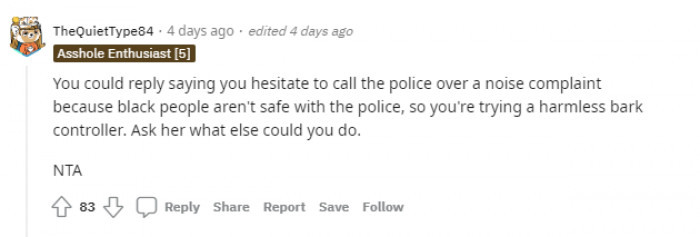
"What else could you do?"
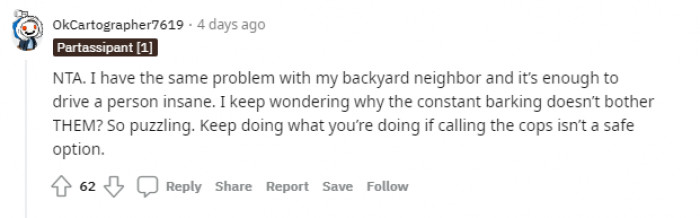
"It's enough to drive a person insane."
Okay, but what device are you using?

That is where the comments start splitting hard.
This also echoes the neighbor who attacked her pet, reimbursed vet bills, then still faced consequences.
Face-to-face communication can foster understanding and reduce misunderstandings.
Establishing a rapport can pave the way for collaborative problem-solving, which is a more constructive approach than unilateral decisions.
The story raises significant questions about the appropriateness of using aversive methods, such as a bark controller, to manage a neighbor's dog. While the woman in the story may feel justified in her actions due to the incessant barking, the broader implications of such methods cannot be ignored. Research suggests that employing positive reinforcement techniques is far more effective in promoting desired behaviors in dogs.
Instead of resorting to devices that could cause stress or anxiety for the animal, a focus on rewarding quietness could foster a healthier relationship between the dog and its owner. This approach not only nurtures the dog's emotional well-being but could also ultimately lead to a more harmonious neighborhood dynamic. The situation highlights the need for constructive solutions to pet-related disturbances, emphasizing understanding and compassion over punitive measures.
They might call the police on you!

"Shine all you want."

Talk to them.
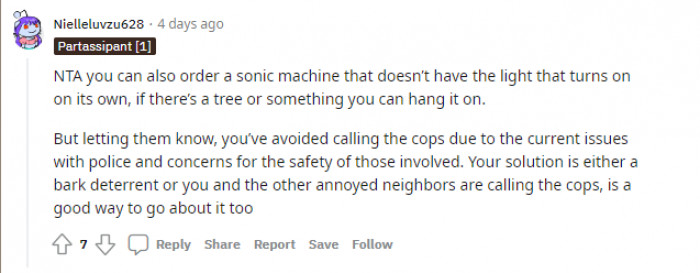
Empathy keeps coming up in the replies.
Empathy plays a crucial role in resolving conflicts, especially in situations involving pet behavior.
Instead of resorting to bark control devices, owners can explore various training methods that engage and stimulate their dogs both mentally and physically.
For instance, providing interactive toys or scheduling regular playtime can significantly reduce excessive barking.
Consistent exercise and mental stimulation are key components in preventing nuisance barking.
We've all done it.
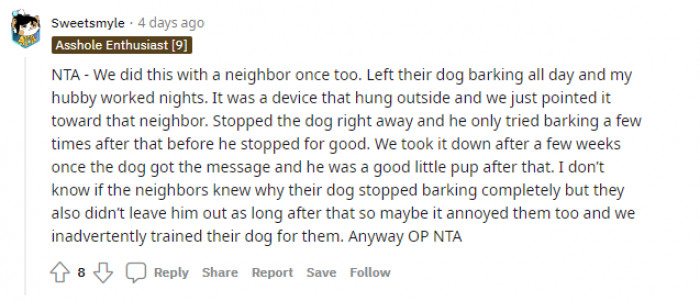
"They sound like the problem neighbor."

"Vets recommend them."

Some commenters clearly think the bark controller was fair game.
Research suggests that fostering empathy can lead to improved relationships and conflict resolution outcomes. Practicing perspective-taking by imagining the neighbor's situation may help in crafting a more compassionate approach to the issue at hand.
Moreover, expressing genuine concern for the dog's well-being, rather than purely focusing on the annoyance it causes, can shift the conversation toward a more positive resolution.
Understanding the psychological needs of dogs can foster a more harmonious living situation.
It's a "Barkyard."

We did it too!
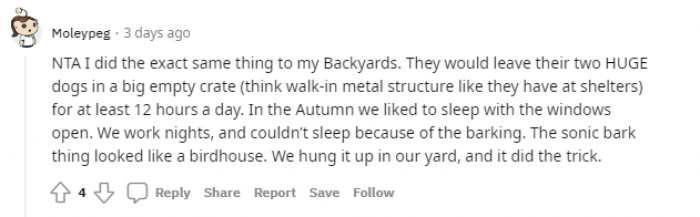
"This isn't a crime."

More commenters kept circling back to the same point, this was never going to be a simple fix.
Long-Term Solutions for Pet Owners
For pet owners facing similar dilemmas, considering alternative training methods that promote positive reinforcement can be beneficial.
The situation surrounding the use of a bark controller on a neighbor's dog raises important questions about the interplay between pet behavior and owner emotional states. The article points out that dogs are highly attuned to their owners' feelings. This sensitivity suggests that when an owner is stressed, their dog may reflect that anxiety through behaviors such as excessive barking. Furthermore, the emotional well-being of pet owners is highlighted as a critical factor in shaping their pets' actions, indicating that a harmonious environment starts with the owner. This insight sheds light on why addressing the root causes of a dog's behavior, rather than solely resorting to tools like bark controllers, could lead to more effective and compassionate solutions for both pets and their owners.
"Had to do this myself."

"Keep using it."

"Eff them."

At this point, nobody in the neighborhood sounds very happy.
Ultimately, fostering a positive relationship with pets requires understanding their needs and habits.
Training and communication strategies that prioritize the dog's perspective can lead to a more effective resolution of issues like barking, aligning behavioral expectations between owner and pet.
By adopting a compassionate approach, both the owner and dog can enjoy a more peaceful coexistence.
"Call the police every night."

"I wish I could use that."

What's your take on this situation? Do you think our OP overstepped by using the device on a dog that doesn't belong to her, or do you think she was entirely justified in doing so?
We always love to hear from you and would love to know your opinions on this. You can share your thoughts with us in the comment section below.
The situation surrounding the use of a bark controller on a neighbor's dog highlights the complexities of pet ownership and community living. While the frustration of dealing with incessant barking is understandable, resorting to devices that may not address the root of the problem raises significant ethical questions.
The article illustrates the importance of seeking humane training methods that focus on understanding the reasons behind a dog's vocalizations. Engaging in compassionate communication with our pets can not only lead to a more harmonious home but also improve relationships with those living nearby.
Ultimately, fostering empathy towards both the dog and its owner can pave the way for resolving conflicts amicably and ensuring that all parties involved can coexist peacefully.
While using a bark control device might appear to be an immediate solution to the disturbances caused by a neighbor's dog, this approach opens the door to serious ethical questions about animal welfare and the dynamics of neighborly relationships. The situation highlights the need for a deeper understanding of how such devices affect not only the dog's well-being but also the emotional landscape of the neighborhood. Engaging in conversations with neighbors about shared concerns could pave the way for more humane and effective solutions to noise-related conflicts. In the end, promoting empathy and fostering open dialogue are essential steps toward achieving harmony in our shared living environments.
Still, the tension with the dog next door escalated into an argument in two neighbors fighting over a dog eating food in the yard.
Share this article:





