Brother-In-Law Mad At Woman For Spending More Money On Sister's Dog Than Nephew

A 28-year-old woman is dealing with the kind of family blowup that starts with a “small” gift and ends with someone slamming doors. In this Reddit story, OP’s brother-in-law got mad because she spent more money on her sister’s dog than on her nephew. The brother-in-law, who is already stressed about money, read it as favoritism and unfair priorities, so his anger came out fast and loud.
Now everyone is stuck arguing over affection, spending, and who “deserves” what, and the dog is at the center of the mess.
Here's OP's story.
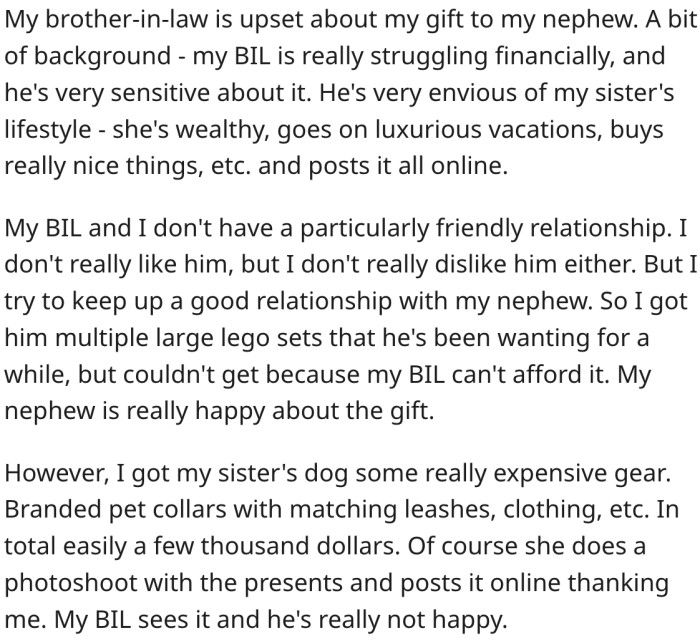
Was she wrong to get more expensive gifts for the dog? Reddit responds.
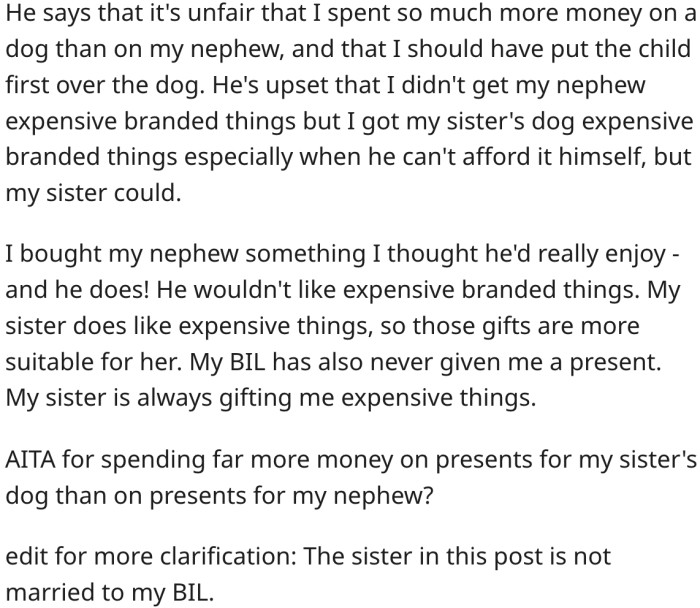
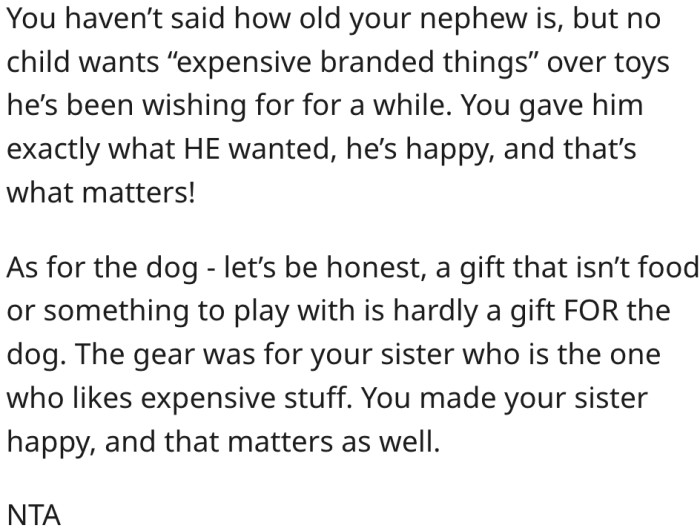
1. Gifts shouldn't be judged by their monetary value.
Exploring Emotional Priorities
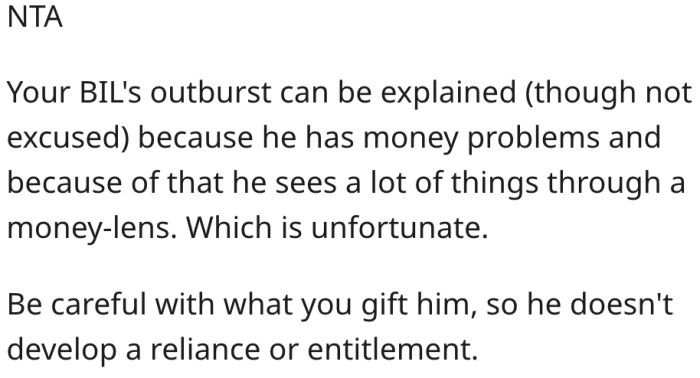
This situation reveals a common psychological conflict between familial obligations and emotional attachments.
The tension surrounding the spending habits on a pet versus a child highlights the underlying family dynamics at play in this situation. CranberryProton's choice to lavish gifts on her sister's dog instead of her nephew has sparked a strong reaction from her brother-in-law, who is already grappling with financial stress. This incident underscores how emotional connections often drive financial decisions, rather than a purely rational approach.
The brother-in-law's feelings of resentment may stem from a perception of favoritism, which is a common source of conflict in family relationships. When expectations about support and care diverge, it can create a rift that complicates familial bonds. This scenario raises important questions about how we prioritize our affections and resources within family units, and the potential fallout when those priorities clash.
2. Her brother-in-law feels unhappy for not being able to meet his child's needs.
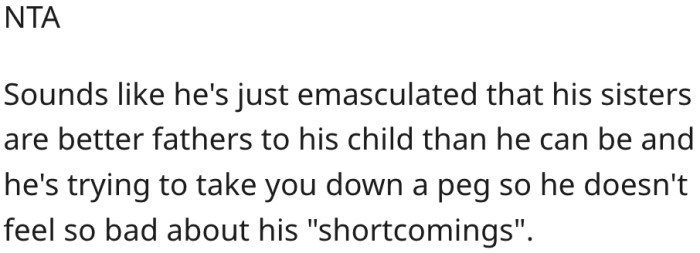
3. The dog doesn't need expensive gear to be happy.
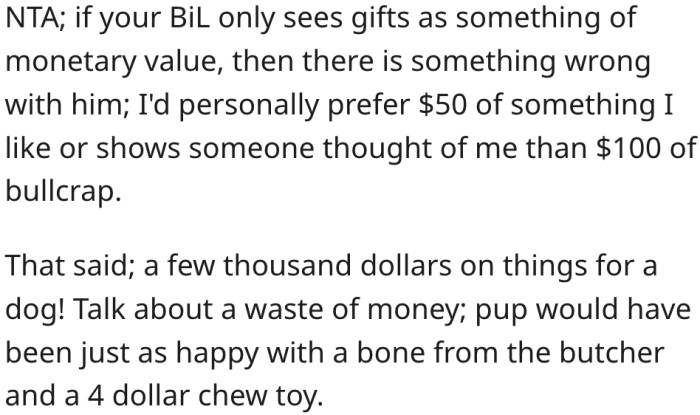
4. It seems her brother-in-law is only jealous.

That’s when OP’s brother-in-law decided the dog’s fancy gifts meant she was choosing the pet over his kid.
The concept of 'emotional labor,' coined by sociologist Arlie Russell Hochschild, plays a significant role in these discussions. Emotional labor refers to the effort put into managing feelings and expressions to fulfill the emotional requirements of a job or relationship.
In this case, the woman may feel the need to invest more in her sister's dog as a coping mechanism for her own emotional state, which can unintentionally alienate other family members.
When one family member feels neglected due to perceived disparities in expenditure, it can create friction and a sense of competition for love and attention.
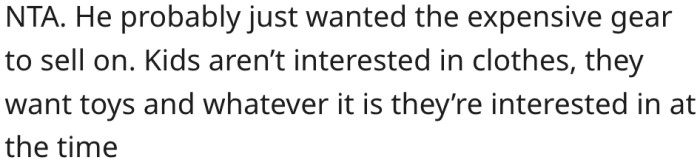
5. Kids want toys, not clothes.
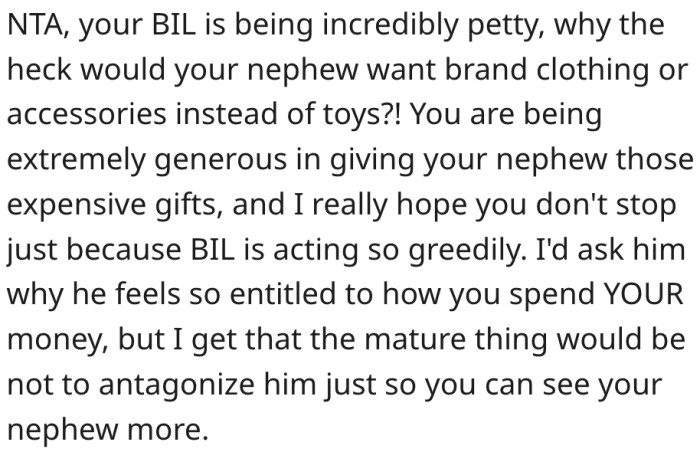
6. She shouldn't stop being nice to her nephew just because her brother-in-law is greedy.
7. Her brother-in-law is upset because he's struggling financially.
Things really heated up once OP’s sister’s dog started getting treated like the favorite in the brother-in-law’s eyes.
Perception is a critical factor in family relationships, especially regarding financial support.
The situation presented by CranberryProton highlights the complexities of attachment in familial and pet relationships.
This gets real similar to the brother who accused his sister of choosing the dog over him after she refused a loan.
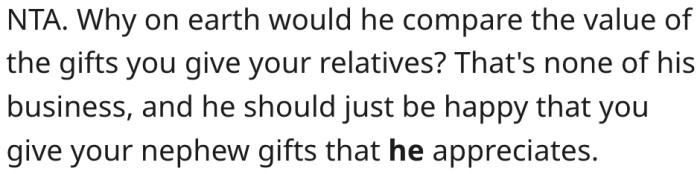
8. It makes no sense that her brother-in-law is comparing gifts.
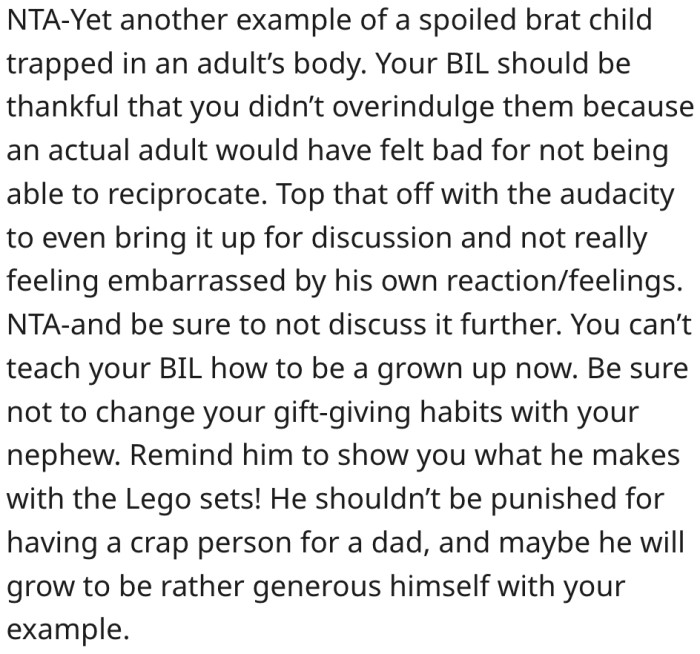
9. Her brother-in-law is a spoiled child who has some growing up to do.
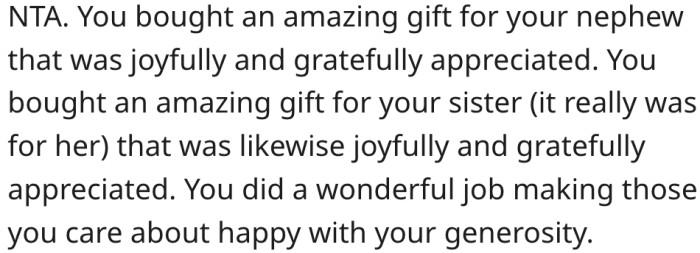
10. Making the people she cares about happy is a good thing.
Establishing regular family meetings could allow for a platform where financial and emotional concerns can be addressed without misunderstanding. The brother-in-law's sensitivity to financial issues heightens the need for transparency to prevent feelings of neglect or competition. Additionally, a shared understanding of financial priorities can help prevent resentment from festering, as demonstrated by the stark contrast in reactions to spending on the dog versus the nephew. Without dialogue, these small grievances can escalate, straining familial relationships further.
Meanwhile, Redditors pointed out that a dog can be happy without expensive gear, which made the whole spending comparison feel extra petty.
From a behavioral perspective, the brother-in-law's anger may stem from feelings of inadequacy or jealousy, which are common emotional responses in family dynamics.
Studies show that these feelings can trigger a defensive reaction, leading to conflict rather than open communication.
To mitigate this, it would be beneficial for the family to engage in open discussions about their emotional needs and values surrounding pets and children.
11. What matters most is that her nephew loved his gift.
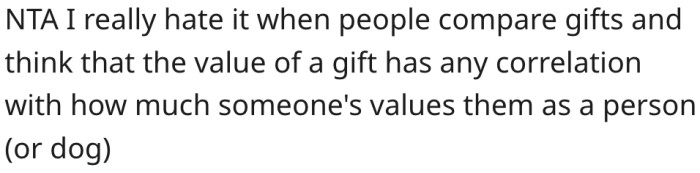
12. Gifts don't represent how much you value someone.
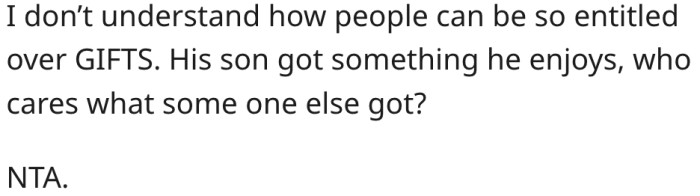
13. It's hard to understand why some people feel entitled to gifts.
Financial dynamics within families can often lead to conflicts, especially regarding perceived favoritism or neglect.
Practical Solutions for Family Communication
To foster better understanding, family therapy could be a helpful avenue to explore these dynamics.
Encouraging family members to express their feelings without judgment can help to resolve underlying issues, leading to healthier relationships.
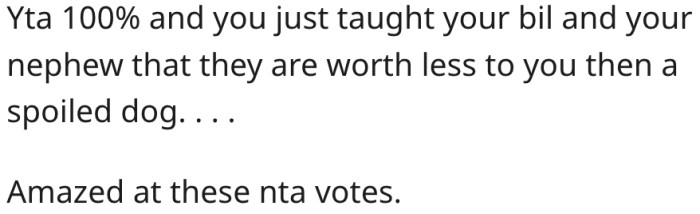
14. She showed her brother-in-law and nephew that the dog is more precious to her.
15. If her nephew loved his gift, it's all good.
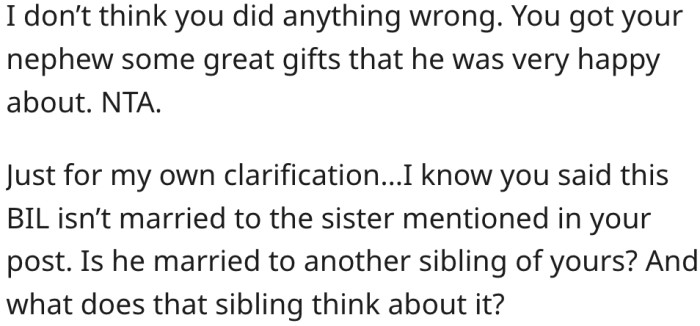
16. What she buys for others isn't her brother-in-law's concern.
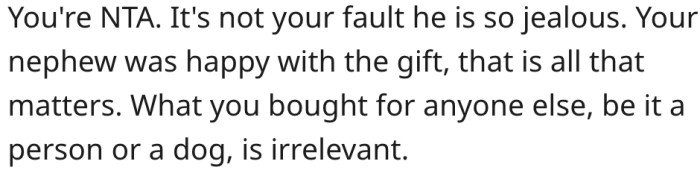
17. Sometimes, it's better not to give gifts.
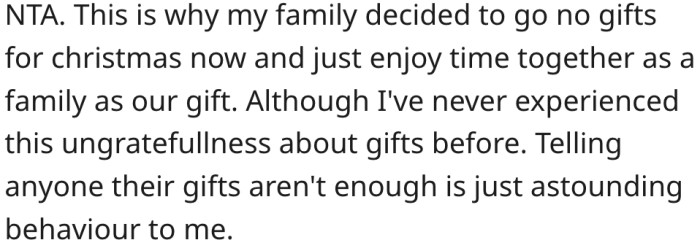
18. Her brother-in-law has no right to complain because he doesn't buy her gifts.
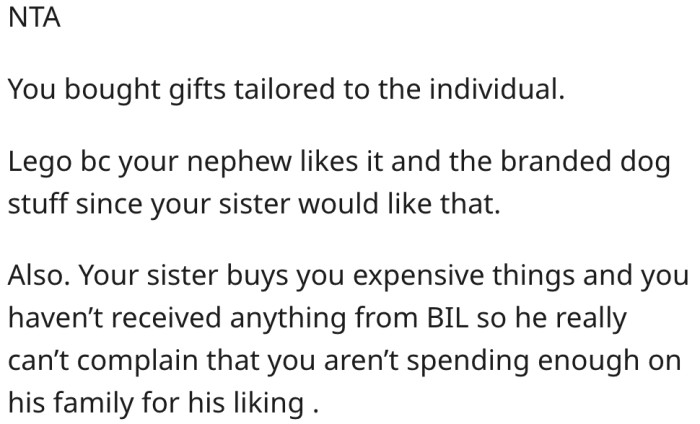
19. Favoritism wasn't involved in the gift-giving.
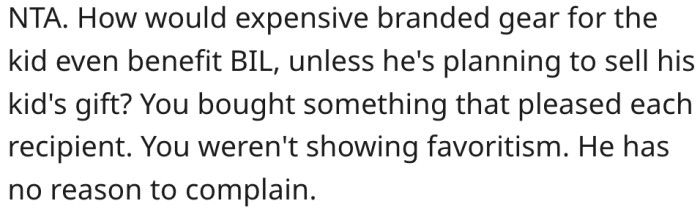
20. She can spend her money however she deems fit.
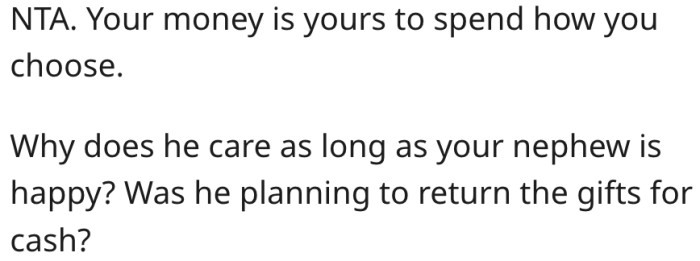
By the end, it looked less like a money issue and more like the brother-in-law was jealous that OP’s attention did not match his expectations.
What do you think?
The monetary value of a gift does not define how much a giver values the receiver. It's the thought and effort behind the gift that counts.
What truly matters is that the gift is something the receiver loves and cherishes, not its price tag. A simple yet meaningful present can hold more value than an expensive one if it shows how much the giver knows and cares for the recipient.
What do you think?
The escalating tension between CranberryProton and her brother-in-law highlights a common issue within families: differing priorities and the emotions tied to them. The situation reveals how financial stress can distort perceptions, leading to resentment when one family member feels neglected in favor of another.
CranberryProton's choice to spend more on her sister's dog than on her nephew has triggered her brother-in-law's insecurities, particularly given his current financial struggles. This dynamic emphasizes the importance of addressing emotional needs within family relationships, as unspoken grievances can quickly escalate into conflict.
Ultimately, fostering open dialogue in situations like these can transform misunderstandings into opportunities for connection. By prioritizing communication, families can bridge gaps created by differing values and expectations, creating a more harmonious environment for all members involved.
The situation presented by CranberryProton highlights the intricate emotional and financial dynamics often present in family relationships.
He’s not mad about the gifts, he’s mad that his nephew didn’t win the attention contest.
Want the same “dog over kids” vibe? See how a sister got a framed dog photo after nephews tapestry.
Share this article: