
15 Rare Cute Sea Animals That Look Almost Imaginary

A pink flapjack octopus looks like it was designed by someone who knows exactly how to mess with your brain. Big eyes, ear-like fins, and a body that can flatten into a pancake, it’s the kind of creature that makes you double-check whether you’re actually seeing it or just staring at a fantasy illustration.
And then you keep going. A dumbo octopus drifts deep enough that every move has to be energy-sparing, a pygmy seahorse disappears into sea fan texture so well that even divers miss it, and a sea bunny and sea angel look soft and dreamy until you realize they are built for sensing, hunting, and surviving in cold, dark water. Meanwhile, a sea pig just strolls across the seafloor like it owns the place, with tiny crabs treating it like a moving shelter.
By the time you get to the “almost imaginary” part, you’re already hooked.
1. Flapjack Octopus
The flapjack octopus has large eyes, short webbed arms, and two fins that resemble ears. It spends much of its time close to the seafloor, where it can flatten its body into a pancake-like shape.
When it swims, the whole animal pulses and flaps. A pink flapjack octopus became widely known after researchers proposed the fitting name Opisthoteuthis adorabilis.

2. Dumbo Octopus
Dumbo octopuses move with ear-like fins and use their webbed arms to steer. They live far below the surface, where food is limited and pressure is intense.
Their slow, floating movement looks calm on camera. In reality, every motion has to conserve energy.
Very cute. Very deep.

3. Pygmy Seahorse
Pygmy seahorses can be smaller than a fingernail. Some species match the color and texture of the sea fans they live on so closely that even trained divers struggle to find them.
Their camouflage is not decorative. It is the main reason such a tiny fish can remain exposed on coral without immediately becoming food.

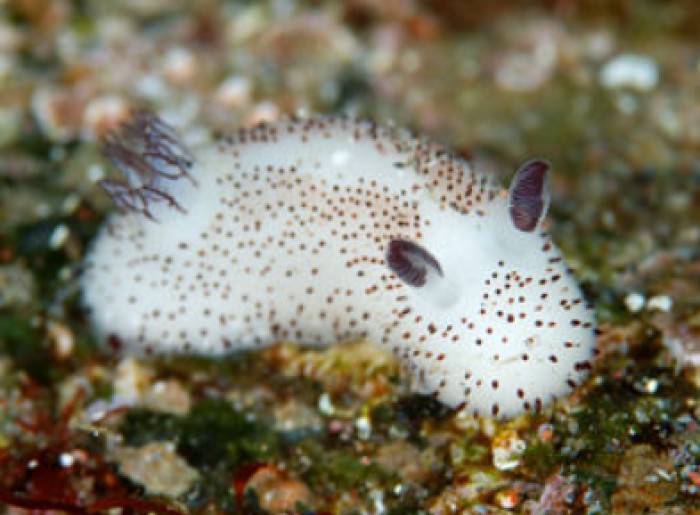
4. Sea Bunny
The sea bunny is a small nudibranch, a type of marine slug. The structures that look like ears are sensory organs called rhinophores, while the fluffy surface is made of tiny projections.
Photographs make it look soft enough to pet. It is usually only a few centimeters long, and handling any wild sea slug is a bad idea.
5. Sea Angel
Sea angels are transparent swimming slugs with wing-like structures adapted from the foot found in other gastropods. They move through cold water with a graceful flapping motion.
Then they eat.
A sea angel can extend hooked mouthparts to pull shelled swimming snails from their homes. The name covers only half the personality.

6. Sea Pig
A sea pig is a deep-sea cucumber with a rounded pink body and small tube feet. It moves across soft sediment, feeding on organic material that has fallen from upper waters.
Researchers sometimes observe young crabs sheltering beneath sea pigs. The arrangement looks like a slow-moving nursery, though scientists are still studying the relationship.

7. Strawberry Squid
The strawberry squid has a bright red body covered in small light-producing organs. Its most famous feature is the mismatched pair of eyes. One large yellow eye looks upward for silhouettes, while the smaller blue eye watches the water below.
Asymmetrical. Effective. Oddly charming.

8. Bobtail Squid
Bobtail squid are compact cephalopods with rounded bodies and short arms. Many bury themselves in sand during the day and emerge after dark.
Some species host light-producing bacteria inside a special organ. The glow helps match moonlight from above, reducing the squid’s shadow when predators look upward.

These flapjack and dumbo octopus vibes match real animals that look straight out of a fantasy world.
9. Leafy Seadragon
Leafy seadragons look like fragments of seaweed drifting through the water. Their elaborate appendages provide camouflage, while small fins do the actual work of movement.
They live off southern and western Australia, linking this list to other rare Australian animals that evolved under unusual geographic conditions.

10. Juvenile Boxfish
Young boxfish can be tiny yellow cubes with dark spots and small fins. Their rigid bodies force them to steer with fine movements rather than bend like most fish.
The shape looks inefficient. It is not. Their fin control allows precise movement around reefs, while the hard body offers protection.

11. Ribbon Eel
A ribbon eel has a narrow body, flared nostrils, and a mouth that often appears open. Adult males are typically vivid blue and yellow, making them look more decorative than dangerous.
They stay partly inside burrows and strike at passing shrimp or small fish. Satin ribbon outside. Predator inside.

12. Blue Dragon Sea Slug
The blue dragon floats upside down near the ocean surface. Its silver underside faces the sky, while the blue side blends with the water below.
It feeds on animals such as Portuguese man o’ war and stores their stinging cells for defense. Small body. Serious consequences.

13. Baby Sea Turtle
Baby sea turtles are not a separate species, but their first journey is too distinctive to leave out. After hatching, they move toward the brightest horizon, which should lead them to open water.
Artificial lights can pull them the wrong way. Pupperish’s collection of tiny turtles shows why the hatchlings attract so much attention, while also revealing how exposed they are.

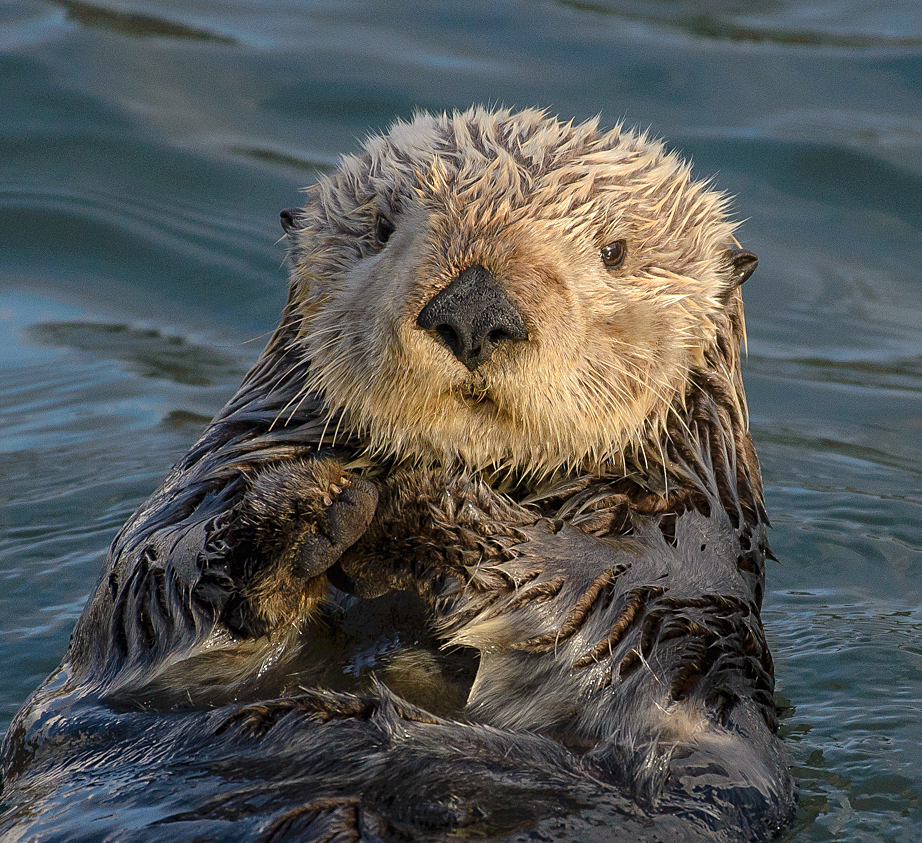
14. Sea Otter
Sea otters float on their backs, wrap themselves in kelp, and sometimes hold paws while resting. Those behaviors look almost staged.
They are also skilled hunters that use rocks to open hard-shelled prey. One otter even used a human boat as temporary shelter while escaping an orca. More relaxed moments appear in these adorable otter photos.
15. Young Pilot Whale
Pilot whale calves have rounded heads, smooth bodies, and strong social bonds with their pods. An unusual case became especially memorable when a dolphin appeared to adopt a baby pilot whale.
Cross-species care is difficult to interpret from a distance, but the pair remained together long enough to draw serious scientific interest.

That flapjack octopus moment is cute, but it’s also the warm-up act for the rest of the deep-sea weirdness.
Once you picture a dumbo octopus floating calmly on camera, you remember it’s doing all that conserving because down there, movement costs.
The sea bunny’s fluffy “pet” look is the next trap, because those ear-like rhinophores are built to detect, not cuddle.
And by the time the sea pig shows up, with young crabs hiding under it like a slow nursery, the whole cast feels like it’s part of one ongoing underwater plot.
Why Do So Many Deep-Sea Animals Look Cute?
Large eyes can help collect limited light. Soft bodies cope with pressure without heavy skeletons. Slow movement saves energy where food is scarce. Those traits happen to overlap with features people read as harmless or youthful.
The effect is strongest on camera. Scale disappears.
Once a remotely operated vehicle removes the surrounding darkness and places the animal in a bright close-up, a creature adapted to crushing pressure can look like a tiny character floating against a black studio background. A tiny sea slug and a large octopus can occupy the same screen, both reduced to a floating face and a pair of fins.
That visual appeal should not blur the biology. Many cute rare animals survive through camouflage, venom, ambush, or highly specialized diets. The ocean versions follow the same rule.
Cute gets the click. Adaptation explains the animal.
You don’t just see these animals, you start wondering what kind of story the ocean is writing when it gets bored.
Want stranger ocean surprises like glass-headed fish, check out these rare sea animals most people never see.
Share this article:





