16 Rare Australian Animals Beyond Kangaroos and Koalas

Some animals in Australia do not just live quietly, they live on the edge. While everyone knows kangaroos and koalas, the real drama is happening in the dry inland, the marshy fringes, and the tiny pockets where a species can barely hold on.
Take the northern hairy-nosed wombat, managed in Queensland where disease, drought, fire, and low numbers turn every breeding season into a high-stakes gamble. Or the orange-bellied parrot, crossing Bass Strait for winter along the mainland coast, where trouble at either end can snowball into disaster. Even the night parrot, the bird that nearly vanished from the map for a century, is back in the spotlight because a few protected sites still matter.
These are the rarest stories in the wild, and they do not fit neatly into one place.
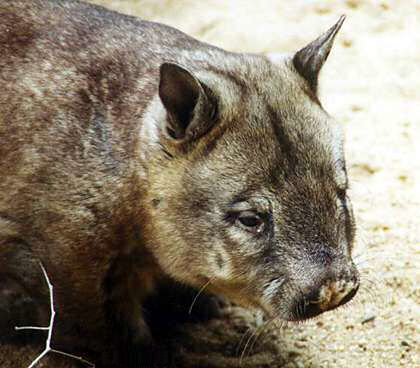
1. Northern Hairy-Nosed Wombat
The northern hairy-nosed wombat is one of the rarest mammals in the world. It is larger than the common wombat, with softer fur, pointed ears, and a broad muzzle.
The remaining wild population is closely managed in Queensland. Disease, drought, fire, and low numbers make every breeding season important.
2. Gilbert’s Potoroo
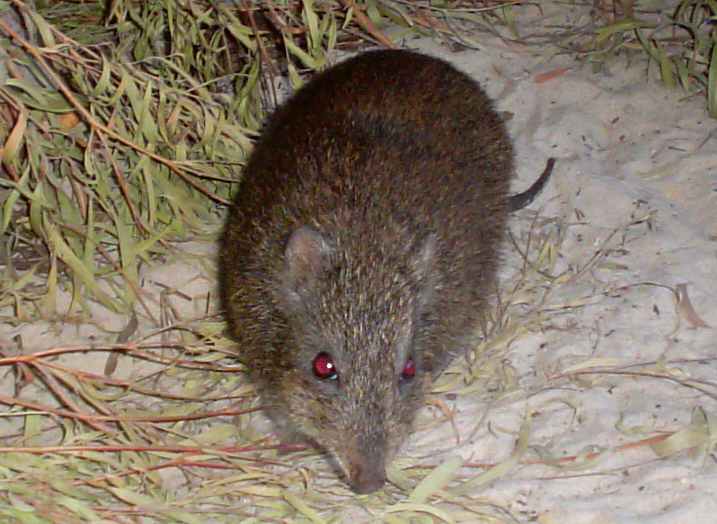
Gilbert’s potoroo is a small nocturnal marsupial with a pointed face and strong hind legs. It was believed extinct until a tiny population was found in Western Australia in 1994.
It feeds heavily on underground fungi. That specialized diet and narrow range make relocation difficult, because suitable habitat needs more than the right vegetation.
3. Orange-Bellied Parrot
The orange-bellied parrot is one of the world’s few migratory parrots. It breeds in southwestern Tasmania and crosses Bass Strait to spend winter along the southern mainland coast.
Only a small number complete that route. The bird depends on several habitats hundreds of miles apart, so damage at either end can affect the entire population.

4. Swift Parrot
Swift parrots also migrate between Tasmania and mainland Australia. They are fast, green birds with red and yellow markings around the face.
Loss of mature flowering trees reduces food and nesting sites. Sugar gliders introduced to Tasmania also prey on nesting females in some areas.

5. Night Parrot
The night parrot became one of Australian ornithology’s greatest mysteries after confirmed records nearly disappeared. It is a ground-dwelling, nocturnal parrot of dry inland country.
Modern evidence includes photographs, feathers, sound recordings, and carefully protected sites. Pupperish covered the moment a bird thought extinct for a century returned to scientific attention.

6. Numbat
The numbat is a striped marsupial that feeds almost entirely on termites. It is active during the day, unlike many small Australian mammals.
A long sticky tongue reaches into termite galleries. The animal does not have the heavy digging build of an anteater, so it follows shallow feeding opportunities as temperatures change.

7. Eastern Quoll
Eastern quolls are spotted carnivorous marsupials found mainly in Tasmania. They hunt insects and small vertebrates and also scavenge.
They disappeared from mainland Australia during the 20th century, likely due to disease, introduced predators, and habitat change. Reintroduction programs are testing whether protected mainland populations can return.

8. Mountain Pygmy Possum
The mountain pygmy possum lives in alpine boulder fields, a habitat that occupies very little of Australia. It hibernates under snow and feeds on insects, seeds, and fruit.
Warmer conditions change snow cover and food timing. Development can also divide the rocky corridors the possums use between seasonal areas.

For more elusive wildlife, see how scientists still struggle to spot rare Amazon animals.
9. Greater Glider
Greater gliders are large tree-dwelling marsupials that can glide between trunks using a membrane stretched between the limbs. They depend on old trees with hollows for shelter.
Logging, fire, and loss of mature forest remove both food and nesting sites. A young tree may replace canopy cover quickly, but a usable hollow can take far longer.

10. Lumholtz’s Tree Kangaroo
Tree kangaroos traded speed on open ground for stronger forelimbs and climbing ability. Lumholtz’s tree kangaroo lives in northeastern Queensland rainforest.
Its bear-like face places it easily among cute rare animals. A closer look at another tree kangaroo shows how securely these marsupials move and rest above the ground.

11. Quokka
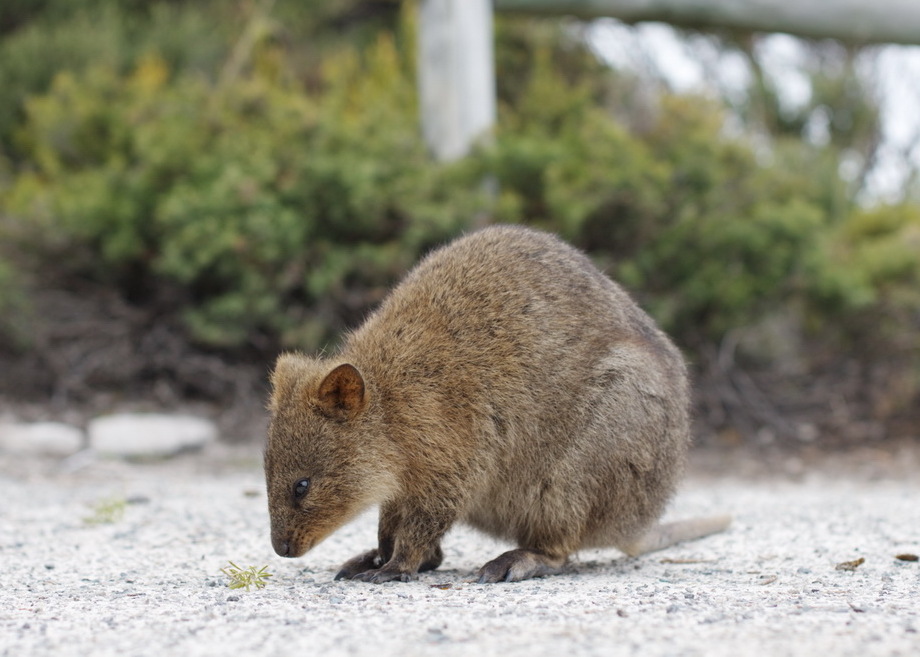
Quokkas are small wallaby relatives found mainly in limited parts of Western Australia, including Rottnest Island. Their mouth shape creates the famous smiling expression.
The island population is highly visible, but mainland groups face more pressure from predators and habitat change. These adorable quokkas are better known than their restricted distribution suggests.
12. Short-Beaked Echidna
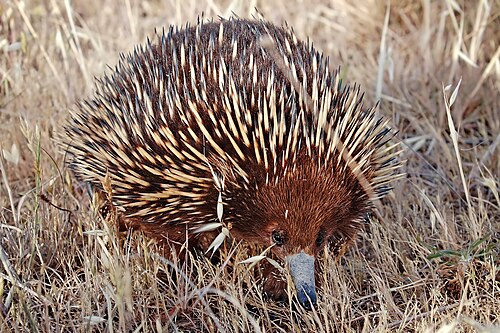
The short-beaked echidna is one of the few living egg-laying mammals. It uses powerful claws to open ant and termite nests, then collects prey with a long sticky tongue.
Echidnas are widespread compared with several animals on this list, but their biology remains unusual. One rescued echidna mistaken for a pink blob shows how strange a young animal can look.
13. Southern Cassowary
The southern cassowary is a large flightless rainforest bird with a helmet-like casque and powerful legs. It eats fruit and spreads seeds across the forest.
That role makes it an important gardener. Habitat fragmentation, vehicle strikes, and dog attacks can reduce populations even where forest remains.

14. Red Handfish
Red handfish use modified pectoral fins to walk across the seabed rather than swim over long distances. They are known from a tiny area near Tasmania.
The limited range makes them one of Australia’s most vulnerable marine species. Their unusual movement also connects them to other rare sea animals.

15. Leafy Seadragon
Leafy seadragons live along southern and western coasts. Their frilled bodies blend with seaweed, while nearly transparent fins move them through the water.
The species is protected, but habitat quality still matters. Seagrass and kelp communities can be damaged without any direct contact with the fish.

The northern hairy-nosed wombat’s Queensland breeding season is already tense, so you can feel how quickly one bad year can steal the next generation.
Then Gilbert’s potoroo pops in like a plot twist, surviving on underground fungi in such a narrow range that relocation is basically a dead end.
After that, the orange-bellied parrot and swift parrot start sounding like they are running a schedule, because losing food or nesting sites on either coast breaks the whole migration chain.
And just when you think the story is done, the night parrot returns with photographs, feathers, and sound recordings, reminding everyone how close “gone forever” really is.
Why Australia Has So Many Range-Restricted Animals
Australia is a continent, but many species live as though they were on islands. A mountaintop, wet forest pocket, offshore island, or isolated river can separate a population from the next suitable habitat.
That creates the same broad pattern seen among Socotra Island animals. Isolation encourages specialization, then makes movement difficult when conditions change.
Introduced predators add another layer.
Small mammals that evolved without foxes and feral cats may lose shelter after fire, then face efficient hunters in the open ground between the surviving vegetation and the next safe patch.
Recovery is rarely quick. Cats and foxes are efficient hunters of small mammals that evolved without comparable threats. Fire can remove shelter and leave survivors exposed.
The result is uneven. Some animals remain common in one region and vanish from another. Others survive only through fenced reserves, island populations, breeding programs, and constant monitoring.
Australia’s best-known animals dominate the souvenirs. The rare ones tell the harder story.
The scariest part is how many of these animals depend on tiny windows of luck, and one wrong season can shut the door.
Next, meet the “big eyes, small bodies” crew in these 18 cute rare animals.
Share this article: